
What Is AC Dry Mode and When Should You Use It?

What Is AC Dry Mode?
AC dry mode is a dedicated dehumidification function built into most modern split systems. You'll recognise it on your remote by the raindrop symbol, and it's one of the most misunderstood settings on the panel. Rather than cooling your room down, dry mode targets the moisture in the air, making it feel more comfortable without necessarily dropping the temperature. This article covers how dry mode works, when to use it, what it can't do and how it stacks up against cool mode.
If you've ever walked into a room that felt stuffy and clammy even though it wasn't particularly hot, dry mode is the setting you were looking for. It's especially useful in Australia's humid coastal climates, where high moisture levels can make mild temperatures feel far worse than they are.
Key takeaways
- AC dry mode removes moisture from the air using a dedicated dehumidification function in split systems
- It works best on mild but humid days between 18°C and 26°C, not as a replacement for cool mode
- Running dry mode for 30 to 60 minutes uses less energy than cool mode and targets humidity rather than temperature
How Does AC Dry Mode Work?
In dry mode, your split system lowers the temperature of the evaporator coil to just below the dew point of the room air, but keeps it well above freezing. As warm, humid air passes over those cold coils, the moisture in the air condenses on the coil surface, drips into the drain tray and is expelled outside through the drainage line. The result is drier, more comfortable air returned to the room.
The key difference from cool mode is fan speed. In dry mode, the unit deliberately runs the fan at its lowest setting. This slows the airflow right down so the air spends more time in contact with the cold coil, giving moisture more opportunity to condense out. In cool mode, the fan runs at a higher speed to maximise airflow and temperature drop, but the coil temperature is typically kept above the dew point, so relatively little dehumidification actually occurs.
Because the fan is running slowly and the coil is not as aggressively chilled as in cool mode, the overall cooling output in dry mode is noticeably lower. The room temperature may drop a few degrees as a side effect, but that's not the primary goal. If you're after serious cooling on a hot day, cool mode is the right choice. Dry mode is best reserved for days where the air feels heavy and damp rather than genuinely hot.
One thing worth knowing is that dry mode is not a substitute for a standalone dehumidifier in very high-humidity environments. It works well for moderate humidity levels typical of a coastal Australian summer morning, but it has limits in persistently saturated conditions.
Dry Mode vs Cool Mode: Key Differences
| Feature | Dry Mode | Cool Mode | Best For |
|---|---|---|---|
| Primary function | Remove moisture from the air | Lower room temperature | Dry mode for humidity, cool mode for heat |
| Fan speed | Fixed at minimum | Variable, typically medium to high | Cool mode for faster air circulation |
| Temperature drop | Slight, incidental | Significant and controlled | Cool mode on hot days above 28°C |
| Energy use | Lower, due to reduced fan and compressor load | Higher, compressor works harder | Dry mode when comfort, not cooling, is the goal |
| Ideal conditions | Mild but humid days, 18°C to 26°C | Hot days where temperature reduction is needed | Use dry mode in shoulder seasons, cool mode in summer peaks |
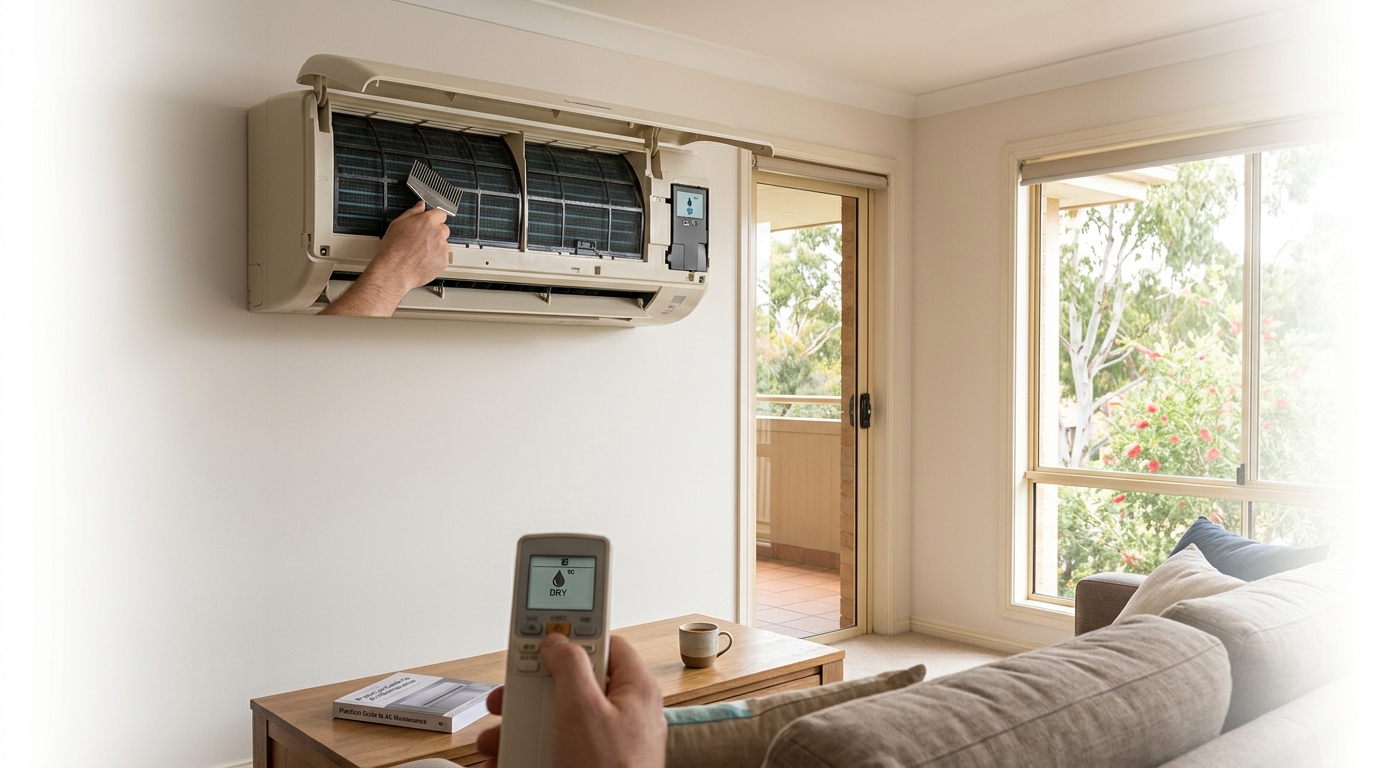
When Should You Use AC Dry Mode?
Dry mode is most useful on mild but humid days, typically between 25°C and 28°C, when the air feels sticky and uncomfortable but the temperature itself is not the problem. Most modern split system air conditioners include dry mode as a standard function, making it easy to target humidity without overcooling the room. It is not a replacement for cool mode on genuinely hot days above 30°C, where you need serious temperature reduction rather than just moisture removal.
There are three situations where dry mode earns its place. First, on mild but humid days where the humidity climbs above 70% and the air feels heavy despite the temperature being comfortable. Second, during extended wet or overcast periods, such as a rainy week in coastal Queensland or the NSW Hunter region, where indoor surfaces start to feel slightly damp and the risk of mould on soft furnishings rises noticeably. Third, as a morning pre-conditioning strategy before a hot day. Early mornings typically carry the highest relative humidity of the day, and running dry mode for 30 to 60 minutes before switching to cool mode gives the unit a head start, allowing it to cool the space more efficiently once the temperature climbs.
Popular units like the Daikin 2.5kW ALIRA X (FTXM25YVMA, $1,180) and the Mitsubishi Electric 2.5kW AP Series (MSZ-AP25VGKD, $1,040) both include dry mode as a standard function, accessible directly from the remote. These are solid choices for bedrooms and living areas in humid coastal climates where you'll genuinely get use out of the setting.
Signs the Air in Your Home Is Too Humid
If you're not sure whether humidity or temperature is the real issue, your home will usually give you a few clear signals. These are the most common indicators that moisture is the problem:
- Condensation forming on the inside of windows, particularly in the morning
- A musty or stale smell in rooms that are otherwise clean
- Skin that feels damp or clammy even when you're sitting still indoors
- Visible mould spots appearing on walls, ceilings or grout lines
- Soft furnishings such as cushions, curtains or bedding that feel slightly wet to the touch
Any two or three of these signs together is a strong indicator that your indoor humidity is running above the comfortable range of 40 to 60%. Dry mode is the right first response in that situation, particularly if the temperature is still within a reasonable range.
How Long Should You Run AC Dry Mode?
For most rooms, 30 to 60 minutes of dry mode is enough to produce a noticeable improvement in comfort. Running it for one to two hours continuously is generally the upper limit recommended by most manufacturers, and pushing beyond that is where problems can start.
Extended dry mode operation puts unnecessary strain on the compressor, which is running at a reduced but sustained load. In some models, prolonged use can also cause the evaporator coils to ice over, particularly if the ambient temperature is already on the lower side. If you notice reduced airflow or frost forming around the indoor unit, switch the system off and let it defrost before restarting. Daikin split systems include clear guidance on this in their documentation, and most other major brands do the same. If you're unsure about your specific model, check the manual or speak with a qualified technician.
The target you're aiming for is an indoor relative humidity of 40 to 60%. Below 40% and the air starts to feel uncomfortably dry. Above 60% and you're back in mould and discomfort territory. A basic hygrometer costs under $20 at most hardware stores and takes the guesswork out of knowing when to run dry mode and when to switch it off. It's a small investment that makes a real difference to how you manage your system through a humid Australian summer.
Tips for Getting the Most Out of Dry Mode
Getting the best results from dry mode comes down to a few simple habits. Used correctly, it can make a real difference to comfort during humid periods while keeping your running costs lower than if you defaulted straight to cool mode. Here are five practical steps to help you get more out of the setting.
- Close windows and doors before you start. Dry mode removes moisture from the air already inside the room. If windows or doors are open, humid outside air keeps flowing in and the unit has to work continuously without ever getting ahead. Seal the room first, then run the unit.
- Run dry mode in the morning before switching to cool mode on hot days. Early mornings carry the highest relative humidity of the day. Running dry mode for 30 to 60 minutes before the temperature climbs gives the unit a head start, so when you do switch to cool mode, it's working with drier air and can reach your target temperature faster.
- Pair dry mode with a ceiling fan on low. Dry mode runs the AC fan at its minimum speed by design. Adding a ceiling fan on its lowest setting helps circulate the drier air around the room without adding any meaningful load to the air conditioner. This is particularly useful in larger living areas where airflow can feel limited in dry mode.
- Check and clean your air filter regularly. A clogged filter restricts airflow across the evaporator coil, which directly reduces how much moisture the unit can pull from the air. During humid periods, aim to check the filter every two to three weeks. Most split system filters take less than five minutes to remove, rinse and refit.
- Use a hygrometer rather than a timer. Running dry mode on a fixed timer means you might stop too early or, more commonly, run it longer than needed. A basic hygrometer shows you the actual indoor humidity level in real time. Once you hit 50 to 55%, you can switch the unit off knowing the job is done. The Fujitsu 2.5kW Lifestyle Inverter Split System (ASTG09KMTC, $1,018) is a budget-friendly option that includes dry mode as standard, making it a practical entry point for households wanting this function without a large outlay. Fujitsu is one of the more reliable brands for this feature across their range, and you can compare the full lineup on the Fujitsu split systems page.
Ready to Upgrade to a Unit With Dry Mode?
AC dry mode is a practical, energy-efficient tool that earns its place in any humid Australian home. It works best on mild but sticky days between 18°C and 26°C, during extended wet periods and as a morning pre-conditioning step before a hot day. Run it in sessions of one to two hours, use a hygrometer to know when to stop, and switch to cool mode once the temperature climbs above 28°C. It is not a replacement for cool mode on genuinely hot days, but used at the right time it reduces energy use and keeps the room comfortable without overcooling.
If your current unit is ageing or simply does not have a dry mode function, it may be worth considering an upgrade. Most modern split systems include it as standard, and the difference it makes during a humid coastal summer is noticeable. If your current unit is missing this feature, browse our range of split system air conditioners to find a model that suits your home and budget.
Frequently Asked Questions About AC Dry Mode
Does dry mode cool the room?
Dry mode does lower the room temperature slightly as a side effect of the dehumidification process, but cooling is not its primary function. The temperature drop is minor and uncontrolled. If you need to cool a room on a hot day, cool mode is the right setting to use.
Is dry mode cheaper to run than cool mode?
Yes. Dry mode uses less energy than cool mode because the fan runs at its minimum speed and the compressor operates at a lower load. For mild but humid days where you only need to remove moisture rather than drop the temperature significantly, dry mode is the more economical choice.
Can I run dry mode overnight?
Running dry mode overnight is not generally recommended. Most manufacturers suggest limiting continuous dry mode operation to one to two hours. Extended use can strain the compressor and, in cooler overnight temperatures, may cause the evaporator coil to ice over. A better approach is to run dry mode for an hour before bed and switch the unit off once humidity reaches a comfortable level.
What humidity level should I aim for indoors?
The comfortable indoor humidity range is 40 to 60% relative humidity. Below 40% the air starts to feel dry and irritating, particularly for people with respiratory sensitivities. Above 60% you risk mould growth and that familiar clammy feeling. A basic hygrometer lets you monitor this in real time rather than guessing.
Does every split system have a dry mode?
Most modern split systems include dry mode as a standard function, accessible via the remote control and usually marked with a raindrop symbol. Older or entry-level units may not include it, which is one reason to check the feature list before purchasing. If dry mode is a priority for your home, confirm it is listed in the product specifications before you buy.
Need expert advice?
Our team can help you choose the right air conditioning system for your space.