
Air Con Not Blowing Cold Air? Common Causes and How to Fix Them
Why Is Your Air Con Not Blowing Cold Air?
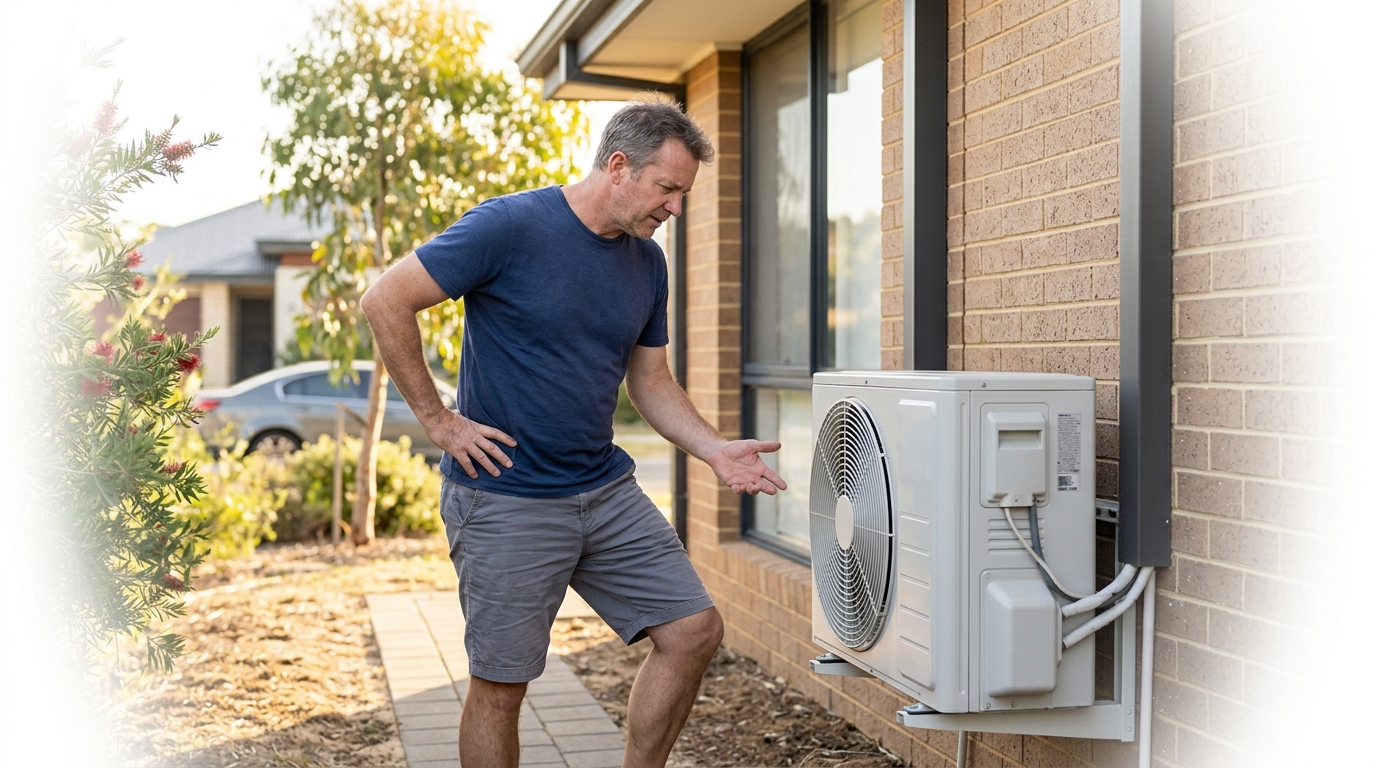
Few things are more frustrating than switching on your air con during a scorching Australian summer only to feel warm air blowing back at you. If your air con is not blowing cold air, you are not alone. It is one of the most common calls we receive, and the good news is that many causes are straightforward to diagnose. This article walks you through the five most likely culprits: a dirty filter, incorrect settings, frozen evaporator coils, a blocked outdoor unit and low refrigerant. Some you can fix yourself in minutes, others need a licensed technician.
Key takeaways
- Air con not blowing cold air is usually caused by a dirty filter, wrong mode setting, frozen coils, blocked outdoor unit or low refrigerant.
- Most common issues can be diagnosed and fixed in under 15 minutes with basic DIY checks.
- Refrigerant work and electrical repairs must be handled by a licensed technician under Australian law.
- Regular maintenance prevents cooling failures and extends system lifespan.
The Most Common Reasons Your Air Con Stops Cooling
An air conditioner that runs but fails to cool is usually suffering from one of five problems. Each has distinct symptoms and a different fix, so working through them in order is the fastest way to get your system back on track.
Dirty or Blocked Air Filter
A clogged air filter is the single most common reason an air con loses cooling performance. The filter sits in front of the evaporator coil and traps dust, pet hair and airborne particles. When it becomes blocked, airflow across the coil drops sharply, reducing the system's ability to absorb heat from the room. In severe cases the unit will trip on thermal overload and shut itself down entirely.
Symptoms include weak airflow from the vents, the unit cycling on and off frequently and a musty smell when the system runs. Check your filter by removing the front panel of the indoor unit. If it looks grey and matted, it needs attention.
Fix: This is a straightforward DIY job. Wash the filter under lukewarm water, let it dry completely and reinstall it. During heavy use in summer, aim to clean or replace filters every four to six weeks.
Incorrect Thermostat or Mode Setting
It sounds obvious, but incorrect settings are behind a surprising number of service calls. The most common scenario is the unit being left in 'Fan Only' mode, which circulates air without activating the compressor. The system runs, air moves, but no cooling happens. A set temperature that is higher than the current room temperature will produce the same result.
Check the mode display on the indoor unit directly rather than relying on the remote. Confirm the unit is set to 'Cool' mode and that the target temperature is at least two to three degrees below the current room temperature. If the remote is unresponsive, replace the batteries before assuming anything more serious is wrong.
Fix: DIY. Adjust the mode and set temperature, or replace the remote batteries.
Frozen Evaporator Coils
Ice forming on the indoor coil is a symptom, not a root cause. The two most common triggers are restricted airflow from a dirty filter and low refrigerant charge. When the coil cannot absorb enough heat, its surface temperature drops below zero and moisture in the air freezes onto the fins. The ice layer then acts as an insulator, making cooling even worse.
Visible signs include ice on or around the indoor unit, water dripping onto the floor as the ice melts and warm or barely cool air from the vents. If you suspect frozen coils, turn the unit off immediately. Switch to fan-only mode for 30 to 60 minutes to thaw the coil without flooding the drain tray.
Fix: Thawing the coil is a DIY step. If the problem recurs after cleaning the filter, the system likely has a refrigerant issue and a licensed technician must inspect it.
Dirty or Blocked Outdoor Condenser Unit
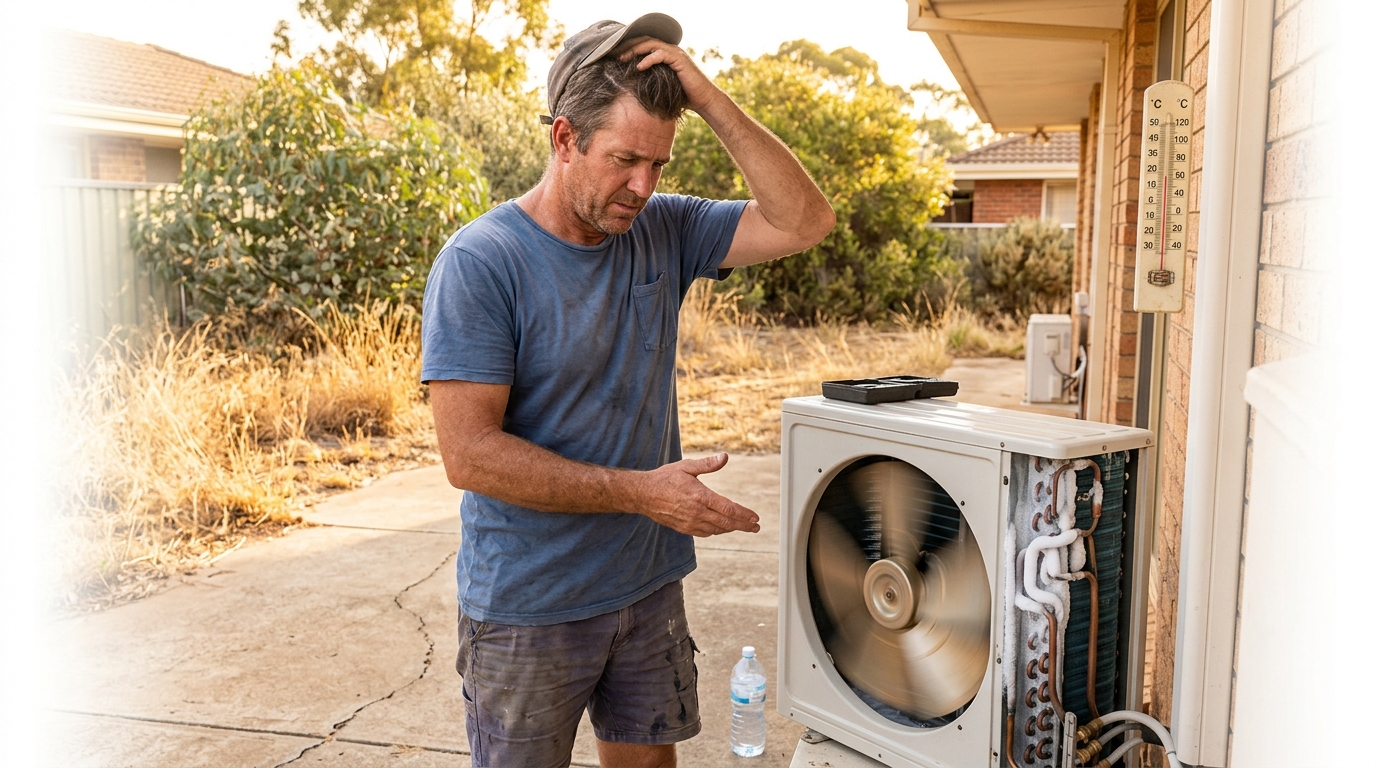
The outdoor unit's job is to expel the heat extracted from inside your home into the outside air. It does this through a large coil of fins that need clear airflow to work efficiently. Leaves, grass clippings, overgrown shrubs and built-up grime all reduce that airflow, forcing the compressor to work harder and eventually causing the system to shut down on high-pressure protection.
Check that there is at least 600mm of clear space around all sides of the outdoor unit. If the fins are coated in dust or debris, gently rinse them with a garden hose using low pressure, working from the inside out where possible. Do not use a pressure washer as it will bend the delicate aluminium fins, and do not attempt to straighten bent fins yourself as this risks cutting your hands and damaging the coil further.
Fix: Clearing debris and a gentle rinse are DIY tasks. A full coil clean with chemical treatment is best left to a technician during an annual service.
Low Refrigerant or a Refrigerant Leak
Refrigerant is the lifeblood of your air conditioning system. Unlike petrol in a car, it does not get consumed during normal operation. If your system is low on refrigerant, it has a leak somewhere in the circuit. There is no such thing as a system that simply 'runs out' over time.
Common symptoms of a refrigerant leak include a faint hissing or bubbling sound near the indoor or outdoor unit, ice forming on the outdoor unit's copper pipes and the system blowing air that feels only slightly cool rather than genuinely cold. The longer a leak goes unaddressed, the harder the compressor works, shortening its lifespan significantly.
Handling refrigerant in Australia is illegal without an ARCtick licence. A licensed refrigeration technician must locate the leak using electronic detection equipment, repair the breach, pressure-test the system and then recharge it to the manufacturer's specified weight. Do not attempt to top up refrigerant yourself using DIY kits sold online. These are not legal for use with split systems and will not fix the underlying leak.
Fix: Licensed technician only. Contact a qualified air conditioning technician to inspect, repair and recharge the system.
Quick DIY Checks Before You Call a Technician
Before booking a service call, run through these five checks in order. They take less than 15 minutes, cost nothing and resolve a surprising number of 'no cooling' complaints. Each step is safe for any homeowner to perform without tools or technical knowledge.
- Check the power supply and circuit breaker. Confirm the unit is switched on at the wall isolator, which is usually a dedicated switch mounted near the outdoor unit. Head to your switchboard and check whether the circuit breaker for the air conditioner has tripped. If it has, reset it once. If it trips again immediately, stop and call a technician as a recurring trip points to an electrical fault.
- Confirm the correct mode and temperature on the remote. Make sure the remote is set to 'Cool' mode, not 'Fan', 'Dry' or 'Heat'. Set the target temperature at least two to three degrees below the current room temperature. If the remote display is blank or unresponsive, replace the batteries before assuming anything more serious.
- Inspect and clean the air filter. Open the front panel of the indoor unit and pull out the filter. If it is grey and matted with dust, wash it under lukewarm water, let it dry fully and reinstall it. A blocked filter is the most common cause of poor cooling and takes about five minutes to fix.
- Check the outdoor unit for obvious blockages. Walk outside and look at the condenser unit. Clear away any leaves, grass clippings or debris that have built up around it. Make sure there is at least 600mm of clear space on all sides. If the unit is running but the fan is not spinning, do not attempt to investigate further as this requires a technician.
- Reset the unit by powering it off at the wall for 30 seconds then restarting. Switch the unit off at the wall isolator, wait 30 seconds and turn it back on. This clears any fault codes or protection modes the system may have locked itself into. Give it five minutes to restart fully before judging whether cooling has improved.
If none of these steps restore cooling, the fault is likely beyond a simple DIY fix. If your system is older and faults are becoming a regular occurrence, it may also be worth considering a replacement rather than another repair. Browse our range of split system air conditioners to see current models and pricing.
When to Call a Licensed Air Conditioning Technician
Some air conditioning faults are safe to address yourself, but others are legally restricted or carry a genuine risk of injury or further damage to the system. Knowing where that line sits will save you money and keep you on the right side of Australian law.
The following tasks are safe for homeowners to handle without any qualifications:
- Cleaning or replacing the air filter
- Clearing leaves and debris from around the outdoor unit
- Rinsing the outdoor unit fins gently with a garden hose
- Resetting the unit at the wall isolator
- Replacing remote control batteries
- Thawing a frozen indoor coil by running fan-only mode
Everything else should be handled by a licensed technician. This includes any work involving refrigerant, which is strictly regulated in Australia. Handling, recovering or recharging refrigerant without a valid ARCtick licence is illegal under the Ozone Protection and Synthetic Greenhouse Gas Management Act. DIY refrigerant top-up kits sold online are not legal for use with split systems and will not fix an underlying leak.
Other jobs that require a licensed professional include diagnosing and repairing electrical faults, replacing or testing the compressor and performing a full coil clean with chemical treatment. Attempting these without the right qualifications risks voiding your warranty, damaging the system further and, in the case of electrical work, creating a serious safety hazard.
The most important thing to remember is that delaying a service call rarely saves money. A small refrigerant leak left unaddressed will eventually destroy the compressor, turning a $300 repair into a $1,500 one. If the DIY checks above have not resolved the problem, book a technician sooner rather than later.
If your system is beyond economical repair, upgrading to a modern inverter model is worth serious consideration. Daikin split systems are a reliable and widely serviced option, with models like the 2.5kW FTXF25WVMA available from $989 for smaller rooms and the 5kW FTXF50WVMA from $1,589 for larger living areas.
Could Your Unit Simply Be the Wrong Size?
An undersized air conditioner will run continuously without ever reaching the set temperature, and this is frequently mistaken for a refrigerant fault or a failing compressor. If your system runs non-stop on a hot day but the room stays stuffy and warm, sizing is the first thing to check. Matching the unit's kilowatt output to the room's floor area is the most reliable starting point.
As a general guide for Australian homes with average insulation:
| Room Size | Recommended Capacity | Typical Use |
|---|---|---|
| 15 to 20 sqm | 2.5kW | Small bedroom or study |
| 20 to 35 sqm | 3.5kW | Master bedroom or medium lounge |
| 40 to 60 sqm | 5kW to 6kW | Open-plan living and dining area |
| 60 to 80 sqm | 7kW to 8kW | Large open-plan or combined kitchen and living |
These figures shift depending on your climate zone, ceiling height, window area and insulation quality. A north-facing room in Queensland with large west-facing windows will need more capacity than the same floor area in a well-insulated Melbourne home.
For a small bedroom of around 15 to 20 sqm, the Daikin 2.5kW Inverter Split System LITE FTXF25WVMA at $989 is a well-matched choice. For open-plan living areas up to around 50 sqm, the Daikin 5kW Inverter Split System LITE FTXF50WVMA at $1,589 is a practical mid-range option. If you prefer an alternative brand at the same capacity, the Mitsubishi Electric 5kW Split System MSZAP50VGKD is priced at $1,653 and is a strong performer in that size range.
Going too large creates its own problems. An oversized unit will cool the room quickly, shut off before completing a full cycle and then restart a few minutes later. This 'short-cycling' prevents the system from properly dehumidifying the air, leaving the room feeling cool but clammy. It also puts extra wear on the compressor over time.
Frequently Asked Questions
Why is my air con running but not cooling the room?
The most common reasons are a blocked air filter, the unit being set to 'Fan Only' mode instead of 'Cool', or a low refrigerant charge caused by a leak. Start by checking the mode setting on the indoor unit directly, then inspect and clean the filter. If both are fine, contact a licensed technician to check the refrigerant level.
Can I fix my air con not blowing cold air myself?
Several causes are safe to address yourself, including cleaning the filter, clearing debris from the outdoor unit, resetting the unit at the wall isolator and thawing a frozen coil by running fan-only mode. Anything involving refrigerant, electrical components or the compressor must be handled by a licensed technician under Australian law.
How do I know if my air con is low on refrigerant?
Signs of low refrigerant include air that feels only slightly cool rather than cold, ice forming on the copper pipes at the outdoor unit and a faint hissing or bubbling sound near the indoor or outdoor unit. Because refrigerant does not deplete during normal use, low levels always indicate a leak that needs professional repair.
Why is my air con blowing warm air in cool mode?
If the unit is confirmed to be in 'Cool' mode and the set temperature is below the current room temperature, the most likely causes are a dirty filter restricting airflow, frozen evaporator coils or a refrigerant leak. Run through the DIY checks first, and if the problem persists after cleaning the filter and resetting the unit, book a technician.
How often should I service my air conditioner?
A professional service once a year is the standard recommendation for most Australian households, ideally in spring before the summer cooling season begins. Between services, clean the indoor filter every four to six weeks during heavy use and keep the outdoor unit clear of debris. Regular maintenance is the most effective way to prevent cooling failures.
Is it worth repairing an old air conditioner or should I replace it?
A useful rule of thumb is that if the repair cost exceeds half the price of a comparable new unit, replacement is usually the better investment. Modern inverter systems are significantly more energy-efficient than units made 10 or more years ago, so a new system will often pay back the difference through lower running costs. Mitsubishi Electric split systems are a well-regarded option with strong energy ratings across a range of room sizes.
Why does my air con freeze up?
Ice on the indoor unit is almost always caused by restricted airflow from a dirty filter or by low refrigerant charge. Both conditions prevent the evaporator coil from absorbing enough heat, causing its surface temperature to drop below zero. Turn the unit off, run fan-only mode for 30 to 60 minutes to thaw the coil, then clean the filter. If freezing recurs, have a technician check the refrigerant.
Time to Cool Down Again
Most air conditioning problems have a straightforward cause. A blocked filter, a wrong mode setting, a frozen coil or a dirty outdoor unit can all be ruled out in under 15 minutes with no tools required. If those checks come up clean, the fault almost certainly involves refrigerant or an electrical component, and that means calling a licensed technician rather than attempting a DIY fix.
If your unit is older and repairs are becoming a regular expense, a replacement is often the smarter call. Modern inverter systems run quieter, cool faster and cost significantly less to run than units from 10 or more years ago. Ready to upgrade? Browse our range of split system air conditioners to find the right capacity for your space and budget.
Need expert advice?
Our team can help you choose the right air conditioning system for your space.