
Why Is My Air Conditioner Leaking Water? Causes and Fixes
Why Is Your Air Conditioner Leaking Water?
You walk into the lounge room on a sweltering Australian summer afternoon and notice a puddle forming under your indoor unit. An air conditioner leaking water inside the home is one of the most common service calls we see, and the good news is that most causes are straightforward to diagnose once you know what to look for.
There are five main reasons your unit might be dripping: a blocked condensate drain line, a dirty air filter, a frozen evaporator coil, a cracked or overflowing drain pan, or low refrigerant levels. Some of these you can sort out yourself in under 30 minutes. Others will need a licensed refrigeration technician to fix safely and legally.
Work through each cause below and you should be able to pinpoint the problem quickly.
Key takeaways
- An air conditioner leaking water usually stems from a blocked drain line, dirty filter, frozen coils, cracked pan or low refrigerant
- Filter cleaning and drain outlet checks are safe DIY tasks you can complete in 30 minutes
- Most other causes require a licensed technician to diagnose and repair safely
- Regular maintenance every four to six weeks prevents the majority of leaks
How Air Conditioners Produce Water (And Why It Leaks)
Air conditioners remove moisture from the air as a natural part of the cooling process. Warm, humid air from your room is drawn across the evaporator coils inside the indoor unit. Those coils are very cold, and when warm air meets a cold surface, moisture condenses out of the air and forms water droplets, much the same way a cold drink forms condensation on a hot day.
Those droplets fall into a shallow drain pan sitting beneath the coils. From there, the water flows out of your home through a condensate drain line, typically a small pipe that exits through an exterior wall or into a household drain. Under normal conditions, you will never see this water because it drains away quietly in the background.
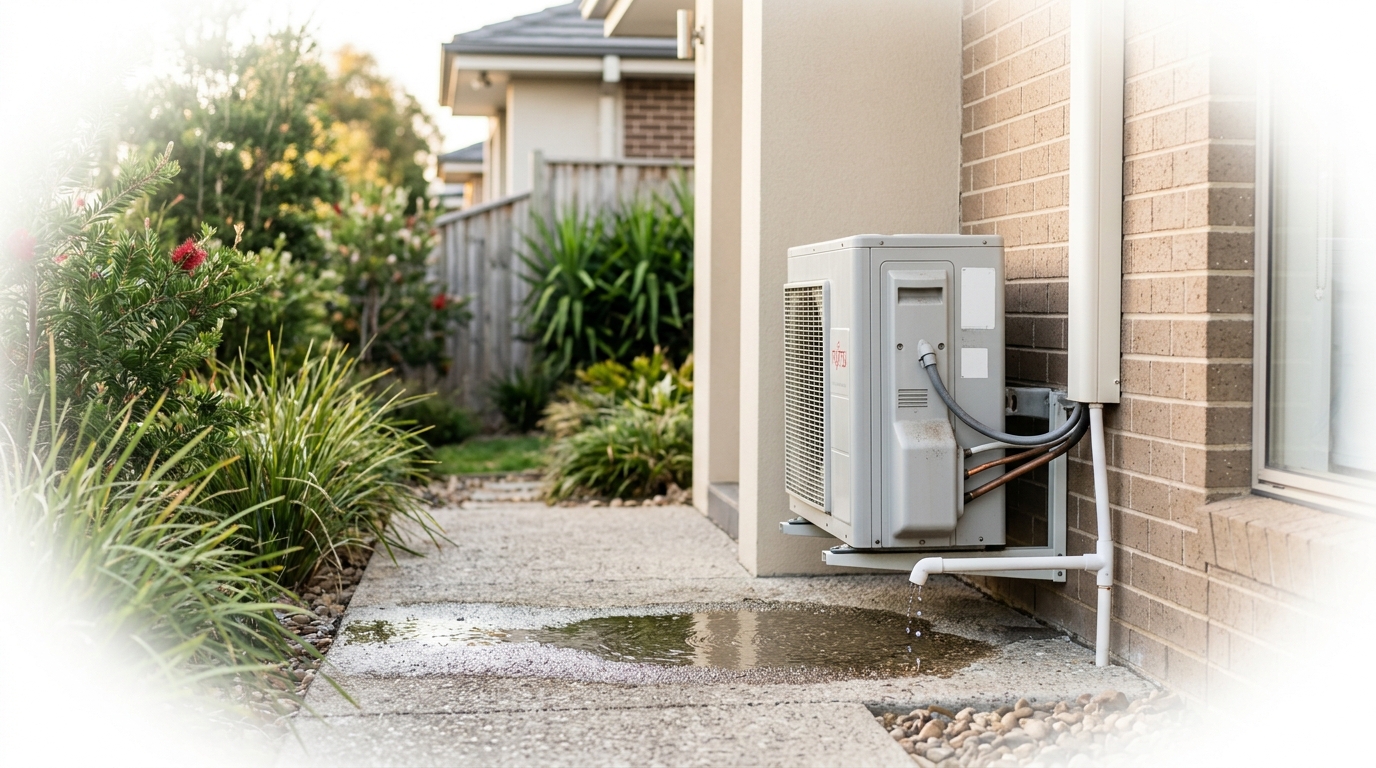
You may notice a small amount of water or vapour coming from the outdoor unit during operation. This is completely normal. The outdoor unit releases heat and some moisture as part of the refrigeration cycle, and a little dripping or steaming from that unit is nothing to worry about.
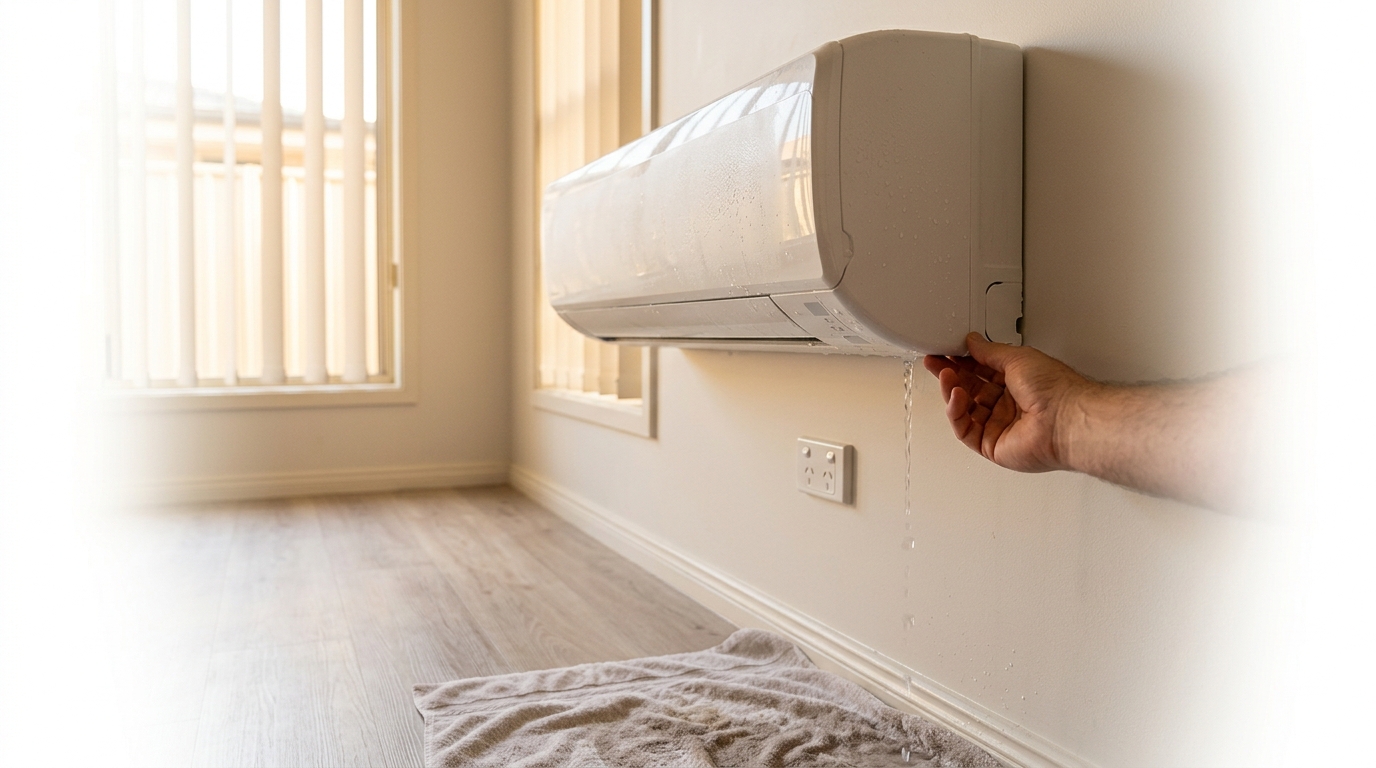
The problem starts when water appears inside your home, either dripping from the indoor unit itself or pooling on the floor beneath it. That tells you the condensate is not draining away as it should. Something is blocking, overflowing or bypassing the drain system, and that is what the rest of this article will help you identify and fix.
5 Common Causes of an Air Conditioner Leaking Water
Split system air conditioners are the most common type affected by water leaks, and the cause almost always comes down to one of five things: a blocked drain line, a dirty filter, low refrigerant, a damaged drain pan, or an installation problem. Each one produces a slightly different pattern of leaking, which makes them easier to tell apart once you know what to look for.
Blocked Condensate Drain Line
A blocked condensate drain line is the single most common reason an air conditioner leaks water inside your home. Over time, dust, dirt, mould and algae accumulate inside the drain line and form a plug that stops water from flowing out. When that happens, water backs up into the drain pan until it overflows and drips from the unit.
One of the clearest signs of a blocked drain is a musty or mouldy smell coming from the indoor unit. That odour is the algae and mould growing inside the line. You may also notice the unit dripping steadily even when it has only been running for a short time, because the pan fills up quickly with nowhere to drain.
This is not a job to tackle yourself beyond checking whether the drain outlet outside is visibly blocked. A technician can clear the line properly using a wet-dry vacuum or compressed air, and can also treat the line to slow future build-up.
Dirty or Clogged Air Filter
A clogged air filter restricts the airflow that passes over the evaporator coils. Without enough warm air moving across them, the coils drop below freezing point and ice forms on their surface. The unit keeps running, the ice keeps building, and eventually you have a solid block of ice sitting inside your indoor unit.
The leak happens when the unit is switched off or goes into a defrost cycle and all that ice melts at once. The drain pan cannot handle the sudden volume of water and it overflows, sending water dripping down the front or sides of the unit.
The good news is that this is one of the few causes you can fix yourself. Check your filter and clean or replace it every four to six weeks during periods of heavy use. Most filters slide out easily from the front of the indoor unit. If you find a thick layer of grey dust on the filter, that is almost certainly contributing to your leak.
Low Refrigerant Levels
Low refrigerant causes the evaporator coils to run colder than they should, which leads to the same icing problem described above but for a different reason. As the ice melts, it produces far more water than the drain pan is designed to handle, and the overflow ends up on your floor.
A critical point to understand here: refrigerant does not get used up during normal operation. If your system is low on refrigerant, it means there is a leak somewhere in the refrigerant circuit. Simply topping up the gas without finding and repairing the leak is a temporary fix at best.
Refrigerant handling is licensed work in Australia under the Australian Refrigeration Council (ARC) regulations. It is illegal for unlicensed individuals to purchase or handle refrigerants, so this is strictly a job for a qualified technician. If you suspect low refrigerant, turn the unit off and book a service call.
Cracked or Rusted Drain Pan
The drain pan sits directly beneath the evaporator coils and its only job is to catch condensation and channel it toward the drain line. In older units, particularly those more than 10 years old, the pan can crack, corrode or warp over time. Once the pan is compromised, water escapes through the crack or gap before it ever reaches the drain outlet.
A cracked pan often produces a slow, steady drip rather than a sudden overflow. You might notice water staining on the wall or ceiling below the unit, or a small but persistent puddle that appears even when the filter is clean and the drain line is clear. A technician can inspect the pan during a service visit and replace it if needed. It is a relatively straightforward repair on most split system models.
Improper Installation or Unit Not Level
A split system indoor unit must be mounted at a very slight downward angle toward the drain outlet so that condensation flows in the right direction. If the unit is installed perfectly level, or tilted the wrong way, water pools on the incorrect side of the drain pan and eventually drips out the front or sides of the unit rather than exiting through the drain line.
This cause is most often discovered in newer installations where the leak starts almost immediately after the unit is first used. It can also occur if a wall bracket shifts or settles over time. The fix is straightforward: a licensed installer re-mounts the unit at the correct angle. If your unit is relatively new and leaking from day one, improper installation is the first thing worth raising with whoever did the job.
What You Can Fix Yourself vs. When to Call a Technician
Most water leak causes require a licensed technician, but there are a few safe, practical steps you can take right now to either fix the problem or at least stop it from getting worse. The table below gives you a clear breakdown of what is safe to handle yourself and what needs a professional.
| You Can Do This Yourself | Call a Licensed Technician |
|---|---|
| Clean or replace the air filter | Flush a blocked condensate drain line |
| Turn the unit off and let ice melt safely before restarting | Diagnose and repair a refrigerant leak |
| Gently clear a visible drain outlet with a dry cloth | Replace a cracked or corroded drain pan |
| Check whether the indoor unit looks visibly unlevel | Re-mount the unit to correct the installation angle |
| Check the filter for dust build-up as a first diagnostic step | Top up refrigerant gas (licensed work under Australian law) |
If you find a thick, dusty filter, clean it and give the unit 24 hours to see whether the leak stops. That alone resolves a surprising number of calls. If the filter is clean and the leak continues, switch the unit off to prevent water damage to your walls or ceiling and book a technician.
Well-maintained units from reputable brands tend to have far fewer recurring drain issues. Daikin split systems, for example, are designed with accessible drain components and filters that are straightforward to clean, which makes routine maintenance easier for homeowners to keep on top of between service visits.
The main thing to avoid is leaving a leak unattended. Even a slow drip can cause mould growth inside the wall cavity or ceiling, and water damage to plasterboard adds up quickly. A service call is almost always cheaper than the repairs that follow from ignoring the problem.
FAQ: Air Conditioner Leaking Water
Why is my air conditioner leaking water inside the house?
An air conditioner leaks water inside the house when condensation cannot drain away properly. The most common causes are a blocked condensate drain line, a clogged air filter causing the evaporator coils to freeze, a cracked drain pan, low refrigerant levels or an indoor unit that was not installed at the correct angle. Cleaning your filter is the first thing to check.
Is it normal for an air conditioner to drip water?
A small amount of dripping from the outdoor unit is completely normal during operation. Water dripping from the indoor unit inside your home is not normal and means something in the condensate drainage system needs attention. Left unaddressed, even a slow indoor drip can cause mould growth and water damage to walls and ceilings.
Can I run my air conditioner if it is leaking water?
You should turn the unit off as soon as you notice water leaking from the indoor unit. Continuing to run it risks water damage to your walls, ceiling and flooring, and if the cause is frozen coils, running the unit makes the ice build-up worse. Switch it off, clean the filter, and if the leak continues after the unit has thawed, book a technician.
How do I stop my air conditioner from leaking water?
Start by cleaning or replacing the air filter, as a clogged filter is the most common fixable cause. If the filter is clean, check whether the drain outlet outside is visibly blocked. Beyond those two steps, the remaining causes, including a blocked drain line, low refrigerant and a damaged drain pan, require a licensed technician to diagnose and repair safely.
How often should I clean my air conditioner filter to prevent leaks?
Clean your air conditioner filter every four to six weeks during periods of heavy use, such as summer and winter. In dusty environments or homes with pets, you may need to clean it more frequently. A clean filter keeps airflow consistent across the evaporator coils, which is the single most effective thing you can do to prevent freeze-related leaks.
Why is my ducted air conditioner leaking water?
Ducted systems can leak for the same core reasons as split systems: blocked drain lines, dirty filters and low refrigerant are all common culprits. Because the components are hidden in the ceiling cavity, leaks from ducted air conditioners are often harder to spot until water staining appears on the ceiling. Annual servicing is especially important for ducted systems because access for DIY checks is limited.
How much does it cost to fix an air conditioner water leak?
A basic service call to clear a blocked drain line typically costs between $100 and $250 depending on your location and the technician. Refrigerant leak repairs are more involved and can range from $300 to $600 or more once the leak is found and sealed and the gas is recharged. Replacing a cracked drain pan sits somewhere in between, usually $150 to $350 including parts and labour.
Keep Your Air Conditioner Running Without the Drips
Most air conditioner water leaks trace back to one of five causes: a blocked drain line, a dirty filter, low refrigerant, a cracked drain pan or an installation angle problem. The encouraging part is that two of those, a clogged filter and a visible drain blockage, are things you can check and fix yourself in under half an hour. The rest are straightforward repairs for a licensed technician.
Regular filter cleaning every four to six weeks during heavy use, combined with an annual service visit, will prevent the majority of leaks before they ever start. A technician can clear the drain line, inspect the pan and check refrigerant levels in a single visit, which is far cheaper than dealing with mould or water-damaged plasterboard later.
If your unit is more than 10 years old and leaking repeatedly, it may be worth weighing up a replacement rather than continuing to repair an ageing system. The Daikin 2.5kW Inverter Split System LITE (FTXF25WVMA) at $989 is a solid, affordable entry point for smaller rooms. The Daikin 2.5kW Inverter Split System CORA (FTXV25WVMA) at $1,054 steps things up with additional features, and the Daikin 3.5kW Inverter Split System CORA (FTXV35WVMA) at $1,275 is a strong mid-range choice for medium-sized rooms. Browse our full range of split system air conditioners to find the right fit for your home.
Need expert advice?
Our team can help you choose the right air conditioning system for your space.