
Why Is My Air Conditioner Leaking Water? Causes and Solutions
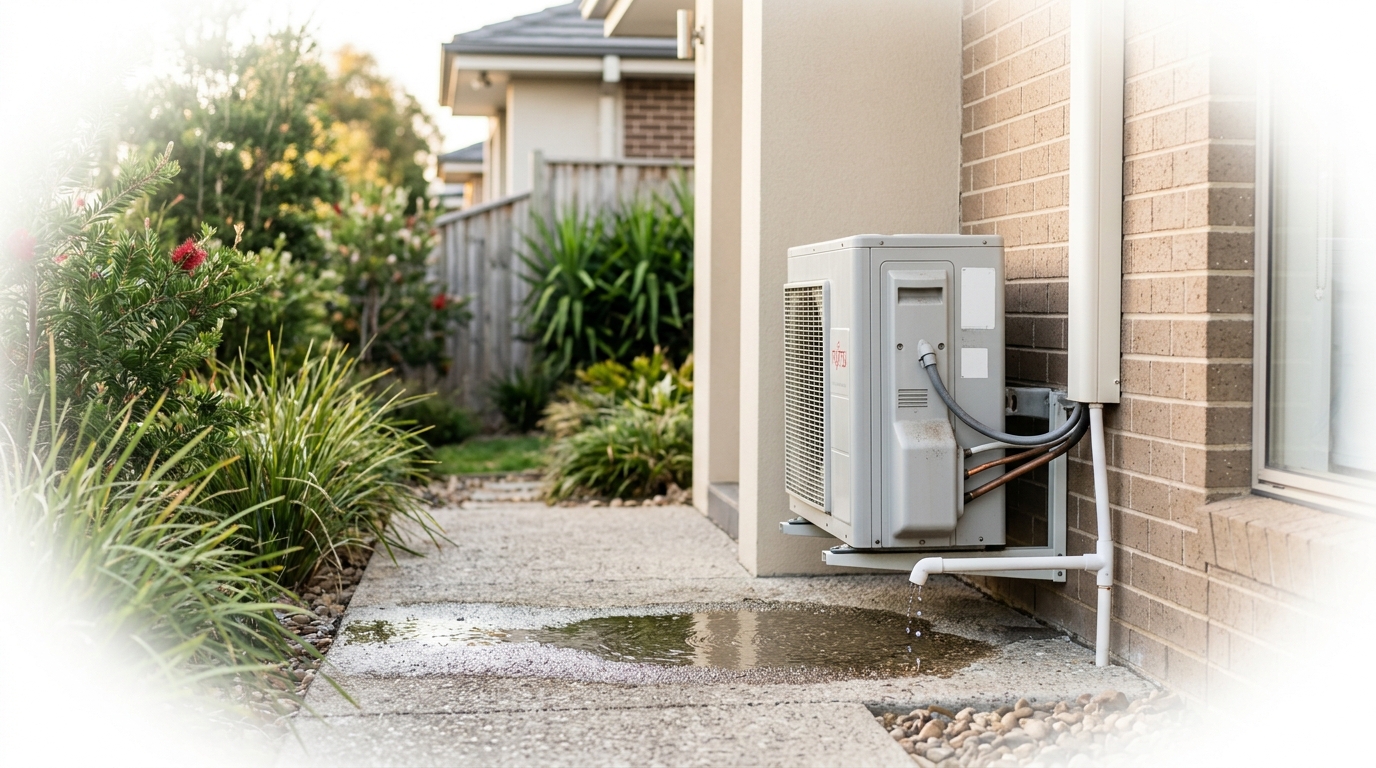
Why Is Your Air Conditioner Leaking Water?
You walk into the lounge room on a sweltering Australian summer afternoon and notice a puddle spreading across the floor beneath your indoor unit. An air conditioner leaking water is one of the most common service calls technicians receive, and the good news is that the cause is usually straightforward to identify. Most leaks trace back to one of four issues: a blocked condensate drain line, a frozen evaporator coil, a cracked or overflowing drain pan, or low refrigerant. Some of these are simple DIY fixes you can sort out in under an hour. Others require a licensed technician. This article walks you through each cause so you can work out what you are dealing with before picking up the phone.
Key takeaways
- An air conditioner leaking water usually stems from a blocked drain line, frozen coil, cracked pan or low refrigerant.
- Most blockages and frozen coils can be fixed at home with basic maintenance and cleaning.
- Refrigerant leaks and persistent problems require a licensed technician to diagnose and repair.
The Most Common Causes of an Air Conditioner Leaking Water
Water leaks from a split system or ducted air conditioner almost always come down to a problem with how condensate is being collected or removed. Your air conditioner pulls moisture out of the air as it cools, and that moisture needs somewhere to go. When any part of that process breaks down, water ends up where it should not. Here are the four causes you are most likely dealing with.
Blocked Condensate Drain Line
The condensate drain line is the pipe that carries moisture extracted from the air to the outside of your home or to a drain point. Over time, algae, dust and airborne debris build up inside the line and restrict or completely block the flow of water. When that happens, condensate backs up into the drain pan until it overflows onto your ceiling or floor.
This is the single most common cause of indoor unit leaks in Australian homes. The warm, humid conditions inside the drain line make it a perfect environment for algae growth, particularly during the long cooling seasons in Queensland, New South Wales and Western Australia. A blocked drain line is usually a DIY fix. Flushing the line with a diluted bleach solution or using a wet-dry vacuum to clear the blockage will often solve the problem immediately.
Frozen Evaporator Coil
The evaporator coil sits inside your indoor unit and is responsible for absorbing heat from the air. If airflow across the coil is restricted, typically because of a clogged air filter, the coil temperature drops below freezing and ice begins to form on its surface. When the unit cycles off or the thermostat is satisfied, that ice melts rapidly and produces far more water than the drain pan can handle at once.
Low refrigerant can cause the same effect by reducing the pressure inside the coil, but a dirty filter is the more frequent culprit. If you spot ice on the indoor unit or notice reduced airflow from the vents, switch the unit to fan-only mode. This allows the ice to melt in a controlled way without adding more refrigerant load, and it gives you a chance to check and clean the filter before restarting cooling mode. Regular filter cleaning, at least once a month during heavy use, is the simplest way to prevent this from happening in the first place.
Cracked or Overflowing Drain Pan
The drain pan sits directly beneath the evaporator coil and catches all the condensate before it flows into the drain line. In older units, the plastic pan can develop hairline cracks over years of thermal expansion and contraction, allowing water to drip straight through rather than reaching the drain outlet. Corrosion can cause the same problem in metal pans.
A pan that is not sitting level is another common issue. If the indoor unit has shifted slightly over time, or was not installed perfectly level to begin with, water pools at the wrong end of the pan and spills over the edge before it ever reaches the drain. This is more common in units that are five or more years old and have never had a service inspection. A cracked pan needs to be replaced, while a levelling issue can sometimes be corrected by adjusting the mounting brackets.
Low Refrigerant
Refrigerant does not get 'used up' during normal operation. If your system is low on refrigerant, it means there is a leak somewhere in the refrigerant circuit. Low refrigerant reduces the pressure inside the evaporator coil, causing it to run too cold and freeze over, which then leads to the same overflow problem described above.
You might notice a hissing or bubbling sound near the indoor or outdoor unit, along with noticeably reduced cooling performance even on a mild day. Unlike the other causes on this list, low refrigerant is never a DIY fix. Handling refrigerant in Australia requires an ARCtick licence, and topping up the system without finding and repairing the leak will only delay the problem. Call a licensed refrigeration technician who can locate the leak, repair it and recharge the system correctly.
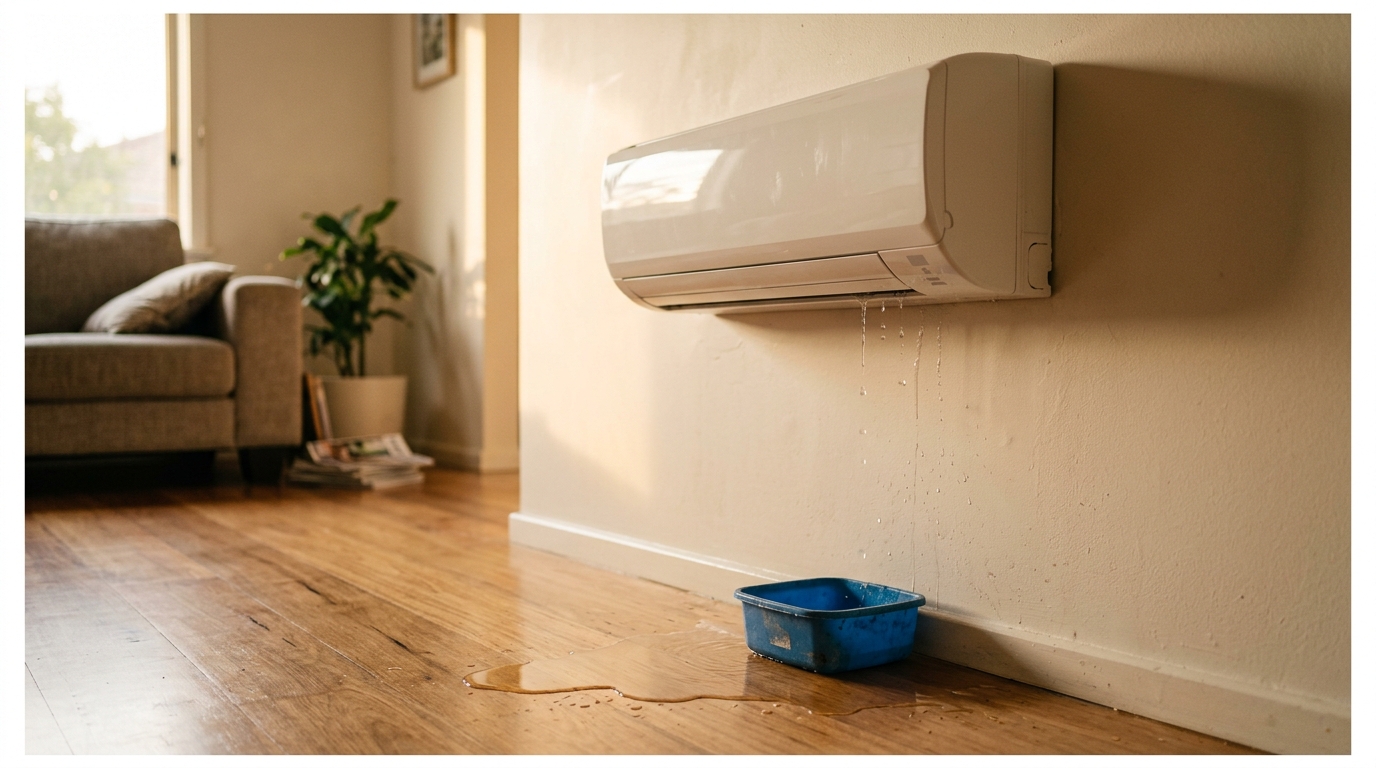
How to Fix an Air Conditioner Leaking Water: Step-by-Step
Most air conditioner water leaks can be diagnosed and fixed at home in under an hour using nothing more than a cloth, a garden hose and a bottle of white vinegar. Steps one through six below are safe for any homeowner to carry out. Refrigerant faults and electrical issues always require a licensed technician.
- Turn the unit off at the wall. Do not just use the remote. Switch the unit off at the isolator switch or circuit breaker before you touch anything. Water and electricity are a dangerous combination, and stopping the unit also prevents further water damage to your ceiling or flooring while you work.
- Check and clean the air filter. Remove the filter panel on the indoor unit and slide out the filter. Hold it up to the light. If it is grey with dust, rinse it under cool running water until the water runs clear. Shake off the excess and leave it to dry completely in a shaded spot before reinserting. Never run the unit with a wet filter.
- Inspect the drain pan. With the filter out, shine a torch into the base of the indoor unit and look at the drain pan. Check for standing water, which points to a blockage downstream, and look closely for hairline cracks or signs of corrosion. A cracked pan needs to be replaced by a technician.
- Locate the condensate drain outlet. This is usually a small pipe exiting through the wall or eave near the indoor unit. Check the visible end for obvious blockages such as dirt, spider webs or debris. Clear anything you can see with a thin brush or a gentle blast of water.
- Flush the drain line. Mix a cup of warm water with a small splash of white vinegar. Pour it slowly into the drain inlet inside the unit, or use a wet/dry vacuum to pull the blockage out from the external end of the pipe. The vinegar helps break down algae buildup without damaging the line.
- Restart the unit and monitor it. Switch the power back on and run the unit in cooling mode for at least 30 minutes. Watch the indoor unit and the area below it for any sign of dripping. If the pan is draining freely and no water appears, the fix has worked.
- If the leak continues or you spot ice, stop use immediately. Ice on the coil or a persistent leak after completing the steps above means the problem is beyond a simple blockage. Switch the unit off and call a licensed technician. Running an iced-up or leaking unit risks damaging the compressor, which is a far more expensive repair.
If your unit is older and this is not the first time you have been through these steps, repeated leaks are often a sign that the system is simply worn out. At that point, repairing it again may not be the most cost-effective path. Browsing split system air conditioners to compare modern replacement options is worth doing before you commit to another service call. For a reliable upgrade, Daikin split systems are a popular choice, with models like the 2.5kW Lite Inverter (FTXF25WVMA) starting from $989 and featuring a washable filter design that makes ongoing maintenance straightforward.
When to Call a Professional for a Water Leak
A licensed air conditioning technician should be your first call, not a last resort, in several specific situations. Knowing where the DIY boundary sits will save you money, protect your warranty and keep you on the right side of Australian law.
Refrigerant leaks are the clearest case. Handling refrigerants in Australia requires an ARCtick Refrigerant Handling Licence under the Ozone Protection and Synthetic Greenhouse Gas Management Act. It is illegal for unlicensed persons to purchase, handle or recharge refrigerant. If you suspect low refrigerant is causing your coil to freeze and leak, do not attempt to top it up yourself. Call a licensed refrigeration technician.
Electrical faults are another firm boundary. If the unit is tripping the circuit breaker, showing error codes related to electrical components, or if you notice any burning smell alongside the leak, treat it as an electrical fault until a technician says otherwise. Water near electrical components is a serious safety risk.
Persistent leaks after completing the DIY steps above are a clear signal that the problem is internal, whether that is a cracked drain pan, a damaged coil or a refrigerant issue. A technician can diagnose these properly without guesswork.
Ducted system leaks are almost always a job for a professional. The drain pans, coil and ductwork in a ducted system are spread across your roof space and are far harder to access and inspect than a wall-mounted split system. If you want to understand your system better before calling, the ducted air conditioners collection has useful information on how these systems are configured. A technician with a ducted system background will know exactly where to look.
Units still under warranty should always be serviced by an authorised technician. Attempting DIY repairs beyond basic filter cleaning can void the manufacturer's warranty, leaving you without cover if a more serious fault develops later.
A routine annual service typically costs between $150 and $250 and covers drain line inspection, coil cleaning and a refrigerant pressure check. That is a small outlay compared to the cost of water damage to a ceiling or a failed compressor. If your ageing unit is leaking repeatedly and the repair bills are stacking up, it may be worth considering a replacement instead. The Daikin 5kW Cora Inverter (FTXV50WVMA) at $1,697 is a solid mid-range option for homeowners who need a reliable, low-maintenance system and want to stop throwing money at an old unit that keeps letting them down.
How to Prevent Your Air Conditioner from Leaking Water
Most air conditioner water leaks are entirely preventable with a few simple maintenance habits. Keeping the drain line clear, the filter clean and the unit level costs nothing but a small amount of time, and it will save you from water damage, emergency service calls and the kind of compressor failures that turn a $150 service into a $1,500 repair bill.
- Clean or replace the air filter every four to six weeks during heavy use. A clogged filter is the leading cause of frozen coils and the overflow leaks that follow. Rinse washable filters under cool running water, let them dry fully in the shade and reinsert. The Daikin 2.5kW Lite Inverter (FTXF25WVMA), available from $989, uses a washable filter design that makes this job quick and straightforward.
- Book an annual professional service. A technician will inspect the drain pan, flush the condensate line, check refrigerant pressure and clean the coil. One service a year is usually enough to catch problems before they become leaks.
- Keep the outdoor unit clear of debris and vegetation. Leaves, grass clippings and overgrown shrubs restrict airflow and can push debris into the system. Aim for at least 500mm of clear space around the unit.
- Check that the indoor unit is mounted level. A unit that has shifted even slightly off level will cause the drain pan to pool water at the wrong end and overflow before it reaches the drain outlet. If you notice the unit looks uneven, have a technician check the mounting brackets.
- Inspect the condensate drain outlet each season. The external end of the drain pipe is a favourite spot for spiders, dirt and leaf litter. A quick visual check and a gentle flush with water at the start of summer and winter takes two minutes and prevents blockages from building up.
Modern inverter split systems from brands like Daikin and Mitsubishi Electric split systems include self-cleaning functions that automatically dry the indoor coil and filter after use, reducing the rate at which dust and moisture accumulate. These features do not replace manual cleaning entirely, but they do extend the interval between cleans and lower the risk of the algae growth that blocks drain lines. If you are buying a new system, self-cleaning is a feature worth prioritising.
FAQ: Air Conditioner Leaking Water
Why is my air conditioner leaking water inside the house?
An air conditioner leaking water inside is almost always caused by a blocked condensate drain line, a frozen evaporator coil or a cracked drain pan. The indoor unit collects moisture from the air as it cools, and if that moisture cannot drain away properly, it overflows into your ceiling or onto the floor. Cleaning the air filter and flushing the drain line with diluted white vinegar resolves the problem in most cases.
Is it normal for an air conditioner to drip water outside?
Yes, a small amount of water dripping from the outdoor unit or from the external end of the condensate drain pipe is completely normal during cooling operation. Your system is removing humidity from the indoor air and that moisture has to go somewhere. The only time outdoor dripping is a concern is if the volume is unusually large or if water is pooling around the base of the outdoor unit rather than draining away.
Can I run my air conditioner if it is leaking water?
You should turn the unit off until you have identified the cause of the leak. Running a leaking air conditioner risks water damage to your ceiling, walls and flooring, and if the leak is caused by a frozen coil, continuing to run the unit in cooling mode will make the ice buildup worse. Switch to fan-only mode to allow any ice to melt safely, then check the filter and drain line before restarting.
How much does it cost to fix an air conditioner leaking water?
If the cause is a blocked drain line or a dirty filter, the fix costs nothing beyond your time. A professional service call to clear a drain line and inspect the system typically runs between $150 and $250. A cracked drain pan replacement will add to that cost depending on the unit and the part. Refrigerant leak repairs are the most expensive outcome, often $300 to $600 or more once the leak is located, repaired and the system recharged by a licensed technician.
Is Your Air Conditioner Past Its Best?
The vast majority of air conditioner water leaks come down to two things: a blocked condensate drain line or a dirty air filter. Both are preventable with basic maintenance, and both can be fixed at home in under an hour. If you stay on top of filter cleaning and flush the drain line each season, you will avoid most of the problems covered in this article.
That said, some faults genuinely need a licensed technician. Refrigerant leaks, cracked drain pans and persistent leaks that return after DIY fixes are all signs that the problem runs deeper than a quick clean can solve.
If your unit is ageing and you have been through these steps more than once, the repair costs can quickly outweigh the value of the system. The Daikin 3.5kW Lite Inverter (FTXF35WVMA) at $1,194 is a popular, competitively priced option worth considering if repeated leaks have you questioning whether your old unit is worth keeping. Browse our best-selling air conditioners to find a reliable replacement that suits your home and budget.
Need expert advice?
Our team can help you choose the right air conditioning system for your space.