
Air Conditioner Leaking Water Inside? Causes and How to Fix It

Why Is Your Air Conditioner Leaking Water Inside?
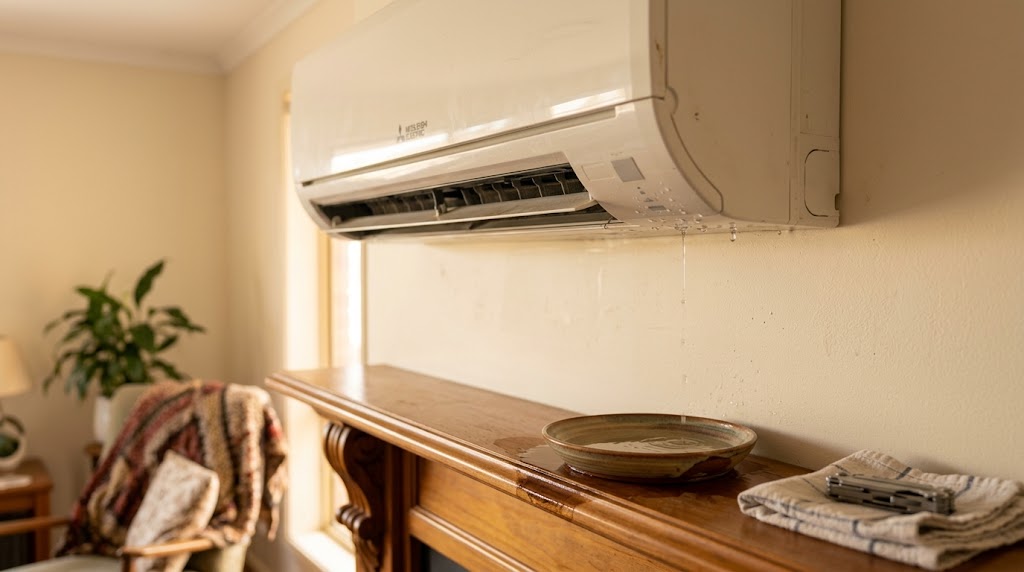
Finding a puddle on your floor or a damp patch spreading across your ceiling below the indoor unit is never a good start to the day. An air conditioner leaking water inside is one of the most common complaints Australian homeowners raise, and while a small amount of condensation is completely normal, pooling water, ceiling stains or a musty mould smell are signs that something has gone wrong and needs attention.
Your air conditioner removes humidity from the air as it cools, and that moisture has to go somewhere. Under normal operation it drips into a drain pan and flows out through a condensate drain line. When any part of that process breaks down, water ends up where it should not be.
This article covers the six most common causes, how to identify which one you are dealing with, and what you can do to fix it or when to call a technician.
Key takeaways
- Air conditioner leaking water inside usually stems from a blocked drain line, dirty filter or frozen coils
- Some fixes like filter cleaning are DIY tasks, while refrigerant work requires a licensed technician
- Regular maintenance prevents most leaks before they cause water damage
The Most Common Causes of an Air Conditioner Leaking Water Inside
Most water leaks from a split system or ducted indoor unit trace back to one of six problems. Some you can fix yourself in under an hour. Others require a licensed technician. Here is what to look for with each cause.
Blocked Drain Line
The condensate drain line carries water away from the indoor unit and out of your home. Over time, dust, mould, algae and debris build up inside the line and form a blockage. Once blocked, water has nowhere to go and backs up into the drain pan until it overflows into the room. This is the single most common cause of an indoor water leak. The tell-tale symptom is a steady drip from the indoor unit even when the system is not running particularly hard, often accompanied by a musty smell from the unit itself.
Cracked or Rusted Drain Pan
The drain pan sits directly beneath the evaporator coil and catches all the condensate before it flows into the drain line. In older units, the pan can crack from age or physical stress, and in humid climates it can corrode and rust through entirely. Even a hairline crack is enough to let water escape before it reaches the drain. Look for visible rust staining on or around the indoor unit casing, or water pooling directly below the unit on the floor or ceiling rather than dripping from the front.
Dirty Air Filter
A clogged air filter restricts the airflow passing over the evaporator coil. Without enough warm air moving across it, the coil gets too cold and ice begins to form on its surface. When the unit cycles off or the thermostat is satisfied, that ice melts rapidly and produces far more water than the drain pan is designed to handle in a short period. The overflow ends up on your floor or ceiling. Reduced airflow from the vents is the clearest symptom alongside the leak, and the fix is as simple as cleaning or replacing the filter.
Frozen Evaporator Coils
Frozen coils are often a symptom of another problem rather than a root cause on their own. Restricted airflow from a dirty filter is the most common trigger, but low refrigerant can also cause the coil to freeze. Either way, once a thick layer of ice builds up and then thaws, the volume of meltwater far exceeds what the drain pan can cope with. You may be able to see ice forming on the indoor unit itself or on the refrigerant lines running to the outdoor unit, which is a clear sign to switch the system off and investigate.
Low Refrigerant
Refrigerant does not get 'used up' in normal operation, so a low refrigerant level almost always means there is a leak somewhere in the system. Low refrigerant reduces the pressure inside the evaporator coil, causing its temperature to drop below freezing and ice to form. Beyond the water leak, you will likely notice the system struggling to cool the room even on a mild day. Refrigerant handling is strictly regulated in Australia and requires an ARC Tick accredited technician. Do not attempt to top up refrigerant yourself as it is illegal without the appropriate licence.
Damaged Pipe Insulation
The refrigerant pipes connecting your indoor and outdoor units are wrapped in foam insulation to keep the cold pipe surface from coming into contact with warm, humid air. If that insulation splits, peels away or deteriorates with age, condensation forms directly on the cold pipe surface and drips into the ceiling cavity or down the wall. This cause is easy to miss because the leak often appears some distance from the indoor unit. Damp patches on the ceiling or wall along the pipe run, rather than directly below the unit, are the key symptom to watch for.
What You Can Fix Yourself vs. What Needs a Professional
Some air conditioner water leak repairs are straightforward tasks any homeowner can handle safely with basic tools and about 30 minutes. Others involve regulated work that is illegal to perform without the correct licence in Australia. Knowing which category your problem falls into saves you time, money and the risk of voiding your warranty.
DIY Fixes You Can Try Today
Before you call anyone, work through these steps in order. Turn the system off at the wall first, every time, before touching any part of the unit.
- Turn off the unit at the wall. Switch the air conditioner off at the wall isolator or circuit breaker, not just via the remote. This removes power from the indoor unit before you handle any components.
- Remove and clean the air filter. Open the front panel of the indoor unit and slide out the filter. Rinse it under running water until the water runs clear, then leave it to dry completely in a shaded spot before reinserting. Never reinsert a damp filter as it encourages mould growth inside the unit.
- Clear the condensate drain line. Locate the drain line outlet outside your home, usually near the base of the outdoor unit or exiting through an external wall. Press the nozzle of a wet-dry vacuum firmly over the outlet and run it for 30 to 60 seconds to pull any soft blockage free. Repeat once or twice if needed.
- Check that the unit is level. Hold a spirit level against the bottom of the indoor unit casing. The unit should be very slightly tilted toward the drain outlet side so water flows away naturally. If it is tilted the wrong way or sitting flat, adjust the mounting bracket until the drain side sits marginally lower.
When to Call a Licensed Technician
Several repairs go beyond what a homeowner should attempt, either because they require specialist tools or because Australian law prohibits unlicensed work.
- Cracked or rusted drain pan. Replacing the drain pan requires dismantling part of the indoor unit. A licensed technician can source the correct OEM part and reseal everything properly.
- Refrigerant recharge or leak repair. Handling refrigerant in Australia requires an ARC Tick accreditation issued under the Ozone Protection and Synthetic Greenhouse Gas Management Act. Performing refrigerant work without this licence is illegal and can result in significant fines. It will also void most manufacturer warranties.
- Condensate pump replacement. Ducted systems and some split systems use a small pump to move condensate uphill to a drain point. Replacing a failed pump involves electrical connections and should be handled by a qualified technician.
- Pipe insulation repair. Re-wrapping deteriorated refrigerant pipe insulation correctly requires the right materials and access to the full pipe run, which often runs through ceiling cavities.
If you are unsure whether your problem falls into the DIY or professional category, err on the side of caution. A service call costs far less than repairing water damage to a ceiling or floor.
How to Prevent Your Air Conditioner from Leaking Water in the Future
The most effective way to prevent water leaks from split system air conditioners is a consistent maintenance routine. Most leaks do not happen suddenly. They develop gradually as filters clog, drain lines accumulate debris and components age without attention. A few simple habits address all of those risks before they become a problem.
Clean your filters regularly. During summer, aim to clean the air filter every two to four weeks. For the rest of the year, once a month is sufficient for most households. A clean filter keeps airflow strong across the evaporator coil, which is the single most effective way to prevent both frozen coils and drain pan overflow.
Schedule an annual professional service. A qualified technician will flush the drain line, check refrigerant pressure, inspect the drain pan for cracks and verify that all electrical components are in good order. If you run your reverse-cycle system heavily through both summer and winter, consider booking a service twice a year. The cost of a service is a fraction of the cost of water damage repairs.
Keep the outdoor unit clear. Leaves, grass clippings and debris around the outdoor unit restrict airflow and put extra strain on the system. Clear a 500mm gap around all sides of the unit and check it after storms or heavy winds.
Check the drain line outlet periodically. Every couple of months, glance at the drain outlet outside your home. A steady drip during operation is normal. No drip at all during a hot day can indicate a blockage forming before it becomes a full overflow.
Choosing a well-built unit from a reputable brand also makes a real difference. Daikin split systems are engineered with reliable condensate management and are straightforward to maintain, which is part of why they are one of the most popular choices in Australia. The Daikin 2.5kW Inverter Split System LITE (FTXF25WVMA) at $989 and the Daikin 3.5kW Inverter Split System LITE (FTXF35WVMA) at $1,194 are both solid entry-level options with accessible filter panels that make monthly cleaning quick and easy. Mitsubishi Electric split systems are another brand with a strong reputation for drainage reliability and build quality, particularly in humid coastal climates where condensate management matters most.
Is It Time to Replace Your Unit?
If your air conditioner is leaking water repeatedly despite professional servicing, is more than 10 to 12 years old, or the repair quote exceeds half the cost of a new unit, replacement is usually the smarter financial decision. Ongoing repairs on an ageing system add up quickly, and a new unit will be more energy efficient and far less likely to cause water damage to your home.
Most water leaks come down to a blocked drain line, a dirty filter, frozen coils or deteriorated components. Regular filter cleaning and an annual professional service will prevent the majority of these issues. When those measures are no longer enough to keep an old unit running reliably, it is time to move on.
The Daikin 5kW Inverter Split System LITE (FTXF50WVMA) at $1,589 is a solid mid-range replacement option that suits most Australian living rooms and open-plan spaces. Ready for a reliable upgrade? Browse our full range of split systems to find the right unit for your home, or get in touch with the Air Conditioning Experts team for personalised advice on sizing and installation.
Frequently Asked Questions
Why is my air conditioner leaking water inside the house?
The most common reason is a blocked condensate drain line, which causes water to back up and overflow from the drain pan. Other causes include a dirty air filter restricting airflow and freezing the evaporator coil, a cracked or rusted drain pan, low refrigerant or deteriorated pipe insulation. Most leaks can be traced to one of these six issues.
Is it safe to run an air conditioner that is leaking water?
No. You should switch the unit off at the wall as soon as you notice a water leak inside. Continuing to run the system risks water damage to your ceiling, walls and flooring, and can create conditions for mould growth. It can also mask a more serious underlying problem such as a refrigerant leak or a failing component.
Can I fix a leaking air conditioner myself?
Some fixes are straightforward DIY tasks, including cleaning the air filter, clearing a soft blockage from the condensate drain line with a wet-dry vacuum and checking that the indoor unit is level. However, repairs involving refrigerant, a cracked drain pan or electrical components must be carried out by a licensed technician under Australian law.
How do I unclog my air conditioner drain line?
Turn the unit off at the wall first. Locate the drain line outlet outside your home, usually near the base of the outdoor unit or exiting through an external wall. Press the nozzle of a wet-dry vacuum firmly over the outlet and run it for 30 to 60 seconds to pull the blockage free. Repeat once or twice if needed, then run the system briefly to confirm water is draining normally.
Why is my air conditioner leaking water when it rains?
Heavy rain can force water back through the condensate drain line outlet if it is positioned where rainwater pools or flows directly over it. It can also indicate that the outdoor unit is not draining properly, or that water is entering through gaps around the pipe penetration in the wall. Check the drain outlet position and ensure the wall penetration is sealed with appropriate weatherproof material.
How often should I service my air conditioner to prevent leaks?
A professional service once a year is the minimum for most households. If you run your reverse-cycle system heavily through both summer and winter, twice a year is a better target. Between professional services, clean the air filter every two to four weeks during peak use and check the drain outlet periodically to catch any blockage before it causes an overflow.
Why is my new air conditioner leaking water inside?
A new unit leaking water is most often caused by an installation issue rather than a fault with the unit itself. The most likely culprits are an indoor unit that is not mounted level, a drain line that was not connected or routed correctly, or a pipe penetration that was not sealed properly. Contact your installer to inspect the installation before assuming the unit is faulty.
Need expert advice?
Our team can help you choose the right air conditioning system for your space.