
Air Conditioner Tripping the Circuit Breaker? Here's Why and What to Do
Why Is Your Air Conditioner Tripping the Circuit Breaker?
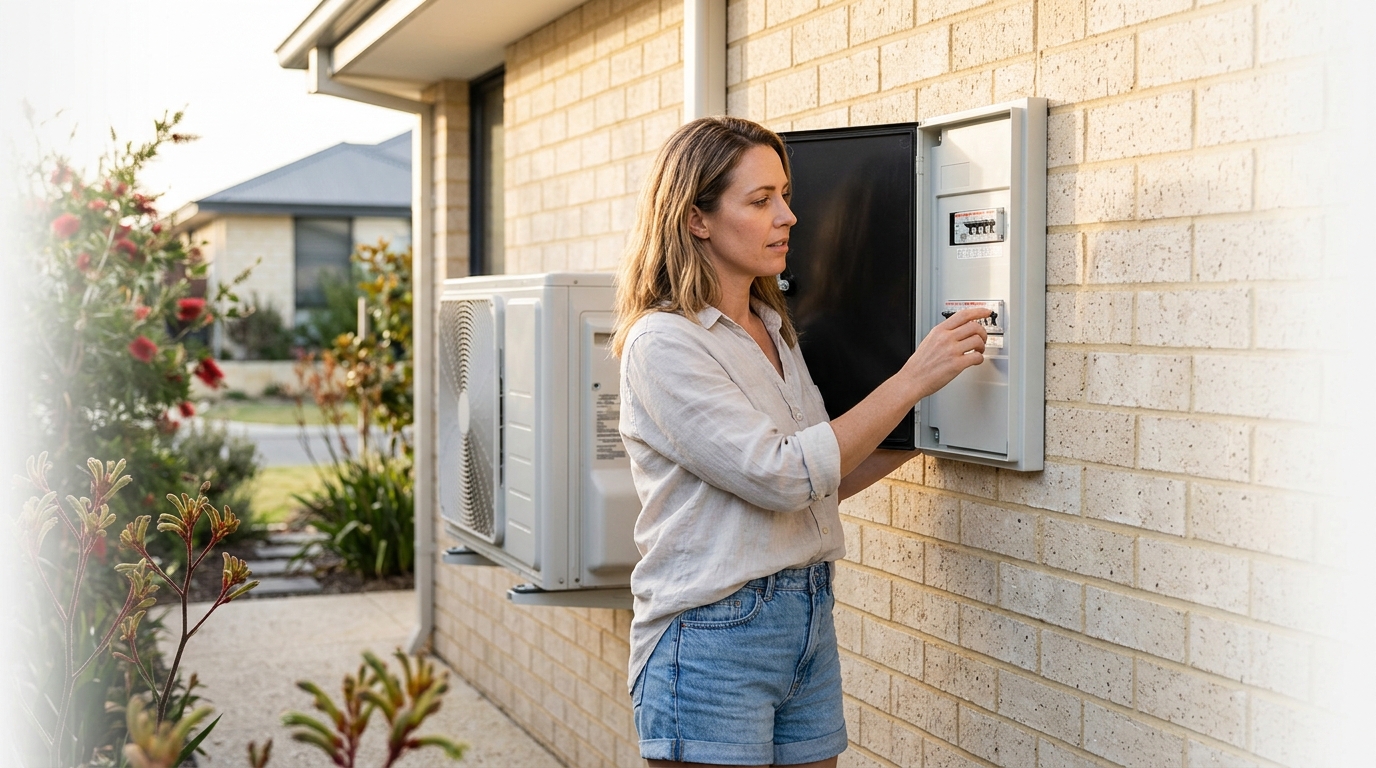
Picture this: it's 38 degrees on a January afternoon, your air conditioner has been running for a couple of hours, and suddenly the cool air stops. You check the switchboard and find a tripped breaker. An air conditioner tripping the circuit breaker is one of the most common electrical complaints Australian homeowners face in summer, and it's rarely a coincidence that it happens on the hottest days of the year.
A circuit breaker is a safety device. Its job is to cut power to a circuit the moment the current flowing through it exceeds a safe level, protecting your home's wiring from overheating and potential fire. Air conditioners are one of the most demanding appliances in any home, drawing high current at start-up and sustained current during operation, which makes them a frequent trigger.
There are four main reasons an air conditioner trips a breaker: a dirty air filter, low refrigerant, a failing compressor, or an undersized or ageing breaker itself. Some of these are straightforward fixes you can handle yourself. Others require a licensed electrician or refrigerant technician. Read on to work out which situation you're dealing with.
Key takeaways
- An air conditioner tripping the circuit breaker usually stems from a dirty filter, low refrigerant, failing compressor or undersized breaker.
- A blocked air filter is the most common and easiest cause to fix yourself.
- Repeatedly resetting a tripped breaker risks serious damage to your compressor and wiring.
The Most Common Causes of an Air Conditioner Tripping the Circuit Breaker
Before calling anyone out, it helps to understand what's actually happening inside your system. Each of the four causes below produces a different pattern of symptoms, so you can usually narrow down the culprit before a technician even arrives.
Dirty or Blocked Air Filter
A clogged air filter is the single most common reason an air conditioner trips its breaker, and it's also the easiest to fix. When the filter is blocked with dust and debris, airflow across the evaporator coil is severely restricted. The system struggles to absorb heat from the room, so the compressor runs longer and harder trying to reach the set temperature. That extra effort translates directly into higher current draw, and if it exceeds the breaker's rated amperage, the breaker trips.
The fix is simple: turn the unit off at the breaker, remove the filter, and clean it under running water or replace it if it's damaged. Let it dry completely before reinstalling. During heavy use in summer, filters should be cleaned every four to six weeks. Neglecting this one task is responsible for a surprising number of service calls that could have been avoided entirely.
After cleaning the filter, wait 30 minutes before resetting the breaker and restarting the unit. This gives the system time to normalise. If the breaker trips again shortly after, the filter wasn't the only problem.
Low Refrigerant or a Refrigerant Leak
Refrigerant is the substance that carries heat out of your home. When the refrigerant level drops due to a leak, the system loses its ability to transfer heat efficiently. The compressor compensates by running continuously at high load, trying to achieve a cooling effect that the depleted refrigerant charge simply cannot deliver. This sustained high-current operation eventually pushes the draw past the breaker's threshold.
Two warning signs point strongly to a refrigerant issue: a hissing or bubbling sound coming from the indoor or outdoor unit, and ice forming on the refrigerant lines or the outdoor unit itself. Ice on the unit in summer is never normal and should be treated as an urgent fault.
Refrigerant handling is not a DIY job. Under Australian law, only a technician holding an ARCtick licence is permitted to purchase, handle and recharge refrigerants. If you suspect a leak, turn the system off and call a licensed refrigerant handler to diagnose and repair the leak before recharging the system. Running the unit with low refrigerant accelerates compressor wear and can turn a relatively affordable repair into a full system replacement.
A Failing or Seized Compressor
The compressor is the heart of your air conditioning system, and it's also the component most likely to cause a dramatic breaker trip. An ageing or mechanically seized compressor draws what's known as a 'locked rotor current' at start-up. This is a massive current spike, often five to six times the normal running current, that occurs when the compressor motor tries to start but can't turn freely. The breaker trips almost instantly, which is actually the correct outcome. Without that protection, the sustained overcurrent would overheat the wiring.
The pattern here is distinctive. The breaker trips within seconds of the unit starting, rather than after it has been running for a while. You may also notice the outdoor unit making a loud humming or clicking noise just before the trip.
Compressor replacement is one of the most expensive air conditioning repairs, often ranging from $1,000 to $2,000 or more depending on the unit. On systems older than eight to 10 years, the cost of a new compressor frequently approaches the cost of a new system. A qualified technician can test the compressor with a clamp meter to confirm the diagnosis, at which point you'll need to weigh up repair versus replacement honestly.
Undersized or Ageing Circuit Breaker
Not every breaker trip means something is wrong with the air conditioner itself. The breaker may be the problem. Air conditioners require a dedicated circuit sized to their rated amperage, and Australian wiring standards under AS/NZS 3000 require that fixed appliances like split systems are connected to their own dedicated circuit, not shared with other loads.
If the breaker was undersized at installation, or if it has weakened over years of thermal cycling, it may trip even when the air conditioner is drawing perfectly normal current. Breakers do degrade over time. A breaker that trips repeatedly under normal load is a breaker that needs replacing.
Only a licensed electrician can assess, size and replace a circuit breaker. This is not a job for a homeowner, regardless of how straightforward it might appear. If your air conditioner is relatively new, has a clean filter and shows no signs of refrigerant or compressor issues, but still trips the breaker regularly, call an electrician first. The fix may be as simple as replacing an ageing 15-amp breaker with a correctly rated one, which is a quick and relatively inexpensive job compared to the alternatives.
What to Do When Your Air Conditioner Trips the Breaker: Safe Steps to Follow
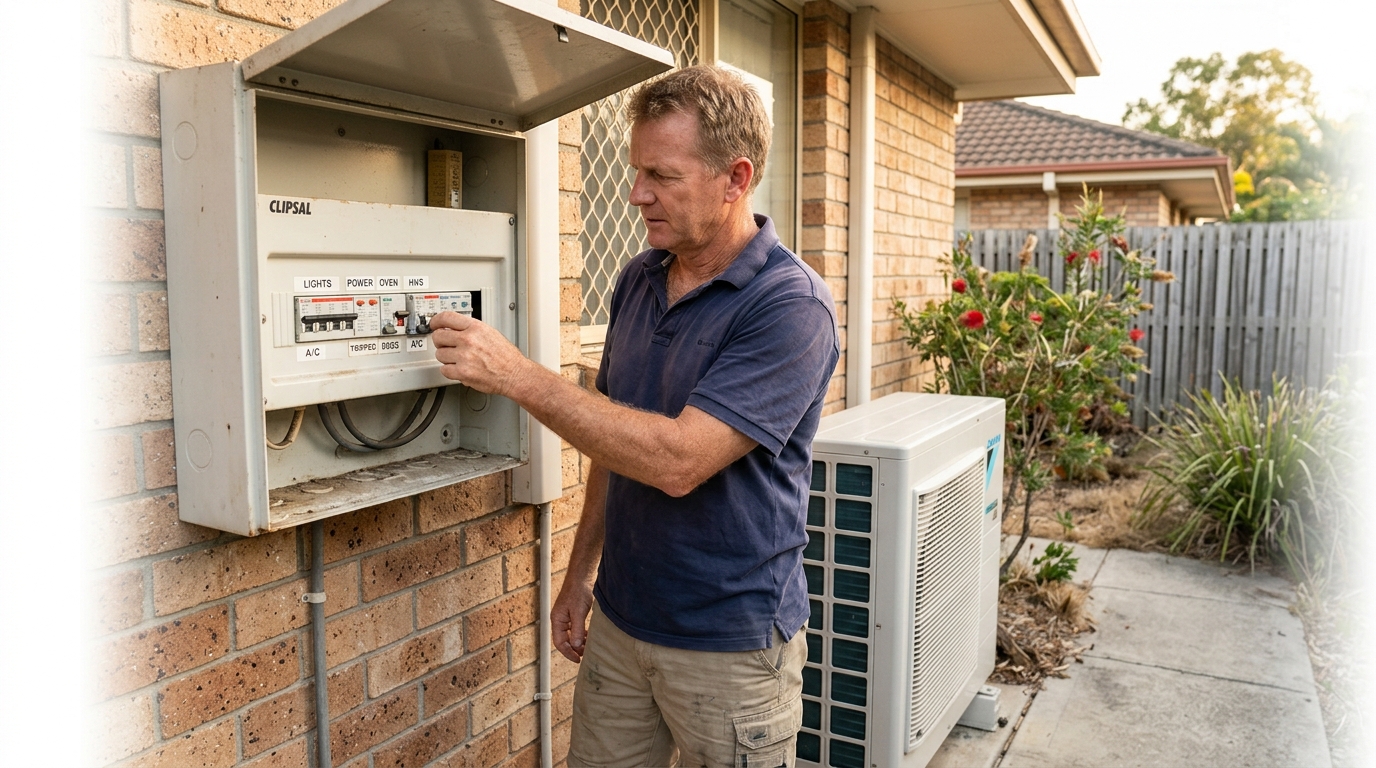
When your air conditioner trips the circuit breaker, follow these steps in order before resetting anything. Rushing straight to the switchboard and flicking the breaker back on is the most common mistake homeowners make, and it can cause serious damage to the compressor or wiring if the underlying fault is still present.
- Turn the air conditioner off at the wall controller or remote. Do this before you go anywhere near the switchboard. You want the unit fully powered down so there is no load on the circuit when you reset the breaker. If the unit has no power and won't respond to the remote, switch it off at the isolator switch on the wall near the outdoor unit.
- Wait at least 30 minutes. This is not optional. The compressor builds up internal pressure during operation, and restarting it too quickly forces the motor to work against that residual pressure. This is called a 'hard start' and it dramatically increases the current spike at start-up. Thirty minutes gives the pressure time to equalise and the system time to cool down.
- Check and clean the air filter. Pull out the indoor unit's filter and inspect it. If it's visibly clogged with dust, rinse it under running water and let it dry completely before reinstalling. A blocked filter is the most common cause of a tripped breaker and takes five minutes to fix.
- Reset the breaker properly. Push the tripped breaker firmly all the way to the OFF position first, then push it back to ON. Some breakers sit in a middle position after tripping and won't reset unless you push them fully off first.
- Turn the air conditioner back on and monitor it closely. Watch and listen for the first five to 10 minutes. Normal operation should be quiet and steady. If the unit starts, runs and holds temperature without tripping the breaker, a one-off event such as a power surge or a temporarily blocked filter was likely the cause.
- If the breaker trips again, stop resetting it and call a licensed technician. Repeatedly resetting a breaker that keeps tripping is not a fix. Every reset sends another high-current surge through the compressor and wiring. Over time this degrades the compressor windings and can cause wiring insulation to break down, turning a manageable repair into a much more expensive one.
One final point: never bypass a tripping breaker by taping it in the ON position or inserting a higher-rated fuse. A breaker that trips is doing exactly what it was designed to do. Bypassing it removes the only protection standing between a fault and a house fire.
When to Call a Licensed Electrician or AC Technician
Some breaker trips are a one-off nuisance you can resolve yourself with a filter clean and a 30-minute wait. Others are warning signs of a serious fault that requires a licensed professional. Knowing the difference saves you money and keeps your home safe.
You can generally handle it yourself if the breaker tripped once during an extreme heat event, the filter was visibly dirty, and the unit has run normally ever since. A single trip after a power surge or a particularly hot afternoon is not unusual, especially in older homes where the wiring has been running at capacity for years.
Call a professional if any of the following apply:
- The breaker trips every time the air conditioner tries to start, particularly within the first few seconds of start-up. This pattern points strongly to a failing compressor drawing locked rotor current.
- The breaker trips immediately after you reset it, even before the unit has had a chance to run. This suggests a hard fault in the wiring or the unit itself.
- You can smell burning near the switchboard or see scorch marks around the breaker. This is an urgent electrical fault. Turn off the main switch and call a licensed electrician straight away.
- The breaker feels warm to the touch or won't stay in the ON position. A breaker that has been thermally stressed repeatedly may have lost its ability to hold rated current reliably.
- Your air conditioner is more than 10 years old and has started tripping the breaker repeatedly. Ageing compressors draw progressively higher current as their internal components wear, and the system may be approaching the end of its serviceable life.
Under Australian law, any work on fixed electrical wiring, including replacing a circuit breaker or rewiring a dedicated circuit, must be carried out by a licensed electrician. Refrigerant work, including diagnosing a leak, recovering refrigerant and recharging the system, requires a technician holding an ARCtick licence. These are not grey areas. Unlicensed electrical work is illegal and will void your home insurance.
A qualified air conditioning technician can perform a full system health check that covers compressor current draw, refrigerant charge level and the condition of all electrical connections. This gives you a clear picture of whether the system is worth repairing. If the technician's report points to a compressor replacement on a unit that's already a decade old, it's worth getting a quote on a new system at the same time. Modern split system air conditioners with inverter technology draw significantly lower start-up current than older fixed-speed units, which reduces the load on your breaker and cuts running costs considerably. If a replacement is on the cards, Daikin split systems are consistently among the most reliable options on the Australian market and are worth comparing against your repair quote.
Could It Be Time to Replace Your Air Conditioner?
If your air conditioner is repeatedly tripping the circuit breaker and a technician has confirmed the compressor is failing, it may be more cost-effective to replace the unit than repair it. The general rule of thumb is straightforward: if the repair quote exceeds 50% of the cost of a comparable new system, replacement is almost always the smarter investment. On a unit that's already 10 or more years old, that calculation tips toward replacement even faster.
There's a practical upside to replacing an older system beyond just fixing the tripping problem. Modern inverter split systems draw significantly lower and steadier current than the fixed-speed models they replace. Fixed-speed compressors start at full power every single time, creating a large current spike that stresses both the compressor and the breaker. Inverter models ramp up gradually and then modulate their output to match the room's needs, which means lower peak current draw, far less wear on the breaker and noticeably lower electricity bills.
Three solid 5kW inverter options available from Air Conditioning Experts illustrate what a modern replacement looks like. The Daikin 5kW Inverter Split System Lite FTXF50WVMA is priced at $1,589 and is one of the most popular entry-level Daikin models in Australia. The Mitsubishi Electric 5kW AP Series MSZAP50VGKD comes in at $1,653 and carries a strong energy star rating alongside Mitsubishi Electric's well-regarded reliability record. The Fujitsu 5kW Lifestyle Range ASTG18KMTC is priced at $1,638 and is a particularly quiet performer suited to bedrooms and living areas. All three are inverter models with high energy star ratings, and all three are far less likely to cause breaker issues than the ageing fixed-speed unit they'd be replacing.
If your current system is giving you grief and a technician has confirmed it's on its last legs, browse the full range of split system air conditioners at Air Conditioning Experts to compare models, capacities and prices before committing to a repair bill that may only delay the inevitable.
Frequently Asked Questions
Why does my air conditioner keep tripping the circuit breaker?
The most common causes are a dirty air filter forcing the compressor to overwork, low refrigerant causing sustained high current draw, a failing compressor drawing excessive start-up current, or an undersized or ageing circuit breaker that can no longer handle the unit's normal load. Start by cleaning the filter and waiting 30 minutes before resetting. If the breaker trips again, call a licensed technician to diagnose the fault.
Is it safe to keep resetting a tripped breaker?
No. Resetting a breaker once after a suspected one-off event is fine, but repeatedly resetting a breaker that keeps tripping is not safe. Each reset sends another high-current surge through the compressor and wiring, accelerating wear on both. If the breaker trips more than once in a short period, stop resetting it and call a licensed electrician or air conditioning technician.
Can a dirty air filter cause a circuit breaker to trip?
Yes, and it's the most common cause of all. A blocked filter restricts airflow across the evaporator coil, forcing the compressor to run longer and harder to reach the set temperature. That extra effort increases current draw, and if it exceeds the breaker's rated amperage, the breaker trips. Cleaning the filter every four to six weeks during heavy use prevents this entirely.
How do I know if my air conditioner compressor is failing?
The clearest sign is a breaker that trips within seconds of the unit starting, often accompanied by a loud humming or clicking from the outdoor unit. This pattern indicates the compressor is drawing 'locked rotor current', a large spike that occurs when the motor tries to start but can't turn freely. A licensed technician can confirm this with a clamp meter test.
Does an air conditioner need its own dedicated circuit?
Yes. Australian wiring standards under AS/NZS 3000 require that fixed appliances like split systems are connected to a dedicated circuit, not shared with other loads. A shared circuit increases the risk of nuisance tripping and can create a fire hazard if the combined load exceeds the circuit's rated capacity. Only a licensed electrician can install or modify a dedicated circuit.
How much does it cost to fix an air conditioner that keeps tripping the breaker?
The cost depends entirely on the cause. Cleaning a filter costs nothing. Replacing an ageing circuit breaker is typically a quick job for an electrician and relatively inexpensive. Recharging refrigerant after a leak repair can range from a few hundred dollars upward. Compressor replacement is the most expensive outcome, often $1,000 to $2,000 or more, at which point comparing the repair cost against a new system is well worth doing.
Need expert advice?
Our team can help you choose the right air conditioning system for your space.