
What Is the Air Conditioner Unit Installation Process? A Step-by-Step Overview
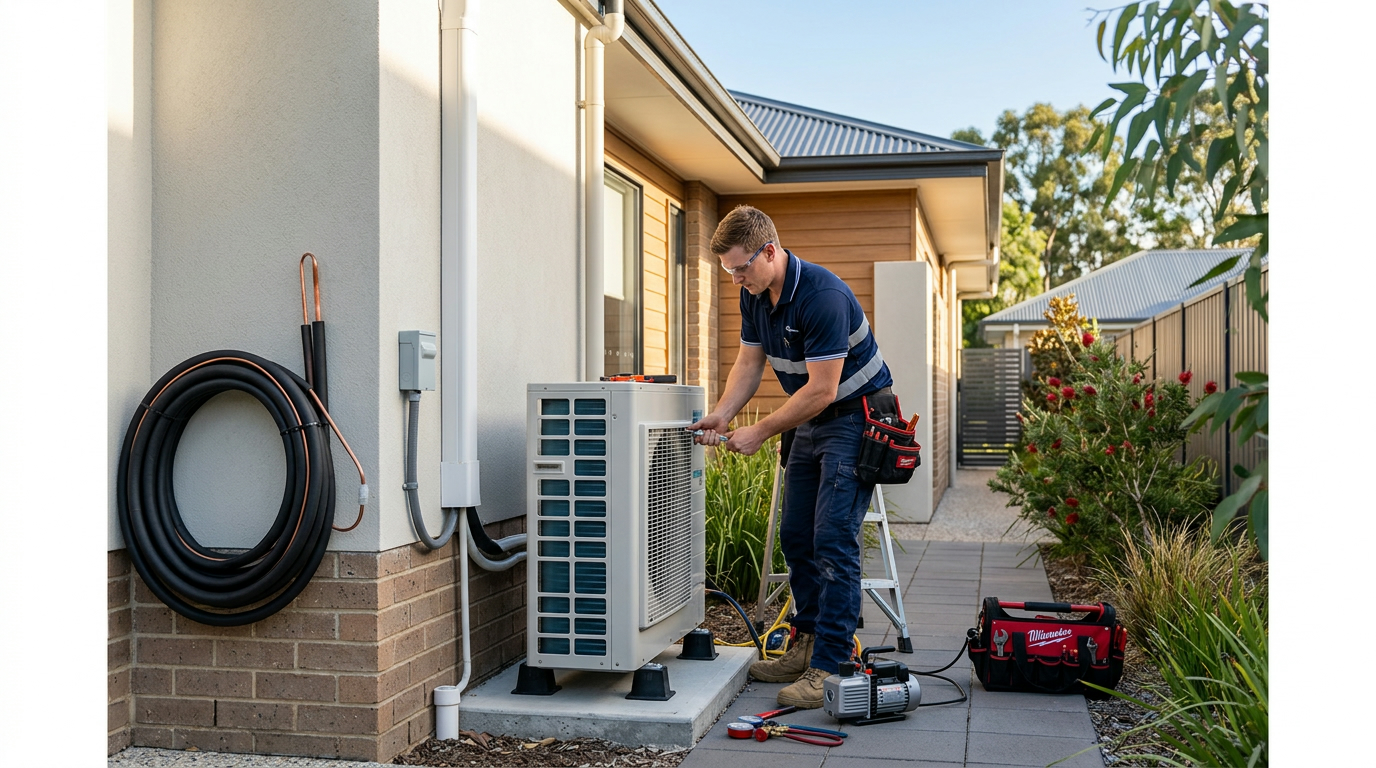
What Does Air Conditioner Unit Installation Actually Involve?
Most homeowners have no idea what to expect on air conditioner unit installation day, and that uncertainty is completely understandable. The process is more involved than a standard appliance delivery, but it follows a clear sequence every time: site assessment, mounting and pipework, electrical connection, and final commissioning. This guide walks through each phase so you know exactly what your installer will be doing and why.
The process looks quite different depending on whether you are getting a split system or a ducted system installed. A split system job can be done in half a day. A ducted installation can take up to three days. In both cases, a licensed refrigeration mechanic and electrician handle all the technical work. Your job is simply to be available and know what to expect.
Key takeaways
- Air conditioner unit installation involves site assessment, mounting, pipework, electrical connection and commissioning.
- Split systems take three to five hours, while ducted systems require one to three days.
- Licensed refrigeration mechanics and electricians must perform all technical work under Australian law.
Split System vs Ducted: How System Type Shapes the Installation
The type of system you have chosen is the single biggest factor in how complex your installation will be and how long the crew will be on-site. Split system air conditioners are a straightforward two-unit job that most installers can complete in a single morning. Ducted air conditioners involve ceiling cavities, ductwork runs, zone controllers and a much larger refrigerant circuit, which means a significantly bigger job from start to finish. Portable and window units sit in a different category entirely and require no trade installation at all.
The table below gives you a quick comparison so you can self-identify which category applies to your situation before reading further.
| Factor | Split System | Ducted System |
|---|---|---|
| Number of indoor units | One wall-mounted head unit | One concealed air handler (serves multiple rooms) |
| Ductwork required | No | Yes, runs through ceiling cavity |
| Zoning controls | No (single zone) | Yes, motorised dampers and zone controller |
| Typical install time | Three to five hours | One to three days |
| Best suited to | Single rooms or open-plan living areas | Whole-home or multi-room climate control |
| Ideal planning window | Any time, minimal disruption | During a build or renovation where possible |
Split System Installation at a Glance
A split system consists of two units: an indoor wall-mounted head unit that delivers conditioned air into the room, and an outdoor compressor/condenser that sits on a bracket or concrete pad outside. The two units are connected by a refrigerant line set, a drain line and electrical cabling that pass through a small core hole in the wall. For a single split system in a standard residential room, most installers complete the full job in three to five hours.
The Daikin 2.5kW Inverter Split System Lite FTXF25WVMA (from $989) is a good example of an entry-level unit that a homeowner might be getting installed in a bedroom or small study. It is a compact, straightforward unit to mount and commission, which keeps labour time at the lower end of that three-to-five-hour range. Larger or higher-capacity models take a little longer due to heavier outdoor units and larger line sets, but the process remains the same.
Ducted System Installation at a Glance
A ducted system hides almost everything above the ceiling. The air handler sits in the ceiling cavity and connects to a network of insulated ducts that run to diffusers (grilles) in each room or zone. A zone controller on the wall lets you independently manage which areas are being cooled or heated. Because the installer needs to work through the ceiling cavity, cut diffuser openings and run electrical cabling to each zone, the job typically takes one to three days depending on the size of the home.
The Daikin 10kW Inverter Ducted Air Conditioner FDYAN100 (from $4,017) is a popular mid-range ducted option suited to medium-sized homes. A system like this will condition multiple rooms simultaneously and is best planned during a build or renovation, when the ceiling cavity is accessible and other trades are already on-site. Retrofitting ducted into an existing home is possible but adds complexity and cost to the installation.
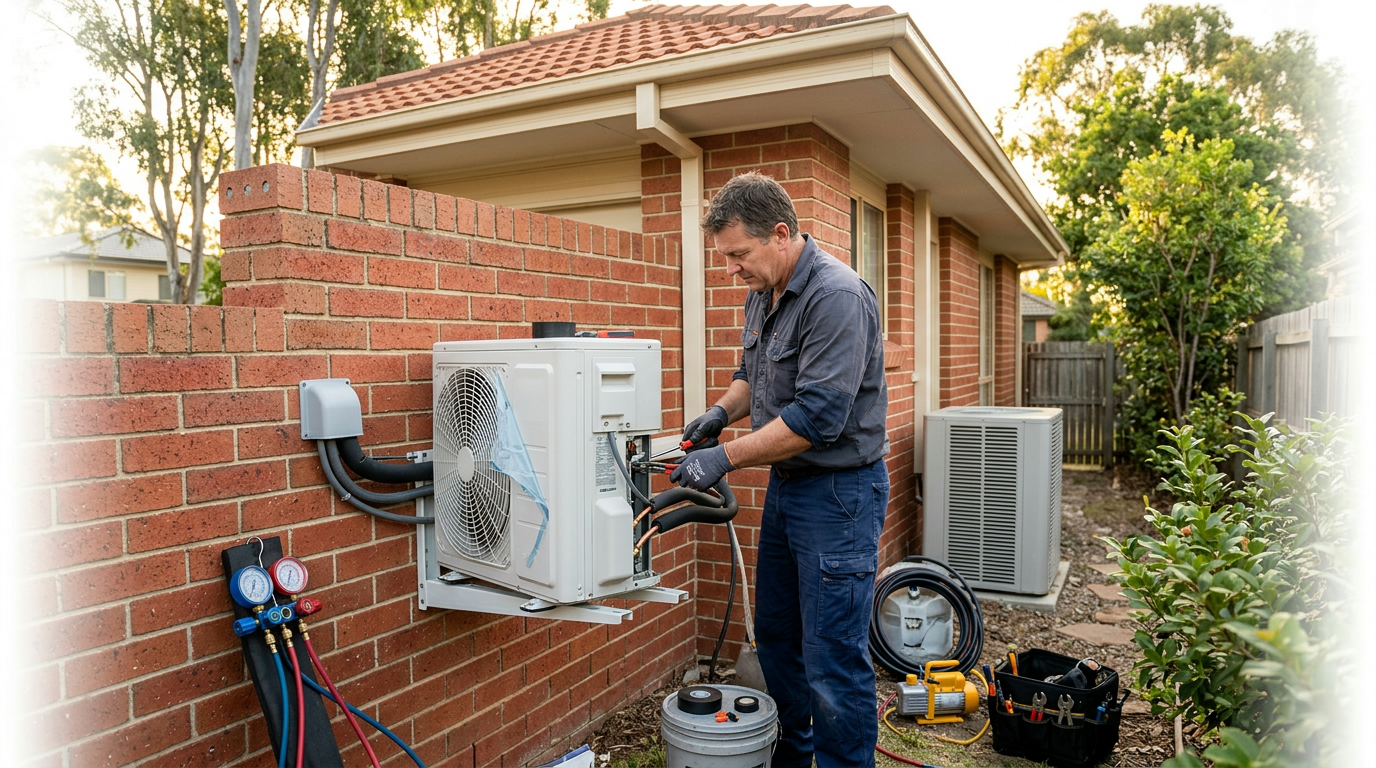
The Air Conditioner Unit Installation Process: Step by Step
A standard air conditioner unit installation follows seven distinct steps, from the initial site check through to the final test run. Every residential installation in Australia must include a licensed refrigeration mechanic for refrigerant handling and a licensed electrician for the switchboard and circuit work. The sequence below applies to a split system, though ducted installations follow the same core steps with additional ductwork phases in between.
- Pre-installation site assessment. Before any drilling or mounting begins, the installer walks through the property to confirm wall structure, ceiling cavity access, electrical switchboard capacity and the best placement for both the indoor and outdoor units. This step determines whether any additional work, such as a switchboard upgrade, is needed before the job can proceed.
- Mounting the indoor unit. A steel bracket is fixed to the wall (or ceiling, for cassette-style units) at the agreed position. The installer drills a core hole through the wall to route the refrigerant lines, drain line and electrical cabling. The indoor unit is then hung on the bracket and levelled.
- Installing the outdoor unit. The outdoor compressor is placed on a concrete pad or a purpose-built wall bracket, positioned to meet manufacturer clearance requirements on all sides. Adequate airflow around the outdoor unit is critical to efficiency and longevity, so placement is not simply a matter of convenience.
- Running the refrigerant line set and drain line. Copper refrigerant pipes are wrapped in insulation and run between the indoor and outdoor units, concealed in a conduit or trunking where possible. The drain line is routed to a suitable discharge point, typically outside or to a drain.
- Electrical connection. A licensed electrician runs a dedicated circuit from the switchboard to the outdoor unit. Under Australian law, all refrigerant handling must be performed by a technician holding an ARCtick licence. This step and the one that follows cannot legally be carried out by an unlicensed person.
- Vacuuming and pressure testing the refrigerant lines. Before any refrigerant gas is released into the system, the installer uses a vacuum pump to remove all moisture and air from the line set, then pressure-tests the circuit to confirm there are no leaks. Skipping this step is a common cause of premature system failure.
- Commissioning and test run. With the system fully connected, the installer powers it up and checks airflow, supply and return temperatures, and all operating modes. Wi-Fi controls and remote settings are configured, and the installer walks the homeowner through basic operation before signing off on the job.
Steps five and six must be performed by a licensed refrigerant handling technician under Australian law. If a quote does not mention ARCtick licensing, ask about it directly before booking.
How Long Does Air Conditioner Unit Installation Take?
For most homeowners, a split system installation takes three to five hours from the installer arriving to the final test run. Ducted systems are a much bigger commitment, often running across one to three full days. Knowing the expected timeframe upfront lets you plan your day and arrange access to the property without any surprises.
| System Type | Typical Install Time |
|---|---|
| Single split system | Three to five hours |
| Multi-split (two to three indoor units) | Five to eight hours |
| Ducted system | One to three days |
Several factors can push a job beyond the standard estimate. Difficult roof cavity access, long refrigerant line runs on multi-storey homes and switchboard upgrades are the most common causes of delays. If the switchboard needs a new circuit breaker or a capacity upgrade, an electrician may need to return on a separate day, which can add time to an otherwise straightforward job.
The Daikin 5kW Inverter Split System Lite FTXF50WVMA (from $1,589) is a popular choice for living rooms and open-plan areas, and a unit of this size typically sits at the upper end of the three-to-five-hour window due to the heavier outdoor unit and slightly larger line set. For Daikin split systems across the full capacity range, installation complexity scales gradually rather than jumping dramatically between sizes.
A reputable installer will give you a firm time estimate at the quote stage, not a vague range. If the quote does not include a time commitment, ask for one. It is a reasonable question and a good indicator of how organised the installer is before they arrive on-site.
What to Expect on Installation Day: A Homeowner Checklist
On installation day, your main job is to be home, have the unit on-site and ready, and give the installer clear access to both the indoor and outdoor locations. A well-prepared homeowner can shave 30 minutes off a job simply by having everything ready before the crew arrives. Here is what to do before they knock on the door and what to expect once they get started.
Before the installer arrives:
- Clear a one-metre working space around the planned indoor unit location and remove any wall art or furniture that could be damaged by drilling dust.
- Clear the outdoor unit location of garden furniture, pot plants or stored items so the crew can work freely.
- Confirm the unit has been delivered and is physically on-site. Installers cannot complete the job without the equipment present.
- Ensure the switchboard is accessible and that you know where the main isolator switch is located.
- Let the installer know about any wall cavities, pipes or cables you are aware of near the planned drill location.
During the installation:
- The installer will lay drop sheets to protect your floors and cover nearby furniture before drilling begins.
- A core hole will be drilled through the exterior wall to route the refrigerant lines, drain line and cabling. Expect noise for a short period during this step.
- The crew will tidy the work area before leaving, removing offcuts, packaging and any debris from the drill.
The Daikin 5kW Inverter Split System Lite FTXF50WVMA (from $1,589) is one of the most commonly installed units in Australian living rooms and open-plan areas. A unit of this size is a straightforward single-day job for an experienced crew.
Before the installer leaves, make sure you receive two things. First, a compliance certificate, known as a Form 1 or equivalent in your state, confirming the refrigerant and electrical work meets Australian standards. Second, a brief walkthrough covering how to use the remote control and how often to clean the filter, which for most split systems is every two to four weeks during heavy use. Do not let the crew leave without both.
Ready to Get Your New Air Conditioner Installed?
Air conditioner unit installation is a straightforward, single-day process for most Australian homes, provided you choose the right unit and book a licensed professional. A split system can be fully operational in three to five hours. A ducted system takes longer but follows the same logical sequence from site assessment through to commissioning. The process is well-established and, with a reputable installer, largely stress-free.
The first step is choosing the right system for your space and budget. Once you have the unit sorted, booking a licensed installer and preparing your home for the day is all that stands between you and a comfortable home. Browse our full range of split systems to find the right capacity and brand for your needs, with options from entry-level bedroom units through to high-capacity open-plan models.
Frequently Asked Questions
How long does air conditioner installation take?
A single split system installation takes three to five hours from start to finish. Multi-split systems with two or three indoor units typically take five to eight hours. Ducted systems are a much larger job and usually run across one to three full days depending on the size of the home and ceiling cavity access.
Do I need a licensed installer to fit an air conditioner in Australia?
Yes. Australian law requires a licensed refrigeration mechanic holding an ARCtick licence to handle refrigerant, and a licensed electrician to connect the dedicated circuit at the switchboard. These are not optional requirements. Any installer who cannot provide evidence of both licences should not be booked for the job.
What is included in an air conditioner installation?
A standard installation covers mounting the indoor and outdoor units, drilling the core hole, running the refrigerant line set and drain line, making the electrical connection, vacuuming and pressure testing the refrigerant circuit, and a final commissioning test run. You should also receive a compliance certificate before the installer leaves.
How much does it cost to install a split system air conditioner?
Installation costs vary by state, installer and job complexity, but most single split system installations in Australia fall between $600 and $1,200 in labour. Difficult access, long line set runs or a switchboard upgrade will push costs higher. Always get at least two itemised quotes before committing to a split system installation.
Can I install an air conditioner myself?
You can mount the indoor bracket and position the outdoor unit yourself, but you cannot legally connect the refrigerant lines or the electrical circuit without the appropriate licences. Attempting unlicensed refrigerant work in Australia carries significant fines and will void your manufacturer warranty. The safe and legal approach is to use a fully licensed installer for all trade work.
Need expert advice?
Our team can help you choose the right air conditioning system for your space.