
Why Is My Air Conditioning Compressor Noisy? Causes and Fixes
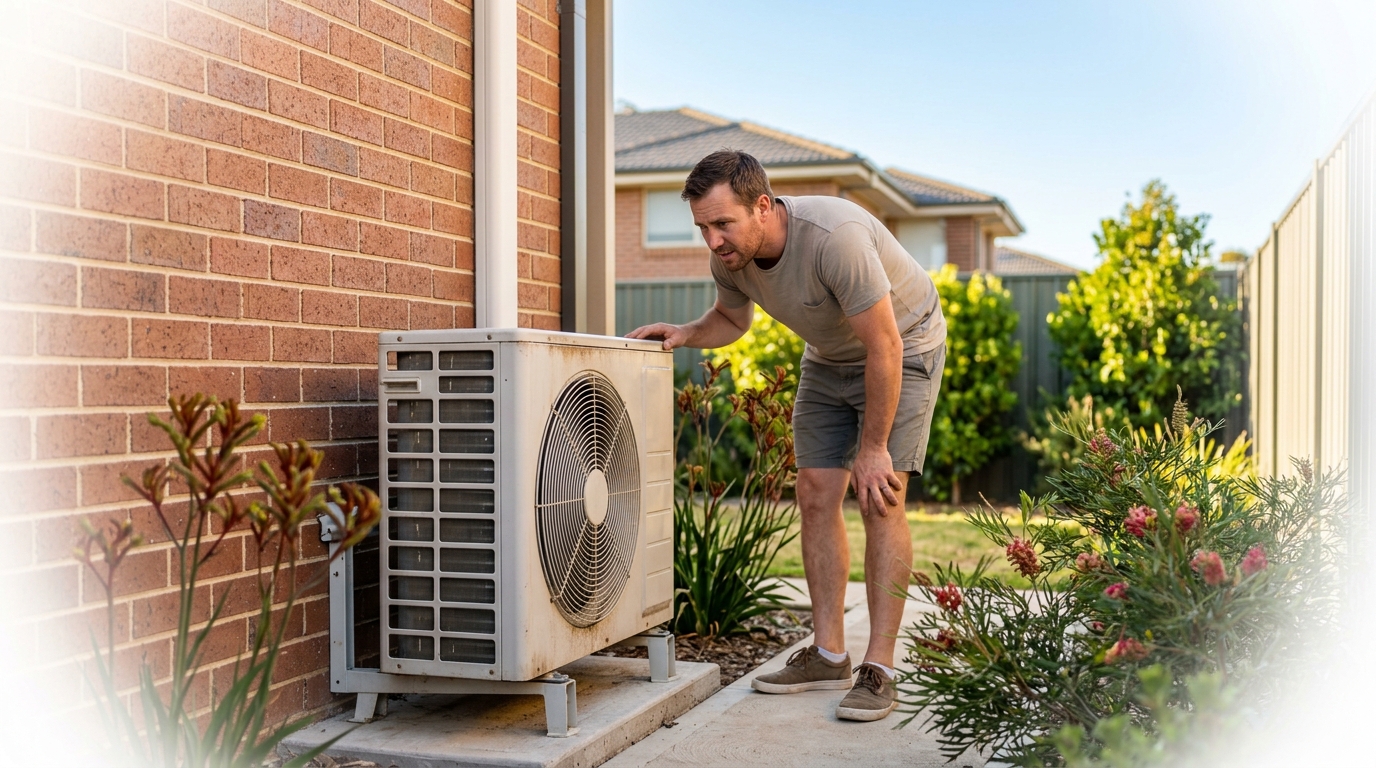
What Is That Noise Coming From Your Air Conditioning Compressor?
A noisy air conditioning compressor is one of the most common service complaints across Australia, and for good reason. That grinding, rattling or hissing sound coming from your outdoor unit is hard to ignore, especially on a 38-degree summer afternoon when you need your system running at full tilt. Air conditioning compressor noise can range from a minor annoyance to a warning sign of serious mechanical failure.
The good news is that many causes are diagnosable at home before you pick up the phone to a technician. This article covers the five most common compressor noise types, what each one typically signals, how urgent the problem is and what you can do about it.
Key takeaways
- Air conditioning compressor noise ranges from harmless rattles to urgent warnings of mechanical failure.
- Identifying the specific sound helps you assess urgency and decide between DIY fixes and professional help.
- Many causes are diagnosable at home through visual inspection and basic troubleshooting.
- Some noises require immediate professional attention to prevent costly damage.
The Five Most Common Types of Air Conditioning Compressor Noise
Not all compressor noises mean the same thing. Identifying the specific sound your unit is making is the fastest way to narrow down the cause, assess the urgency and decide whether this is a DIY fix or a job for a licensed technician.
Banging or Clanking
A banging or clanking noise from your outdoor unit is one of the most serious sounds your air conditioner can make. It almost always points to a loose or broken internal component, such as a piston, connecting rod or fan blade that has come free and is striking the compressor housing during operation. The impact can cause rapid, cascading damage to surrounding components.
This is a high-urgency situation. Switch the unit off immediately and do not restart it until a qualified technician has inspected the system. Running the unit with a broken internal component can turn a repairable fault into a full compressor replacement.
Buzzing or Humming
Buzzing is typically electrical in origin. Common culprits include a failing run capacitor, a faulty contactor or loose wiring connections inside the outdoor unit. A low, steady hum during operation is normal for inverter-driven compressors and is nothing to worry about. A loud, persistent buzz that is new or getting worse is a different matter entirely.
Treat a loud buzz as medium-to-high urgency. Electrical faults left unattended can escalate into compressor failure or, in rare cases, a fire risk. A technician can test the capacitor and contactor with a multimeter in a single visit, making this a relatively straightforward diagnosis.
Hissing or Screeching
Hissing from the outdoor unit often indicates a refrigerant leak or excess pressure building within the refrigerant circuit. You may also notice reduced cooling performance or ice forming on the indoor unit alongside the sound. Screeching, by contrast, typically points to a failing compressor motor bearing that is running dry or seizing under load.
Both sounds are high-urgency and require a licensed refrigeration technician. In Australia, handling refrigerants is illegal without an ARCtick licence under the Ozone Protection and Synthetic Greenhouse Gas Management Act. Do not attempt to top up refrigerant yourself. Call a professional and keep the unit switched off until they arrive.
Rattling or Vibrating
Rattling is the most common compressor noise and, reassuringly, often the least serious. Typical causes include loose screws on the outdoor unit casing, unsecured mounting brackets, debris such as leaves or small sticks that have fallen inside the unit and worn rubber isolation feet that no longer absorb vibration effectively.
This is generally a low-urgency noise. Start by switching the unit off and visually inspecting the outdoor unit for obvious debris. Tighten any loose screws on the casing panels. If the rubber feet under the unit are cracked or flattened, replacing them is a simple and inexpensive fix. If the rattle persists after these checks, have a technician take a look.
Clicking or Ticking
A single click when your air conditioner starts up or shuts down is completely normal. It is simply the sound of electrical relays engaging and disengaging as the system cycles. Repetitive clicking during normal operation is a different story. This pattern can indicate a relay fault, a control board issue or a failing capacitor that is struggling to start the compressor motor on each cycle.
Repetitive clicking sits at medium urgency. The unit may continue to operate for a period, but the underlying fault will typically worsen over time. Have a technician inspect the control board and starting components before the system fails entirely, ideally before the peak of summer when service bookings fill up fast.
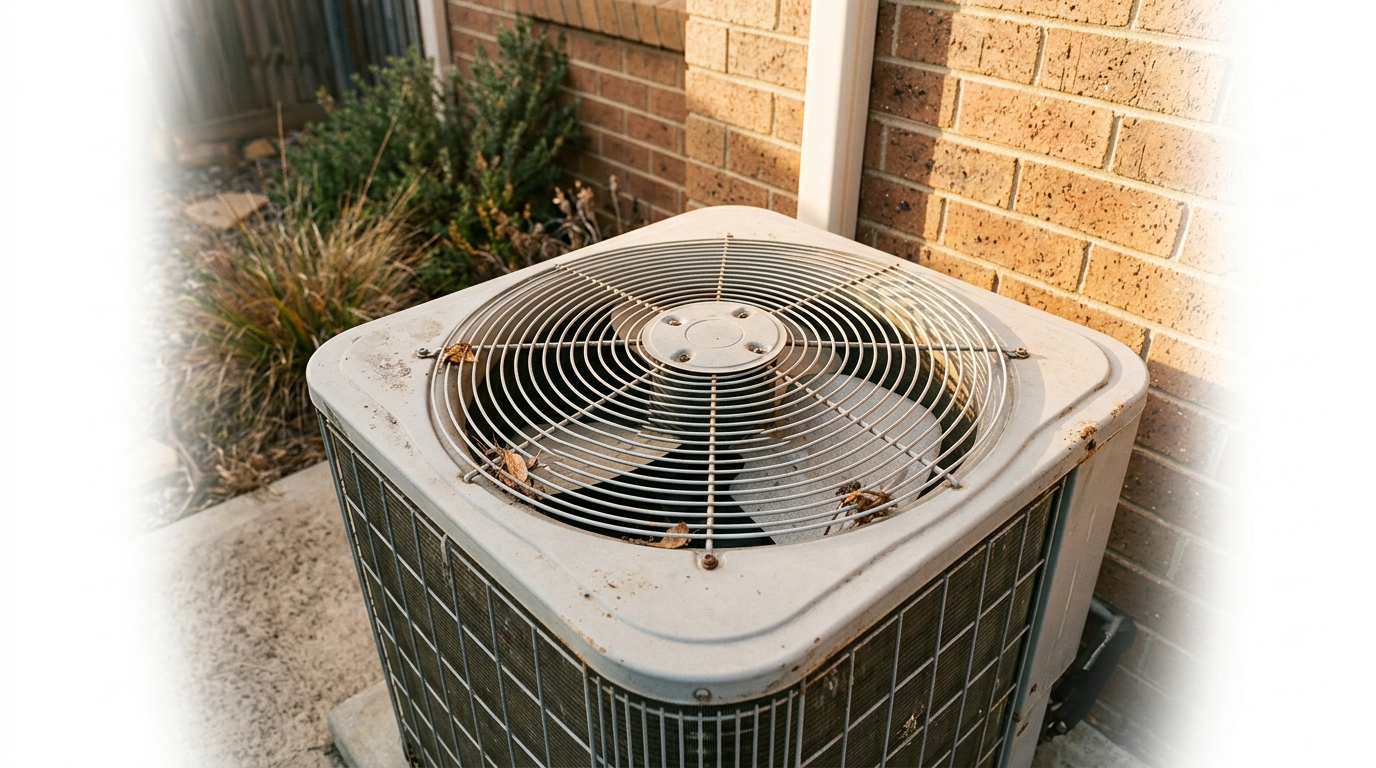
What Causes Air Conditioning Compressor Noise? The Root Issues
Air conditioning compressor noise has six main root causes: age and wear on internal components, poor or incorrect installation, incorrect refrigerant charge, electrical component failure, debris accumulation inside the outdoor unit and a unit that is the wrong size for the space it is cooling. Understanding which cause applies to your situation points you directly toward the right fix, whether that is a quick DIY clean-up or a call to a licensed technician.
The Six Root Causes at a Glance
- Age and internal wear: Pistons, bearings and motor windings degrade over time, especially in units that have run through 10 or more Australian summers.
- Poor or incorrect installation: A unit that is not level, lacks adequate clearance or sits on worn isolation feet will vibrate and rattle far more than it should.
- Low or overcharged refrigerant: Both conditions force the compressor to work harder than its design allows, generating excess noise and heat.
- Electrical component failure: A failing capacitor or worn contactor causes buzzing, clicking and hard-start behaviour that puts stress on the compressor motor.
- Debris accumulation: Leaves, sticks, seed pods and dirt inside the outdoor unit can contact the fan blades or restrict airflow, producing rattling and grinding sounds.
- Wrong unit size: An undersized unit runs continuously at full load trying to keep up, while an oversized unit short-cycles repeatedly. Both patterns accelerate wear and increase noise over time.
Why Installation Quality Makes Such a Difference
Of these six causes, poor installation is the one most often overlooked by homeowners. A compressor that is not sitting level on a solid pad or wall bracket will transmit vibration through the structure of the house, amplifying what should be a quiet hum into an intrusive rattle. Inadequate clearance around the outdoor unit restricts airflow, forcing the compressor to run hotter and louder.
Modern inverter split systems are engineered to run at impressively low outdoor noise levels, but only when they are installed correctly. The Daikin Cora 2.5kW (from $997) and the Mitsubishi Electric AP Series 2.5kW ($1,122) are both good examples of units with low outdoor sound ratings that can be undermined entirely by a sloppy installation. If your relatively new inverter unit is noisier than you expected, installation quality is the first thing worth investigating.
If you are considering an upgrade to a quieter system, browse Daikin split systems or Mitsubishi Electric split systems to compare current models and outdoor noise ratings.
How to Troubleshoot Air Conditioning Compressor Noise: What You Can Do Yourself
Before calling a technician, there are several safe checks a homeowner can carry out to identify or even resolve the source of compressor noise. These steps cover the causes that do not require tools, refrigerant handling or electrical work. Work through them in order and note what you find at each stage.
- Switch the unit off at the isolator and wait for it to fully stop. Do not attempt any inspection while the unit is running. Locate the isolator switch on the wall beside the outdoor unit and turn it off. Wait at least two minutes for all moving parts to come to a complete stop.
- Visually inspect the outdoor unit for debris. Look through the grille for leaves, sticks, seed pods or any other material that may have fallen inside. Use a gloved hand or a soft brush to remove anything you can reach safely. Do not insert tools into the unit.
- Check and tighten any visible loose screws or panels on the outdoor casing. Work around the perimeter of the unit and hand-tighten any screws that have vibrated loose. A rattling panel is one of the easiest noise sources to fix yourself.
- Inspect the rubber isolation feet or mounting brackets for wear. The rubber feet under a ground-mounted unit absorb vibration. If they are cracked, flattened or missing, the compressor noise transfers directly into the concrete pad and surrounding structure. Replacement feet are inexpensive and widely available.
- Check that the unit is sitting level on its pad or bracket. Use a spirit level if you have one. A unit that has shifted out of level, particularly after heavy rain or ground movement, will vibrate unevenly and produce rattling or humming that was not there before.
- Switch the unit back on and listen carefully. With the checks above completed, restore power at the isolator and let the unit run for a few minutes. Refer back to the noise descriptions in the previous section and identify which type most closely matches what you are hearing now.
- If the noise persists or matches a high-urgency type, turn the unit off and contact a licensed technician. Banging, hissing and screeching all require professional diagnosis. Do not continue running the unit in the hope the noise will resolve itself.
A note on what you cannot do yourself: In Australia, all refrigerant handling must be performed by a technician holding an ARCtick licence. Electrical work inside the outdoor unit, including capacitor and contactor replacement, must also be carried out by a licensed electrician or refrigeration mechanic. Attempting either of these tasks yourself is illegal and potentially dangerous.
If your unit is older and the noise points to internal compressor wear or repeated electrical faults, replacement is often more cost-effective than ongoing repairs. Browse our full range of split system air conditioners to compare modern, quieter options across all major brands and capacity sizes.
When to Call a Professional and When to Consider a Replacement
Some air conditioning compressor noises require a licensed technician immediately, while others point toward a broader question: is this unit worth repairing at all? As a general rule, refrigerant hissing, internal banging and persistent electrical buzzing are all stop-the-unit-now situations that need a qualified refrigeration mechanic before you run the system again. The risk of further damage, or in the case of electrical faults, a safety hazard, is too high to ignore.
Once a technician has diagnosed the fault, you will face the repair-or-replace decision. Use this framework to guide your thinking:
| Situation | Recommended Action |
|---|---|
| Unit is under 8 years old, fault is minor (capacitor, contactor, isolation feet) | Repair. Cost is low relative to the remaining lifespan. |
| Unit is 8 to 10 years old, repair cost is under 30% of a new unit's price | Repair is reasonable, but factor in energy efficiency gains from a new unit. |
| Unit is over 10 years old, repair cost exceeds 50% of a new unit's price | Replace. You are likely paying to extend the life of an inefficient system by only a few years. |
| Compressor itself has failed (seized motor, broken piston) | Replace in almost all cases. Compressor replacement alone often costs more than a new entry-level unit. |
One factor that often tips the decision toward replacement is how much quieter modern inverter systems are compared to older fixed-speed units. A quality inverter split system running at part load is genuinely unobtrusive. The Fujitsu Lifestyle Range 2.5kW (from $1,018) is a good example: it runs at low outdoor noise levels, carries a strong energy star rating and suits most standard Australian bedrooms and living areas. If your current unit is over a decade old and has been noisy for years, a replacement will likely be quieter, cheaper to run and more reliable from day one.
Browse Fujitsu split systems to compare the full Lifestyle Range lineup alongside other Fujitsu models and current pricing.
Frequently Asked Questions About Air Conditioning Compressor Noise
Why is my air conditioner compressor so loud all of a sudden?
A sudden increase in compressor noise usually points to a specific mechanical or electrical event rather than gradual wear. Common causes include a loose component that has finally shifted, a capacitor beginning to fail, debris that has entered the outdoor unit or a refrigerant issue that has developed quickly. Switch the unit off, run through the basic visual checks outlined above, and call a technician if the noise matches a high-urgency type such as banging, hissing or screeching.
Is it normal for an air conditioner compressor to make noise?
A low hum or gentle whirr during operation is completely normal for any compressor. Inverter-driven units are particularly quiet because they modulate their speed rather than switching on and off at full power. What is not normal is any new noise, a noise that is getting louder over time, or sounds like banging, hissing, screeching or repetitive clicking.
Can I run my air conditioner if the compressor is making a banging noise?
No. A banging noise almost always means a loose or broken internal component is striking the compressor housing during operation. Continuing to run the unit risks turning a repairable fault into a full compressor failure, which is a far more expensive outcome. Switch the unit off at the isolator and contact a licensed technician before restarting it.
How much does it cost to fix a noisy air conditioning compressor in Australia?
Repair costs vary widely depending on the fault. Replacing rubber isolation feet or tightening loose panels may cost little more than a standard service call, typically $100 to $200. Capacitor or contactor replacement usually falls in the $200 to $400 range including labour. A full compressor replacement can run from $800 to over $1,500 depending on the unit size and brand, which is why replacement is often the smarter choice for older systems.
Why does my air conditioner make a hissing noise when it turns off?
A brief hiss as the unit shuts down is often just refrigerant pressure equalising across the system, which is normal. A continuous hiss during operation, or a hiss accompanied by reduced cooling performance, is more likely to indicate a refrigerant leak. Refrigerant handling requires an ARCtick-licensed technician in Australia, so do not attempt to investigate or top up the refrigerant yourself.
How long should an air conditioning compressor last in Australia?
A well-maintained compressor in an Australian climate typically lasts 10 to 15 years, though units in coastal areas or those that run heavily through long summers may show wear earlier. Regular servicing, correct installation and keeping the outdoor unit clear of debris all extend compressor life. Units that have been run with an incorrect refrigerant charge or poor airflow tend to fail significantly sooner.
Still Hearing Noise? Time to Act
Different compressor noises point to very different problems. A rattle might be a loose screw you can fix in five minutes, while a hiss or bang could mean your system is one more cycle away from a costly failure. The key takeaway is this: identify the noise type, match it to the cause and act at the right level of urgency rather than hoping it resolves on its own.
Ignoring compressor noise almost always leads to a bigger repair bill. A failing capacitor left unattended becomes a seized compressor. A refrigerant leak left running becomes a burnt-out motor. The longer you wait, the more expensive the outcome.
If your unit is over 10 years old and the noise keeps coming back, replacement is likely the smarter investment. Browse our full range of split system air conditioners to find a quieter, more energy-efficient model that suits your home and budget.
Need expert advice?
Our team can help you choose the right air conditioning system for your space.