
Air Duct Cleaning: What It Is, When You Need It and What to Expect
What Is Air Duct Cleaning and Why Does It Matter?
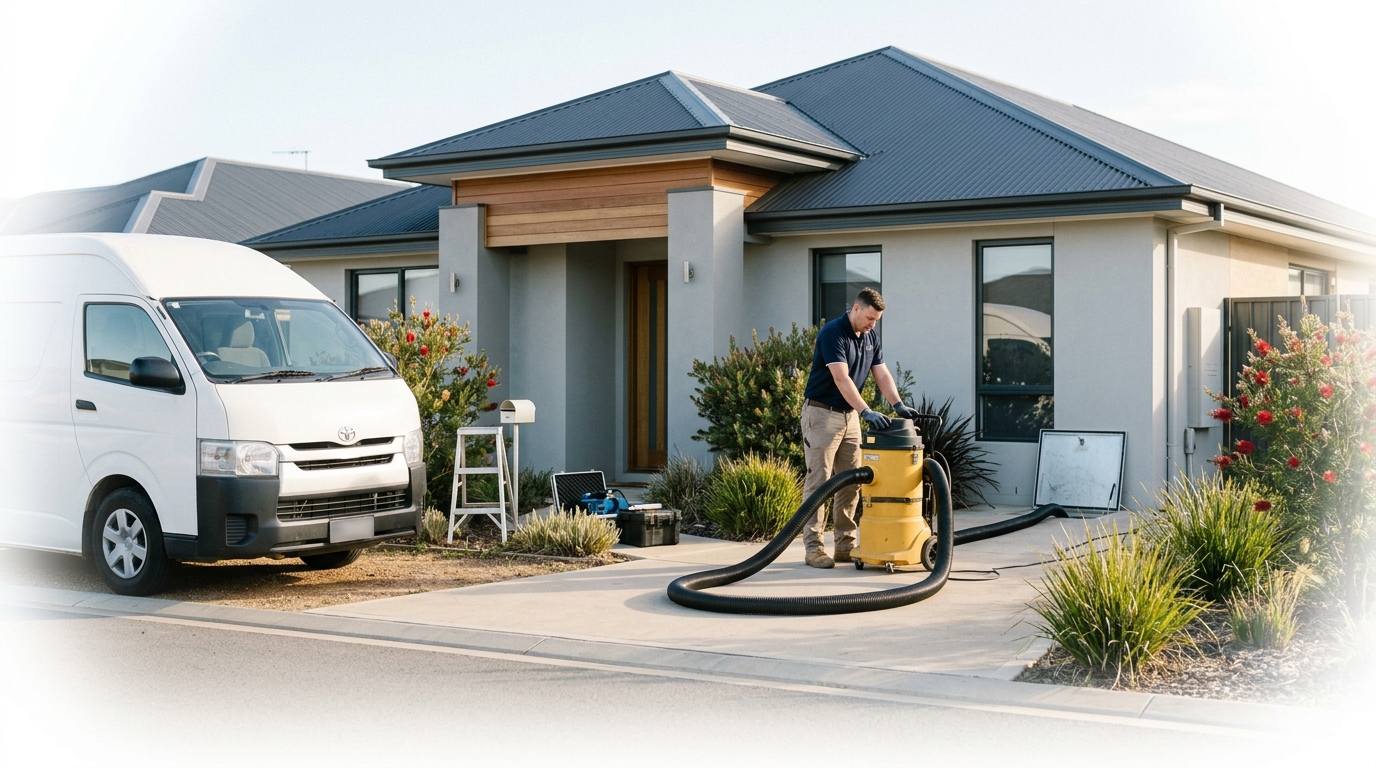
Air duct cleaning is the professional removal of dust, debris, mould spores, allergens and other contaminants that build up inside the ductwork of a ducted air conditioners system. Your ducts are the network of channels hidden inside your walls, ceiling and floor cavities that carry conditioned air from the unit to every room in the house. Over time, those channels collect a surprising amount of grime, and that grime gets pushed into your living spaces every time the system runs.
A clean duct system does two things well: it keeps the air your family breathes free of contaminants, and it lets your air conditioner move air efficiently without fighting through layers of built-up debris. A dirty system works harder, costs more to run and can develop problems that shorten its lifespan.
This article covers the warning signs that cleaning is overdue, exactly what the cleaning process involves, whether DIY is a realistic option and what you should expect to pay in Australia.
Key takeaways
- Air duct cleaning removes contaminants from ducted systems to improve air quality and efficiency.
- Warning signs include visible dust at vents, musty odours and uneven airflow between rooms.
- Professional cleaning is recommended every three to five years for most Australian homes.
- Costs typically range from $300 to $1,000 depending on home size and duct complexity.
Signs Your Air Ducts Need Cleaning
Most homeowners have no way to see inside their ductwork, so the system can become heavily contaminated before anyone notices. These are the clearest warning signs that a professional clean is overdue.
- Visible dust or debris blowing from vents. If you can see dust puffing out of a vent grille when the system starts up, there is already a significant build-up inside the ducts. That dust is landing on your furniture, your floors and your lungs.
- Musty or stale odours when the system runs. A musty smell is one of the most reliable indicators of mould or mildew growth inside the ductwork. Mould thrives in the dark, slightly humid environment of a duct cavity, and the smell will spread through every room the system serves.
- Increased allergy or asthma symptoms among household members. If family members are sneezing more, waking with congestion or finding their asthma harder to manage, contaminated ducts are a common culprit. Dust mites, pet dander, pollen and mould spores all accumulate in ductwork and recirculate continuously.
- Uneven airflow between rooms. Rooms that feel noticeably warmer or cooler than the rest of the house, despite the system running normally, can indicate blockages or heavy debris build-up restricting airflow in specific duct runs.
- Visible mould growth around vent covers. Mould on or around a vent grille is a strong sign that mould has taken hold inside the duct itself. This needs professional attention promptly, as mould spreads quickly in ductwork and is difficult to remove without the right equipment.
- A recent renovation or construction project. Plasterboard dust, insulation fibres and timber particles generated during a renovation are extremely fine and get drawn into the return air vents. Even a modest bathroom renovation can leave a significant amount of debris inside the duct system.
- The system has not been cleaned in more than three to five years. Even without any of the above symptoms, a ducted system that has been running for several years without a clean will have accumulated enough dust and debris to affect both air quality and efficiency. Regular cleaning is part of responsible system maintenance, not just a response to a problem.
If two or more of these signs apply to your home, it is worth booking a professional inspection. A technician can use a camera to assess the inside of the ducts before committing to a full clean.
How the Air Duct Cleaning Process Works
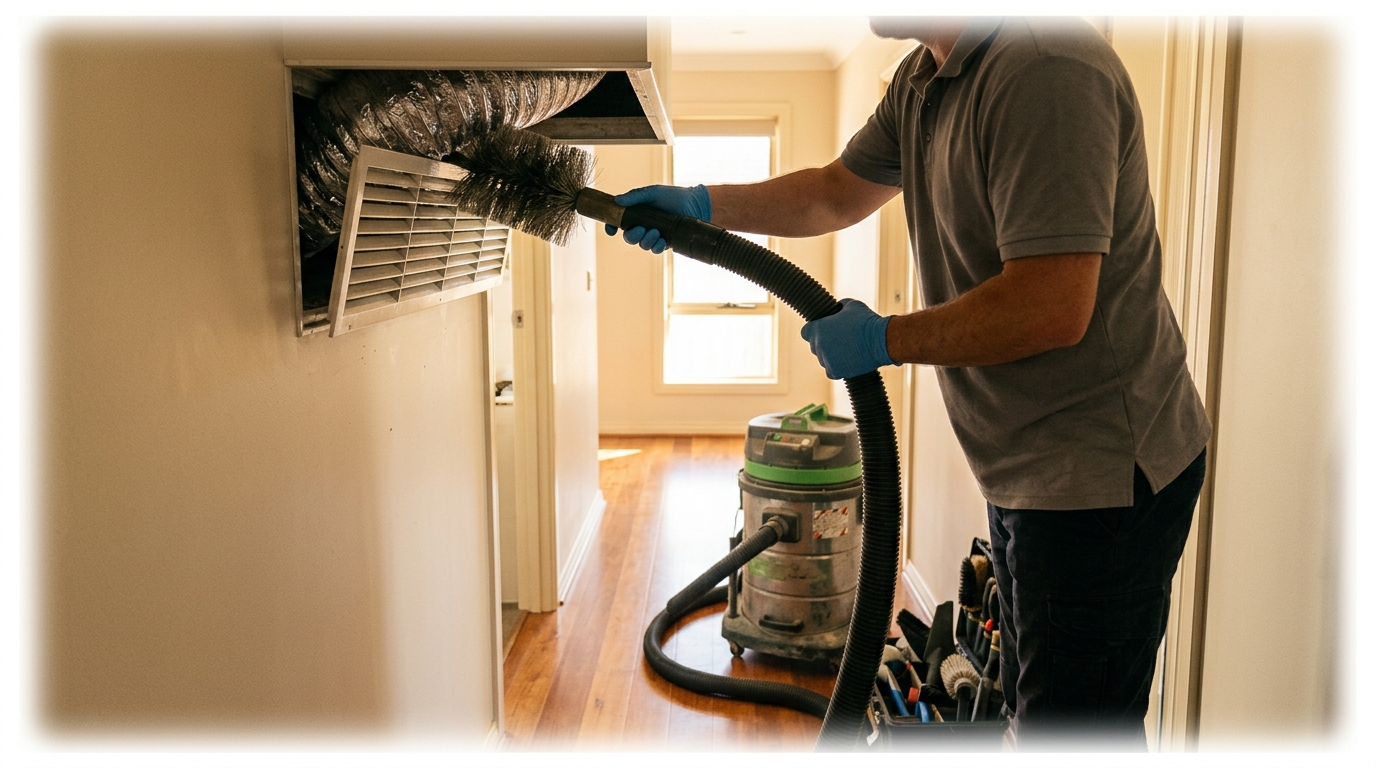
A professional air duct cleaning service follows a systematic process that takes two to four hours in a typical Australian home. Reputable technicians follow NADCA (National Air Duct Cleaners Association) standards, which set minimum requirements for equipment, technique and the scope of work. Here is what to expect from start to finish.
- Initial inspection of the ductwork and system. The technician inspects the duct network before any cleaning begins, often using a small camera to assess the level of contamination, identify any damage or blockages and check for mould. This inspection determines the scope of work and whether any repairs are needed first.
- Sealing off vents and registers. All supply and return vents are covered with foam blocks or adhesive covers. This seals the duct system so that when negative pressure is applied, air and dislodged debris can only travel in one direction toward the vacuum collection unit.
- Connecting a high-powered vacuum to the main trunk line. A truck-mounted or portable industrial vacuum is connected directly to the main duct trunk. This creates the negative pressure that pulls loosened debris through the system and into a sealed collection unit outside the home.
- Agitating duct walls to dislodge debris. With the vacuum running, the technician feeds rotary brushes or compressed air whips through each duct run. These tools scrub the duct walls and break up compacted dust, dander and debris so it can be drawn into the vacuum.
- Cleaning supply and return ducts, grilles, diffusers and the air handler. Every accessible component is addressed, including the supply ducts that push air into rooms, the return ducts that draw air back to the unit, all grilles and diffusers, and the air handler unit itself including the coil, drain pan and blower.
- Optional antimicrobial treatment. If mould or bacterial growth is found, the technician may apply an EPA-registered antimicrobial solution to the duct interior after cleaning. This step is not always necessary and should only be recommended when contamination is confirmed, not as a routine upsell.
- Final inspection and system test. The technician removes all vent covers, restores the system to normal operation and runs it to confirm airflow is even and unrestricted. A camera re-inspection of key duct sections confirms the clean is complete.
DIY Duct Cleaning vs Hiring a Professional
Homeowners can handle basic duct maintenance themselves, but DIY efforts only ever address surface-level dust. What you can realistically do at home is quite different from what a professional service delivers.
| Task | DIY (homeowner) | Professional technician |
|---|---|---|
| Replacing or cleaning filters | Yes, every one to three months | Included in a full service |
| Wiping vent grilles and covers | Yes, with a damp cloth | Included in a full service |
| Vacuuming the first 20-30cm inside a vent | Yes, with a household vacuum | Full duct length covered |
| Deep cleaning duct walls and trunk lines | No, requires industrial equipment | Yes, with rotary brushes and high-powered vacuum |
| Internal camera inspection | No | Yes |
| Mould treatment inside ducts | No, requires licensed technician | Yes, with antimicrobial treatment |
| Air handler and coil cleaning | No | Yes |
A household vacuum simply cannot generate the negative pressure needed to pull debris from deep inside a duct run. For anything beyond filter replacements and wiping down grilles, a licensed professional is the only realistic option. Attempting to clean deep into ducts without the right equipment can actually dislodge debris and push it further into the system.
How Often Should You Clean Your Air Ducts?
For most Australian homes, professional air duct cleaning is recommended every three to five years. That interval assumes a typical household with no pets, no major renovations and no occupants with respiratory conditions. Several factors can shorten that window considerably, and knowing which ones apply to your home helps you plan maintenance before problems develop.
The following factors all increase the rate at which your ducts accumulate contamination and should prompt more frequent cleaning, closer to every two to three years:
- Pets that shed heavily. Dog and cat hair, along with dander, is drawn into the return air vents continuously. Homes with multiple pets can see significant build-up within 12 to 18 months.
- Household members with allergies or asthma. If anyone in the home has a respiratory condition, the threshold for acceptable contamination is lower. More frequent cleaning reduces the allergen load in circulated air.
- Recent renovations. As covered in the warning signs section, construction dust is extremely fine and infiltrates ductwork quickly. A clean should be scheduled within a few months of any significant building work.
- Dusty or high-pollen environments. Homes in rural areas, near unsealed roads or in regions with high seasonal pollen counts will accumulate external particulates faster than urban homes with sealed windows.
- Older ductwork. Ducts that are 15 or more years old may have deteriorating insulation or small gaps at joints that allow additional debris to enter the system.
Between professional cleans, filter maintenance is the single most effective thing you can do to slow duct contamination. Replacing or cleaning your filters every one to three months significantly reduces the volume of dust that makes it past the filter and into the duct network. Check your system manual for the recommended filter type and interval.
A quality ducted system is a substantial investment. The Daikin 10kW Inverter Ducted Air Conditioner FDYAN100, for example, starts from $4,017, and regular duct maintenance is one of the most straightforward ways to protect that investment and keep the system running at its rated efficiency. If you are considering a new installation, Daikin ducted systems are among the most popular choices in Australia for their reliability and energy efficiency ratings.
Air Duct Cleaning Costs in Australia
Professional air duct cleaning in Australia typically costs between $300 and $1,000 or more, depending on the size of your home and the complexity of the duct network. Melbourne homeowners searching for local pricing can expect to pay within the same ranges as the national figures below, though costs vary between providers and states. Getting two to three quotes before booking is always worthwhile.
| Home Size | Estimated Duct Cleaning Cost (AUD) | Notes |
|---|---|---|
| Small home (up to 3 bedrooms) | $300 – $500 | Basic clean of supply and return ducts, grilles and filters |
| Medium home (3 to 4 bedrooms) | $450 – $700 | Includes return air system and air handler; typical for most Australian homes |
| Large home (5+ bedrooms) | $600 – $1,000+ | Complex ductwork with multiple zones; higher-capacity systems like the Daikin 14kW Inverter Ducted Air Conditioner FDYAN140 (from $5,275) will have longer duct runs that add to the job scope |
These figures cover a standard clean only. Additional charges apply for mould treatment, antimicrobial sanitising or a camera inspection if not included in the base quote. Mould remediation in particular can add $100 to $300 or more to the total, depending on the extent of the growth.
A premium system like the Mitsubishi Electric 10kW Inverter Ducted Air Conditioner PEA-M100HAA, starting from $4,110, is a significant investment. Routine duct cleaning helps maintain its efficiency ratings and keeps you on the right side of warranty requirements. For another leading option in the same class, Mitsubishi Electric ducted systems are worth comparing if you are planning a new installation or upgrade.
Skipping regular maintenance rarely saves money in the long run. Dirty ducts force your system to work harder, which pushes up energy bills and accelerates wear on the motor and coil. A $500 clean every few years is considerably cheaper than a $2,000 coil replacement or a spike in your quarterly electricity costs. Think of duct cleaning as routine servicing, the same way you would approach a car service rather than waiting for something to break.
Keep Your Ducted System Running at Its Best
Air duct cleaning is one of the most overlooked parts of home maintenance, yet it has a direct impact on air quality, energy efficiency and the lifespan of your system. Most Australian homes benefit from a professional clean every three to five years, and the warning signs of dirty ducts are straightforward once you know what to look for. Dust at the vents, musty odours, uneven airflow and worsening allergy symptoms are all signals worth acting on promptly.
Regular cleaning protects your investment, keeps your running costs down and ensures the air circulating through your home is as clean as possible. If your current system is ageing or struggling to perform, it may be time to consider an upgrade alongside your maintenance routine. Browse our full range of ducted air conditioners to compare models, capacities and brands suited to Australian homes of every size.
Frequently Asked Questions
How often should air ducts be cleaned in Australia?
Most Australian homes should have their air ducts professionally cleaned every three to five years. Homes with pets, occupants with allergies or asthma, or recent renovations should aim for every two to three years. Between professional cleans, replacing your filters every one to three months is the most effective way to slow contamination build-up.
How much does air duct cleaning cost in Australia?
Professional air duct cleaning in Australia typically costs between $300 and $1,000 or more, depending on the size of your home and the complexity of the duct network. A standard clean for a medium-sized home generally falls between $450 and $700. Additional charges apply for mould treatment or antimicrobial sanitising if contamination is found during the inspection.
Can I clean my air ducts myself?
Homeowners can replace filters and wipe down vent grilles, but deep duct cleaning requires industrial vacuum equipment and rotary brushes that are not available to the average homeowner. A standard household vacuum cannot generate the negative pressure needed to pull debris from inside a duct run. Attempting to clean deep into ducts without the right tools can push debris further into the system rather than removing it.
What are the signs that air ducts need cleaning?
The clearest signs include visible dust blowing from vents, musty or stale odours when the system runs, uneven airflow between rooms and worsening allergy or asthma symptoms among household members. Visible mould around vent covers on a ducted system is a more urgent warning sign that requires prompt professional attention. If two or more of these signs apply, book a professional inspection before the problem worsens.
Need expert advice?
Our team can help you choose the right air conditioning system for your space.