
Why Is My Aircon Dripping Water Inside? Causes and Fixes
Why Is Your Aircon Dripping Water Inside?
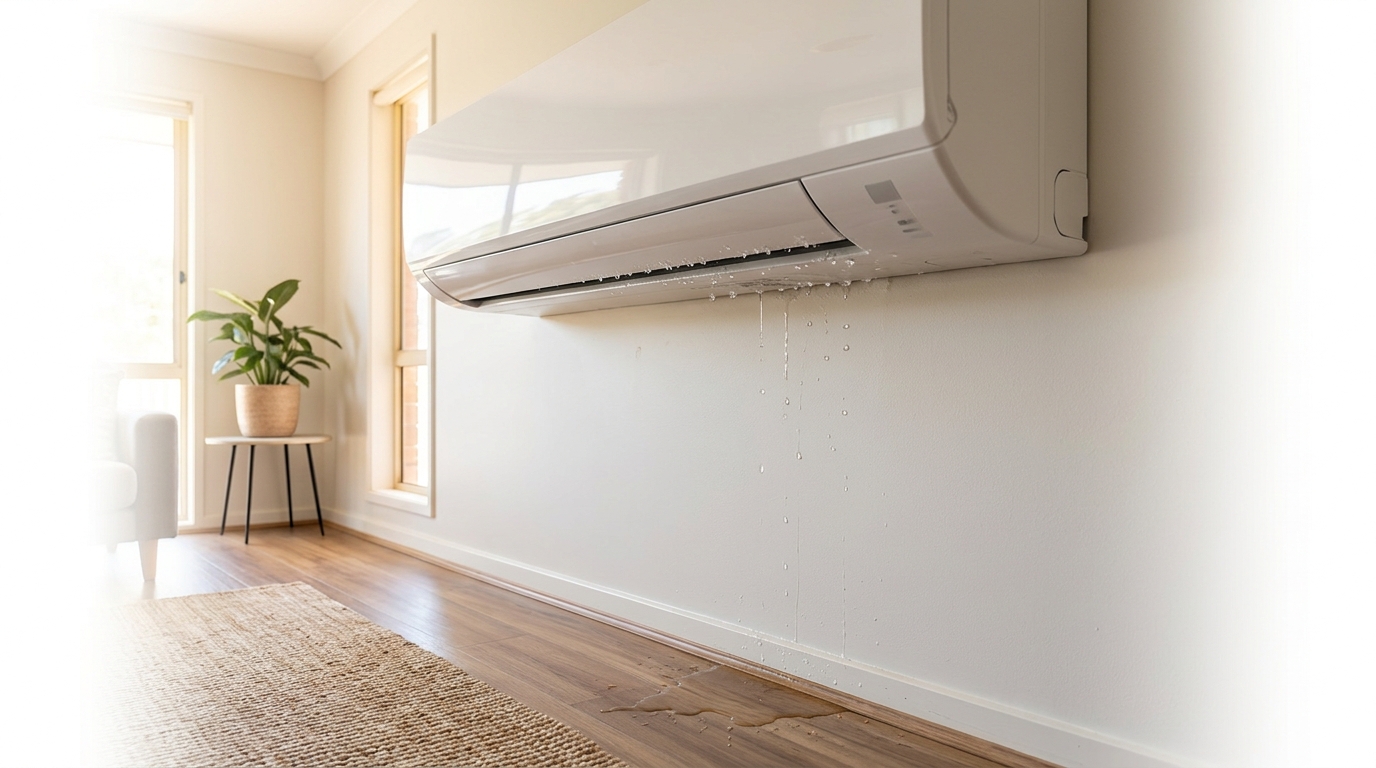
You walk into the lounge on a sweltering Australian afternoon, expecting cool relief, and instead find a puddle forming beneath your indoor unit. Aircon dripping water inside the room is one of the most common complaints we hear, and it is almost always a sign that something needs attention. A little moisture on the outdoor unit is perfectly normal, but water appearing inside your home is not something to ignore.
The good news is that most causes are straightforward to diagnose and many can be fixed without a costly service call. This article covers the six most common reasons your aircon is dripping water inside, from a blocked condensate drain to a frozen evaporator coil, low refrigerant, a dirty air filter, a cracked drain pan and incorrect installation. Work through them in order and you will have a clear picture of what is going on.
Key takeaways
- Aircon dripping water inside usually means the condensate drain system is blocked or damaged.
- Most causes can be fixed with filter cleaning or drain flushing without professional help.
- Annual maintenance prevents the majority of water leaks before they start.
How Your Air Conditioner Handles Water (The Basics)
Your air conditioner removes water from the air as a natural part of the cooling process. As warm, humid air from your room is drawn across the cold evaporator coil inside the indoor unit, the moisture in that air condenses into liquid water droplets, much like the outside of a cold glass on a humid day. That water drips down into a shallow tray called the drain pan, then flows out of your home through a condensate drain line connected to an external drain point.
Under normal operating conditions, this process runs quietly in the background and you never see a drop of water inside. The volume of condensate produced depends on how humid the air is. On a sticky Queensland summer day your unit can pull several litres of water out of the air every hour, so the drain system needs to be clear and functioning properly at all times.
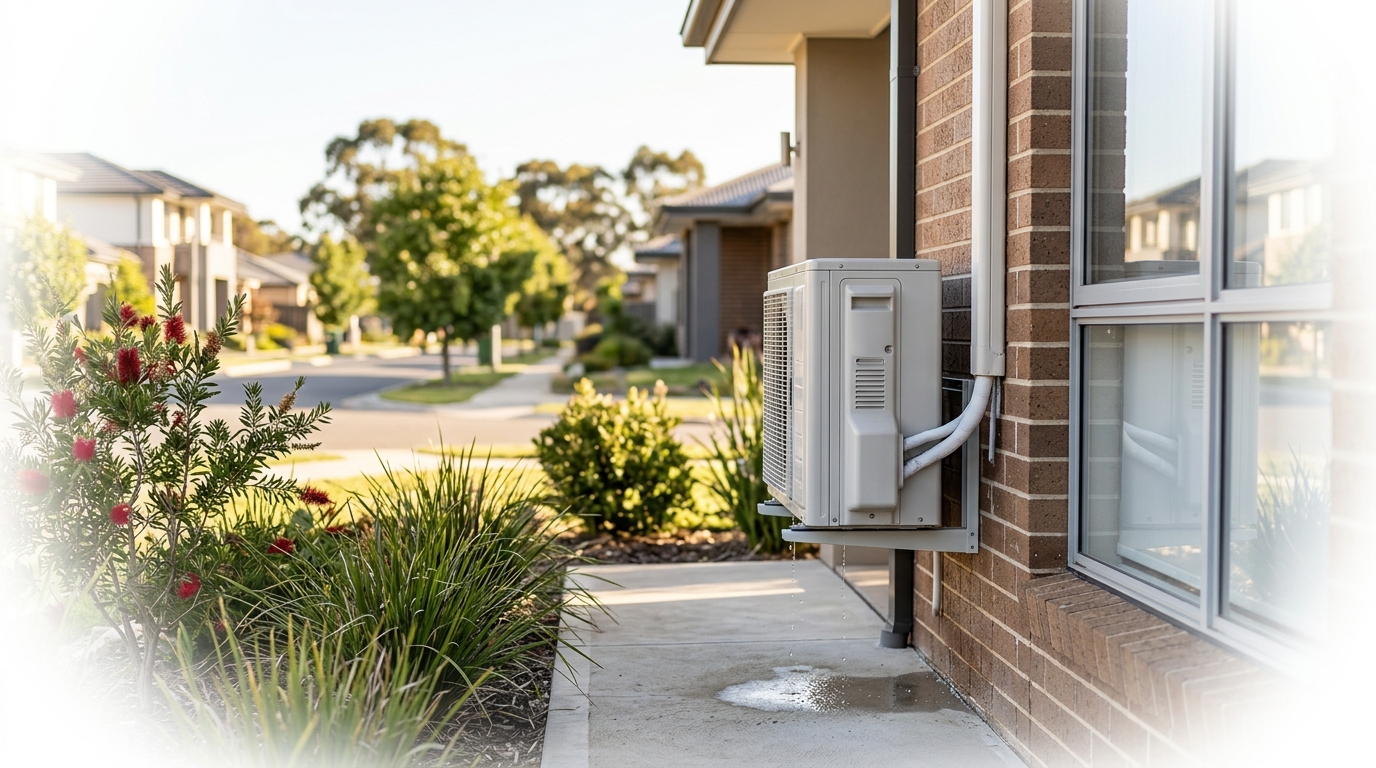
A small amount of dripping from the outdoor unit is completely normal and nothing to worry about. The outdoor unit releases heat and can produce condensate of its own, particularly in humid conditions or when running in heating mode during cooler months. Water appearing inside the room, however, means the condensate is not making it out of the building the way it should. Something in the chain from evaporator coil to drain pan to drain line has broken down, and the sections below explain exactly what that is likely to be.
6 Common Causes of an Aircon Dripping Water Inside
Water dripping from the indoor unit of your air conditioner almost always traces back to one of six problems. These issues are most common in split system air conditioners, where the evaporator coil, drain pan and condensate line all sit inside the indoor wall unit. Work through each cause below to narrow down what is happening in your system.
Blocked Condensate Drain Line
The condensate drain line is a small pipe that carries water from the drain pan to an external drain point, and over time it collects algae, mould, dust and debris. Once enough buildup accumulates, the line becomes partially or fully blocked and water has nowhere to go except back up into the drain pan and over the edge into your room. This is the single most common cause of aircon dripping water inside. The good news is that it is usually a DIY fix: a wet/dry vacuum applied to the drain outlet can clear most blockages, and a diluted bleach flush every few months keeps the line clear going forward.
Dirty or Clogged Air Filter
A clogged air filter restricts the airflow that passes over the evaporator coil. Without enough warm air moving across it, the coil gets too cold and drops below freezing, causing ice to form on its surface. When the unit cycles off, that ice melts rapidly and produces far more water than the drain pan can handle at once, sending it spilling into the room. Cleaning your filters every four to six weeks during heavy-use periods is one of the simplest ways to prevent this problem entirely.
Frozen Evaporator Coil
A frozen evaporator coil can result from a dirty filter, but it can also be caused by low refrigerant levels or blocked return air vents. The visual signs are hard to miss: ice visible on the indoor unit, noticeably reduced airflow from the vents and warm or barely cool air coming out despite the unit running. If you suspect a frozen coil, turn the unit off immediately and let it thaw completely before investigating further. Running the system while the coil is iced over puts extra strain on the compressor and can cause more serious damage.
Damaged or Rusted Drain Pan
The drain pan sits directly beneath the evaporator coil and catches all the condensate before it flows out through the drain line. On older units, typically those 10 or more years old, the pan can develop hairline cracks or rust through entirely, meaning water bypasses the drain line and drips straight down into the room. This is not a DIY repair. A licensed technician will need to assess whether the pan can be replaced or whether the age of the unit makes a full replacement the more cost-effective option.
Low Refrigerant Levels
Low refrigerant reduces the pressure inside the system, which causes the evaporator coil to run far colder than it should and freeze over. When the unit eventually cycles off and the ice thaws, the sudden volume of meltwater overwhelms the drain pan. Tell-tale signs alongside the dripping include a hissing or bubbling sound from the indoor unit and noticeably reduced cooling performance even on a moderate day. Refrigerant handling is licensed work under Australian regulations and must never be attempted as a DIY fix. A qualified technician needs to locate the leak, repair it and recharge the system.
Incorrect Installation or Poor Unit Pitch
Every indoor unit needs to be mounted with a very slight tilt toward the drain outlet so that condensate flows in the right direction. If the unit is perfectly level, or worse, pitched the wrong way, water pools at the front of the drain pan and drips out the front of the unit rather than down the drain line. This is a common outcome of amateur or rushed installations. A licensed technician can re-pitch the unit correctly, which is usually a straightforward job once the fault is identified.
Which Fixes Can You Do Yourself and Which Need a Pro?
Once you have identified the likely cause, the next question is whether you can fix it yourself or whether you need to call a technician. The table below gives a clear breakdown.
| Issue | DIY or Pro? | Estimated Fix Difficulty |
|---|---|---|
| Dirty or clogged air filter | DIY | Easy. Remove, rinse and refit. Takes under 10 minutes. |
| Blocked condensate drain line | DIY | Moderate. Requires a wet/dry vacuum or diluted bleach flush. |
| Thawing a frozen evaporator coil | DIY | Easy. Turn the unit off and allow several hours for the ice to melt. |
| Cracked or rusted drain pan | Pro | Requires disassembly and part replacement by a licensed technician. |
| Refrigerant leak and recharge | Pro (licensed only) | Requires an ARCtick-licensed technician. Not legally DIY-able. |
| Re-pitching the indoor unit | Pro | Requires remounting the unit. Straightforward for a technician. |
It is worth being direct about refrigerant work: handling refrigerant without an ARCtick licence is illegal in Australia under the Ozone Protection and Synthetic Greenhouse Gas Management Act. There are no workarounds and no grey areas. If you suspect a refrigerant leak, book a licensed technician and do not attempt to top up the system yourself. For everything else on the DIY side of the table, the fixes are low-risk and low-cost. Units from reputable brands that are properly maintained rarely develop the more serious faults. Well-maintained Daikin split systems, for example, are known for reliable drain and coil engineering that holds up well over years of Australian summer use.
How to Prevent Your Aircon Dripping Water in the Future
Preventing your aircon from dripping water inside comes down to a handful of simple habits that take very little time but save you from dealing with puddles, water damage and costly repairs. Most leaks are not random failures. They are the result of neglected maintenance that builds up over months or years.
- Clean or replace filters every four to six weeks during peak season. A clean filter keeps airflow strong across the evaporator coil, which is the single most effective way to prevent both frozen coils and blocked drain lines. It takes under 10 minutes and costs nothing if your filters are washable.
- Book a professional service once a year to flush the drain line and check refrigerant. An annual service catches slow refrigerant leaks, algae buildup in the drain line and early signs of drain pan corrosion before any of them become a dripping problem.
- Check that the indoor unit is level after any move or reinstallation. Even a slight forward tilt can redirect condensate toward the front of the drain pan and into your room rather than down the drain line.
- Keep the area around the outdoor unit clear to maintain airflow. Restricted airflow at the outdoor unit affects the whole refrigerant cycle and can contribute to coil icing indoors.
- Watch for early warning signs such as musty smells or reduced cooling output. A musty odour often means mould is growing in the drain pan or on the coil. Reduced cooling on a hot day can signal a partially frozen coil or a refrigerant issue. Catching either early means a simple fix rather than a flooded ceiling.
Investing in a quality unit from a reputable brand also makes a real difference over the long run. Mid-range units like the Daikin 3.5kW Inverter Split System LITE FTXF35WVMA at $1,194 are engineered with reliable drain and coil systems that hold up well through years of Australian summer use, as do Mitsubishi Electric split systems, which are well regarded for their build quality and consistent condensate management.
Still Having Problems? It Might Be Time for a New Unit
Most cases of aircon dripping water inside are fixable with a filter clean, a drain flush or a quick re-pitch of the indoor unit. But if you have worked through the causes in this article and the dripping keeps coming back, or if a technician has found a cracked drain pan or a refrigerant leak on a unit that is already 10 or more years old, the repair bill can quickly outweigh the cost of a fresh start.
A reliable entry-level replacement does not have to break the budget. The Daikin 2.5kW Inverter Split System LITE FTXF25WVMA comes in at $989, and the Mitsubishi Electric 2.5kW Split System MSZAP25VGKD is a strong alternative at $1,040. Both are well-suited to smaller rooms and come with the build quality and warranty support that older budget units simply cannot match.
Air Conditioning Experts stocks a wide range of split systems and ducted units from leading brands including Daikin, Mitsubishi Electric, Fujitsu and more. If your current unit is giving you grief, browse our full range of split systems to find a reliable replacement at a competitive price.
Frequently Asked Questions
Why is my aircon dripping water inside the house?
Your aircon is dripping water inside because condensate is not draining out of the building the way it should. The most common causes are a blocked condensate drain line, a dirty air filter causing the evaporator coil to freeze and then thaw rapidly, low refrigerant levels or a cracked drain pan. Cleaning your filters and flushing the drain line resolves the majority of cases.
Is it normal for an air conditioner to drip water?
A small amount of dripping from the outdoor unit is completely normal, particularly in humid conditions or when running in heating mode. Water dripping from the indoor unit inside your home is not normal and means the condensate drain system is not working correctly. Address it promptly to avoid water damage to walls, ceilings and flooring.
Can I fix a dripping aircon myself?
You can fix several causes yourself, including cleaning a dirty filter, clearing a blocked drain line with a wet/dry vacuum and allowing a frozen coil to thaw by turning the unit off. Refrigerant leaks, cracked drain pans and re-pitching the indoor unit all require a licensed technician. Refrigerant work is legally restricted to ARCtick-licensed professionals in Australia.
How do I stop my aircon from leaking water?
Clean your filters every four to six weeks during peak season, book an annual professional service to flush the drain line and check refrigerant levels, and make sure the indoor unit is mounted with a slight tilt toward the drain outlet. These three habits prevent the vast majority of water leaks before they start.
Need expert advice?
Our team can help you choose the right air conditioning system for your space.