
Aircon Outdoor Unit Placement: Where Is the Best Place to Install Your Outdoor Unit?
Why Aircon Outdoor Unit Placement Matters
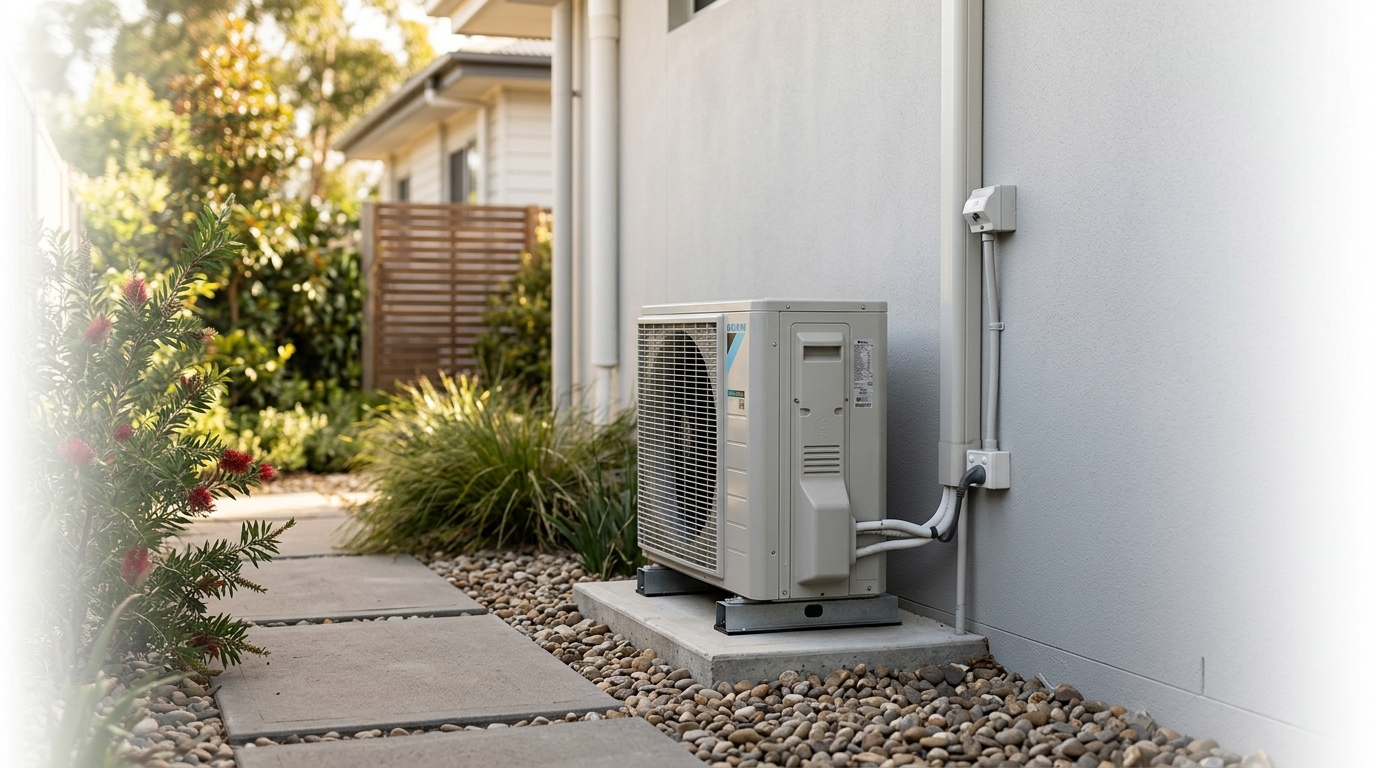
Aircon outdoor unit placement is one of the most overlooked decisions in a split system installation, yet it has a direct impact on how well your system performs, how long it lasts and what it costs to run. A poorly positioned outdoor unit can reduce energy efficiency by 10 to 20 per cent, accelerate wear on the compressor and create noise problems that are difficult and expensive to fix after the fact.
Getting placement right from the start means your system runs cooler, works less hard and delivers better comfort for longer. The five key factors that determine the best position are sun exposure, airflow and clearance, pipe run length, drainage and water exposure, and noise impact on neighbours and living areas. Each of these is covered in detail below.
Key takeaways
- Correct aircon outdoor unit placement improves efficiency by 10 to 20 per cent and extends system lifespan.
- South or east-facing walls with 300mm side clearance and 600mm front clearance are ideal.
- Avoid direct sunlight, enclosed spaces, debris sources and poor drainage when positioning your unit.
The Best Location for an Outdoor AC Unit
The best location for an outdoor AC unit balances shade, airflow, short pipe runs and protection from water. For most Australian homes, this means a south or east-facing wall with at least 300mm of clearance on the sides and rear, positioned as close as practical to the indoor unit. A licensed installer will assess your home's specific layout before recommending a final position, since every property has different constraints. If you are still choosing a system, browse our range of split system air conditioners to compare options before booking an installation.
North or South Facing: Which Wall Is Best?
In Australia, north-facing walls receive the most direct sunlight year-round, which makes them a poor choice for outdoor unit placement. When the outdoor unit sits in full sun, the refrigerant inside runs hotter, the compressor works harder and your electricity bill climbs. South-facing walls are generally the safest option because they stay shaded for most of the day across all seasons.
East-facing walls are a reasonable compromise in many situations. Morning sun is far less intense than afternoon sun, so the unit heats up less and recovers quickly once the sun moves around. West-facing walls are the worst option in most Australian climates. Afternoon summer sun on the west side of a home is the harshest of the day, and a unit baking in that heat will struggle to reject heat efficiently at exactly the time you need it most.
Not every home has a south or east-facing wall that works logistically. If your only practical option is a north or west-facing position, a shade structure, pergola or purpose-built louvre screen can make a real difference. Just make sure any shade structure does not restrict airflow around the unit, as that creates a separate problem.
Clearance and Airflow Requirements
Outdoor units need room to breathe. Most manufacturers require a minimum of 300mm of clear space at the sides and rear of the unit so that air can circulate freely around the coil. At the front discharge side, where the fan expels hot air, you generally need between 600mm and one metre of unobstructed space. Blocking that discharge airflow is one of the fastest ways to overheat a compressor and shorten the life of your system.
Common culprits that restrict airflow include timber fences built too close to the unit, brick walls on multiple sides, dense shrubs or hedges that grow up around the unit over time, and garden beds that gradually encroach on the clearance zone. Even a well-placed unit can develop airflow problems years later if landscaping is not managed.
Exact clearance specifications vary between brands and models, so always refer to the installation manual for the specific unit being installed. Your installer should check these figures before finalising the mounting position, not after the brackets are already on the wall.
What to Avoid When Positioning Your Outdoor Unit
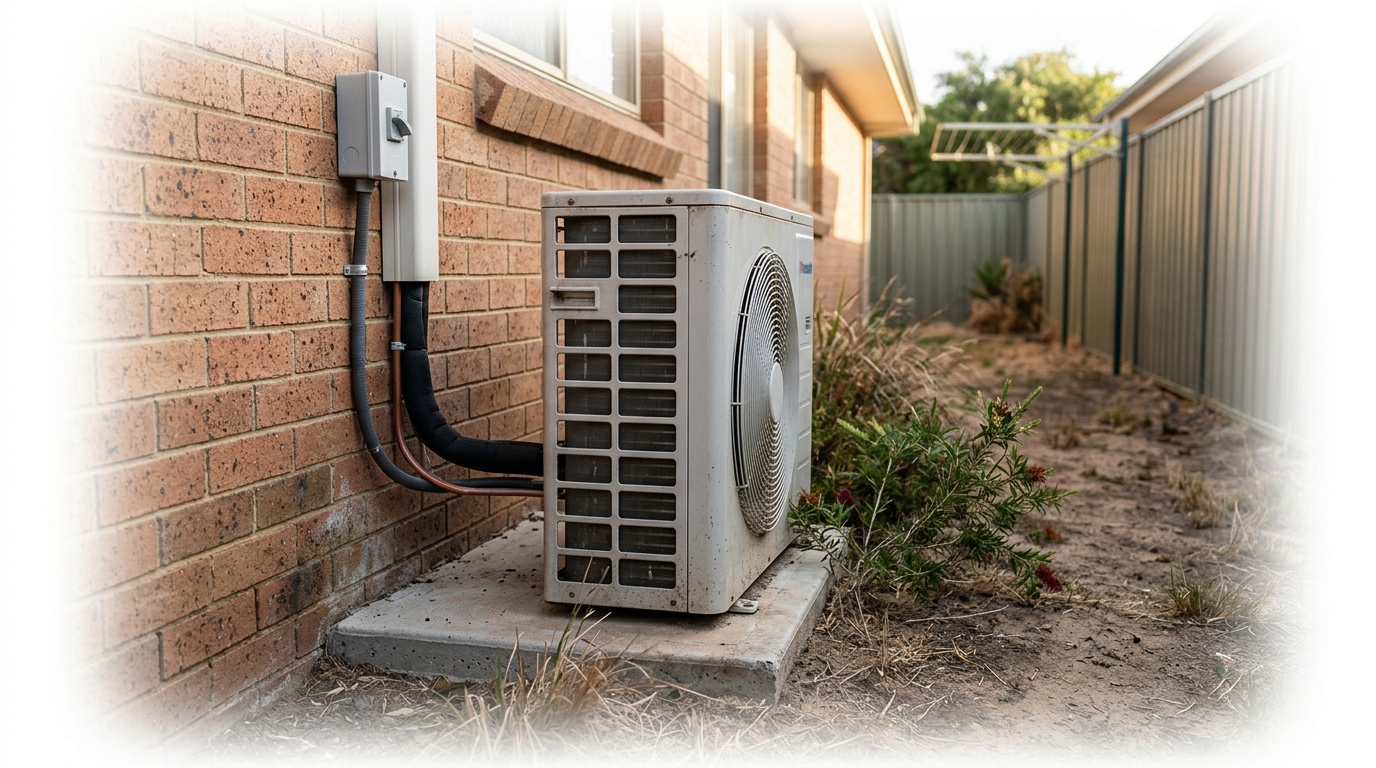
The most common outdoor unit placement mistakes in Australian homes are easy to avoid once you know what to look for. A well-placed Daikin split system will run quieter and last longer than the same unit installed in a cramped, sun-exposed spot. The following mistakes are worth checking before your installer finalises the position.
- Direct sunlight with no shade. A unit sitting in full afternoon sun works significantly harder to reject heat, which drives up running costs and puts extra strain on the compressor over time.
- Enclosed or poorly ventilated spaces. Installing a unit under a deck, inside a cupboard enclosure or against multiple walls traps the hot air the unit is trying to expel. The unit then recirculates that hot air, which kills efficiency fast.
- Near trees or garden beds that shed debris. Leaves, seed pods, grass clippings and mulch are drawn into the unit by the fan and clog the coil fins. A blocked coil is one of the most common causes of reduced performance and premature compressor failure.
- Areas where water pools after rain. Outdoor units can handle rain, but sitting in standing water accelerates corrosion of the base pan and electrical components. Low-lying spots or areas with poor drainage should be avoided.
- Positions that direct noise toward neighbours. The fan discharge should not point directly at a neighbour's bedroom window or outdoor entertaining area. Most Australian councils have noise regulations that apply to air conditioning units, and a complaint can be costly to resolve after installation.
- Locations that make servicing difficult or dangerous. A unit wedged into a tight corner, mounted above head height without safe access, or hidden behind fixed structures will cost more to service and may be skipped during routine maintenance as a result.
If your local council has specific noise or setback requirements for air conditioning equipment, check these before installation. Rules vary between councils, and some require the unit to be a minimum distance from a boundary fence or neighbouring dwelling.
Ground Mount vs. Wall Bracket vs. Roof: Which Is Right for Your Home?
The three main mounting options for an outdoor unit are ground mount, wall bracket and roof mount. Each suits different property types and site conditions, and the right choice depends on your available space, ground conditions and the layout of your home. Premium brands like Mitsubishi Electric split systems publish specific mounting guidelines in their installation manuals, and a licensed installer will cross-reference these before recommending a mounting method.
| Mounting Type | Best For | Pros | Cons |
|---|---|---|---|
| Ground Mount | Homes with level ground, adequate side clearance and low flood risk | Easiest access for servicing and filter cleaning. No structural wall assessment required. Straightforward installation. | Vulnerable to flooding in low-lying areas. Debris and pests can access the unit more easily. May require a concrete pad. |
| Wall Bracket | Urban homes with limited yard space, narrow side passages or sloped ground | Keeps the unit off the ground and away from water, debris and pests. Saves floor space. Common and cost-effective. | Requires a structurally sound masonry or timber-framed wall. Vibration can transfer to the building if brackets are not correctly isolated. |
| Roof Mount | Properties where no suitable ground or wall space exists, such as townhouses or commercial buildings | Frees up all ground and wall space. Keeps the unit out of reach from ground-level interference. | Requires specialist installation and additional vibration isolation. Harder and more expensive to service. Roof penetrations must be properly waterproofed. |
Ground mounting is the most straightforward option where the site allows it. The unit sits on a concrete slab or purpose-built feet, making it easy for a technician to access all four sides during a service. The main risk is water ingress in areas prone to pooling after heavy rain, which is a real consideration in parts of Queensland, the Northern Territory and low-lying coastal suburbs across Australia.
Wall brackets are the most common solution in suburban homes with limited outdoor space. The bracket must be fixed into solid masonry or into structural timber framing, not just cladding. Anti-vibration mounts between the bracket and the wall are worth the small additional cost, particularly in homes where the bracket is on a wall adjacent to a bedroom.
Roof mounting is a last resort for residential installations rather than a preferred option. The additional height makes routine servicing more involved, and any roof penetrations for pipework need to be properly flashed and sealed to prevent water damage. Your installer will recommend the most appropriate mounting method once they have assessed your property in person.
Ready to Install? Choose the Right Split System First
Getting outdoor unit placement right starts before the installer arrives. Choosing a quality system from a reputable brand means you have access to detailed installation manuals, proper clearance specifications and manufacturer support if something goes wrong. The placement principles covered in this article apply equally across all major brands, so the unit you choose matters as much as where it goes.
Three popular 5kW options worth considering are the Daikin 5kW Inverter Split System LITE FTXF50WVMA ($1,589), a well-regarded mid-range unit that rewards correct placement with strong efficiency figures; the Mitsubishi Electric 5kW Split System Air Conditioner MSZAP50VGKD ($1,653), a reliable choice from a brand known for producing some of the quietest outdoor units on the market; and the Fujitsu 5kW Lifestyle Range Inverter Split System ASTG18KMTC ($1,638), a solid third option that confirms correct placement principles apply regardless of which brand you go with.
Not sure which capacity or brand suits your home? Our team can help with sizing advice and point you toward a licensed installer in your area. To find the right unit for your home, browse our best-selling air conditioners.
Frequently Asked Questions
Where should an aircon outdoor unit be placed?
The best position for an aircon outdoor unit is a shaded, south or east-facing wall with at least 300mm of clearance on the sides and rear, and 600mm to one metre of clear space in front of the fan discharge. The unit should be as close as practical to the indoor unit to keep pipe runs short, and positioned away from areas that collect standing water or debris. A licensed installer will assess your specific property before finalising the location.
Can I put my outdoor unit in direct sunlight?
You can, but it will cost you. An outdoor unit sitting in full afternoon sun has to work significantly harder to reject heat, which reduces efficiency and puts extra strain on the compressor over time. If a shaded position is not available, a purpose-built louvre screen or shade structure can help, provided it does not restrict airflow around the unit.
How far does the outdoor unit need to be from the fence?
Most manufacturers require a minimum of 300mm of clear space at the sides and rear of the unit, which means the unit should sit at least 300mm from any fence, wall or fixed structure on those sides. Some councils also have their own setback rules that may require greater separation from a boundary fence or neighbouring property. Check your local council requirements before installation to avoid having to relocate the unit later.
Can an outdoor unit be installed on a roof?
Yes, roof mounting is a legitimate option where no suitable ground or wall space exists, and it is more common in townhouses and commercial buildings than in freestanding homes. It requires specialist installation, additional vibration isolation and properly flashed roof penetrations for the pipework. Routine servicing is also more involved and more expensive, so roof mounting is generally a last resort for residential properties rather than a preferred choice.
Does the outdoor unit need to be level?
Yes. Outdoor units must be installed on a level surface or level brackets to ensure the compressor oil circulates correctly and condensate drains away from the unit rather than pooling inside it. Most manufacturers allow a small tolerance of a degree or two, but a noticeably tilted unit can cause oil return problems and premature compressor wear. Your installer will check and adjust the level during installation.
How much noise does an outdoor unit make, and does placement affect it?
Most modern split system outdoor units operate between 48 and 58 decibels, which is roughly equivalent to a quiet conversation or moderate rainfall. Placement has a significant effect on how that noise is perceived. A unit mounted on a wall bracket can transfer vibration into the building structure, while a unit with its fan discharge pointed toward a neighbour's bedroom will seem much louder than the same unit positioned differently. Choosing a quiet model and positioning the discharge away from living areas and neighbouring properties makes a real difference.
Can I enclose my outdoor unit to hide it?
Enclosing an outdoor unit is one of the most common placement mistakes. Any structure that restricts airflow around the unit, particularly in front of the fan discharge, causes the unit to recirculate hot air and lose efficiency rapidly. If you want to screen the unit for aesthetic reasons, use open louvre screens that allow air to pass freely, and make sure the front discharge has at least 600mm of unobstructed clearance. Always check the manufacturer's clearance specifications before building any enclosure.
Need expert advice?
Our team can help you choose the right air conditioning system for your space.