
How to Dispose of an Old Air Conditioner in Australia: Aircon Removal Done Right
Why Aircon Removal Needs to Be Done Properly in Australia
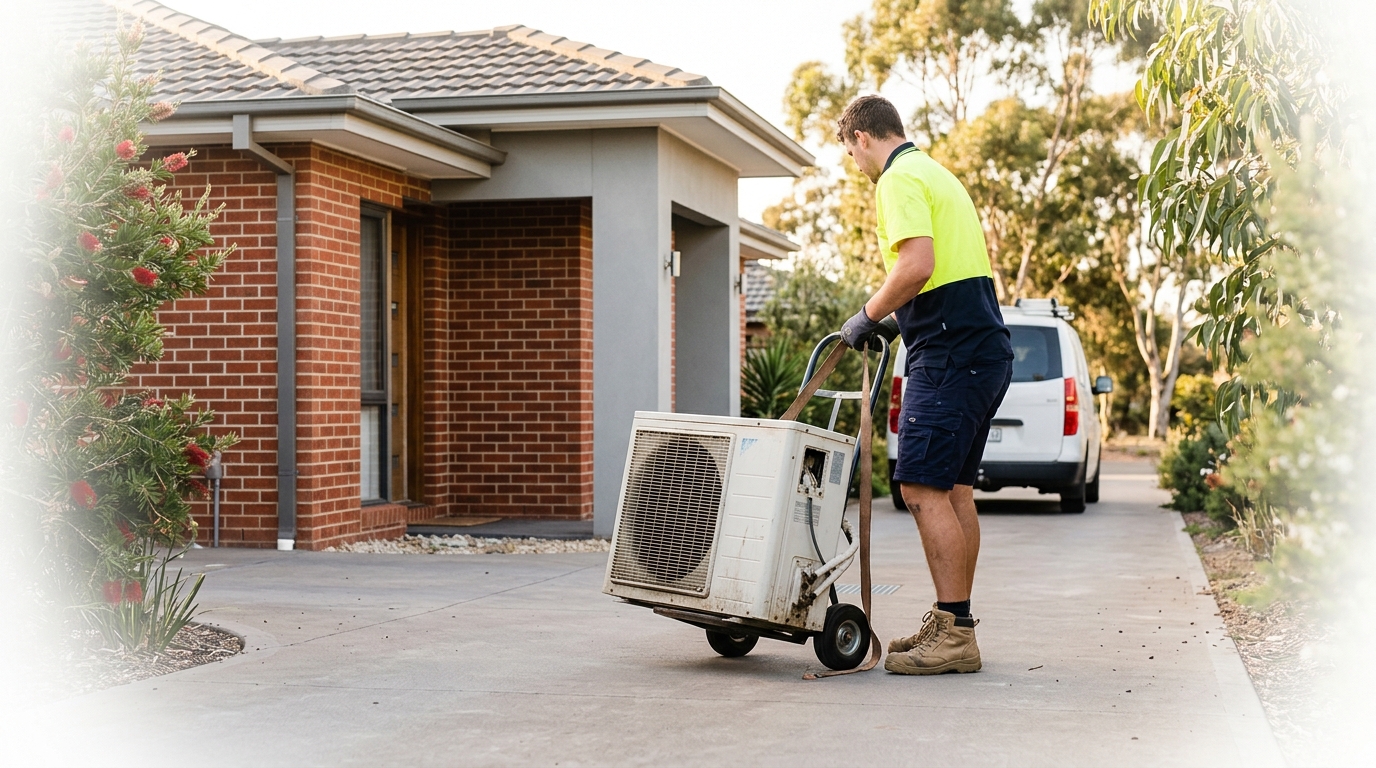
Aircon removal is not as simple as unplugging an old unit and leaving it on the kerb. In Australia, disposing of an air conditioner incorrectly is illegal, and the consequences go well beyond a fine. The refrigerants inside these systems, from older CFCs and HCFCs through to the modern R410A and R32 gases found in most split systems today, are potent greenhouse gases regulated under the Ozone Protection and Synthetic Greenhouse Gas Management Act 1989. Releasing them into the atmosphere is a federal offence.
Beyond the legal risk, there is a real environmental cost. A single kilogram of R410A has a global warming potential roughly 2,088 times that of carbon dioxide. Getting disposal right matters for your wallet, your legal standing and the planet.
This article covers your legal obligations before removal, the disposal options available to you, what the process typically costs and how to choose a replacement unit once the old one is gone.
Key takeaways
- Aircon removal requires a licensed technician to recover refrigerant before disposal is legal in Australia.
- Council collections and certified e-waste recyclers offer low-cost disposal options once refrigerant is recovered.
- Bundling removal with a new installation often costs less than standalone removal.
Australian Regulations You Must Know Before Removing an Aircon
Before you arrange for an old split system or ducted unit to be taken away, you need to understand the legal framework that governs refrigerant handling in Australia. The short version is this: refrigerant must be recovered by a licensed professional before any air conditioning unit is dismantled or disposed of. Skipping this step is not a grey area. It is a breach of federal law.
The Ozone Protection and Synthetic Greenhouse Gas Management Act 1989 and its associated regulations make it an offence to intentionally vent, release or allow refrigerant to escape into the atmosphere. Penalties for individuals can reach tens of thousands of dollars, and businesses face even steeper consequences. The Australian Government's Department of Climate Change, Energy, the Environment and Water enforces these rules, and prosecutions do occur.
The type of unit you are removing affects how complex the process is:
- Split systems and ducted systems contain refrigerant under pressure in sealed copper lines. These must have refrigerant professionally recovered before removal. A licensed technician will use recovery equipment to capture the gas safely.
- Portable and window units are self-contained, so there are no external refrigerant lines to disconnect. This makes them simpler to handle physically, but they still contain refrigerant, compressor oils and metals that make landfill disposal inappropriate. They should go through an e-waste or appliance recycling programme.
Once refrigerant has been recovered from a split or ducted system, the remaining unit is largely steel, copper and aluminium, all of which are recyclable through scrap metal dealers or council e-waste drop-off points.
Who Needs an ARCtick Licence?
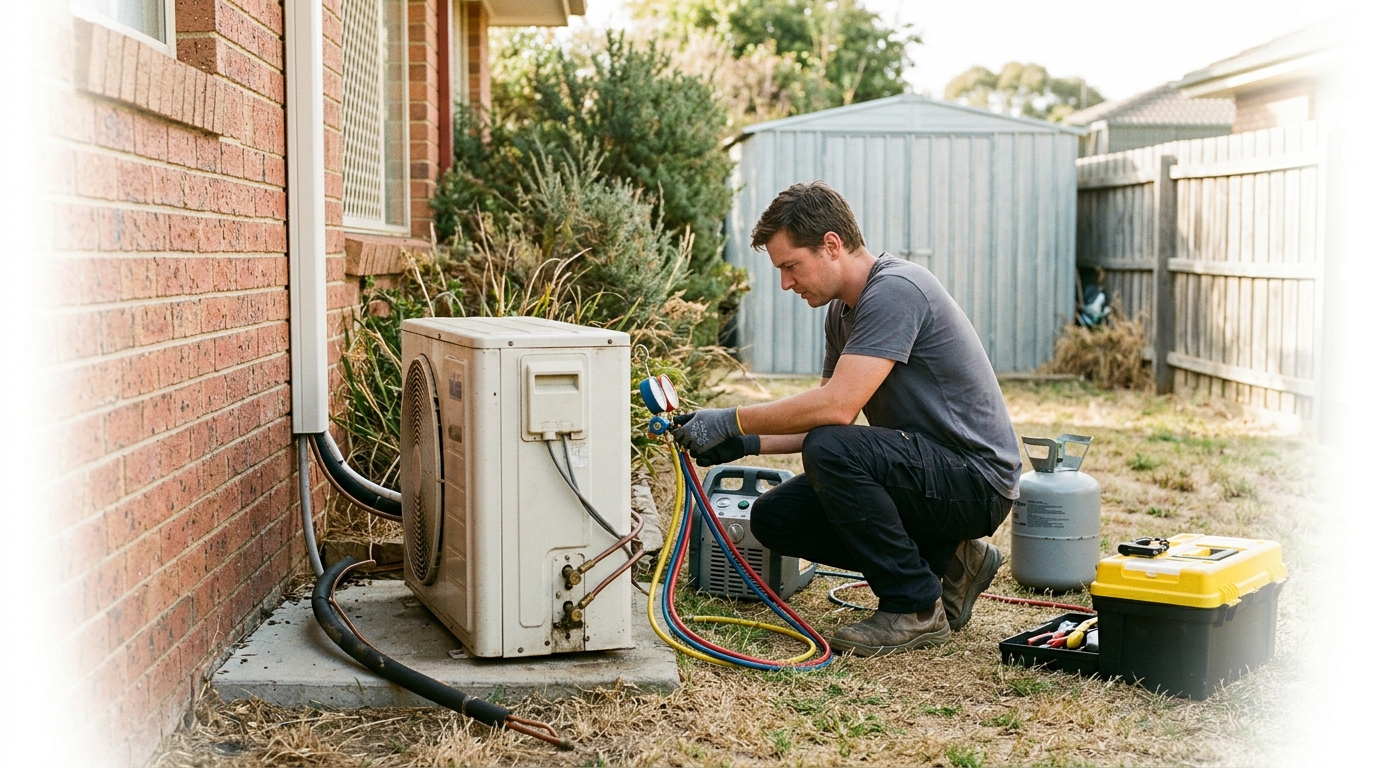
Any technician who handles, recovers or transfers refrigerant in Australia must hold an ARCtick licence issued by the Australian Refrigeration Council (ARC). This applies to recovering refrigerant from your old unit before removal, transferring it to a recovery cylinder and disposing of or reclaiming it through an approved facility.
As a homeowner, you cannot legally perform this work yourself, regardless of how handy you are. A standard electrician is also not sufficient for this task. Refrigerant handling requires a separate refrigerant handling licence, which most qualified HVAC technicians will already hold alongside their electrical licence. When you book a technician for aircon removal, always confirm they hold a current ARCtick licence. You can verify any licence number on the ARC's public register at arctick.com.au before work begins.
Your Aircon Removal and Disposal Options in Australia
Australian homeowners have four main pathways for disposing of an old air conditioner: hiring a licensed HVAC technician to recover refrigerant and disconnect the unit, using a council hard-waste or e-waste collection, dropping the unit at a certified e-waste recycler, or having your installer take the old unit away as part of a replacement job. The right option depends on your council, your location and whether the unit still works. For most people replacing a split system air conditioner, the installer take-away route is the simplest and often the cheapest.
Here is how to work through the process step by step:
- Book a licensed HVAC technician to recover refrigerant and disconnect the unit. This is a legal requirement before any other step can happen. The technician will use recovery equipment to capture the refrigerant into an approved cylinder, then safely disconnect the electrical and refrigerant lines. Confirm they hold a current ARCtick licence before booking.
- Check whether your local council offers a hard-waste or e-waste collection service. Many Australian councils run annual or on-demand collections that accept white goods and air conditioning units. Eligibility rules and booking processes vary, so check your council's website directly before putting anything out on the kerb.
- Contact a certified e-waste recycler or drop-off facility. Specialist recyclers can handle the full unit once refrigerant has been removed. Planet Ark's Recycling Near You directory at recyclingnearyou.com.au is a practical starting point for finding a facility close to you.
- Ask your installer if they offer take-away of the old unit as part of a replacement job. Many HVAC installers will remove and dispose of your old system when they install a new one, often for a modest add-on fee or sometimes at no extra charge. It is worth asking upfront when you get a quote.
If your old unit is still working, selling or donating it is also a legitimate option. A working split system in good condition can fetch a few hundred dollars on Marketplace or Gumtree. The unit still needs a licensed technician to disconnect it safely before it goes anywhere. The buyer or recipient will need their own licensed installer to reconnect it at the new location.
Council Hard-Waste and E-Waste Collections
Most Australian councils run annual or on-demand hard-waste collections that accept white goods including air conditioners. These services are typically free or low cost for residents, making them one of the more accessible disposal options available.
Acceptance policies vary significantly between councils. Some will take a complete split system outdoor unit at the kerb without question. Others require proof that refrigerant has already been professionally recovered before they will accept the item. A small number of councils do not accept air conditioning units through hard-waste at all and direct residents to a dedicated e-waste drop-off point instead.
Before you book a collection or put anything out, visit your local council's website and check the specific rules for your area. Look for the hard-waste or bulky goods collection page and confirm whether air conditioners are listed as accepted items. If refrigerant recovery is required, you will need to arrange that with a licensed technician first and keep a record of the work in case it is requested.
Certified E-Waste Recyclers
Certified e-waste recyclers are equipped to safely dismantle an air conditioning unit from start to finish. They can recover any remaining refrigerant, separate the copper coils, aluminium fins and steel casing for metal recycling, and dispose of compressor oils through approved channels. This makes them a responsible end-of-life option for units that cannot go through council collections.
Costs vary between facilities. Some recyclers offer free drop-off for air conditioning units, particularly those that recover value from the metals inside. Others charge a drop-off fee, typically in the $20 to $80 range depending on the size of the unit and the facility's location. It pays to ring ahead and confirm pricing before making the trip.
Planet Ark's Recycling Near You directory at recyclingnearyou.com.au is the most practical tool for finding a certified facility near you. Enter your postcode and search for 'air conditioners' or 'white goods' to see what is available in your area. Not every suburb will have a specialist recycler nearby, but the directory also lists council drop-off points and transfer stations that accept e-waste.
How Much Does Aircon Removal Cost in Australia?
Aircon removal costs in Australia range from nothing to around $300 depending on who does the work, how the unit is disposed of and whether removal is bundled with a new installation. The table below covers the main scenarios you are likely to encounter. Note that costs vary by state, unit size and how accessible the installation is. A ground-floor split system is straightforward. A ducted air conditioner removal involving roof space access and multiple refrigerant circuits will sit at the higher end of any range.
| Removal Type | Who Does It | Typical Cost (AUD) | Notes |
|---|---|---|---|
| Refrigerant recovery and disconnection only | Licensed HVAC technician (ARCtick) | $150 to $300 | Required by law before any other disposal step. Cost varies by unit type and refrigerant volume. |
| Full removal and disposal bundled with new installation | Your installing HVAC company | $0 to $200 add-on | Often discounted or included when you are buying a new system. Always ask for this to be quoted upfront. |
| Council hard-waste collection | Local council | Free to ~$50 booking fee | Varies by council. Some require refrigerant to be removed first. Check your council's website for eligibility. |
| E-waste recycler drop-off | Certified e-waste facility | $0 to $80 | Some facilities are free; others charge based on unit size. Ring ahead to confirm pricing and accepted items. |
| Scrap metal dealer | Scrap metal yard | They may pay $10 to $40 for the unit | Refrigerant must be professionally removed first. The dealer recovers value from copper, aluminium and steel. |
For most homeowners replacing a single split system, the most cost-effective approach is to bundle removal with the new installation quote. Many installers will take the old unit away for free or for a small fee, handling both disconnection and disposal in a single visit. If you are not replacing the unit, expect to pay $150 to $300 for refrigerant recovery and disconnection as a standalone job, then use a council collection or e-waste drop-off to handle the physical unit at little or no additional cost.
Scrap metal dealers are worth considering if your unit is large and the metals inside have reasonable value, but this only works once refrigerant has been properly recovered. Do not expect a scrap yard to handle that step for you.
Ready for a Replacement? Choosing Your Next Air Conditioner
If your old unit has failed or is simply costing too much to run, replacing it with a modern inverter split system is one of the most effective upgrades you can make to your home's comfort and energy efficiency. Today's 2.5kW inverter models are dramatically more efficient than units from 10 or more years ago, with higher energy star ratings that translate directly into lower quarterly electricity bills. The technology has moved on considerably, and the running cost difference is real.
To give you a sense of what is available at different price points, here are three solid options from the Air Conditioning Experts range:
- Daikin 2.5kW Inverter Split System Lite FTXF25WVMA at $989. A reliable entry-level option from one of Australia's most trusted brands. The Lite series keeps things straightforward without sacrificing Daikin's core inverter efficiency.
- Fujitsu 2.5kW Lifestyle Range Inverter Split System ASTG09KMTC at $1,018. A well-regarded mid-range unit with a compact indoor head and quiet operation, suited to bedrooms and smaller living areas.
- Mitsubishi Electric 2.5kW Split System AP Series MSZAP25VGKD at $1,122. Mitsubishi Electric's AP Series is a popular choice for good reason. It offers strong energy ratings, a wide operating temperature range and a reputation for longevity that justifies the slightly higher price.
All three are inverter-driven, which means they modulate their output to match the room's needs rather than cycling on and off at full power. That is where the efficiency gains come from. Air Conditioning Experts offers nationwide delivery across Australia, so location is no barrier to getting the right unit. Browse our full range of split systems to compare models, capacities and brands side by side.
Frequently Asked Questions About Aircon Removal
Can I remove an air conditioner myself in Australia?
You cannot legally disconnect a split system or ducted air conditioner yourself in Australia. Refrigerant recovery must be carried out by a technician holding a current ARCtick licence issued by the Australian Refrigeration Council. Releasing refrigerant into the atmosphere is a federal offence under the Ozone Protection and Synthetic Greenhouse Gas Management Act 1989. Portable and window units do not have external refrigerant lines, so you can physically remove them yourself, but they still need to go through an e-waste or appliance recycling programme rather than general waste.
How much does it cost to remove an old air conditioner?
Aircon removal costs in Australia typically range from $150 to $300 for a standalone refrigerant recovery and disconnection job carried out by a licensed HVAC technician. If you are having a new unit installed at the same time, many installers will remove the old system for free or for a modest add-on fee of around $50 to $200. Council hard-waste collections and certified e-waste drop-off facilities can handle the physical unit at little or no additional cost once refrigerant has been professionally removed.
Where can I dispose of an old air conditioner near me?
Your best starting points are your local council's hard-waste or e-waste collection service and Planet Ark's Recycling Near You directory at recyclingnearyou.com.au. Enter your postcode and search for 'air conditioners' or 'white goods' to find certified facilities in your area. Some councils offer free kerbside collection for large appliances, while others direct residents to a dedicated e-waste drop-off point. If you are having a new unit installed, ask your installer whether they offer take-away of the old unit as part of the job.
Do air conditioners need to be drained before disposal?
The main concern with air conditioner disposal is not water but refrigerant gas, which must be professionally recovered before the unit is dismantled or disposed of. Split systems and ducted units hold refrigerant under pressure in sealed copper lines, and this must be captured by a licensed ARCtick technician using approved recovery equipment. Compressor oil is also present inside the unit and is handled by certified e-waste recyclers as part of their dismantling process. There is no separate draining step required by the homeowner beyond arranging licensed refrigerant recovery.
Get Your Old Unit Out and Your New One In
Disposing of an old air conditioner in Australia comes down to three non-negotiables: get a licensed ARCtick technician to recover the refrigerant, use a legitimate disposal pathway such as a council collection or certified e-waste recycler, and do not put the unit out with general waste. Each of these steps protects you legally and keeps harmful gases out of the atmosphere.
The good news is that most of these disposal pathways are free or low cost, and if you are replacing the unit at the same time, your installer can often handle the whole process in a single visit. A modern inverter split system from a brand like Daikin split systems will run quieter, use less power and last longer than the unit you are replacing. The upfront cost pays for itself over time through lower electricity bills.
Ready to upgrade? Browse the full Air Conditioning Experts split system range to find the right model for your home and budget.
Need expert advice?
Our team can help you choose the right air conditioning system for your space.