
Are Gas Wall Heaters Safe? What Australian Homeowners Need to Know
Are Gas Wall Heaters Safe for Australian Homes?
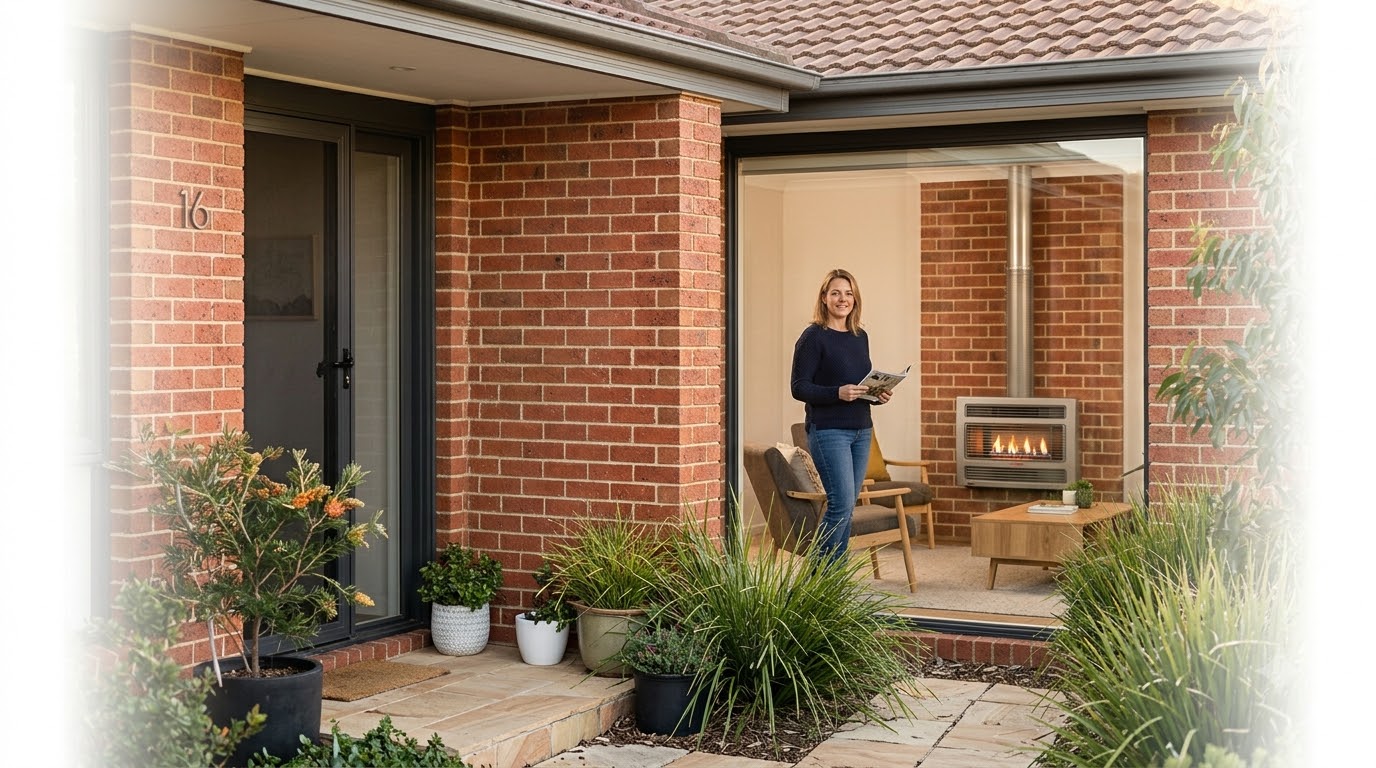
Gas wall heaters are safe when they are correctly installed, regularly serviced and used as intended, but they do carry real risks that every Australian homeowner should understand. These units have been a fixture in homes across Victoria, South Australia and Western Australia for decades, and the question of gas wall heater safety comes up constantly, especially in older properties where the original installation may be 20 or 30 years old. The three risks that matter most are carbon monoxide poisoning, gas leaks and fire hazards from inadequate clearance. Modern units have improved significantly in terms of safety features and efficiency, but no heater, old or new, is safe without proper maintenance and informed use.
Key takeaways
- Gas wall heaters are safe when professionally installed, regularly serviced and used with a carbon monoxide detector.
- Flued heaters are considerably safer than unflued models for indoor air quality.
- Three primary risks are carbon monoxide poisoning, gas leaks and fire hazards from inadequate clearance.
How Gas Wall Heaters Work and the Risks Involved
Gas wall heaters burn natural gas or LPG to produce heat, and the way combustion gases are handled is what separates a safe installation from a dangerous one. There are two main types found in Australian homes: flued and unflued. Understanding the difference is the single most important thing you can do before using one of these heaters.
A flued heater connects to a flue pipe that carries combustion gases, including carbon monoxide, nitrogen dioxide and water vapour, outside the home. An unflued heater has no such pipe. All combustion by-products are released directly into the room where the heater is operating. That distinction has significant consequences for indoor air quality and occupant health.
Flued vs Unflued Gas Heaters: Which Is Safer?
Flued gas wall heaters are considerably safer for indoor air quality than unflued models. Because the flue pipe vents combustion gases to the outside, the air inside your home stays clean provided the flue is unobstructed and the unit is serviced regularly. Flued heaters must comply with AS 4553, the Australian standard covering flued gas space heaters, which sets requirements for construction, performance and installation clearances.
Unflued heaters release everything produced by combustion directly into your living space. That includes carbon monoxide if combustion is incomplete, nitrogen dioxide and significant amounts of moisture. For people with asthma, chronic obstructive pulmonary disease or other respiratory conditions, even a well-functioning unflued heater can aggravate symptoms. Several Australian states have responded with restrictions: unflued gas heaters are banned in bedrooms, bathrooms and any room without adequate natural ventilation in most jurisdictions, and some states have moved to phase them out of new installations entirely.
| Feature | Flued Gas Heater | Unflued Gas Heater |
|---|---|---|
| Combustion gases | Vented outside via flue pipe | Released into the room |
| Indoor air quality impact | Minimal when serviced correctly | Adds CO, NO2 and moisture to indoor air |
| Suitable for bedrooms | Yes, with correct installation | No, banned or restricted in most states |
| Ventilation requirement | Flue must be clear and unobstructed | Requires adequate natural ventilation at all times |
| Relevant Australian standard | AS 4553 | AS/NZS 5601 (gas installations) |
| Recommended for enclosed living spaces | Yes | No |
For any enclosed living area, a flued heater is the right choice. If you currently have an unflued model, use it only in a well-ventilated room, keep windows cracked while it is running and never use it while sleeping.
Beyond the flued versus unflued distinction, three primary risks apply to gas wall heaters of any type.
Carbon monoxide poisoning is the most serious risk. CO is colourless and odourless, and it builds up quickly in a poorly ventilated room or when a flue is blocked by debris, a bird's nest or a damaged fitting. Symptoms including headaches, dizziness and nausea are easy to mistake for a cold or flu. A carbon monoxide detector installed near the heater is not optional; it is essential.
Gas leaks from aged fittings, corroded connections or damaged flexible hoses are a fire and explosion risk. Older homes with original gas fittings are particularly vulnerable. If you smell gas near your heater, do not attempt to operate it. Turn off the gas at the meter, ventilate the space and call a licensed gas fitter.
Fire hazards arise when combustible materials are placed too close to the unit. Australian installation standards specify minimum clearances around gas wall heaters, and these must be respected. Curtains, furniture and stored items within the clearance zone are a genuine fire risk, particularly in older homes where the heater may have been installed before current standards applied.
Safety Features to Look for in Modern Gas Wall Heaters
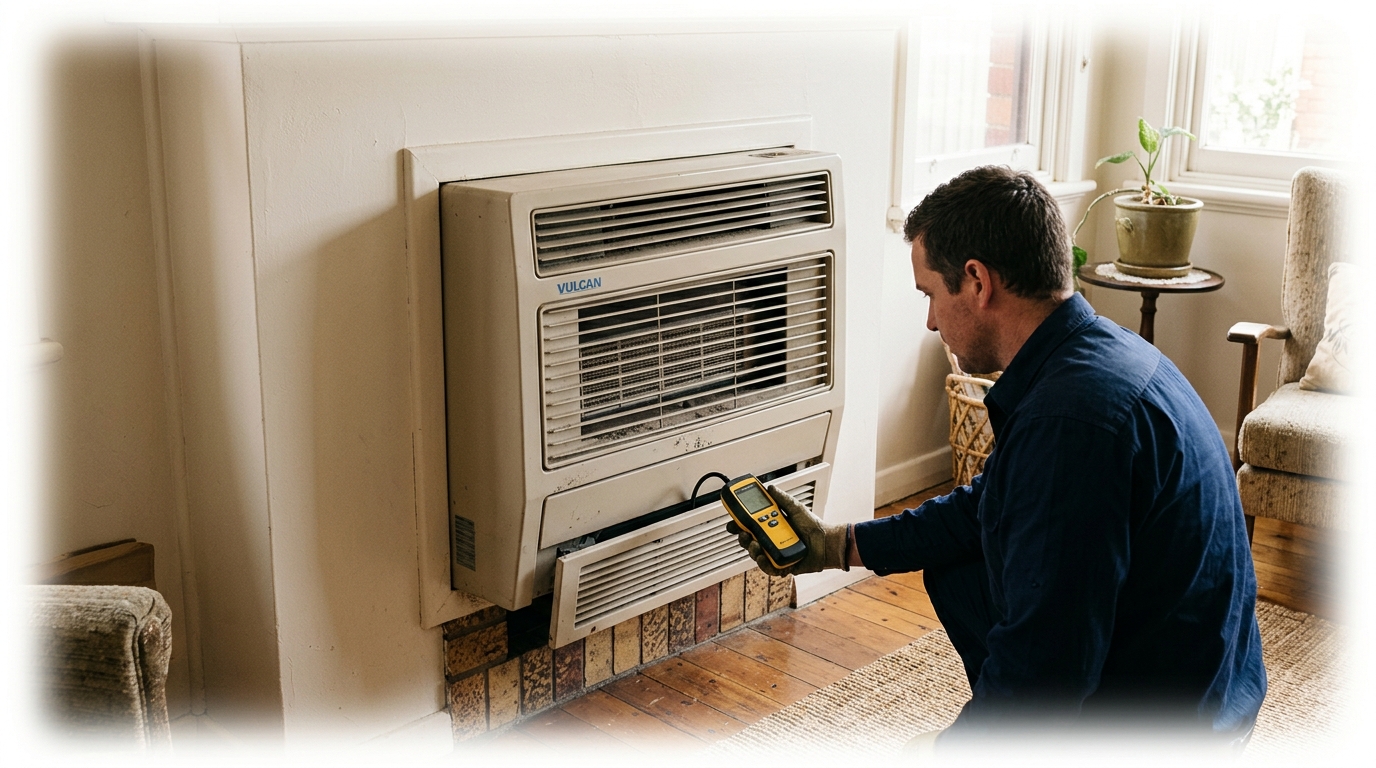
Modern gas wall heaters include several built-in safety technologies that significantly reduce the risk of carbon monoxide exposure, gas leaks and burns. The key features to look for are an oxygen depletion sensor, a flame failure device, cool-to-touch surfaces and a thermocouple valve. These features only protect you if the unit has been professionally installed by a licensed gas fitter and is serviced at least once a year.
Oxygen Depletion Sensor (ODS)
An oxygen depletion sensor monitors the oxygen level in the room and automatically shuts the heater off if that level drops below a safe threshold. This is particularly important for unflued heaters, where combustion draws directly on the room's air supply. If the ODS triggers, treat it as a warning: ventilate the room and have a gas fitter inspect the unit before using it again.
Flame Failure Device (FFD)
A flame failure device cuts the gas supply the moment the pilot light or main burner flame goes out. Without this feature, an extinguished flame would allow raw gas to continue flowing into the room, creating a serious explosion and asphyxiation risk. All gas wall heaters sold in Australia since the mid-1990s are required to include an FFD, but older units may predate this requirement.
Thermocouple Valve
The thermocouple is a heat-sensing probe that sits in the pilot flame. It generates a small electrical current that holds the gas valve open. If the flame goes out and the thermocouple cools, the current stops and the valve closes automatically. It works alongside the FFD as a secondary gas shutoff and is one of the most reliable safety components in a gas heater.
Cool-to-Touch Grilles and Cabinets
Contemporary gas wall heaters are designed with grilles and outer cabinets that stay at a safe surface temperature during normal operation. This matters in homes with young children or pets who may brush against the unit. Older heaters with exposed metal grilles can reach temperatures that cause contact burns within seconds, so this is a meaningful upgrade if you are replacing an ageing unit.
Gas Approval Mark
Any gas appliance sold in Australia must carry a gas approval mark, either the AGA mark or the Aus Gas certification. This confirms the product has been tested and approved to Australian standards. Before purchasing a gas wall heater, check the product documentation or the unit itself for this mark. If it is absent, do not buy or install the appliance.
Common Problems With Gas Wall Heaters and How to Avoid Them
Gas wall heaters are reliable appliances, but five problems come up repeatedly in Australian homes. Each one has a clear cause and a clear course of action. For all of them, the right response is to call a licensed gas fitter rather than attempt a repair yourself. Working on gas appliances without a licence is illegal in every Australian state and territory, and the risks are not worth it.
1. Pilot Light Keeps Going Out
A pilot light that repeatedly extinguishes is almost always caused by a faulty or worn thermocouple, or by a draught reaching the burner chamber. The thermocouple may no longer be generating enough current to hold the gas valve open, or it may be positioned slightly away from the flame. A draught can come from a nearby window, a gap in the wall cavity around the heater, or a deteriorated door seal. A gas fitter can test the thermocouple, replace it if needed and check for draught sources in a single visit.
2. Yellow or Orange Flame Instead of Blue
A healthy gas flame burns blue. A yellow or orange flame indicates incomplete combustion, which means the burner is not getting enough oxygen or the gas-to-air ratio is off. Incomplete combustion produces carbon monoxide. If you notice a yellow or orange flame, turn the heater off immediately, ventilate the room and do not use the unit again until a gas fitter has inspected and adjusted the burner. This is not a cosmetic issue; it is a carbon monoxide risk.
3. Unusual Smells
Two distinct smells are worth knowing. A sulphur or rotten-egg smell means there is a gas leak somewhere in the supply line, the connections or the valve. Turn off the gas at the meter, open windows and doors, leave the house and call your gas supplier or a licensed gas fitter immediately. Do not switch any lights or appliances on or off while evacuating.
A burning dust smell at the start of the heating season is far less serious. Dust accumulates on the burner and heat exchanger over summer and burns off when the heater first fires up. The smell should clear within 10 to 15 minutes. If it persists beyond that, or if the smell is acrid rather than dusty, have the unit inspected.
4. Blocked or Deteriorated Flue
In older homes, the flue pipe may be partially blocked by debris, a bird's nest or corrosion. A blocked flue forces combustion gases back into the living space instead of venting them outside, which is exactly the scenario that leads to carbon monoxide poisoning. Flue condition should be checked as part of an annual service. If your home is more than 20 years old and the heater has never been serviced, a flue inspection is the first thing to organise.
5. Inadequate Heat Output
If the heater runs continuously but the room never reaches a comfortable temperature, there are two likely explanations. The unit may be undersized for the room it is heating, which is a common issue in older homes where a small heater was installed in a space that has since been opened up or extended. Alternatively, there may be a gas pressure issue at the meter or regulator. A gas fitter can measure the supply pressure and confirm whether the unit is receiving the correct input. If the heater is simply too small, replacing it with a correctly sized unit will make a noticeable difference to both comfort and running costs.
Is a Reverse Cycle Split System a Better Alternative to Gas Wall Heaters?
A reverse cycle split system eliminates every combustion-related risk associated with gas wall heaters. There is no open flame, no carbon monoxide, no nitrogen dioxide and no flue to maintain. For homeowners replacing an ageing gas wall heater or fitting out a new build, a reverse cycle unit is worth serious consideration. It heats in winter, cools in summer and typically delivers three to five units of heat for every unit of electricity it consumes, making it considerably cheaper to run than a direct-resistance electric heater and competitive with gas on running costs in most Australian states.
The upfront cost is higher than a basic gas wall heater, and you will need a licensed electrician to install the outdoor unit and run the refrigerant lines. But you avoid the ongoing cost of flue inspections, gas fitter callouts and the safety infrastructure that responsible gas heater ownership requires, including carbon monoxide detectors and annual servicing.
Rinnai split systems are a natural starting point for homeowners who already trust the Rinnai name from their gas heating. The Rinnai 2.5kW T Series Inverter Split System (HSNRT25B) is priced at $760 and suits bedrooms and smaller living areas up to around 20 square metres. The Rinnai 5kW T Series Inverter Split System (HSNRT50B) at $1,188 handles larger rooms comfortably and both models include built-in Wi-Fi, so you can preheat the room before you get out of bed. For homeowners with open-plan living areas, the Daikin 8.5kW XL Premium Inverter Split System (FTXM85WVMA) at $2,909 delivers serious heating and cooling capacity across larger spaces.
The broader range of reverse cycle split systems covers every room size and budget, and many models now include split systems with built-in Wi-Fi for convenient scheduling and remote control. If you are weighing up a like-for-like gas replacement against making the switch to electric, the absence of combustion risk and the dual heating and cooling capability make a split system a compelling case.
| Feature | Gas Wall Heater | Reverse Cycle Split System |
|---|---|---|
| Carbon monoxide risk | Yes, if flue blocked or combustion incomplete | None, no combustion involved |
| Flue required | Yes (flued models) | No |
| Heating efficiency | Up to ~90% of gas energy converted to heat | 300-500% (3-5 units of heat per unit of electricity) |
| Cooling in summer | No | Yes |
| Upfront cost (entry level) | Lower | Higher |
| Annual servicing requirement | Yes, licensed gas fitter required | Filter cleaning only for most models |
Gas Wall Heater Safety Tips for Australian Homeowners
If you already own a gas wall heater and want to use it safely, these seven steps cover the most important actions you can take right now. Following them consistently reduces the risk of carbon monoxide exposure, gas leaks and fire to a manageable level. None of them require specialist knowledge, but several of them do require a licensed gas fitter, and that distinction matters under Australian law.
- Have the unit serviced by a licensed gas fitter every two years, or annually for older units. A service covers burner condition, flue integrity, gas pressure, safety device function and clearances. For any heater more than 10 years old, annual servicing is the safer interval. A gas fitter can also tell you whether the unit is still worth maintaining or whether replacement is the more cost-effective path.
- Install a carbon monoxide detector in every room that contains a gas appliance. CO is colourless and odourless, and symptoms of low-level exposure are easy to dismiss as tiredness or a headache. A detector costs between $40 and $120 and provides an early warning that no amount of vigilance can replicate. Test it monthly and replace the unit every five to seven years.
- Never block or cover the heater's ventilation grilles. Grilles on the front, sides or base of the unit allow combustion air in and heat out. Covering them with furniture, curtains or stored items restricts airflow, reduces efficiency and can cause the unit to overheat or produce incomplete combustion.
- Maintain a minimum 900mm clearance from curtains, furniture and other combustible materials. Australian installation standards specify this clearance for a reason. Curtains in particular can billow toward a heater in a draught and ignite quickly. Check the clearance zone at the start of each heating season, especially if furniture has been rearranged.
- Check the flue annually for blockages. Bird nests, leaves, debris and corrosion can all partially or fully block a flue pipe. A blocked flue forces combustion gases back into the living space. If your home has trees nearby or you have noticed birds near the external flue outlet, inspect it before the first use of the season.
- Turn the heater off when leaving the room for an extended period or going to sleep. Running a gas heater in an unoccupied or sleeping room removes your ability to notice warning signs such as unusual smells, a change in flame colour or a CO detector alarm. Most modern units have programmable timers that make this straightforward.
- If you smell gas, act immediately. Turn off the appliance and the gas supply at the meter, open all windows and doors, leave the house and call your gas supplier's emergency line. Do not operate any light switches, power points or appliances while evacuating, as a spark can ignite accumulated gas.
One rule applies to all of the above: gas appliance repairs in Australia must be carried out by a licensed gas fitter. This is a legal requirement in every state and territory, not a recommendation. A general handyman, no matter how capable, cannot legally work on gas appliances, and an unlicensed repair will void your insurance and leave you liable if something goes wrong.
Frequently Asked Questions About Gas Wall Heaters
Are gas wall heaters still available in Australia?
Yes, gas wall heaters are still sold and installed in Australia in 2026, though availability varies by state. Flued models remain widely available from brands including Rinnai, Brivis and Paloma. Unflued models face increasing restrictions, and some states have moved to limit or phase out new unflued installations, so check your local regulations before purchasing.
How much does it cost to run a gas wall heater?
Running costs depend on the unit's star rating, the size of the space being heated and your local gas tariff. As a rough guide, a 25MJ/h flued gas wall heater running for four hours a day will consume around 100MJ of gas, which costs approximately $1.00 to $1.50 per day on a typical Australian residential gas rate. A higher star-rated unit will reduce that figure noticeably over a full winter season.
What is the best gas wall heater?
The best gas wall heater for most Australian homes is a flued model with a high energy star rating, an oxygen depletion sensor, a flame failure device and a thermocouple valve. Rinnai and Brivis are the most consistently recommended brands for reliability and parts availability. That said, if you are replacing an older gas wall heater, it is worth considering whether a reverse cycle split system better suits your needs. You can browse our full range of split system air conditioners to compare options across every room size and budget.
What are common problems with gas wall heaters?
The most common problems are a pilot light that repeatedly goes out, a yellow or orange flame indicating incomplete combustion, unusual smells pointing to a gas leak or dust burn-off, a blocked or deteriorated flue and inadequate heat output from an undersized unit. Most of these issues are straightforward for a licensed gas fitter to diagnose and resolve. None of them should be treated as a DIY repair.
The Bottom Line on Gas Wall Heater Safety
Gas wall heaters can be safe, practical and cost-effective heating solutions for Australian homes. The key conditions are that the unit is flued, professionally installed by a licensed gas fitter, serviced at least every two years and used alongside a working carbon monoxide detector. Millions of Australian homes rely on gas wall heaters every winter, and with the right precautions in place, that is a perfectly reasonable choice.
If you are replacing an ageing unit or fitting out a new room, a reverse cycle split system is worth a serious look. It heats and cools, carries no combustion risk and requires far less ongoing safety infrastructure. The Rinnai 2.5kW T Series Inverter Split System (HSNRT25B) starts at $760, while the Rinnai 5kW T Series (HSNRT50B) is $1,188 for larger rooms. For open-plan spaces, the Daikin 8.5kW XL Premium (FTXM85WVMA) at $2,909 is a strong performer.
Ready to explore your options? Browse our full range of split system air conditioners to find the right fit for your home.
Need expert advice?
Our team can help you choose the right air conditioning system for your space.