
Ducted AC Installation Cost in Australia: 2026 Price Guide
What Does Ducted AC Installation Cost in Australia?
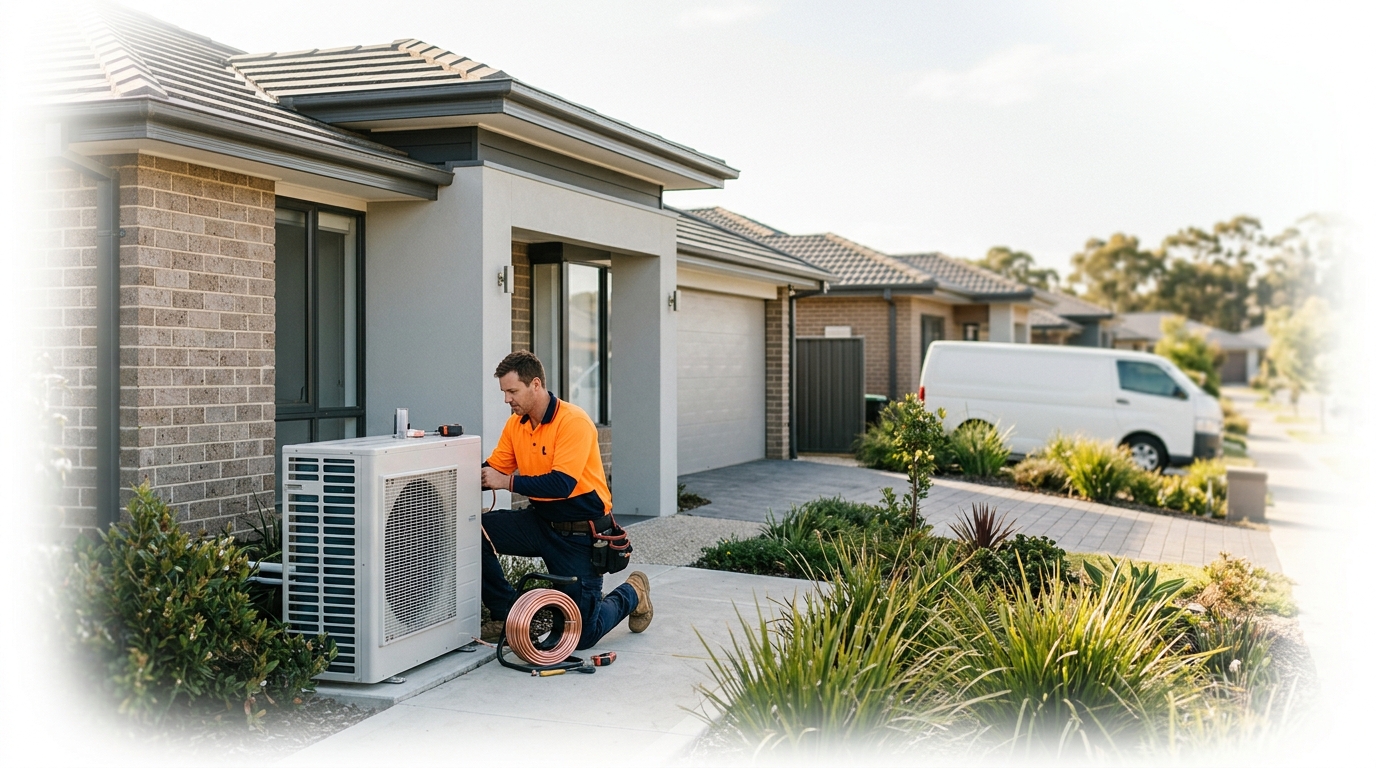
Duct AC installation in Australia typically costs between $6,000 and $30,000 or more, depending on the size of your home, the brand you choose, the complexity of the ductwork and whether your property already has infrastructure in place. A compact three-bedroom home in Brisbane needs a very different system to a large two-storey house in Melbourne.
The final price is shaped by four main factors: the capacity of the ducted unit itself, the cost of labour and ductwork, your home's existing electrical setup and the brand tier you select. This guide breaks down each of those cost drivers, compares unit prices across popular brands, and explains what a realistic quote should include so you can budget with confidence.
Key takeaways
- Duct AC installation costs $6,000 to $30,000 depending on home size and system capacity
- Unit price and labour costs are separate line items that should be compared independently
- Home size, roof access and electrical upgrades significantly impact the final price
Ducted AC Installation Cost Breakdown: Unit vs Labour
The total cost of a ducted air conditioning installation comes down to two core components: the price of the unit itself and the cost of getting it installed. Understanding both separately helps you compare quotes accurately and spot anything that looks out of place.
Unit Costs
The ducted unit (supply only) is usually the single largest line item. Prices scale with capacity, and capacity scales with the size of the space you need to condition. To browse our range of ducted air conditioners and compare models side by side, you can filter by kilowatt output to find the right fit for your floor plan.
At the entry level, the Daikin 5kW Inverter Ducted Air Conditioner FDYAN50 is priced at $2,798 (supply only) and suits smaller homes or apartments up to around 120m². Step up to a medium-sized home of 120 to 250m² and you are looking at something like the Daikin 12.5kW Inverter Ducted Air Conditioner FDYAN125 at $4,622 (supply only). Larger homes above 250m² typically require 16kW to 20kW systems, where unit costs alone can push past $6,000.
Three-phase power systems carry a noticeable price premium. As a reference point, the three-phase version of the Daikin 12.5kW FDYAN125 is listed at $5,179 compared to $4,622 for the single-phase equivalent. If your property runs on three-phase power, factor that difference into your budget from the start.
Labour and Installation Costs
Labour, ductwork and associated installation work typically adds $3,000 to $10,000 or more on top of the unit price. The exact figure depends on how many zones you need, how accessible your ceiling cavity is and whether the installer needs to run new electrical circuits to your switchboard. Most reputable installers quote a combined supply-and-install price, which makes it easier to compare like for like.
What's Included in the Installation Quote?
A thorough ducted AC installation quote should itemise every component and service involved. Before you sign anything, confirm the quote covers all of the following:
- Indoor concealed unit: The fan coil unit that sits in your ceiling cavity, connected to the ductwork throughout the home.
- Outdoor compressor: The condenser unit installed outside, usually on a concrete pad or wall bracket.
- Ductwork and insulated flexible ducts: The network of ducts that carries conditioned air from the indoor unit to each room.
- Ceiling diffusers and return-air grilles: The visible vents in each room that distribute air and allow return air to cycle back to the unit.
- Zone controllers: The wall-mounted or app-based controls that let you manage airflow room by room.
- Electrical wiring and switchboard work: Dedicated circuit installation, isolator switches and any switchboard upgrades required to safely power the system.
- Commissioning: Testing, balancing airflow across zones and registering the system warranty with the manufacturer.
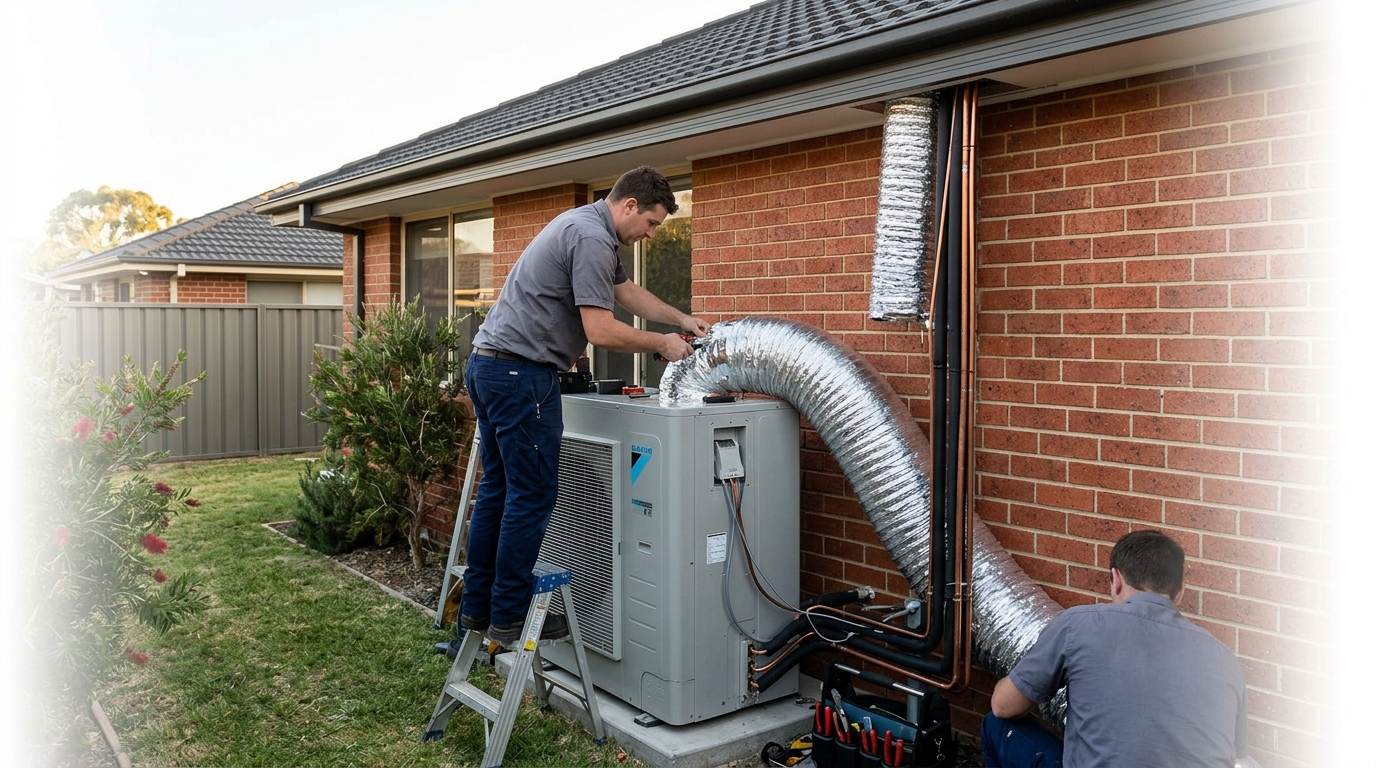
One cost factor that catches many homeowners off guard is the difference between a new build and a retrofit. Installing ductwork into an existing home means working around insulation, structural beams and limited ceiling access, which adds time and labour cost. A new build, where the ceiling cavity is open and accessible during construction, is significantly cheaper to duct. If you are retrofitting, get at least two quotes and ask each installer to walk you through how they plan to route the ducts.
How Home Size Affects Your Duct AC Installation Price
The size of your home is the single biggest driver of ducted AC cost, because it determines the system capacity you need, the length of ductwork required and the number of zones to control. As a general rule, every step up in home size adds $4,000 to $8,000 to the total installed price, and the jump from a medium home to a large one is often where costs accelerate most sharply.
| Home Size | Recommended Capacity | Estimated Unit Cost (Supply Only) | Estimated Total Installed Cost |
|---|---|---|---|
| Small home or apartment (up to 120m²) | 5 to 8.5kW | $2,800 to $3,700 | $6,000 to $10,000 |
| Medium home (120 to 250m²) | 10 to 12.5kW | $4,000 to $4,600 | $10,000 to $16,000 |
| Large home (250 to 350m²) | 14 to 16kW | $5,100 to $6,300 | $16,000 to $22,000 |
| Very large or multi-storey (350m²+) | 18 to 20kW | $6,000 to $6,300+ | $22,000 to $30,000+ |
For a small home or apartment, the Daikin 5kW Inverter Ducted Air Conditioner FDYAN50 at $2,798 (supply only) sits right at the entry point of this range and is a practical starting point for spaces up to 120m². At the medium tier, the Daikin 12.5kW Inverter Ducted Air Conditioner FDYAN125 at $4,622 (supply only) aligns closely with the 120 to 250m² bracket. Among popular brands for medium to large homes, Daikin ducted systems are consistently well regarded for their energy efficiency and reliability across Australian climate zones.
Multi-storey homes sit at the upper end of each cost range, and often beyond it. Longer duct runs between floors, more complex routing around structural elements and the additional labour of working across two levels all push installation costs higher. If your home has a low-pitch roof or limited ceiling cavity access, expect your installer to add a labour surcharge on top of the standard estimate.
These figures assume a standard single-storey home with reasonable ceiling access. Treat them as a planning benchmark rather than a firm quote, and always get at least two itemised quotes from licensed installers before committing.
Key Factors That Change the Final Installation Price
Beyond the base cost of the unit and standard labour, several variables can push a ducted AC quote significantly higher or, in some cases, bring it down. Understanding these factors before you speak to an installer means you will not be caught off guard by line items that seem to appear from nowhere.
- Existing ductwork: If your home already has a ducted system in place, replacing just the indoor and outdoor units can reduce installation costs considerably. However, older ductwork often needs to be inspected and partially replaced to meet current standards, so do not assume a like-for-like swap will be straightforward. A full retrofit into a home with no existing ductwork is the most expensive scenario.
- Roof space access: Tight ceiling cavities and low-pitch roofs slow installers down significantly. If your roof space is less than 600mm at its peak, or if insulation is packed tightly around structural beams, expect additional labour charges. Some installers will quote a flat rate; others will charge by the hour once they are on site.
- Number of zones: Each zone requires a motorised damper and zone controller, adding $200 to $500 per zone on top of the base installation cost. A four-zone system is standard for a medium home, but larger homes with six or eight zones will see this cost add up quickly.
- Brand and model tier: Premium brands like Daikin and Mitsubishi Electric carry a higher upfront price but typically offer better energy star ratings, longer warranties and more reliable after-sales support. The Mitsubishi Electric 10kW Inverter Ducted Air Conditioner PEA-M100HAA, for example, is priced at $4,110 (supply only) and represents a strong mid-to-premium option for homes in the 120 to 200m² range.
- Location: Metro areas like Sydney, Melbourne and Brisbane generally have more competitive installer pricing due to higher market density. Regional and rural installs often attract travel fees or higher labour rates, sometimes adding $500 to $2,000 to the total cost depending on distance.
- Electrical upgrades: If your switchboard cannot handle the additional load of a ducted system, an upgrade is non-negotiable. Switchboard upgrades typically cost $800 to $2,500. Homes that require three-phase power for a larger system face even higher electrical costs, so confirm your property's power supply early in the process.
Ducted vs Split System: Which Costs More Overall?
For whole-home climate control, ducted air conditioning and a multi-room split system setup are the two main options. Ducted systems have a higher upfront cost, but comparing them purely on installation price misses a large part of the picture.
A multi-room split system setup covering four rooms typically requires four separate indoor units, four outdoor units (or a multi-head outdoor unit) and four individual installations. The combined supply-and-install cost for that configuration can reach $12,000 to $18,000, which overlaps significantly with the ducted range for a similar-sized home. Split systems are also more visible, with wall-mounted units in every room rather than discreet ceiling vents.
For homes with four or more rooms to condition, ducted often becomes the more cost-effective long-term choice. You get a single outdoor unit, centralised control, consistent airflow across the whole home and a much cleaner aesthetic. Running costs depend heavily on how you use the zones, but a well-zoned ducted system can be just as efficient as individual splits when managed properly.
At the premium end of the ducted market, Mitsubishi Electric ducted systems are a strong contender. The Mitsubishi Electric 10kW Inverter Ducted Air Conditioner PEA-M100HAA at $4,110 (supply only) is a good example of what you get at that tier: a reliable inverter system with strong energy ratings and a reputation for quiet operation. The trade-off is a higher upfront cost compared to entry-level alternatives, but for a system you expect to run for 15 or more years, that premium is often worth it.
How to Get the Best Price on Ducted AC Installation
The most effective ways to reduce your ducted AC installation cost are to compare multiple quotes, buy your unit separately from a reputable retailer, time your installation for the off-season and make sure you are not paying for more capacity than your home actually needs. None of these steps require you to cut corners on quality.
- Get at least three quotes from licensed HVAC installers. Prices for the same job can vary by $2,000 or more between installers, even in the same suburb. Ask each installer to provide an itemised quote so you can compare labour, ductwork and materials separately rather than just comparing a single total figure.
- Buy the unit separately and arrange your own installer. Purchasing a supply-only unit from a reputable online retailer and sourcing your own licensed installer can save several hundred dollars compared to a combined supply-and-install package from a single contractor. The Daikin 5kW Inverter Ducted Air Conditioner FDYAN50 at $2,798 (supply only) and the Daikin 12.5kW FDYAN125 at $4,622 (supply only) are good examples of the savings available when you separate the two costs.
- Install in autumn or spring. Demand for HVAC installers peaks in summer and winter. Booking your installation in March to May or September to October means installers are less stretched, turnaround times are shorter and some will offer better rates to fill their schedule.
- Choose the right capacity for your home. Oversizing a ducted system wastes money twice: once on the higher upfront unit cost and again on inflated running costs from a system that short-cycles rather than running efficiently. Use your floor plan and ceiling height to confirm the correct kilowatt range before you commit.
- Check for state government rebates. Victorian homeowners can access up to $3,560 off a new reverse-cycle system through the Victorian Energy Upgrades (VEU) program, with larger discounts available when replacing gas ducted heating. In New South Wales, the Energy Savings Scheme offers discounts of up to $560 on eligible split system replacements. South Australia's Retailer Energy Productivity Scheme (REPS) also provides incentives for eligible households. Check your state government's energy website before you sign a contract.
If whole-home ducted cooling is beyond your current budget, consider whether a targeted approach with split system air conditioners could cover your highest-priority rooms at a lower upfront cost while you plan for a full ducted installation later.
Frequently Asked Questions About Ducted AC Installation
How much does it cost to install ducted air conditioning in Australia?
Ducted air conditioning installation in Australia typically costs between $6,000 and $30,000 or more, depending on the size of your home, the brand and capacity of the unit, and the complexity of the ductwork. A small home under 120m² can be ducted for $6,000 to $10,000, while a large home above 350m² can exceed $30,000 once labour, zoning and electrical work are included.
How long does ducted AC installation take?
Most ducted air conditioning installations take one to three days to complete. A straightforward single-storey home with good ceiling access is typically finished in a day, while a larger home with multiple zones, complex duct routing or limited roof space can take two to three days. Electrical switchboard upgrades, if required, may add additional time depending on your electrician's schedule.
Is ducted air conditioning worth it?
Ducted air conditioning is worth it for homes with four or more rooms to condition, where the cost of multiple split systems would approach or exceed the ducted price anyway. The main advantages are whole-home climate control from a single outdoor unit, a cleaner aesthetic with discreet ceiling vents and the ability to zone rooms independently. For smaller homes or single-room needs, a split system is usually the more cost-effective choice.
Can I install ducted air conditioning in an existing home?
Yes, ducted air conditioning can be retrofitted into an existing home, though it costs more than installing during a new build. The additional cost comes from working around insulation, structural beams and limited ceiling access. A licensed installer will assess your roof space before quoting, and in some cases may recommend a slim-line or low-profile indoor unit to fit a tight ceiling cavity. Always get at least two quotes for a retrofit job.
Ready to Install Ducted Air Conditioning? Start Here
Ducted air conditioning installation in Australia costs between $6,000 and $30,000 or more, and the unit itself is only part of that figure. Labour, ductwork, zoning and electrical work make up a significant share of the total, which is why separating supply costs from installation costs is the smartest way to budget and compare quotes accurately.
Buying your unit supply-only from a competitive retailer is one of the most effective ways to control costs from the outset. Options like the Daikin 5kW Inverter Ducted Air Conditioner FDYAN50 at $2,798 and the Daikin 12.5kW FDYAN125 at $4,622 give you a clear cost baseline before you approach installers for labour quotes.
Browse the full range at Air Conditioning Experts' ducted air conditioners to compare models, capacities and pricing across all major brands. Then get at least three itemised quotes from licensed installers before you commit.
Need expert advice?
Our team can help you choose the right air conditioning system for your space.