
How Much Does Ducted Air Conditioning Cost in Australia?
What Does Ducted Air Conditioning Cost in Australia?
Ducted air conditioning in Australia typically costs between $6,000 and $25,000+ fully installed, depending on the size of your home, the brand you choose and how complex the installation is. As the most comprehensive whole-home climate solution available, a ducted system heats and cools every room through a network of ceiling vents connected to a central unit. That whole-home coverage is what separates ducted air conditioners from split systems, and it's also what drives the higher price tag.
The wide price range can feel overwhelming, but it comes down to four key drivers: system capacity, installation complexity, brand and quality tier, and zoning. This article breaks each one down so you know exactly what you're paying for before you get a quote.
Key takeaways
- Ducted air conditioning cost ranges from $7,000 to $25,000+ fully installed in Australia.
- System capacity, installation complexity and brand quality are the main cost drivers.
- Premium inverter systems cost more upfront but deliver lower running costs over time.
Key Factors That Affect Ducted Air Conditioning Cost
Ducted air conditioning prices vary so widely because no two homes are the same. The unit itself is only part of the equation. Labour, ductwork, electrical work and the extras you choose all stack up quickly. Here's how each factor shapes the final number.
System Capacity and Home Size
The capacity of a ducted system is measured in kilowatts, and getting the right size is one of the most important decisions you'll make. A rough starting point is 100 to 125 watts per square metre of floor area, though your climate zone, ceiling height and insulation quality all push that figure up or down.
In practical terms, most Australian homes need somewhere between 8.5kW and 16kW. A 10kW unit is generally suited to homes up to around 150sqm, while a 16kW system covers homes in the 200 to 250sqm range. Larger homes or those in hotter climates like Queensland or Western Australia may need 18kW or more.
Undersizing is a common mistake. A system that's too small will run constantly trying to reach the set temperature, driving up your electricity bill without ever quite getting there. Oversizing causes its own problems: the system short-cycles, switching on and off too frequently, which reduces efficiency and puts extra wear on the compressor.
The table below shows indicative supply-only prices for Daikin ducted units at different capacity tiers to give you a sense of how unit cost scales with size.
| Capacity | Suitable Home Size | Example Unit | Supply-Only Price (AUD) | Estimated Installed Price |
|---|---|---|---|---|
| 8.5kW to 10kW | Up to ~150sqm | Daikin FDYAN100 | $4,017 | $7,000 to $11,000 |
| 14kW to 16kW | ~180 to 250sqm | Daikin FDYAN160 | $5,814 | $9,500 to $14,000 |
| 16kW to 20kW (three phase) | 250sqm+ | Daikin FDYQN180 (three phase) | $5,962 | $12,000 to $18,000+ |
Installation Complexity
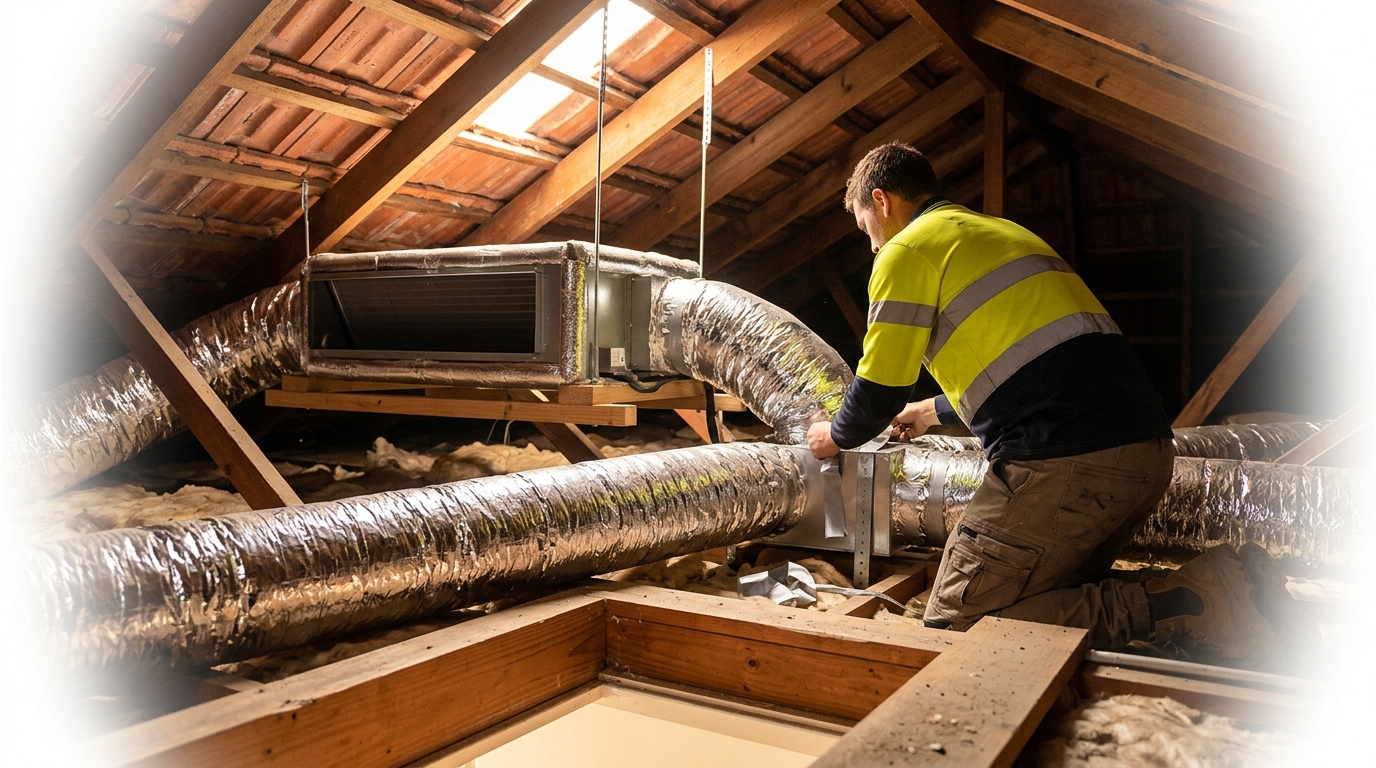
Labour typically adds $3,000 to $6,000 or more on top of the unit price, and that range exists because installations vary enormously. The key variables are roof space access, the total length of ductwork runs, the number of ceiling outlets required and whether your electrical panel needs an upgrade to handle the new load.
A straightforward single-storey home with a clear, accessible roof cavity and a short duct run to six or eight outlets is at the lower end of that labour range. A two-storey home is a different story. Routing ductwork between floors often requires cutting through structural elements, adding hours to the job. If your switchboard doesn't have capacity for a new dedicated circuit, factor in an additional $500 to $1,500 for electrical work on top of the standard installation quote.
Brand and System Quality
Ducted systems span a wide quality spectrum, from budget-tier brands to premium names like Daikin and Mitsubishi Electric. Budget systems cost less upfront but often carry shorter warranties, less sophisticated inverter technology and lower energy efficiency ratings, which means higher running costs over the life of the system.
Premium brands command a higher purchase price for good reason. Better inverter compressors maintain precise temperatures with less energy, and longer warranties (some Daikin models carry up to five years parts and labour) reduce your exposure to repair costs. For a system you'll run daily for 15 to 20 years, the efficiency gap between a budget and premium unit adds up to a meaningful dollar figure over time.
Zoning, Controls and Add-Ons
Zoning lets you independently control the temperature in different areas of your home, so you're not cooling empty bedrooms while the family is in the living room. A basic two-zone setup adds relatively little to the overall cost, but a fully zoned eight-room system with motorised dampers and individual zone sensors can add $1,000 to $3,000 or more to the installation price.
Smart Wi-Fi controllers are another popular add-on, allowing you to adjust settings remotely via your phone. Enhanced filtration systems, particularly useful for allergy sufferers, are also available on most premium ducted units. Each of these extras is worth considering at the time of installation, as retrofitting them later is almost always more expensive.
Ducted Air Conditioning Price Breakdown by System Size
Fully installed ducted air conditioning in Australia ranges from around $7,000 for a compact 10kW system in a smaller home to well over $20,000 for a large-capacity system in a bigger property. The table below uses real supply-only prices from the Daikin ducted range to anchor the unit cost column, with installed price estimates reflecting typical Australian labour and materials costs across each capacity tier.
| System Capacity | Suitable Home Size | Unit Price (Supply Only) | Estimated Installed Price |
|---|---|---|---|
| Up to 10kW | Up to ~150sqm | From $4,017 (e.g. Daikin FDYAN100) | $7,000 to $11,000 |
| 10kW to 14kW | ~150 to 200sqm | From ~$4,500 to $5,275 (e.g. Daikin FDYAN140) | $9,000 to $13,000 |
| 14kW to 16kW | ~200 to 250sqm | From $5,814 (e.g. Daikin FDYAN160) | $10,500 to $15,000 |
| 16kW to 20kW | ~250 to 350sqm | From $5,962 (e.g. Daikin FDYQN180, three phase) | $13,000 to $19,000 |
| 20kW+ | 350sqm+ or high-demand climates | $7,000+ | $16,000 to $25,000+ |
Daikin is one of Australia's most trusted ducted brands, with a strong reputation for inverter efficiency and long-term reliability. Browse the full range of Daikin ducted systems to compare models and current pricing across all capacity tiers.
These figures are indicative ranges only. Your actual installed cost will depend on your roof cavity access, duct run lengths, number of outlets, zoning requirements and whether any electrical upgrades are needed. Always get at least two or three quotes from qualified installers before committing, and make sure each quote covers the same scope of work so you're comparing apples with apples.
Hidden and Ongoing Costs to Budget For
Beyond the unit and standard installation, ducted air conditioning carries several additional costs that catch buyers off guard. Budgeting for these upfront avoids nasty surprises once the job is underway and gives you a more accurate picture of the true five-year cost of ownership.
Electrical Upgrades and Switchboard Work
Ducted systems draw significant power, and older homes in particular may not have the electrical capacity to support a new dedicated circuit. If your switchboard needs an upgrade or a new circuit breaker installed, expect to add $500 to $1,500 to the overall cost. Three-phase systems, which are common at 16kW and above, require three-phase power at the property. If your home only has single-phase supply, connecting three-phase power from the street is a substantial additional expense that needs to be confirmed with your installer before you commit to a system.
Plastering and Ceiling Repairs
Installing ductwork means cutting into ceilings to fit the outlet grilles. In most cases a competent installer will leave a clean finish, but some homes require patching, plastering or repainting around the outlets after the job is done. This is rarely included in a standard installation quote, so ask your installer explicitly what the finish will look like and whether any remedial work is their responsibility.
Annual Servicing and Filter Maintenance
A ducted system should be professionally serviced once a year to keep it running efficiently and to protect your warranty. Expect to pay $150 to $300 per service depending on your location and the size of the system. Filter cleaning is something you can do yourself every few months, but a full service includes checking refrigerant levels, cleaning the indoor unit, inspecting ductwork connections and testing the controls. Skipping annual servicing is a false economy as minor issues left unattended tend to become expensive repairs.
Running Costs and the Case for Inverter Technology
Electricity is the ongoing cost that adds up most significantly over the life of a ducted system. Older fixed-speed systems run at full power until the set temperature is reached, then switch off completely, cycling on and off repeatedly throughout the day. Modern inverter systems adjust their output continuously to maintain the target temperature, which uses considerably less energy over the same period.
A high-efficiency ducted system with a strong energy star rating will cost more upfront but can meaningfully reduce your quarterly electricity bills. Over a 5 to 10 year lifespan, that efficiency gap often offsets a significant portion of the higher purchase price. If you're comparing two systems and one has a noticeably better star rating, it's worth running the numbers on annual running costs before defaulting to the cheaper option.
Ducted vs Split System: Which Is Worth the Cost?
Ducted air conditioning suits larger homes, new builds and whole-home comfort, while split systems are the more cost-effective choice for smaller homes, apartments or when only one or two rooms need conditioning. The right answer depends on your home size, how many rooms you need to condition and whether you're building new or retrofitting an existing property.
The table below summarises the key differences to help you self-qualify before speaking to an installer.
| Factor | Ducted System | Split System |
|---|---|---|
| Best suited to | 4+ bedroom homes, new builds, renovations | Apartments, smaller homes, 1 to 3 rooms |
| Upfront cost (installed) | $8,000 to $20,000+ | $1,500 to $4,500 per unit installed |
| Unit supply cost | $4,000 to $7,000+ | $600 to $2,500+ |
| Whole-home coverage | Yes, via ceiling vents in every room | No, each unit covers one zone only |
| Aesthetic impact | Minimal, only small ceiling grilles visible | Wall-mounted indoor unit visible in each room |
| Retrofit difficulty | High, requires roof cavity access and ductwork | Low, straightforward installation in most homes |
| Flexibility | Whole-home system, harder to expand later | Add units room by room as needed |
For medium-sized homes with three bedrooms, a quality multi-zone split system air conditioners setup can deliver very similar comfort to ducted at a considerably lower total cost. You might spend $6,000 to $9,000 installing three well-matched split systems rather than $12,000 to $15,000 on a ducted system of equivalent coverage.
Where ducted genuinely wins is in new builds and major renovations, where ductwork can be planned into the ceiling cavity from the start. It also wins on aesthetics: a ducted system is nearly invisible once installed, with only small grilles in the ceiling. If you're conditioning four or more rooms and the roof cavity allows it, ducted is usually the cleaner and more practical long-term solution.
Is Ducted Air Conditioning Worth the Cost?
Ducted air conditioning is a significant investment, typically $8,000 to $20,000+ fully installed, but it delivers whole-home comfort, adds measurable property value and, with a quality inverter system, can be surprisingly efficient to run day to day. For the right home and the right situation, it's one of the best upgrades you can make.
Before accepting any quote, do your homework on unit pricing. Supply-only prices are publicly available, so you can check what a Daikin FDYAN160 or FDYQN180 costs before a bundled installer quote lands in your inbox. Knowing the unit price gives you a clear baseline and makes it much easier to assess whether the labour and materials component of a quote is reasonable.
Get at least two or three quotes from qualified installers and make sure each one covers the same scope, including ductwork, zoning, electrical work and any ceiling repairs. The cheapest quote is not always the best value if it excludes items the others include.
To compare unit prices across the full range before you speak to an installer, browse our ducted air conditioner range and use the supply-only prices as your starting point.
Frequently Asked Questions
How much does ducted air conditioning cost to install in Australia?
Fully installed ducted air conditioning in Australia typically costs between $7,000 and $25,000+, depending on system capacity, home size and installation complexity. A 10kW system in a smaller home sits at the lower end of that range, while a large three-phase system in a 300sqm+ home can push well past $20,000. Labour alone generally adds $3,000 to $6,000 on top of the unit price.
How much does a Daikin ducted system cost installed?
A Daikin ducted system costs roughly $7,000 to $15,000 fully installed for most Australian homes, depending on capacity and installation requirements. The Daikin FDYAN160 16kW unit has a supply-only price of $5,814, and with labour, ductwork and electrical work, a fully installed price of $10,500 to $15,000 is a realistic expectation for a mid-sized home. Larger or more complex installations will cost more.
Is ducted air conditioning cheaper to run than split systems?
A modern inverter ducted system is efficient, but running costs are generally higher than a split system because it conditions a larger area. The key is using zoning to avoid cooling or heating rooms that aren't in use. A well-zoned ducted system with a strong energy star rating can keep running costs reasonable, but it will rarely be cheaper to run than a single split system covering one room.
How long does ducted air conditioning last?
A quality ducted air conditioning system typically lasts 15 to 20 years with regular servicing. Annual professional maintenance, filter cleaning every few months and prompt attention to any faults are the main factors that determine longevity. Budget-tier systems may need replacement sooner, while premium brands like Daikin and Mitsubishi Electric are built for long service lives.
Does ducted air conditioning add value to a home?
Yes, ducted air conditioning is widely regarded as a value-adding feature in the Australian property market. Buyers in most states expect whole-home climate control in larger homes, and a well-maintained ducted system can meaningfully improve a property's appeal and sale price. The return varies by location and property type, but it is generally considered one of the more practical home improvement investments.
What size ducted air conditioner do I need for a 4-bedroom house?
A typical four-bedroom Australian home of around 200 to 250sqm generally requires a 14kW to 16kW ducted system. That said, your climate zone, ceiling height, insulation quality and window area all affect the correct sizing. A qualified installer should perform a proper heat load calculation rather than relying on floor area alone, as undersizing or oversizing both lead to higher running costs and reduced comfort.
Can ducted air conditioning be installed in an existing home?
Yes, ducted air conditioning can be retrofitted into an existing home, provided there is adequate roof cavity space to run the ductwork. Single-storey homes with accessible roof cavities are the most straightforward to retrofit. Two-storey homes or properties with limited ceiling space are more complex and expensive to work with. An installer will need to inspect your roof cavity before quoting to confirm feasibility and identify the right ducted system for your layout.
Need expert advice?
Our team can help you choose the right air conditioning system for your space.