
Fan Mode on an Aircon: What It Does and When to Use It
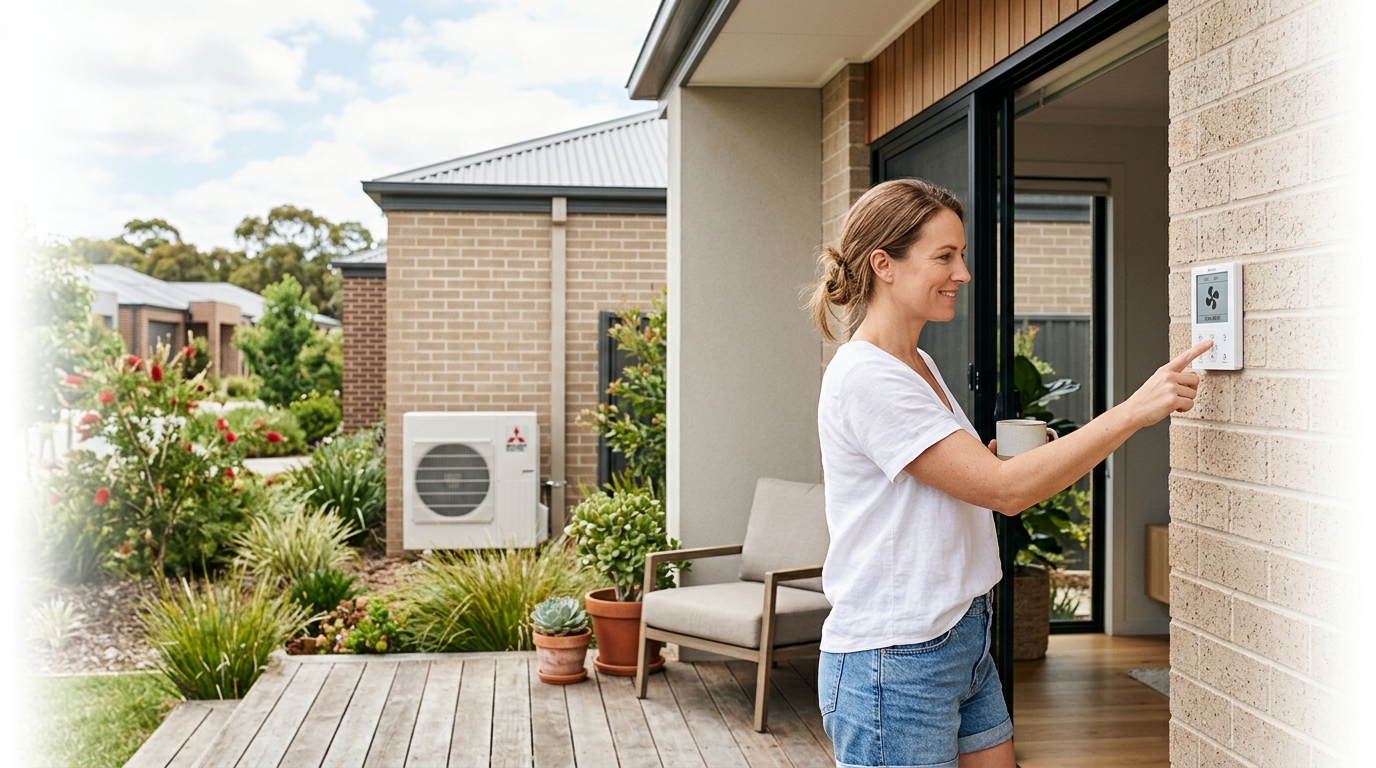
What Is Fan Mode on an Aircon?
Picture a mild autumn evening where the temperature has dropped to a comfortable 20 degrees but the air inside feels a little stale and still. Switching on full cooling would be overkill. This is exactly where fan mode on an aircon earns its place. Fan mode runs the indoor unit's fan to circulate air around the room without activating the compressor, so no active cooling or heating takes place.
Think of it as using your split system as a glorified ceiling fan. The unit moves air, improves circulation and can make a room feel fresher, all while drawing a fraction of the power it would use in cool or heat mode.
This article covers how fan mode works mechanically, when it makes sense to use it, how it stacks up against cool and auto modes, and whether it actually saves you money on electricity.
Key takeaways
- Fan mode aircon circulates air without cooling or heating, using only the indoor fan motor.
- It works best on mild days and overnight when active climate control is unnecessary.
- Fan mode uses 90% less electricity than cool mode, saving around $3 to $4 per night.
How Fan Mode Works in a Split System
Fan mode on a split system keeps the compressor completely switched off and runs only the indoor fan motor. In cool or heat mode, the compressor pumps refrigerant between the indoor and outdoor units to transfer heat, and that refrigerant cycle is the energy-hungry part of the system. In fan mode, none of that happens. The outdoor unit sits completely idle while the indoor fan draws room air across the indoor coil and pushes it back into the space.
Because no refrigerant cycle is active, the air passing through the unit is not cooled, heated or dehumidified. The temperature and humidity level in the room stay exactly the same. What changes is airflow. Moving air across your skin increases the rate of evaporative cooling from your body, which is why a room can feel more comfortable even when the actual air temperature has not dropped at all.
Most split systems offer several fan speed options in fan mode:
- Low: quiet, gentle circulation suited to bedrooms or quiet spaces
- Medium: a balanced option for living areas during mild weather
- High: maximum airflow for larger rooms or when you want to push air through quickly
- Auto fan: the unit selects a speed automatically based on its own logic (see below)
The outdoor unit produces zero noise and draws zero power in fan mode, which is worth knowing if your outdoor unit is positioned near a bedroom window or a neighbour's fence.
Fan Mode vs Auto Fan Speed: What's the Difference?
This is one of the most common points of confusion on an aircon remote, and it is worth clearing up directly. 'Fan mode' and 'auto fan speed' are two completely separate things.
Fan mode is a full operating mode, selected the same way you would select 'cool' or 'heat'. Choosing fan mode tells the unit to run the indoor fan only, with the compressor off. No cooling, no heating, no refrigerant movement.
Auto fan speed is a fan speed setting available within cool, heat or dry mode. When you select auto fan speed inside cool mode, the unit still runs the compressor and actively cools the room. It simply adjusts the fan speed up or down automatically to reach your target temperature more efficiently.
In short, auto fan speed within cool mode still runs the compressor and changes the air temperature. Fan mode does not. If your remote shows a fan icon alongside speed options like low, medium and high, look for a separate mode button to switch between cool, heat, dry, fan and auto. That mode button is what puts the unit into true fan mode.
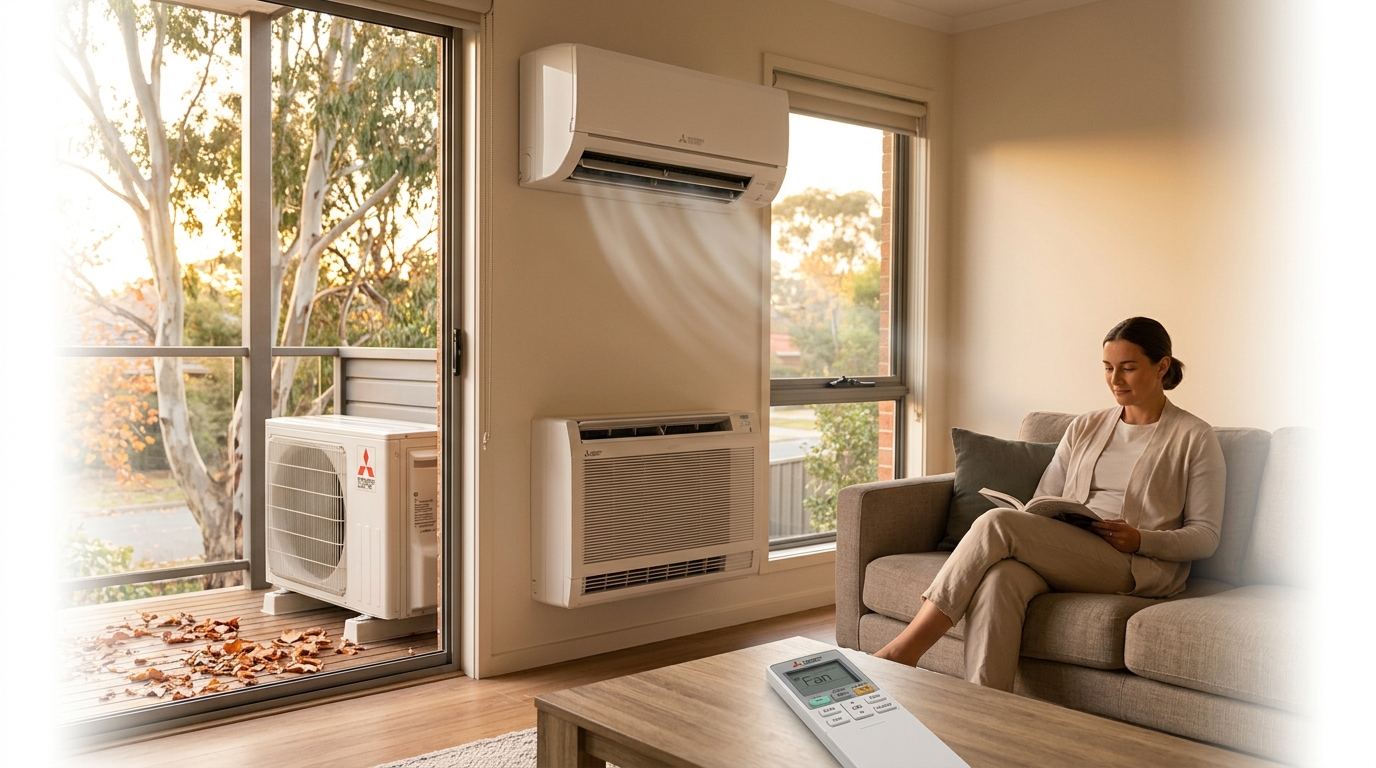
When Should You Use Fan Mode on Your Aircon?
Fan mode is best suited to mild conditions where air movement alone is enough to keep you comfortable. All modern split system air conditioners include fan mode as a standard feature, but most households rarely think to use it. Getting familiar with the right scenarios can save you money and reduce unnecessary wear on the compressor.
Here are the four situations where fan mode genuinely earns its keep:
- Mild spring or autumn days: If the temperature is sitting comfortably around 20 to 24 degrees but the air inside feels stale or stuffy, fan mode freshens the room without overcooling it. You get circulation without the chill.
- Overnight in temperate conditions: On nights where the mercury stays mild, running the compressor all night is wasteful. A low fan speed provides a gentle breeze that is often enough for comfortable sleep at a fraction of the running cost.
- After a cooling or heating cycle: Once the room has reached your target temperature, switching to fan mode for 10 to 15 minutes helps redistribute the conditioned air evenly before you turn the unit off entirely. This is especially useful in larger rooms where temperature can be uneven.
- Rooms with good cross-ventilation: Open a window on the opposite side of the room and let fan mode assist the natural airflow. The unit acts as a booster, pulling fresh air through the space more effectively than an open window alone.
Fan mode is not always the right call, though. There are two situations where you should skip it and reach for cool or dry mode instead.
- Humid summer days: Fan mode circulates humid air without removing any moisture. On a sticky 30-degree day in Brisbane or Darwin, it will make the room feel worse, not better. Use cool or dry mode instead.
- When the room genuinely needs cooling or heating: Fan mode cannot change the air temperature. If you are hot, use cool mode. If you are cold, use heat mode. Fan mode is a comfort tool for mild conditions, not a substitute for active climate control.
Fan Mode vs Cool Mode: Which One Should You Choose?
Fan mode and cool mode serve different purposes, and choosing the wrong one for the conditions will either leave you uncomfortable or cost you more than necessary. The table below lays out the key differences across five practical attributes so you can make the right call quickly.
| Attribute | Fan Mode | Cool Mode |
|---|---|---|
| Compressor Active | No | Yes |
| Energy Use | Very low | Moderate to high |
| Temperature Change | None | Cools the room |
| Humidity Reduction | None | Yes. Dehumidifies as a by-product |
| Best Used When | Mild days, good airflow | Hot days, humid conditions |
Fan mode is not a substitute for cool mode on a genuinely hot day. If the outdoor temperature is pushing 30 degrees or above, or the humidity is making the air feel heavy, fan mode will circulate warm, muggy air around the room and do nothing to address the actual problem. Cool mode activates the compressor, drops the room temperature and pulls moisture out of the air as a by-product. That is what you need in Australian summer conditions.
Where fan mode shines is in the shoulder seasons and mild evenings where cool mode would simply overcool the room and waste energy. Modern units make switching between modes straightforward. The Daikin Lite FTXF25WVMA ($989) and the Mitsubishi Electric AP Series 2.5kW MSZAP25VGKD ($1,040) both allow you to toggle between fan and cool mode in a single button press on the remote, and both support app control if you want to switch modes before you even walk into the room. Browse the full range of Daikin split systems or Mitsubishi Electric split systems if you are looking for a unit that handles both modes with minimal fuss.
Does Fan Mode Save Electricity?
Fan mode uses dramatically less electricity than cool mode because the compressor never switches on. A typical split system compressor draws between 700W and 2,500W depending on the capacity of the unit. The indoor fan motor alone draws roughly 20W to 60W. Running fan mode on a mild day instead of cool mode can cut the energy draw of the unit by 90% or more compared to active cooling.
Fan mode is not completely free to run. The indoor fan motor does consume a small amount of electricity, and over a full day that adds up. But the saving compared to running cool mode unnecessarily is significant. To put it in practical terms, running a 40W fan motor for eight hours costs around $0.10 to $0.15 at typical Australian electricity rates. Running a 1,500W compressor for the same period costs closer to $3.50 to $4.50. The difference is not trivial across a season.
The Fujitsu Lifestyle 2.5kW ASTG09KMTC ($1,018) is a good example of a unit that makes this easy to act on. Its remote clearly labels fan mode as a distinct operating mode, so there is no guesswork about whether the compressor is running or not. You can see at a glance which mode you are in and switch intentionally rather than leaving the unit in cool mode out of habit.
Using fan mode strategically on mild days and overnight is one of the simplest habits for reducing annual running costs. It requires no special settings, no timers and no app. Just a single button press on the remote when the conditions are right.
FAQ: Fan Mode Aircon Questions Answered
Does fan mode on an aircon cool the room?
No. Fan mode does not cool the room. The compressor stays off, so no refrigerant cycle runs and the air temperature does not change. Fan mode circulates existing room air, which can make you feel cooler through increased airflow across your skin, but the actual temperature in the room stays the same.
Is fan mode the same as a ceiling fan?
They produce a similar effect but work differently. A ceiling fan moves air directly using a motor and blades mounted in the room. An aircon in fan mode draws air through the indoor unit, passes it across the internal coil and pushes it back out through the louvres. Both circulate air without changing temperature, but the aircon's fan mode directs airflow more precisely and can cover a larger area from a single point.
Should I use fan mode or auto mode?
Use fan mode when the temperature is already comfortable and you just want air movement. Auto mode is better when you want the unit to maintain a set temperature, because it will switch between cooling, heating and fan operation automatically to hold that target. Fan mode gives you manual control and keeps the compressor off. Auto mode hands control to the unit and will run the compressor whenever it decides the room needs it.
Does fan mode use a lot of electricity?
No. Fan mode draws only 20W to 60W depending on the unit and the fan speed selected. That is comparable to a standard light bulb. Running fan mode for a full eight-hour night costs roughly $0.10 to $0.15 at typical Australian electricity rates, compared to several dollars for the same period in cool mode.
Can I use fan mode overnight?
Yes, and it is one of the best uses for it. On mild nights where the temperature stays below 24 degrees, a low fan speed provides gentle air movement that most people find comfortable for sleeping. It is quieter than cool mode because the compressor and outdoor unit are completely off, and the running cost overnight is minimal.
Does fan mode help with humidity?
No. Fan mode does not remove moisture from the air. It simply circulates the air as-is, humidity included. On a humid day, fan mode can actually make the room feel more uncomfortable by moving warm, sticky air around without addressing the moisture. For humid conditions, use dry mode or cool mode instead, both of which dehumidify the air as part of their normal operation.
Ready to Get More From Your Air Conditioner?
Fan mode is one of the most underused settings on a split system, yet it costs almost nothing to run and can keep a room comfortable on mild days without touching the compressor. Used on the right days, particularly in spring, autumn and on temperate evenings, it can meaningfully reduce your annual running costs without any sacrifice in comfort.
If you are in the market for a new unit that handles every mode well, from fan and dry through to full cooling and heating, browse our full range of split system air conditioners at Air Conditioning Experts. You can compare models from Daikin, Mitsubishi Electric, Fujitsu and more, with clear specs and pricing to help you find the right fit for your home.
Need expert advice?
Our team can help you choose the right air conditioning system for your space.