
How Does Air Conditioning Work? A Plain-English Guide for Australian Homeowners
How Does Air Conditioning Work? The Short Answer
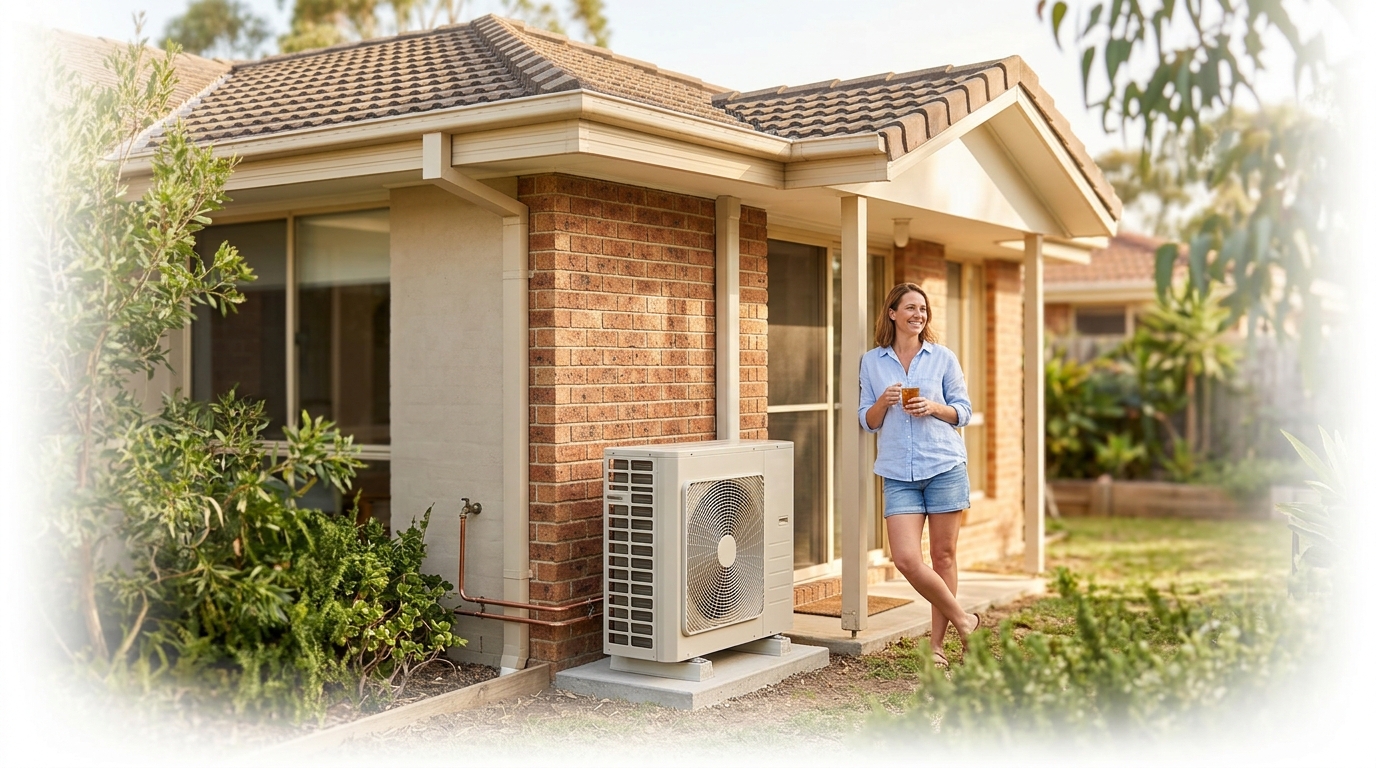
Air conditioning works by moving heat out of your home rather than generating cold air from scratch. A refrigerant fluid circulates between an indoor unit and an outdoor unit, absorbing heat from inside your home and releasing it outside. The result is a cooler, more comfortable indoor environment, which is exactly what you need during an Australian summer that can push well past 40 degrees Celsius.
This guide covers the four things every homeowner should understand: the refrigeration cycle that makes it all possible, the key components inside your system, the main types of air conditioners available in Australia and some practical tips for getting the most out of your unit. By the end, you will have a clear picture of what is actually happening every time you reach for the remote.
Key takeaways
- Air conditioning works by moving heat out of your home using a refrigeration cycle with refrigerant fluid.
- Split systems and ducted systems are the most popular options for Australian homes.
- Setting your thermostat between 24 and 26 degrees Celsius maximises energy efficiency.
The Refrigeration Cycle: Moving Heat, Not Making Cold
The refrigeration cycle is the continuous process that allows your air conditioner to transfer heat from inside your home to the outdoors. It runs in a loop, which is why a well-functioning system can hold a steady temperature rather than just cooling the room once and stopping. Understanding this cycle makes it much easier to diagnose problems, choose the right system and use your unit efficiently.
Here is how the cycle works, step by step:
- Warm indoor air passes over the evaporator coil. The indoor unit draws warm air from your room across a coil filled with cold refrigerant. The refrigerant absorbs the heat from the air, and the now-cooler air is blown back into the room.
- The refrigerant evaporates into a gas. As the refrigerant absorbs heat, it changes state from a liquid into a low-pressure gas. This phase change is what allows it to carry large amounts of heat energy very efficiently.
- The compressor pressurises the gas and pumps it outside. The compressor, located in the outdoor unit, squeezes the refrigerant gas to a much higher pressure. This raises its temperature significantly, making it hotter than the outside air so the heat can be released.
- The condenser coil releases the heat outside. The hot, high-pressure gas flows through the condenser coil in the outdoor unit. A fan blows outside air across the coil, drawing the heat away. As the refrigerant loses heat, it condenses back into a liquid and the cycle begins again.
Because this process repeats continuously, your air conditioner does not just cool the room once and switch off. It keeps pulling heat out until the indoor temperature matches your thermostat setting, then cycles on and off to maintain it.
What Is Refrigerant and Why Does It Matter?
Refrigerant is the chemical compound that circulates through your air conditioning system, shifting between liquid and gas states to carry heat from one place to another. Without it, the refrigeration cycle simply cannot happen. Think of it as the working fluid that does the heavy lifting inside every air conditioner.
The type of refrigerant your system uses affects both its energy efficiency and its environmental impact. Older systems used R22, which was phased out in Australia due to its high ozone-depleting potential. Most modern Australian units now use either R32 or R410A. R32 has become the preferred choice for newer split systems because it has a lower global warming potential than R410A and requires a smaller refrigerant charge to do the same job.
The charge level matters just as much as the type. If your system is low on refrigerant due to a leak, it will struggle to transfer heat effectively, your energy bills will climb and the compressor can overheat. Refrigerant top-ups must be carried out by a licensed technician under Australian regulations, so if your system is not cooling as well as it used to, a professional check is the right first step.
Key Components Inside Your Air Conditioner
Every air conditioner, regardless of brand or size, relies on five core components working together to move heat out of your home. Knowing what each part does makes it far easier to spot early warning signs of trouble before a small issue turns into an expensive repair.
- Evaporator coil: Located in the indoor unit, this coil is filled with cold refrigerant that absorbs heat from the warm air drawn across it. When it is working correctly the coil stays cool and dry. Ice forming on the coil is a common sign of restricted airflow or low refrigerant.
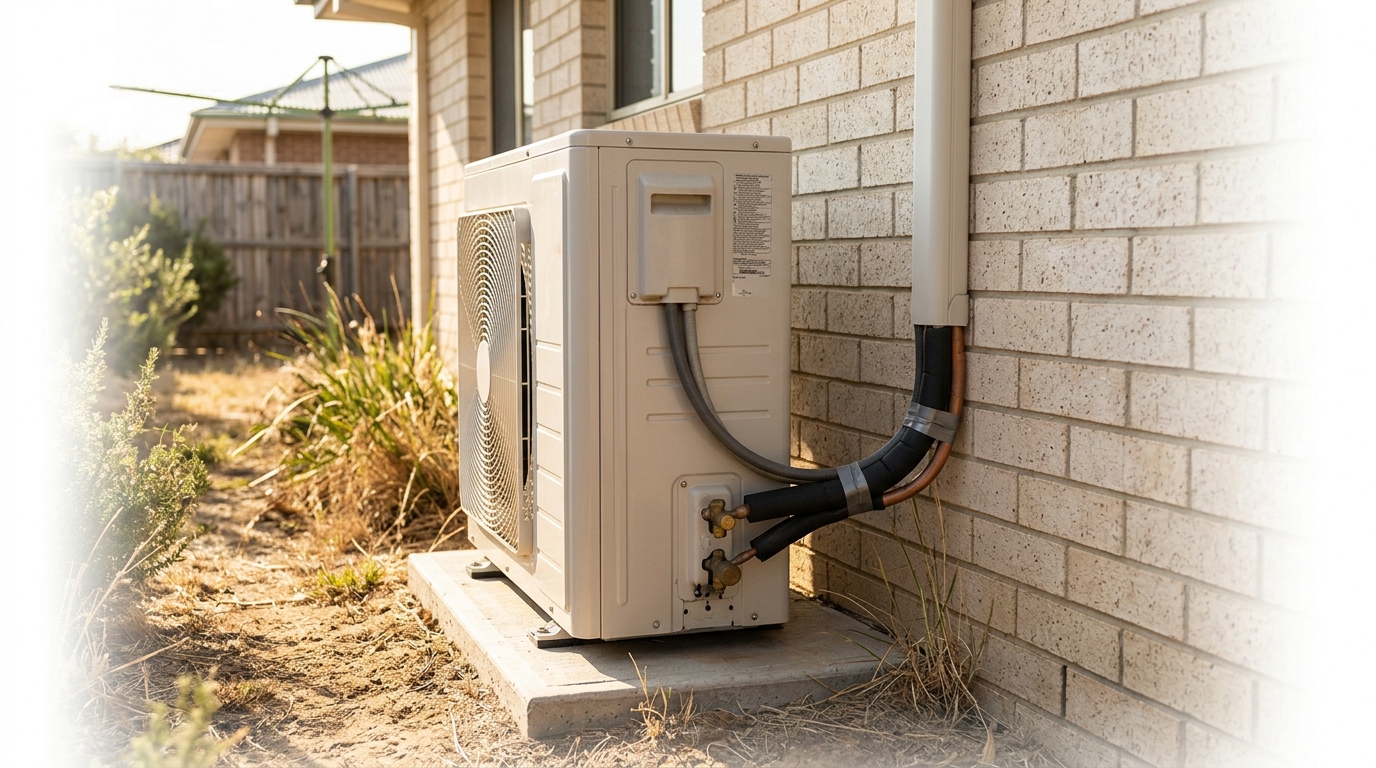
- Condenser coil: Housed in the outdoor unit, this coil releases the heat the refrigerant has carried from inside your home. A fan blows outside air across it to carry that heat away. In split system air conditioners, the evaporator and condenser coils are separated into two distinct units connected by refrigerant lines.
- Compressor: The heart of the outdoor unit, the compressor pressurises the refrigerant gas to raise its temperature so heat can be expelled outside. A grinding or rattling noise from the outdoor unit often points to a compressor under stress.
- Expansion valve: This small but critical component rapidly reduces the pressure of the refrigerant as it moves back toward the indoor unit, dropping its temperature so it is ready to absorb heat again.
- Fan and blower: The indoor blower circulates room air across the evaporator coil, while the outdoor fan pushes air across the condenser coil. Reduced airflow from either fan will drag down the efficiency of the whole system.
These five components form a closed loop. If any one of them underperforms, the entire refrigeration cycle suffers. Keeping your filters clean, scheduling annual servicing and listening for unusual noises are the simplest ways to catch component problems early and avoid a mid-summer breakdown.
Types of Air Conditioning Systems Available in Australia
Australian homeowners have three main system types to choose from: split systems, ducted systems and portable units. Each suits a different combination of home size, budget and installation situation. The table below gives a quick comparison before we look at the trade-offs in more detail.
| System Type | Best For | Typical Capacity Range | Approximate Price Range (AUD) |
|---|---|---|---|
| Split System | Single rooms or open-plan living areas | 2kW to 9kW | $700 to $2,500+ |
| Ducted System | Whole-home or multi-room cooling and heating | 8kW to 20kW+ | $3,500 to $10,000+ |
| Portable Unit | Renters or rooms where installation is not possible | 1kW to 4kW | $400 to $1,200 |
Split systems are by far the most popular choice for Australian homes. They consist of a wall-mounted indoor unit and a compact outdoor unit, require only a small hole through the wall for refrigerant lines and can be installed in a day. At the entry-level end, the Daikin 2.5kW Inverter Split System Lite FTXF25WVMA at $989 is a solid starting point for a bedroom or small living area. For a medium-sized open-plan space, the Mitsubishi Electric 5kW Split System AP Series MSZAP50VGKD at $1,653 offers reliable performance with strong energy efficiency ratings. Browse Daikin split systems if you want to compare the full range of capacities and features. The main trade-off with split systems is that each unit only conditions one zone, so a large home may need multiple units.
Ducted systems run concealed ductwork through your ceiling or under your floor to deliver conditioned air to every room from a single central unit. They offer a clean, unobtrusive look and the ability to zone different areas of the home independently. The Daikin 10kW Inverter Ducted Air Conditioner FDYAN100 at $4,017 is a practical example of a whole-home solution suited to medium to large Australian homes. The price step-up over split systems is real, and installation costs are higher too, but the result is consistent comfort throughout the entire house. If a whole-home solution sounds right for your situation, our range of ducted air conditioners covers options from leading brands across a wide range of capacities.
Portable units need no installation at all, which makes them attractive for renters or rooms where a wall-mounted unit is not practical. The trade-off is efficiency. Portable units are significantly less efficient than split systems of a similar capacity, they generate noise in the room and they require a window or vent to exhaust hot air. For most homeowners who have the option to install a fixed system, a split system will deliver better comfort at a lower running cost over time.
Reverse Cycle vs Cooling-Only: What Most Australians Need
A reverse-cycle air conditioner uses the same refrigeration cycle in both directions, extracting heat from outside air to warm your home in winter and pumping heat out to cool it in summer. A cooling-only unit runs the cycle in one direction only and cannot provide heating. For most Australian homeowners, reverse-cycle is the smarter long-term investment.
The case for reverse-cycle is strongest in southern states like Victoria, South Australia and Tasmania, where winter temperatures regularly drop to single digits. Running a reverse-cycle system for heating is typically two to three times more energy-efficient than a standard electric heater, because you are moving heat rather than generating it. Even in Queensland and the Northern Territory, where winters are mild, the small price premium for reverse-cycle capability is usually worth paying for the flexibility it provides.
Cooling-only units do cost slightly less upfront and can make sense in far-north Queensland or Darwin where heating is genuinely never needed. For everywhere else in Australia, a reverse-cycle system covers all seasons in one purchase and tends to pay for itself through lower energy bills within a few years.
Getting the Most Out of Your Air Conditioner: Practical Tips for Homeowners
Running your air conditioner efficiently comes down to a handful of consistent habits that reduce energy use, extend the life of your unit and keep your home comfortable through the hottest months. These tips apply to any split system or ducted unit in an Australian home, regardless of brand or age.
- Set the thermostat between 24 and 26 degrees Celsius for cooling. Every degree below 24°C can add around 10% to your running costs. A setting of 24 to 26°C keeps most rooms comfortable while keeping your electricity bill in check. For heating in winter, 18 to 20°C is the equivalent sweet spot.
- Clean or replace your filters every four to six weeks during heavy use. A clogged filter forces the fan to work harder, reduces airflow across the evaporator coil and can cause ice to form on the coil. Most filters simply slide out and can be rinsed under a tap. It takes five minutes and makes a noticeable difference to both performance and air quality.
- Keep doors and windows closed while the unit is running. Every gap lets warm outside air flood back in, forcing the system to work continuously rather than cycling down once the target temperature is reached. In older homes, check door seals and window frames for obvious draughts before summer arrives.
- Use the timer function to pre-cool before peak heat. Running your unit from around 2pm rather than waiting until the house is already at 38°C means the system works against a smaller temperature difference and reaches your target setting much faster. Many modern units, including Mitsubishi Electric split systems, offer Wi-Fi control and smart scheduling so you can set this up from your phone before you even leave work.
- Schedule a professional service once a year. A licensed technician will check refrigerant levels, clean the coils, inspect electrical connections and confirm the system is running within its rated efficiency. Annual servicing catches small problems before they become expensive mid-summer breakdowns.
- Follow the 3-minute rule when restarting your unit. If you turn the system off and need to switch it back on, wait at least three minutes before restarting. This gives the refrigerant pressure time to equalise and protects the compressor from unnecessary strain. It is a simple habit that can add years to the life of your unit.
Frequently Asked Questions
How does an air conditioner cool a room?
An air conditioner cools a room by removing heat from the indoor air rather than producing cold air from scratch. Warm room air passes over a refrigerant-filled evaporator coil, the refrigerant absorbs the heat and carries it to the outdoor unit where it is expelled outside. The cooled air is then blown back into the room, and the cycle repeats until the thermostat setting is reached.
What is the most energy-efficient temperature to set my air conditioner?
The most energy-efficient cooling temperature is between 24 and 26 degrees Celsius. Setting your thermostat in this range balances comfort with running costs, as each degree below 24°C adds roughly 10% to your energy use. For heating, 18 to 20°C is the recommended range. Avoid setting extreme temperatures in the hope of cooling or heating the room faster as it does not speed up the process and simply wastes energy.
How often should I service my air conditioner?
Most manufacturers and Australian HVAC technicians recommend a professional service once a year, ideally before summer begins. Between professional services, you should clean or rinse the indoor filter every four to six weeks during periods of heavy use. Regular filter cleaning is the single most effective thing a homeowner can do to maintain efficiency and air quality between annual services.
Why should you wait 3 minutes before turning an air conditioner back on?
Waiting three minutes after switching off your air conditioner allows the refrigerant pressure in the system to equalise before the compressor starts again. If the compressor restarts against unbalanced pressure, it has to work much harder than normal, which causes unnecessary wear and can shorten its lifespan significantly. Most modern units have a built-in delay to handle this automatically, but manually waiting three minutes is a good habit if your unit does not.
Ready to Choose the Right System for Your Home?
Air conditioners move heat rather than manufacture cold air, and that single insight changes how you shop for one. The right system type and capacity for your space will keep you comfortable year-round while keeping running costs as low as possible. Get either of those factors wrong and you will feel it in both your comfort and your electricity bill.
If you are ready to find the right fit, browse our full range of split system air conditioners and ducted air conditioners online. Every product listing includes capacity, energy star ratings and pricing so you can compare options side by side at your own pace. And if you would rather talk it through with someone who knows their stuff, get in touch with our team. We are happy to help you match the right system to your home, your climate zone and your budget.
Need expert advice?
Our team can help you choose the right air conditioning system for your space.