
How Does Evaporative Cooling Work? A Plain-English Explanation
How Does Evaporative Cooling Work?
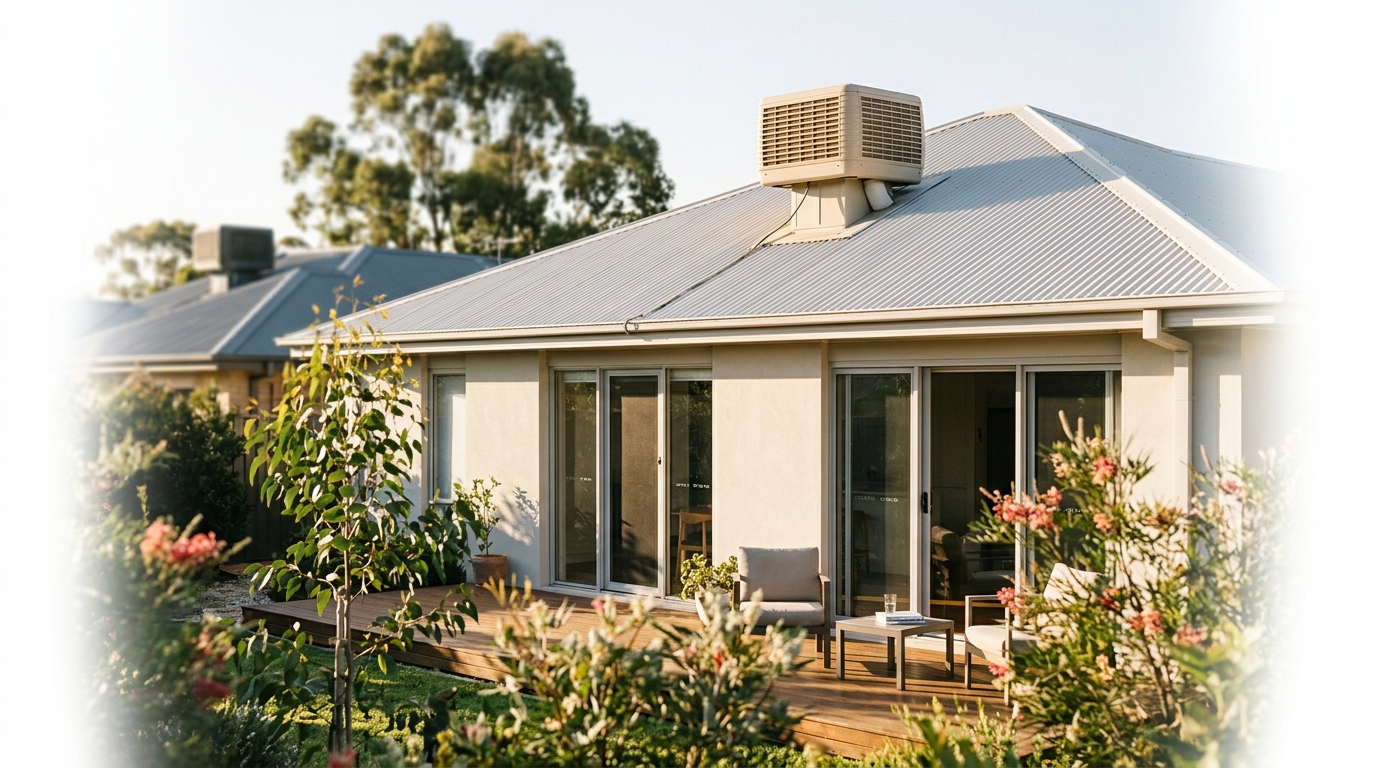
Evaporative cooling works by drawing warm outside air through water-saturated pads, where the water evaporates and absorbs heat from the air, dropping its temperature before a fan pushes that cooled air into your home. Think of stepping out of a swimming pool on a hot, dry day. The water on your skin evaporates and you feel an immediate chill. An evaporative cooler does exactly the same thing, just on a larger scale.
This article covers the core science behind the process, the key pros and cons, how evaporative cooling compares to refrigerant-based air conditioning, and when a split system is likely the smarter choice for Australian homes.
Key takeaways
- Evaporative cooling works by using water evaporation to absorb heat and cool air naturally
- Most effective in hot, dry climates with humidity below 30 per cent
- Uses 80 per cent less electricity than refrigerant air conditioning systems
- Requires regular maintenance and open windows to function properly
The Science Behind Evaporative Cooling
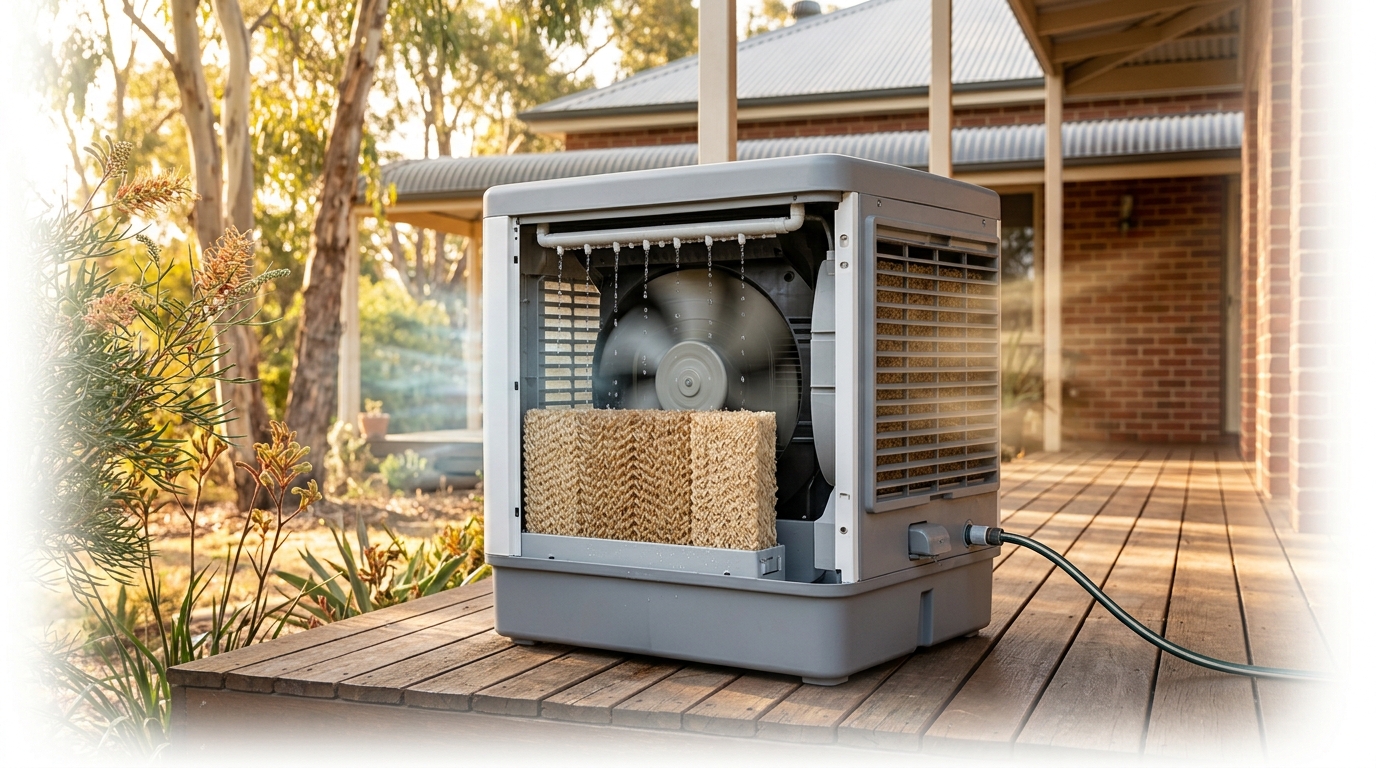
An evaporative cooler has three main components working together: a water reservoir that keeps the cooling pads saturated, thick cellulose or synthetic wet pads that the air passes through, and a fan that draws warm air in and pushes cooled air out. The temperature drop happens because of a physical principle called the latent heat of evaporation. When water changes from liquid to vapour, it absorbs a significant amount of heat energy from the surrounding air, and that absorbed heat is what cools the airstream down.
In dry conditions, a well-sized evaporative cooler can drop air temperature by 5 to 15 degrees Celsius. The exact drop depends on how hot and dry the incoming air is. The drier the air, the more water it can absorb, and the greater the cooling effect.
Here is how the cooling cycle works from start to finish:
- The water pump draws water from the reservoir and distributes it evenly across the cooling pads, keeping them thoroughly wet.
- The fan pulls warm outside air through the saturated pads at a controlled rate.
- As the air passes through the pads, water molecules evaporate into the airstream, absorbing heat energy in the process.
- The now-cooled, slightly more humid air is pushed through the ductwork or directly into the room.
- Windows or vents are left partially open to allow the warm stale air to escape, maintaining a continuous flow of fresh cooled air through the space.
That last step is worth noting. Unlike a refrigerant air conditioner, an evaporative cooler needs the home to be partially open to work properly. Sealing the house traps humidity and reduces the cooling effect quickly.
Why Humidity Makes or Breaks the Process
Evaporative cooling is most effective when the relative humidity outside is below 30%. At that level, the air has plenty of capacity to absorb more moisture, and the evaporation rate is high enough to produce a meaningful temperature drop. Once humidity climbs above 60%, the air is already carrying so much moisture that very little additional evaporation can occur, and the cooler delivers little more than a warm, damp breeze.
This is why evaporative cooling suits some Australian climates far better than others. Cities like Adelaide and Perth experience hot, dry summers with humidity regularly sitting below 20% on the hottest days, making evaporative systems genuinely effective. Inland areas of New South Wales and Victoria are similarly well-suited. Coastal cities like Brisbane, Sydney and Darwin are a different story. High summer humidity in those regions regularly pushes past 60 to 70%, which is exactly the range where evaporative cooling loses its effectiveness and a refrigerant-based split system becomes the more practical choice.
Pros and Cons of Evaporative Cooling
Evaporative cooling has genuine strengths that make it the right choice for many Australian households, but it also has real limitations that can make it the wrong choice for others. The table below lays out both sides honestly so you can weigh them against your own situation.
| Advantages | Disadvantages |
|---|---|
| Lower purchase price than a comparable refrigerant system | Ineffective in humid weather (above 60% relative humidity) |
| Uses roughly 80% less electricity than a refrigerant air conditioner, significantly reducing running costs | Windows or vents must be left partially open, which lets in noise, dust and insects |
| Continuously introduces fresh outside air rather than recirculating the same stale indoor air | Requires regular water top-ups, especially on very hot days when consumption increases |
| No refrigerant chemicals involved, making it a simpler and more environmentally straightforward technology | Cooling pads need periodic cleaning and replacement to prevent mould and mineral build-up |
| Adds a small amount of moisture to dry indoor air, which can feel more comfortable in arid climates | Provides no heating capability, so a separate heating solution is needed in winter |
| Generally simpler to install and service than a refrigerant split system | Performance drops sharply on days when outside humidity is already elevated, often the hottest days of the year |
The running cost advantage is real and worth taking seriously. An evaporative cooler typically draws between 150 and 500 watts, compared to 800 to 2,500 watts for a refrigerant split system doing the same job. Over a full summer in a dry climate like Adelaide or Perth, that difference adds up to a meaningful saving on your electricity bill.
The flip side is that the maintenance commitment is ongoing. Pads that are not cleaned regularly become a breeding ground for bacteria and mould, and the water supply line needs to be checked at the start of each season. If you are not prepared to keep up with that routine, the running cost savings can be offset by repair bills or poor air quality.
Evaporative Cooling vs Split System Air Conditioning
Evaporative coolers and split system air conditioners cool your home through completely different processes, which means each technology suits a different set of circumstances. The table below compares them across the factors that matter most to Australian homeowners.
| Feature | Evaporative Cooler | Split System Air Conditioner |
|---|---|---|
| Climate suitability | Best in hot, dry climates (Adelaide, Perth, inland NSW and VIC) | Effective in all Australian climates, including humid coastal regions |
| Running cost | Very low. Typically 150 to 500W per hour | Higher. Typically 800 to 2,500W per hour depending on capacity |
| Purchase price | Lower upfront cost for equivalent coverage | Higher upfront cost, though prices vary widely by brand and capacity |
| Heating capability | None. Cooling only | Yes, reverse-cycle models provide both heating and cooling year-round |
| Humidity performance | Drops sharply above 60% relative humidity | Consistent performance regardless of outdoor humidity levels |
| Maintenance | Regular pad cleaning, water top-ups and seasonal servicing required | Filter cleaning every few weeks, annual professional service recommended |
| Air quality | Continuously draws in fresh outside air | Recirculates indoor air, filtered but not fresh outside air |
Evaporative cooling makes strong sense if you live in a dry inland climate, want to keep running costs as low as possible and already have a separate heating solution for winter. For most Australian homes, particularly those on the coast or in subtropical regions where summer humidity regularly exceeds 60%, a reverse-cycle split system air conditioners offer year-round reliability that an evaporative cooler simply cannot match. A split system heats in winter, cools in summer and performs consistently regardless of what the humidity is doing outside.
Evaporative Cooler Maintenance: What You Need to Know
Evaporative coolers require more hands-on seasonal maintenance than most owners expect before they buy. The core tasks are cleaning or replacing the wet pads each season, flushing the water reservoir regularly, checking the pump and float valve, and winterising the unit at the end of summer. Skipping any of these steps does not just reduce performance, it can actively harm your indoor air quality.
The wet pads are the part that demands the most attention. Over a cooling season, mineral deposits from tap water accumulate in the pad fibres and reduce airflow. More seriously, pads that stay damp between uses can harbour mould and bacteria, which then get pushed directly into your living spaces every time the fan runs. Most manufacturers recommend inspecting pads at the start of each season and replacing them every one to three years depending on water hardness and how heavily the unit is used.
Here is a straightforward seasonal maintenance checklist to keep your evaporative cooler running cleanly:
- At the start of summer, remove and inspect the cooling pads. Clean with a mild solution or replace if they show signs of mould, heavy mineral crust or physical deterioration.
- Drain and scrub the water reservoir to remove any sediment or biofilm that has built up over winter.
- Check the water pump is priming correctly and that the float valve shuts off at the right level to prevent overflow.
- During the season, flush the reservoir every two to four weeks to prevent mineral concentration in the water.
- At the end of summer, drain the reservoir completely, remove and dry the pads, and cover or seal the unit to keep dust and pests out over winter.
If that level of upkeep does not suit your situation, a portable unit is worth considering as an alternative. The Rinnai 2.6kW Cooling Only Portable Air Conditioner (RPC26MC) at $689 is a refrigerant-based option that needs nothing more than a filter rinse every few weeks. Renters and people cooling a single room can also browse portable air conditioners for a range of low-maintenance options that require no installation and no seasonal servicing routine.
Is Evaporative Cooling Right for Your Home?
Evaporative cooling suits Australian homes in hot, dry inland climates where summer humidity stays consistently below 30 to 40%. If you live in Adelaide, Perth or inland New South Wales and Victoria, have an open-plan layout that allows good airflow, and already have a separate heating solution for winter, an evaporative system can deliver genuine comfort at a low running cost. For everyone else, the limitations outweigh the savings.
Coastal and subtropical households in Sydney, Brisbane, Melbourne and Darwin face summer humidity that regularly exceeds 60%, which is the point where evaporative cooling becomes largely ineffective. If you also need heating through winter, an evaporative cooler covers only half the year and you will still need a second system. In those situations, a reverse-cycle split system is the more practical and cost-effective choice across all seasons.
For households making the switch or setting up a new home, the Daikin 2.5kW Inverter Split System LITE (FTXF25WVMA) at $989 is a solid entry-level option for bedrooms and smaller living areas. For larger open-plan spaces, the Daikin 5kW Inverter Split System LITE (FTXF50WVMA) at $1,589 provides the capacity to handle a full living and dining area comfortably. Both models offer reverse-cycle heating and cooling in a single unit. Browse the full range of Daikin split systems to find the right capacity for your space.
Frequently Asked Questions
How does evaporative cooling work?
Evaporative cooling works by pulling warm outside air through water-saturated pads. As the water evaporates, it absorbs heat from the air and drops its temperature before a fan pushes the cooled air into your home. The process relies on the same principle as feeling cold when you step out of a pool. Water evaporating off a surface draws heat away from the surrounding air.
Is evaporative cooling effective in humid weather?
No. Evaporative cooling loses effectiveness quickly once outdoor humidity rises above 60%. At that point, the air is already carrying so much moisture that very little additional evaporation can occur, and the unit delivers minimal cooling. Households in humid coastal cities like Brisbane, Sydney and Darwin are better served by a refrigerant-based reverse-cycle split system.
Does evaporative cooling use a lot of electricity?
Evaporative coolers are significantly cheaper to run than refrigerant air conditioners. A typical unit draws between 150 and 500 watts, compared to 800 to 2,500 watts for a comparable split system. Over a full summer in a dry climate, that difference can add up to a substantial saving on your electricity bill.
How often do evaporative cooler pads need to be replaced?
Most manufacturers recommend inspecting the cooling pads at the start of each season and replacing them every one to three years. The exact interval depends on your local water hardness and how heavily the unit is used. Pads showing signs of mould, heavy mineral crust or physical deterioration should be replaced immediately, regardless of age, to protect your indoor air quality.
Need expert advice?
Our team can help you choose the right air conditioning system for your space.