
How Does Hydronic Heating Work and Is It Right for Your Home?
How Does Hydronic Heating Work?
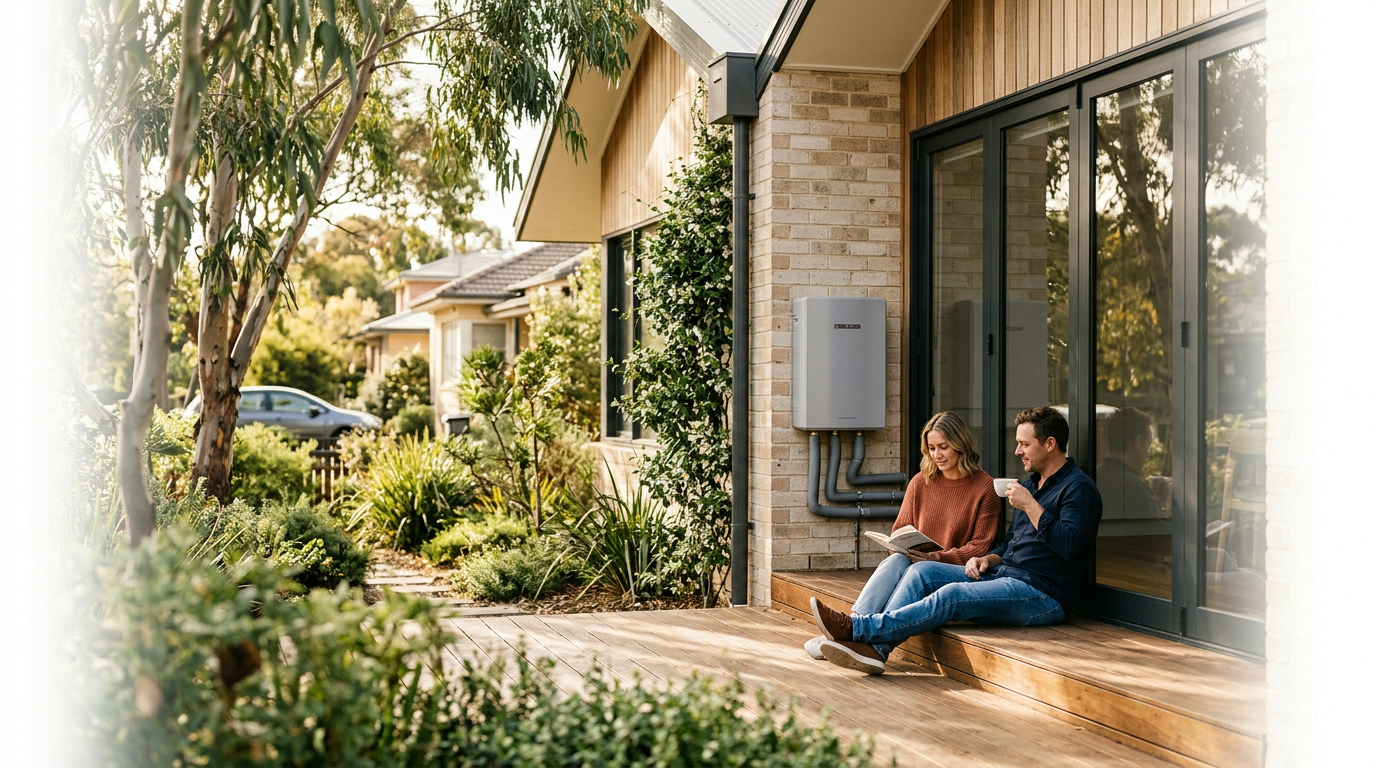
Hydronic heating is a water-based central heating system that warms your home by circulating hot water through a closed loop of pipes connected to heat emitters such as panel radiators, towel rails or underfloor tubing. A boiler or heat pump heats the water, a circulation pump keeps it moving around the loop, and the emitters release that warmth into each room through radiant heat and natural convection rather than blowing air around.
Because the system relies on radiant warmth rather than forced air, it produces a very even, consistent heat. There are no fans pushing dust and allergens around the room, and the temperature tends to feel more stable than what you get from a ducted air system cycling on and off.
The heat source can be a gas condensing boiler, an electric boiler or a hydronic heat pump. Each option has different running costs and installation requirements, but the core principle is the same: heat water, move it through pipes, release the warmth where you need it.
Key takeaways
- Hydronic heating works by circulating hot water through pipes to heat emitters that release warmth via radiant heat and convection.
- Systems offer even, silent, draught-free warmth with no air circulation or allergen disturbance.
- High upfront costs and lack of cooling capability make it suitable for specific climates and renovation scenarios.
The Key Components of a Hydronic Heating System
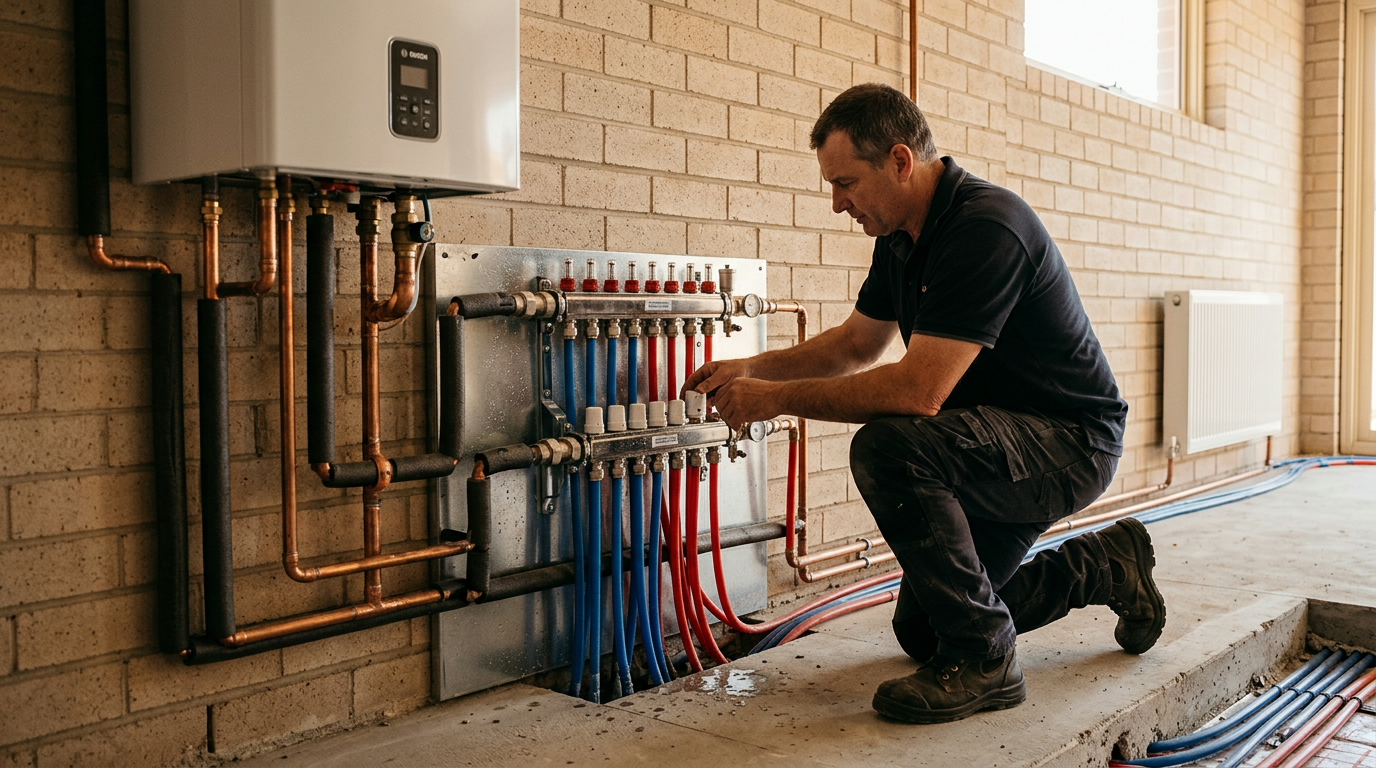
A hydronic heating system has four main parts working together: a heat source to warm the water, a circulation pump to keep it moving, a pipe network to carry it around the home, and heat emitters to release the warmth into each room. Modern systems also include a thermostat or zone controller so you can regulate the temperature room by room rather than heating the whole house at once.
Boilers and Heat Sources
The boiler is the heart of a hydronic system. It heats the water to the target temperature and maintains it as the water circulates through the loop. Gas condensing boilers are the most common choice in Australian homes because natural gas is widely available in most capital cities and the running costs are relatively predictable.
Hydronic heat pump systems are growing in popularity, particularly in Victoria and South Australia where gas prices have risen sharply. A heat pump extracts heat from outdoor air and transfers it to the water, using significantly less electricity than a conventional electric boiler. Electric boilers are also available and suit homes without a gas connection, though their running costs are higher than a heat pump alternative.
Heat Emitters: Radiators, Underfloor Loops and More
Heat emitters are the visible end of the system, and the type you choose affects both the look of your home and the water temperature your boiler needs to produce. Panel radiators are the most common choice in Australian hydronic installations. They mount on the wall, heat up relatively quickly and work well with water temperatures between 60 and 80 degrees Celsius.
Underfloor hydronic heating runs warm water through tubing embedded in or beneath the floor slab, turning the entire floor surface into a low-level radiant heater. Because the heat spreads across a large surface area, the water only needs to reach around 35 to 45 degrees Celsius, which makes underfloor loops particularly well matched to heat pump sources. Towel rails and trench convectors are also common additions, providing targeted warmth in bathrooms and near windows without requiring a separate heating system.
The pipe network connecting everything is typically made from PEX (cross-linked polyethylene) or copper. PEX is flexible, resistant to corrosion and easier to run through existing wall cavities, making it the preferred choice for most new hydronic installations in Australia.
Pros and Cons of Hydronic Heating
Hydronic heating has genuine strengths that make it a compelling choice for certain homes, but it also carries real limitations that can rule it out entirely for others. The table below lays out both sides honestly so you can weigh them against your own situation.
| Pros | Cons |
|---|---|
| Even, draught-free warmth with no hot and cold spots across the room | High upfront installation cost, typically $8,000 to $20,000+ depending on system size and emitter type |
| Silent operation with no fan noise, making it ideal for bedrooms and living areas | No cooling capability at all. A separate system is required for summer comfort |
| No air circulation means dust, pollen and allergens stay settled, which is a real benefit for allergy and asthma sufferers | Slow heat-up time compared to reverse-cycle systems, which can warm a room in minutes |
| Zone control lets you heat only the rooms in use, reducing wasted energy | Retrofitting underfloor loops into an existing home causes significant renovation disruption, including floor removal and extended installation time |
| Long system lifespan of 20 to 30 years for quality components, making it a durable long-term investment | The boiler requires annual servicing to maintain efficiency and safety, adding to the ongoing cost of ownership |
The biggest practical limitation for most Australian households is that cooling limitation. In Melbourne, Sydney, Brisbane and Adelaide, summer temperatures regularly push above 35 degrees Celsius, meaning a hydronic-only home still needs a separate cooling solution. That additional cost needs to factor into any honest comparison with a system that handles both seasons from a single installation.
Hydronic Heating vs Reverse-Cycle Air Conditioning: Which Is Better for Australian Homes?
For most Australian homes, reverse-cycle air conditioning outperforms hydronic heating on versatility and upfront cost, because a single system handles both winter heating and summer cooling. Hydronic heating delivers superior comfort quality in the right setting, but it cannot cool, and that is a significant drawback in a country where summer is long and hot. The table below compares the four most common whole-home comfort options side by side.
| System Type | Upfront Cost | Running Cost | Cooling Capability | Installation Disruption | Best Suited For |
|---|---|---|---|---|---|
| Hydronic (radiators) | $8,000 to $15,000+ | Moderate (gas) to high (electric boiler) | None | Moderate. Wall mounting and pipe runs required | Cold-climate homes in Victoria, Tasmania or alpine areas |
| Hydronic (underfloor) | $12,000 to $20,000+ | Low to moderate with a heat pump source | None | High. Floor removal or new slab required for retrofits | New builds or major renovations in cold climates |
| Reverse-Cycle Split System | $989 to $2,500+ per unit | Low to moderate (COP of 3 to 5+) | Yes, heating and cooling from one unit | Low. Wall-mounted indoor unit and outdoor compressor only | Individual rooms or open-plan living areas in any climate |
| Reverse-Cycle Ducted | $3,319 to $8,000+ installed | Low to moderate depending on home size and zoning | Yes, whole-home heating and cooling | Moderate. Ceiling or underfloor ductwork required | Larger homes wanting a single whole-home system |
The versatility advantage of reverse-cycle systems is hard to overstate for Australian conditions. A modern inverter split system achieves a coefficient of performance (COP) of 3 to 5 or higher, meaning it produces three to five units of heating energy for every unit of electricity consumed. Depending on your local gas and electricity tariffs, a high-efficiency reverse-cycle unit can actually be cheaper to run than a gas hydronic boiler, particularly as gas prices continue to rise across Victoria and South Australia. The Daikin 2.5kW Inverter Split System LITE (FTXF25WVMA) starts from $989, and the Mitsubishi Electric 3.5kW AP Series (MSZAP35VGKD) is priced at $1,282. Both deliver heating and cooling from a single compact unit at a fraction of the cost of a hydronic installation.
For larger homes where whole-home comfort is the goal, a reverse-cycle ducted system is the closest like-for-like alternative to a full hydronic setup. The Daikin 7.1kW Inverter Ducted system (FDYAN71) is priced from $3,319 and can condition an entire home through ceiling-mounted outlets, with zoning options available to manage running costs room by room. That is still well below the entry-level cost of a comparable hydronic installation, and it covers cooling as well.
Hydronic heating is not the wrong choice, but it is the right choice for a narrower set of circumstances. If you live in a genuinely cold climate, are building new or undertaking a major renovation, and are prepared to install a separate cooling system for summer, the comfort quality is hard to match. For everyone else, browsing split system air conditioners or exploring ducted air conditioners will likely deliver better overall value across all four seasons.
Is Hydronic Heating Right for Your Home?
Hydronic heating suits a specific type of home and household rather than the average Australian property. If you are building new, live in a genuinely cold climate and prioritise comfort above all else, it can be an outstanding long-term investment. For most other situations, a reverse-cycle system will serve you better on almost every measure.
Hydronic heating is likely the right fit if you:
- Are building a new home or undertaking a major renovation where underfloor loops or radiator pipe runs can be installed without significant disruption
- Live in a cold climate zone such as alpine Victoria, the ACT, Tasmania or the Southern Tablelands of NSW, where heating demand is high and sustained through winter
- Have household members with asthma, allergies or respiratory conditions who benefit from a system that does not circulate air or disturb settled dust and pollen
- Strongly prefer silent, radiant warmth over the fan noise and airflow of a forced-air system
- Already have natural gas connected to the property, which keeps running costs more predictable and the boiler installation more straightforward
- Are prepared to install a separate cooling solution for summer, such as a split system or ceiling fans
A reverse-cycle system is likely the smarter choice if you:
- Own an existing home with no hydronic infrastructure, where retrofitting pipes and emitters would mean significant renovation cost and disruption
- Need both heating and cooling from a single system, which is the reality for most homes in Melbourne, Sydney, Brisbane and Adelaide
- Are working with a budget under $5,000, where a quality Daikin split system or comparable unit delivers whole-room comfort at a fraction of the hydronic entry price
- Own a rental property or investment where upfront cost and tenant flexibility matter more than premium comfort quality
- Want a system installed and running within a day or two rather than weeks of trades and construction work
For most Australian homes, a reverse-cycle system delivers better all-round value across all four seasons. Hydronic heating remains a premium option for those who prioritise comfort above all else and are willing to plan and budget accordingly.
Still Weighing Up Your Options? We Can Help
Hydronic heating delivers exceptional warmth and comfort, but the high upfront cost, lengthy installation process and complete lack of cooling capability make it the right choice for a relatively small number of Australian homes. For the majority of households, a reverse-cycle air conditioner covers both heating and cooling from a single unit, installs in a day and costs a fraction of a full hydronic setup.
If you are ready to explore your options, browse our range of best-selling air conditioners to find a unit that suits your home size and budget. Not sure where to start? Our team is happy to help you compare models and find the right fit. Get in touch and we will point you in the right direction.
Frequently Asked Questions
What are the negatives of hydronic heating?
The biggest negative of hydronic heating is the high installation cost, which typically runs between $8,000 and $20,000 or more for a whole-home system. Hydronic systems also provide no cooling, so Australian households still need a separate air conditioning system for summer. Add in slow warm-up times, the significant disruption of retrofitting underfloor pipes into an existing home, and the requirement for annual boiler servicing, and the upfront commitment is substantial.
What is the most efficient way to run hydronic heating?
The most efficient way to run hydronic heating is to maintain a lower, consistent water temperature rather than cycling the system on and off, since water retains heat well and reheating from cold wastes energy. Pairing the system with a heat pump boiler instead of a gas boiler significantly improves energy-efficiency. Using zone controls to heat only occupied rooms and ensuring the home is well insulated reduces heat loss and keeps running costs down.
What is the life expectancy of a hydronic heating system?
A well-maintained hydronic heating system can last 20 to 30 years, with quality copper or PEX pipework often outlasting the boiler itself. Boilers typically need replacement every 15 to 20 years, while radiators can last even longer with minimal maintenance. Annual servicing is the single most important factor in achieving maximum system lifespan.
Is hydronic heating cheap to run?
Whether hydronic heating is cheap to run depends heavily on the heat source. A gas condensing boiler is relatively affordable in areas with cheap gas, but rising gas prices across Australia are narrowing that advantage. A heat pump hydronic system can undercut gas on running costs, but modern reverse-cycle split systems with high COP ratings are often cheaper to run per kilowatt of heat delivered than either gas or electric hydronic options, making them a worthwhile comparison before committing to hydronic.
Need expert advice?
Our team can help you choose the right air conditioning system for your space.