
How to Clean Your Air Conditioner: A Step-by-Step DIY Guide
Why Knowing How to Clean Your Air Conditioner Matters
Learning how to clean your air conditioner properly is one of the simplest ways to protect your comfort, your health and your power bill. A dirty unit has to work harder to push air through clogged filters and coils, which means longer run times, higher electricity costs and a shorter lifespan for the system. Studies consistently show that a blocked filter alone can reduce cooling efficiency by up to 15 per cent.
Poor indoor air quality is the other side of the problem. Dust, mould spores and allergens build up inside the unit and get blown straight into your living space every time the system runs. For households with asthma or allergy sufferers, this is a real concern rather than a minor inconvenience.
The good news is that most split system owners can handle the basics themselves without calling a technician. This guide walks you through four main steps: cleaning the indoor unit filters, wiping down the indoor unit body and vanes, cleaning the outdoor condenser unit and knowing when to call a professional for a deeper service.
Key takeaways
- Learning how to clean your air conditioner improves efficiency, reduces costs and extends system lifespan.
- Most maintenance tasks are simple DIY jobs that take 30 to 45 minutes.
- Clean filters every two to four weeks during peak use for best performance.
What You Need Before You Start
Gathering the right tools before you begin makes the whole job faster and safer. Most of what you need is already around the house, with one or two inexpensive additions from a hardware store.
- Soft brush or old paintbrush for loosening dust from filters and fins
- Vacuum cleaner with a brush attachment for removing loose debris without spreading it
- Microfibre cloth for wiping down surfaces without scratching
- Mild detergent or a dedicated coil cleaner spray for breaking down grease and grime on coils
- Fin comb (optional) for straightening bent aluminium fins on the outdoor unit
- Garden hose for rinsing the outdoor condenser unit
Before you touch anything, the single most important step is to switch the unit off at the isolator switch or circuit breaker, not just via the remote control. The remote only puts the unit into standby mode. Power is still running to the board, which creates a real risk of electric shock when you start handling internal components.
If you are using a coil cleaner spray or any chemical product, put on a pair of gloves and safety glasses first. These sprays can irritate skin and eyes, particularly in enclosed spaces with limited ventilation. Once the power is off and your protective gear is on, you are ready to start.
How to Clean a Split System Air Conditioners: Step by Step
Cleaning a split system air conditioner is a straightforward DIY job that takes around 30 to 45 minutes from start to finish. The process covers the indoor unit filters, the indoor unit body and coil fins, the condensate drain tray and the outdoor condenser unit. Less confident DIYers can skip the coil cleaning steps and leave those for a professional annual service without any issue.
- Turn off power at the isolator or circuit breaker. Do not rely on the remote control or the unit's power button. The remote only puts the system into standby, and live power remains at the board. Find the dedicated isolator switch on the wall near the outdoor unit, or switch off the circuit breaker in your switchboard.
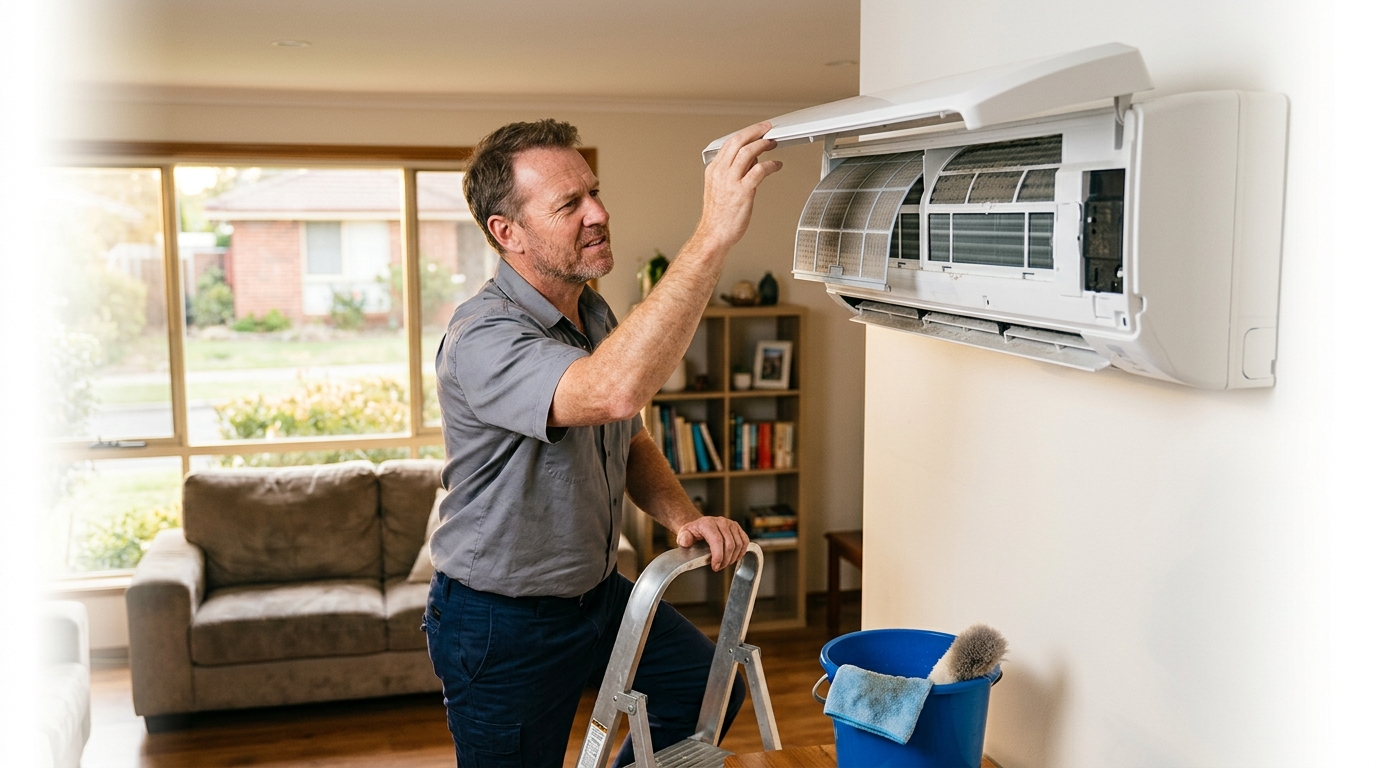
- Open the indoor unit's front panel. On most split systems, the front panel hinges upward or clips off without any tools. Refer to your owner's manual if you are unsure, as forcing the panel can crack the plastic housing.
- Remove the air filters. The filters will slide or clip out easily. Take note of which way they face before removing them so reinstallation is straightforward.
- Vacuum loose dust from the filters, then wash them. Use a brush attachment on your vacuum to remove the bulk of the dust first. Then rinse the filters under warm water with a small amount of mild detergent, working gently with your hands or a soft brush. Stand them upright in a well-ventilated spot to air-dry completely before reinstalling. Never put damp filters back into the unit.
- Clean the evaporator coil fins (optional for confident DIYers). With the filters out, you will see the evaporator coil behind them. Use a soft brush or vacuum with a brush attachment to gently remove dust from the fins, always brushing in the direction of the fins rather than across them. Brushing across the fins can bend them and restrict airflow. If you are not comfortable doing this, leave it for a professional service.
- Wipe down the indoor unit casing, louvres and fan blades. Use a damp microfibre cloth to wipe the outer casing, the directional louvres and, where accessible, the fan blades. Avoid soaking any surfaces near electrical components.
- Check and clear the condensate drain tray. The drain tray sits beneath the evaporator coil and collects moisture. Standing water or a slimy build-up in the tray is a sign of a partially blocked drain line. Wipe the tray clean with a damp cloth and flush the drain line with a small amount of water if you can access it.
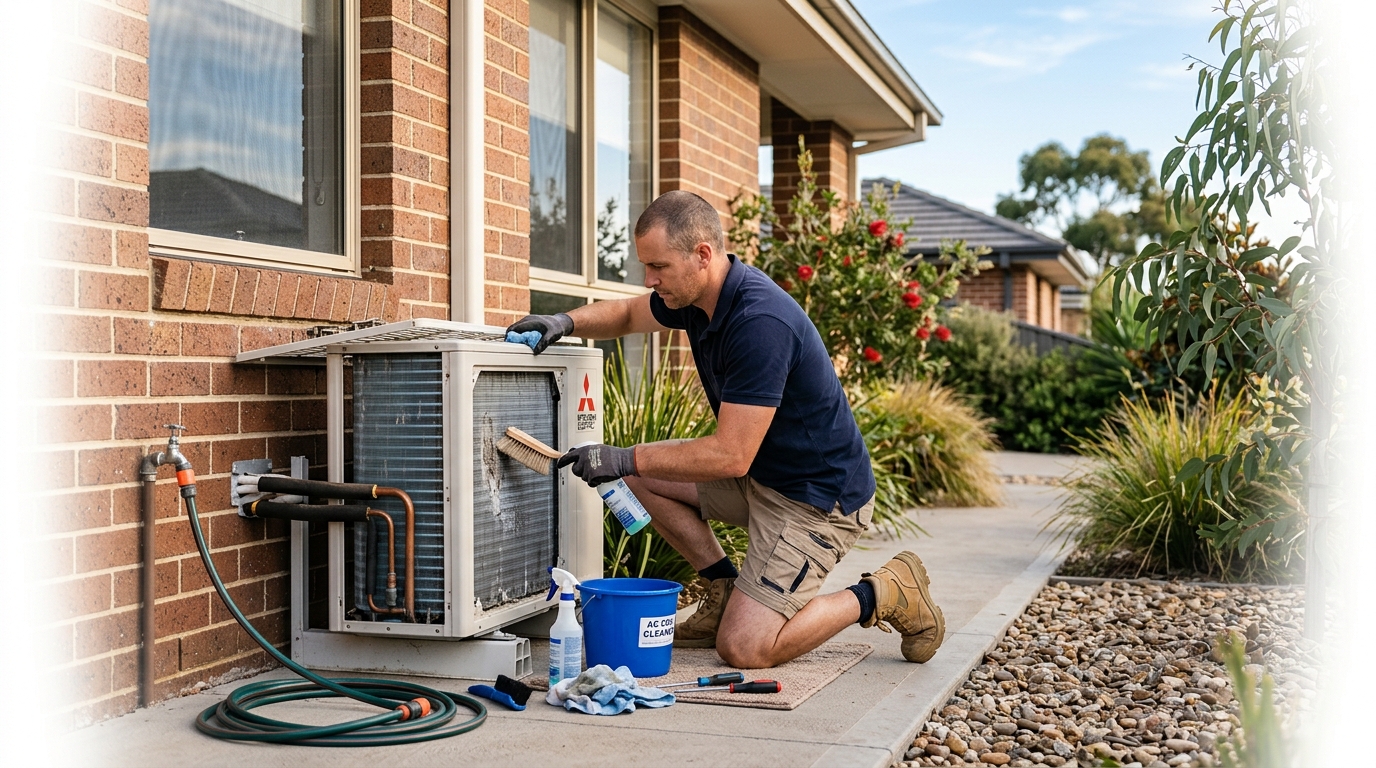
- Clean the outdoor condenser unit. Clear away any leaves, grass clippings and debris from around the base and sides of the unit. Use a garden hose on a gentle setting to rinse the condenser coil fins from the inside out if the unit design allows access. Skip this step if you are not confident, and leave it to a technician. See the subsection below for more detail.
- Reinstall the dry filters, close the panel and restore power. Make sure the filters are fully dry and seated correctly before closing the front panel. Switch the power back on at the isolator or circuit breaker, then test the unit on a low fan setting to confirm everything is running normally.
Cleaning the Indoor Unit Filters
The air filters in a split system are the most important part of the unit to keep clean. A clogged filter is the single biggest cause of reduced airflow and higher running costs, because the system has to work harder to pull air through a blocked mesh. Cleaning them regularly takes less than 10 minutes and makes a noticeable difference to both performance and energy use.
Most split system filters slide or clip out without any tools at all. The front panel hinges up, and the filters lift straight out from their tracks. There are no screws, no latches and no special technique required. Models like the Daikin 2.5kW LITE FTXF25WVMA ($989) and the Samsung ARISE Wind Free AR7500 2.5kW ($846) are good examples of units with particularly accessible filter panels, making the job quick and hassle-free.
During peak use periods in summer and winter, aim to clean your filters every two to four weeks. Outside of those seasons, once per season is generally sufficient for most households. If you have pets, live near a dusty road or run the unit for long hours each day, lean toward the more frequent end of that range. Letting filters go too long between cleans forces the unit to work harder, which shows up directly on your electricity bill.
Cleaning the Outdoor Condenser Unit
The outdoor condenser unit releases the heat extracted from inside your home into the outside air. It does this through a large coil of aluminium fins that need clear airflow to work efficiently. When leaves, grass clippings, cottonwood seeds or general debris build up on or around the unit, heat exchange is restricted and the system has to run longer to achieve the same result.
Keep at least 500mm of clear space around all sides of the condenser unit. Trim back any plants or shrubs that have grown close to it, and check after storms or mowing sessions for debris that may have collected against the fins.
When rinsing the condenser coil with a garden hose, always use a gentle setting. A high-pressure hose can bend the thin aluminium fins, which reduces airflow and is difficult to fix without a fin comb. If you do notice bent fins, a fin comb (available at most hardware stores) can straighten them out. Brush gently in the direction of the fins rather than across them.
Chemical coil cleaning of the condenser is best left to a licensed technician. The sprays involved are stronger than household cleaners and need to be handled and disposed of correctly. An annual professional service will cover this as part of the job.
How Often Should You Clean Your Air Conditioner?
For most Australian households, the right cleaning schedule is: filters every two to four weeks during peak summer and winter use, a full DIY clean of the indoor unit at the start of each season and a professional service once per year. Following this routine keeps the unit running efficiently, protects air quality and helps avoid costly repairs down the track.
Here is a simple schedule to follow:
| Task | Frequency | Who Does It |
|---|---|---|
| Filter clean | Every 2 to 4 weeks during heavy use; once per season otherwise | DIY |
| Full indoor unit clean (casing, louvres, drain tray) | Start of each season (4 times per year) | DIY |
| Outdoor condenser clear and rinse | Every 3 months or after storms | DIY |
| Professional service (coil chemical clean, refrigerant check, electrical inspection) | Once per year | Licensed technician |
Owners of ducted air conditioners have an extra task to add to the list. The return air grilles and zone filters in a ducted system collect dust just as split system filters do, and they need vacuuming every four to six weeks during heavy use. Neglecting them causes the same airflow and efficiency problems, just spread across a larger system.
One thing worth knowing is that some manufacturers include filter maintenance requirements in their warranty conditions. Running a unit with a visibly clogged filter for an extended period can give a manufacturer grounds to reduce or void a warranty claim if the unit fails. Keeping a simple log of your cleaning dates takes 30 seconds and gives you a clear record if you ever need to make a claim.
Signs Your Air Conditioner Needs More Than a DIY Clean
Some air conditioner problems go beyond what a filter wash and wipe-down can fix. If your unit is showing any of the warning signs below after a thorough clean, the issue is likely inside the coil, the drainage system or the refrigerant circuit, and a licensed technician is the right call rather than another DIY attempt.
- Musty or mouldy smell that persists after cleaning. A smell that returns within a day or two of cleaning usually means mould has taken hold deep inside the evaporator coil, where a DIY clean cannot reach. A professional chemical coil clean is needed to clear it properly.
- Ice forming on the indoor unit or refrigerant lines. Ice build-up is a strong indicator of low refrigerant, a blocked coil or restricted airflow. All three causes require a licensed technician to diagnose and fix safely.
- Water leaking from the indoor unit onto the wall or floor. A small amount of condensation is normal, but active dripping or pooling water points to a blocked or cracked condensate drain line that needs professional attention.
- The unit runs but cannot reach the set temperature. If the system runs continuously without cooling or heating the room effectively, refrigerant loss or a failing compressor is the most likely cause.
- Unusual rattling, grinding or squealing noises. These sounds often point to a loose fan blade, a failing motor bearing or debris caught in the fan assembly. Running the unit with a mechanical fault can cause further damage quickly.
If your unit is more than 10 to 12 years old and showing any of these symptoms repeatedly, a repair bill may not be the best use of your money. Older systems also run on refrigerants that are being phased out in Australia, which can make servicing more expensive over time. At that point, it is worth weighing up the cost of repairs against a replacement. You can browse our range of split systems to get a sense of what a modern, efficient replacement would cost.
Keep Your Air Conditioner Running at Its Best
Regular maintenance is the simplest investment you can make in your air conditioner. Clean filters every two to four weeks during heavy use, a full DIY clean at the start of each season and an annual professional service will keep almost any system running efficiently for its full lifespan. These three habits together do more for performance and reliability than any single repair ever will.
If your current unit is ageing, underperforming or simply costing too much to run, it may be time to consider an upgrade. A well-maintained mid-range unit like the Daikin 5kW LITE FTXF50WVMA ($1,589) is worth protecting with a consistent cleaning routine. For those ready to replace, Daikin split systems are among the most reliable and energy-efficient options available in Australia, with models to suit every room size and budget.
A cleaner unit runs cooler, costs less to operate and lasts longer. Start with the filters this week and build the habit from there.
Frequently Asked Questions
Can I clean my air conditioner myself?
Yes, you can clean your air conditioner yourself for basic maintenance tasks. Washing the filters, wiping down the casing and cleaning the exterior of the outdoor unit are all well within reach for most homeowners. Chemical coil cleaning, refrigerant handling and any electrical work must be carried out by a licensed technician, as these tasks carry safety and legal requirements in Australia.
Is AC harmful for bronchitis?
A dirty air conditioner can be harmful for bronchitis, as it may circulate dust, mould spores and allergens that aggravate the airways and worsen respiratory symptoms. A clean, well-maintained unit with fresh filters actually improves indoor air quality rather than harming it. If someone in your household has bronchitis or another respiratory condition, clean your filters every two to four weeks and consider a unit with a built-in air purification or anti-allergy filter.
What is the 3 minute rule for air conditioners?
The 3-minute rule for air conditioners means waiting at least three minutes after switching a unit off before turning it back on again. This pause allows the refrigerant pressure in the system to equalise, protecting the compressor from the strain of restarting under load. The rule is especially relevant after a power outage, where the temptation to restart the unit immediately can lead to compressor damage over time.
What is the best thing to clean your AC unit with?
For filters, warm water with a small amount of mild dish detergent is the best cleaning solution. For the indoor casing and louvres, a damp microfibre cloth removes dust and grime without scratching the surface. For evaporator coils, a no-rinse coil cleaner spray from a hardware store is the most effective DIY option. Avoid bleach, harsh chemicals or high-pressure water on any internal components, as these can damage fins, coatings and seals.
Need expert advice?
Our team can help you choose the right air conditioning system for your space.