
How to Fix Aircon Problems: A Troubleshooting Guide for Common Issues
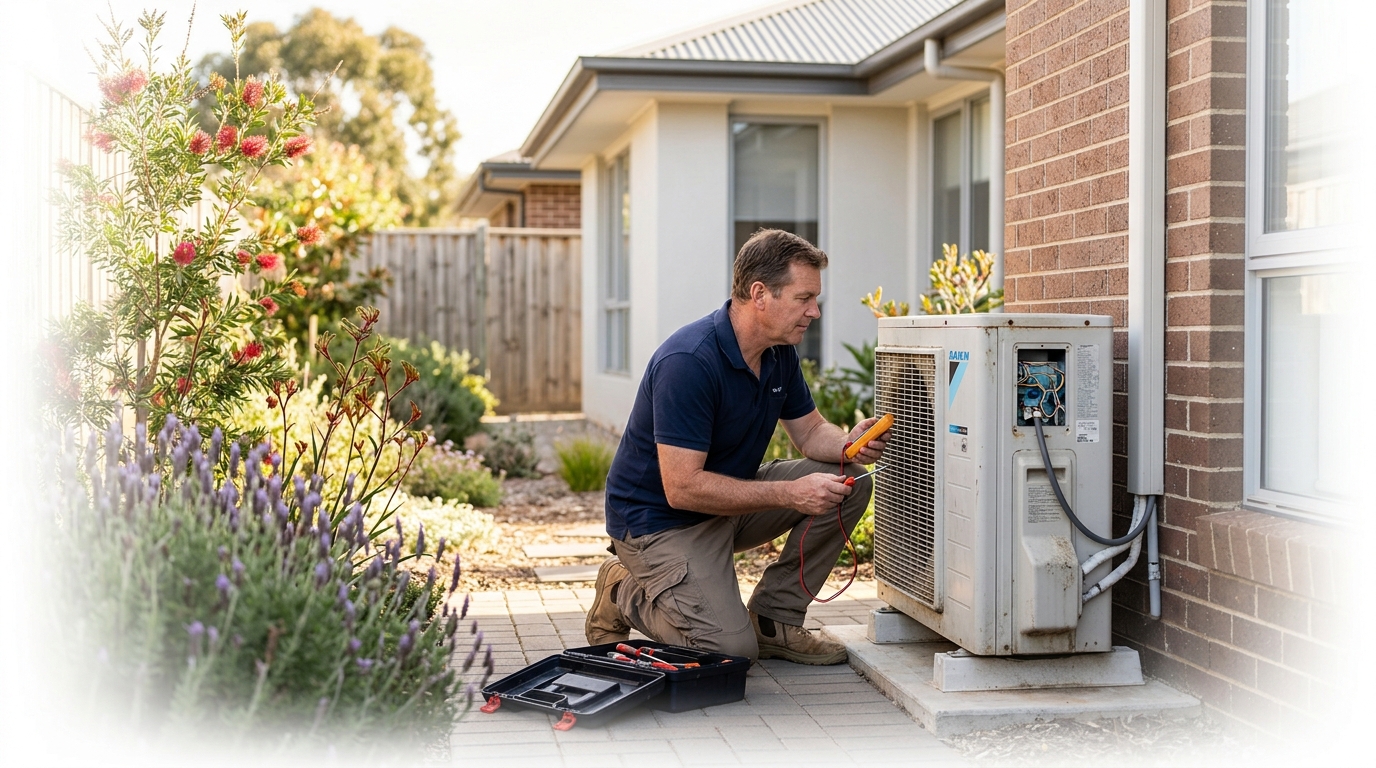
How to Fix Aircon Issues Before Calling a Technician
Your aircon picks the worst possible moment to stop working. It is 38 degrees outside, the humidity is brutal, and the unit is either blowing warm air or not responding at all. Before you reach for the phone to book a technician, many common faults have straightforward fixes you can handle yourself. Knowing how to fix aircon problems at home can save you a call-out fee and get you cool again faster.
This guide covers the four faults Australian homeowners run into most often: the unit not cooling or heating properly, the unit not turning on, water leaking from the indoor head unit, and strange noises or smells. For each one, you will find step-by-step fixes you can try right now. Where a fault genuinely requires a licensed technician, such as refrigerant issues or electrical faults, the guide will say so clearly.
Key takeaways
- Most common aircon faults can be fixed at home by cleaning filters, checking settings and clearing blockages.
- Dirty air filters and blocked condenser units are the leading causes of poor cooling performance.
- Refrigerant leaks and electrical faults require a licensed technician and cannot be safely repaired at home.
The Most Common Aircon Problems and What Causes Them
Most aircon faults fall into a small number of categories. Understanding the likely cause before you start troubleshooting saves time and helps you decide whether a DIY fix is realistic or whether you need a professional. Here are the four faults that account for the vast majority of service calls in Australian homes.
- Unit not cooling or heating: Usually caused by a dirty air filter restricting airflow, an incorrect thermostat setting, or a unit that is undersized for the room. Refrigerant leaks are also possible but require a licensed technician to diagnose and repair.
- Unit not turning on at all: Most often a tripped circuit breaker, a blown fuse on the indoor unit, a flat or faulty remote control battery, or the unit being locked in a timer or sleep mode. Wiring faults are less common but do occur.
- Water leaking from the indoor head unit: Typically caused by a blocked condensate drain line, which forces water to back up and overflow the drain tray. A dirty evaporator coil or a unit installed without the correct downward tilt can produce the same result.
- Unusual noises or smells: Rattling or vibrating sounds usually point to a loose panel, a dirty fan blade or debris caught in the unit. Musty smells almost always mean mould or bacteria growing on the evaporator coil or in the drain tray, which is common in humid Australian climates.
None of these faults are unusual and most have appeared in service logs across every major brand. The sections below walk through each one in detail so you can work through the fix methodically.
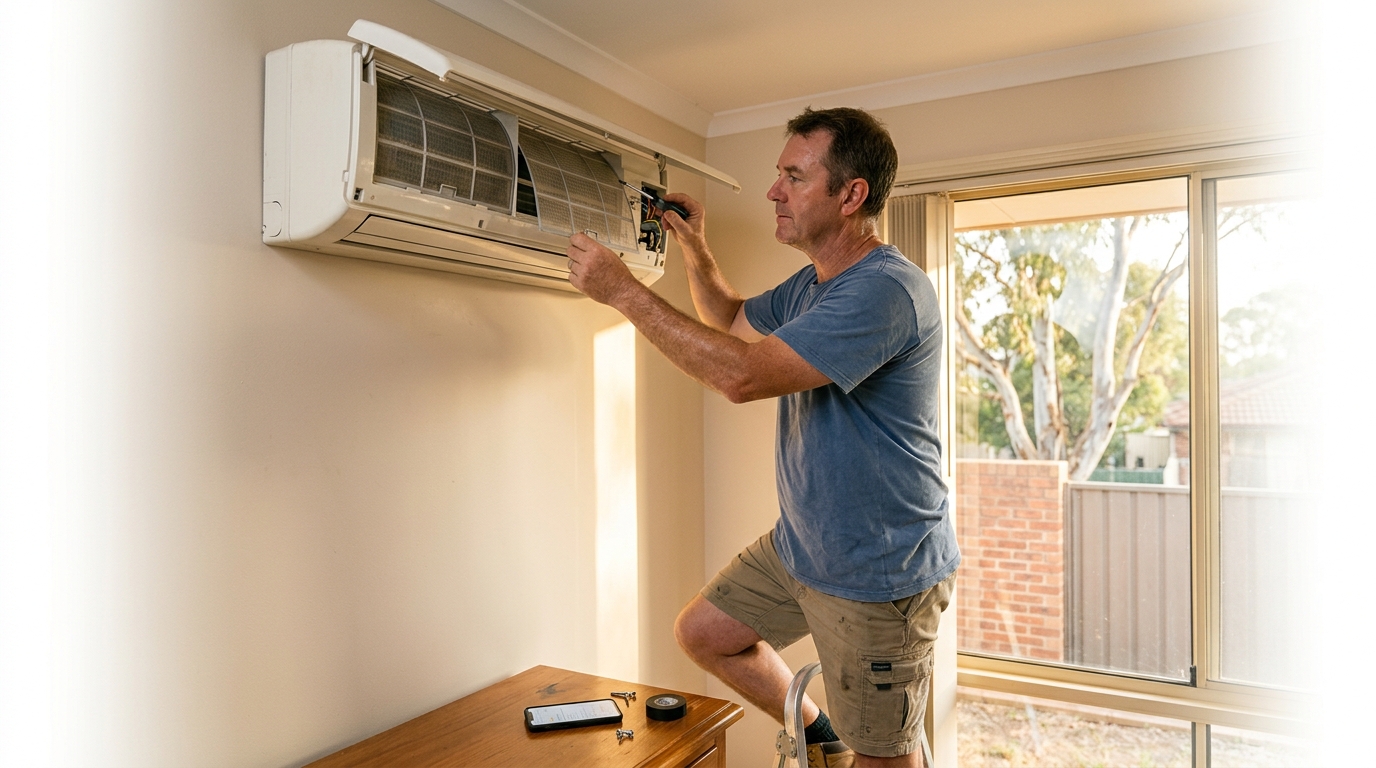
Step-by-Step: How to Fix Aircon Problems at Home
Most aircon faults can be narrowed down to a handful of causes, and a methodical check through the basics will resolve the majority of them without a technician. Work through the steps below in order. Each one is safe to carry out without tools or a trade licence, and completing them all takes less than 20 minutes.
- Check the power supply and circuit breaker. Go to your switchboard and look for a tripped breaker in the air conditioning circuit. A tripped breaker will sit between the 'on' and 'off' positions. Switch it fully off, then back on. If it trips again immediately, stop and call a licensed electrician. Do not reset it a second time.
- Inspect and reset the thermostat or remote settings. Confirm the unit is set to the correct mode (cool, heat or auto) and that the set temperature is actually lower than the current room temperature for cooling, or higher for heating. Replace the remote batteries if the display is dim or unresponsive. Check whether a timer or sleep mode has been activated, as these are a surprisingly common cause of a unit that appears dead.
- Clean or replace the air filter. Turn the unit off at the wall before opening the front panel. Slide out the filter and hold it up to the light. If you cannot see light through it, it needs cleaning. Rinse it under warm water, let it dry completely and reinstall it. A blocked filter is the single most common cause of poor airflow and reduced cooling performance.
- Clear debris from the outdoor condenser unit. Walk outside and check the condenser. Remove any leaves, grass clippings or other debris that have collected against the fins or inside the top grille. Make sure there is at least 50 cm of clear space around all sides of the unit. A blocked condenser cannot reject heat efficiently, which causes the system to work harder and cool less effectively.
- Check and clear the condensate drain line. Locate the drain outlet, which is usually a small pipe exiting the wall near the indoor unit. If water is dripping from the indoor head unit rather than from the outdoor drain, the line is likely blocked. You can flush it by pouring a cup of warm water mixed with a small amount of white vinegar into the drain tray. Repeat once or twice to clear any algae or sludge buildup.
- Reset the unit by cutting power for 30 seconds. Turn the unit off using the remote, then switch it off at the wall isolator or circuit breaker. Wait 30 seconds, then restore power and restart normally. Many modern units store a fault state in memory and a full power cycle clears it. Some models also have a dedicated reset button on the indoor unit, usually recessed and labelled 'Reset'.
Modern split system air conditioners like the Daikin LITE 2.5kW ($989) and Daikin CORA 2.5kW ($1,054) display alphanumeric error codes on the indoor unit panel when a fault is detected. These codes are listed in the owner's manual and can tell you exactly which component has triggered the fault, which makes diagnosis significantly faster before or after you work through the steps above.
When to Stop DIY and Call a Professional
Some faults are outside the scope of safe DIY work, either because they require a licensed refrigeration mechanic under Australian law or because they involve live electrical components that carry a genuine risk of injury. If you have completed all six steps above and the fault persists, book a technician rather than continuing to troubleshoot.
- Refrigerant leaks or recharging: Handling refrigerant is illegal without an ARCtick licence in Australia. If you suspect a leak (the unit runs but never gets cold, or ice forms on the copper lines), call a licensed HVAC technician.
- Electrical component replacement: Capacitors, PCBs and contactor relays must be replaced by a licensed electrician or HVAC technician. Do not open the outdoor unit's electrical compartment.
- Faults that persist after all DIY steps: A fault that survives a full reset and a clean filter is telling you something is wrong internally. Further investigation without the right tools and training risks making the problem worse.
Aircon Not Blowing Cold? How to Fix Poor Cooling Performance
If your aircon is running but not blowing cold air, the cause is almost always one of three things: a dirty filter blocking airflow, a low refrigerant charge or a unit that is too small for the room it is trying to cool. Two of those three you can address yourself right now. The third requires a licensed technician but is straightforward to identify.
A clogged air filter is the most common culprit and the easiest to fix. When the filter is coated in dust, the evaporator coil cannot absorb heat from the room air efficiently, so the air coming out of the vents feels barely cool even though the compressor is running. Remove the filter, rinse it under warm water and let it dry fully before reinstalling. If you cannot remember the last time you cleaned it, that is almost certainly your problem.
Low refrigerant is the second common cause. The system will run continuously, the air will feel slightly cool but never reach the set temperature, and you may notice ice forming on the copper pipes near the indoor unit. This is not a DIY fix. Refrigerant handling requires an ARCtick licence under Australian law, so you will need to book a technician to locate the leak, repair it and recharge the system.
The third cause is an undersized unit. A rough rule of thumb for standard Australian homes is 0.15 kW of cooling capacity per square metre of floor space. A 20 m² bedroom needs around 2.5 kW. A medium-sized living area of 33 to 40 m² needs at least 5 kW. The Daikin LITE 5kW ($1,589) is a well-matched option for that kind of space, offering inverter-driven efficiency without overspending on capacity you do not need. Browse our range of Daikin split systems to find the right capacity for your room.
One more thing worth checking before you call anyone: make sure all doors and windows in the room are closed while the unit is running. A split system is sized for a defined space. If you are trying to cool a room with an open doorway into a hallway or an adjacent kitchen, the effective area the unit is working against is much larger than the room itself, and even a correctly sized unit will struggle to hit the set temperature.
Aircon Maintenance Tips to Prevent Problems in the First Place
Regular maintenance is the single most effective way to avoid the faults covered in this guide. Cleaning filters every four to six weeks during heavy use, keeping the outdoor unit clear and booking an annual professional service will prevent the vast majority of breakdowns before they happen. Staying on top of these tasks also protects your manufacturer warranty.
Here are the key maintenance tasks to build into your routine:
- Clean the air filters every four to six weeks during heavy use. During summer and winter, filters clog faster than most people expect. A quick rinse under warm water and a full dry before reinstalling takes less than 10 minutes and prevents the most common cause of poor performance.
- Hose down the outdoor condenser unit at the start of summer. Use a garden hose on a gentle setting to rinse dust, pollen and debris from the condenser fins. Do this with the unit switched off at the isolator. Blocked fins force the compressor to work harder and shorten its lifespan.
- Check the condensate drain tray for mould and blockages. A quick visual inspection every month or two during humid weather can catch a slow blockage before it becomes a water leak. A small amount of white vinegar poured into the tray helps keep algae growth under control.
- Book an annual professional service. A licensed technician will check refrigerant levels, inspect electrical connections, clean the evaporator coil and confirm the system is running within spec. This is the one task you cannot replicate yourself.
Keeping up with these tasks also matters for your warranty. Most leading brands sold in Australia, including Daikin, carry a five-year parts and labour warranty when the unit is installed by a licensed technician. Neglected maintenance can give a manufacturer grounds to reject a warranty claim, so a small amount of regular upkeep protects a significant investment.
Ready for an Upgrade? Signs Your Aircon Needs Replacing
If you have worked through every troubleshooting step in this guide and your unit is still underperforming, the problem may not be fixable. A unit that is over 10 years old, requires repairs every season or consistently fails to reach the set temperature despite clean filters and a clear condenser is telling you that ongoing repairs are no longer cost-effective. At some point, the money spent keeping an ageing system running is better put toward a new one.
Modern inverter split systems are significantly more energy-efficient than units made a decade ago, which means a replacement often pays for itself in lower running costs over a few years. Take a look at our best-selling air conditioners to find a model that suits your home and budget. You will find options from Daikin and other leading brands across a full range of capacities, all backed by manufacturer warranties and available with nationwide delivery.
Frequently Asked Questions
How do I fix my AC not blowing cold?
Start by cleaning the air filter, as a blocked filter is the most common reason an aircon runs without cooling properly. If the filter is clean, check that the unit is set to 'cool' mode and that the set temperature is lower than the current room temperature. If neither of those fixes it, the unit may have a refrigerant leak or be undersized for the room, both of which require a technician or a replacement unit. If you are considering an upgrade, browsing split system air conditioners by capacity is a good starting point.
Why is my aircon running but not cooling the room?
The most likely causes are a dirty filter, a blocked outdoor condenser unit or a room that is too large for the unit's capacity. Check that doors and windows are closed while the system is running, as an open floor plan significantly increases the effective area the unit has to cool. If the unit runs continuously without reaching the set temperature, low refrigerant is also a strong possibility.
Why is water dripping from my indoor aircon unit?
Water dripping from the indoor head unit almost always means the condensate drain line is blocked. Algae and sludge build up in the drain over time, forcing water to back up and overflow the drain tray. Flushing the drain with warm water and a small amount of white vinegar usually clears the blockage. If the dripping continues after flushing, the unit may have been installed without the correct downward tilt toward the drain outlet.
Why does my aircon smell musty?
A musty smell is caused by mould or bacteria growing on the evaporator coil or inside the drain tray. This is very common in humid Australian climates, particularly in units that run frequently during summer. Cleaning the filter and flushing the drain tray with white vinegar will help, but a full coil clean by a licensed technician is the most effective fix for persistent odours.
How often should I service my aircon?
A professional service once a year is the standard recommendation for residential split systems in Australia. Between professional services, clean the air filters every four to six weeks during periods of heavy use and keep the outdoor condenser unit clear of debris. Staying on this schedule also protects your manufacturer warranty, as neglected maintenance can give a brand grounds to reject a claim.
When should I replace my aircon instead of repairing it?
If your unit is over 10 years old and requires repairs every season, replacement is usually the more cost-effective choice. A modern inverter split system is significantly more energy-efficient than a unit from a decade ago, so the running cost savings often offset the purchase price within a few years. A unit that consistently fails to reach the set temperature despite clean filters and a clear condenser is another strong sign that repair costs are no longer justified.
Need expert advice?
Our team can help you choose the right air conditioning system for your space.