
How to Install a Split System Air Conditioner: What Australians Need to Know
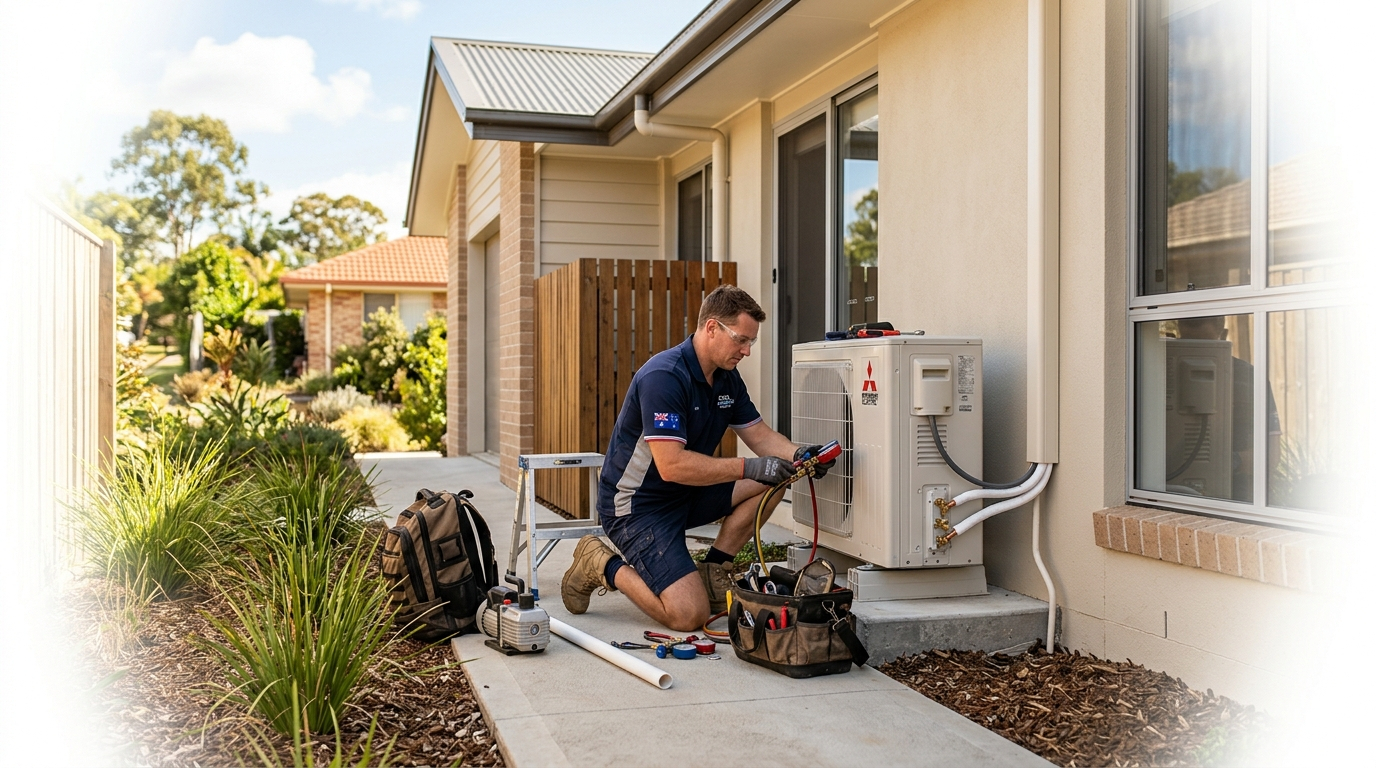
How to Install a Split System Air Conditioner: The Australian Overview
Installing a split system air conditioner is one of the most popular home improvement projects in Australia, and it's easy to see why. A quality unit can cool a room in minutes, slash heating bills in winter and last well over a decade. But before you reach for a drill, there's a critical reality to understand: in Australia, the core installation work is not a DIY job. Refrigerant handling and electrical connections must be carried out by licensed tradespeople, full stop.
This article walks you through the full installation process step by step, explains exactly what licences your installer must hold, covers what you as a homeowner can prepare in advance to keep labour costs down, and gives you a clear picture of what a professional installation should cost in 2026.
Key takeaways
- Split system installation requires licensed professionals for refrigerant and electrical work in Australia.
- A standard installation costs $1,500 to $2,500 including labour and a quality unit.
- Homeowners can prepare the site to reduce labour time and costs.
Can You DIY a Split System Installation in Australia?
No. Split system installation in Australia is not a legal DIY job for the vast majority of the work involved. Two separate licences are required by law, and attempting the work without them exposes you to fines, voided warranties and serious safety risks. That said, there are genuine preparation tasks homeowners can handle themselves to reduce the time a tradesperson spends on site.
The two pieces of work that require a licensed professional are the electrical connection and the refrigerant handling. The indoor and outdoor units must be wired into your home's electrical system by a licensed electrician. Separately, the refrigerant lines must be connected, pressure-tested and charged by a technician who holds an ARCtick licence issued by the Australian Refrigeration Council. These are two distinct credentials, and both are required for a compliant installation.
Penalties for unlicensed electrical or refrigerant work vary by state but can reach thousands of dollars in fines. More practically, every major manufacturer including Daikin, Mitsubishi Electric and Fujitsu explicitly states in their warranty terms that installation must be carried out by a licensed technician. A non-compliant installation voids the warranty from day one, leaving you with no manufacturer support if the unit develops a fault.
What homeowners can do before the installer arrives is genuinely useful. Choosing the right wall location, clearing furniture away from the proposed indoor unit position, identifying wall stud positions and confirming there is a suitable outdoor space for the condenser unit all save time on the day. Less time on site means lower labour costs, so a bit of preparation is worth doing.
What Licences Does an Installer Need?
A fully qualified split system installer needs to hold two credentials:
- ARCtick refrigerant handling licence: Issued by the Australian Refrigeration Council (ARC), this licence authorises a technician to purchase, handle and recover refrigerants. Without it, a tradesperson cannot legally connect or charge the refrigerant lines in your system.
- State-issued electrical contractor or restricted electrical licence: The exact licence type varies by state and territory, but all require the holder to be a qualified electrician authorised to carry out fixed wiring work. In most states this means a licensed electrical contractor or a licensed electrician working under one.
Any reputable installer will hold both and should provide their licence numbers without hesitation if you ask. You can verify an ARCtick licence directly on the ARC website at arctick.org by searching the technician's name or licence number. For electrical licences, each state has its own register, such as NSW Fair Trading or the Electrical Safety Office in Queensland.
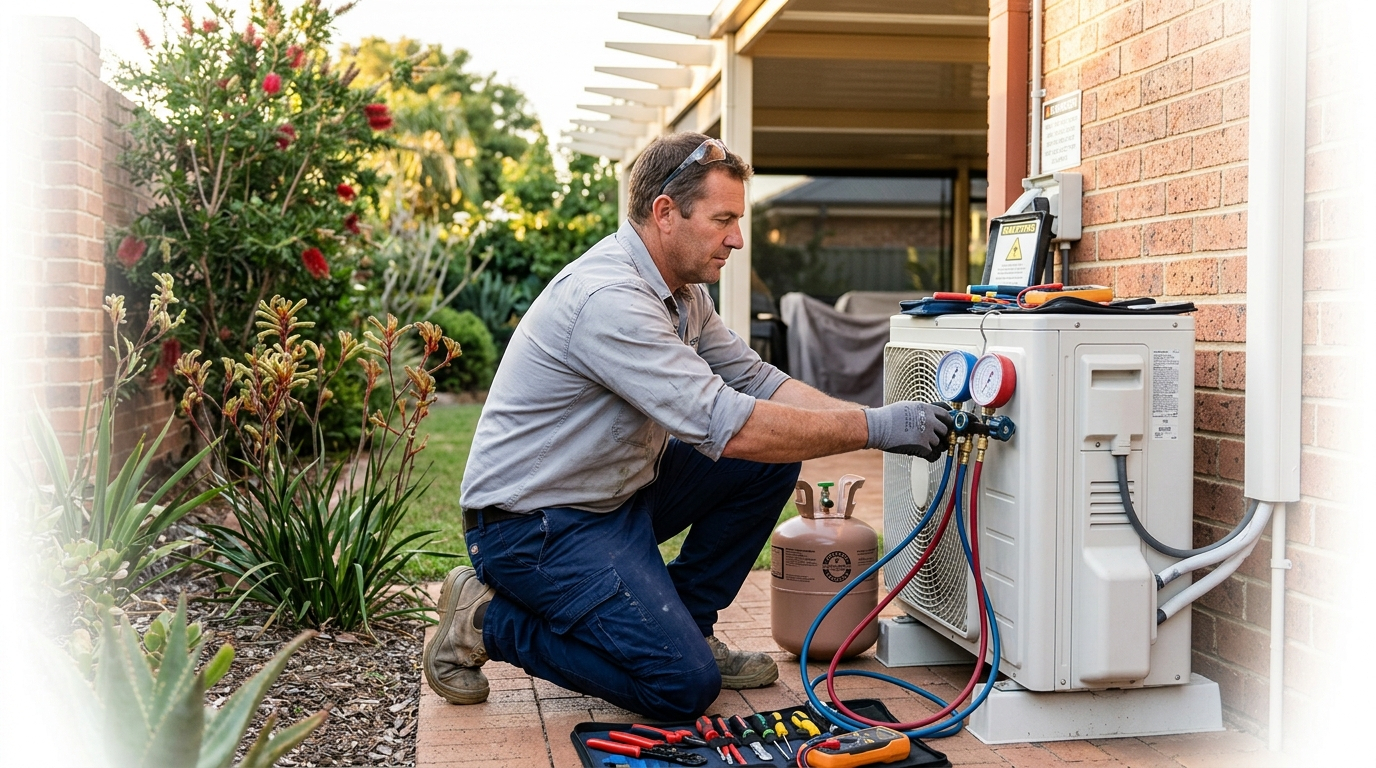
The Step-by-Step Split System Installation Process
The professional installation process follows the same broad sequence regardless of which brand you choose. Whether your installer is fitting Daikin split systems or any other major brand, here is exactly what happens on the day so you know what to expect and can ask informed questions at each stage.
- Choose and prepare the indoor unit location. The indoor unit should be mounted high on an exterior wall, ideally near a stud for solid fixing, and away from direct sunlight or heat sources that could confuse the thermostat. Your installer will confirm the position gives adequate airflow across the room and that there is a clear path through the wall for the pipe and cable bundle.
- Mount the indoor unit backplate and bracket. The metal backplate is fixed securely to the wall, levelled carefully so the condensate drain runs correctly. Getting this step right prevents water leaks inside the room later on.
- Drill the penetration hole through the wall. A core drill is used to create a single angled hole through the wall, sloping slightly downward toward the outside so water drains away from the building. The hole needs to be large enough to pass the refrigerant pipes, electrical cable and condensate drain line through together.
- Run the refrigerant copper pipes, electrical cable and condensate drain line. These three components are typically bundled together and fed through the wall penetration. The copper pipes are pre-insulated to prevent condensation and heat loss along the run.
- Mount and connect the indoor unit. The indoor unit clips onto the backplate and the refrigerant pipes, electrical cable and drain line are connected at the back of the unit. The front cover is then fitted and the unit is checked for level.
- Position and mount the outdoor unit. The outdoor condenser is placed on a flat concrete pad or a wall-mounted bracket at ground level or on a balcony. Manufacturers specify minimum clearances on all sides, typically 300mm at the sides and rear and at least 500mm at the front, so airflow is not restricted.
- Connect refrigerant lines, electrical wiring and drain at the outdoor unit. The pipe bundle running from the indoor unit is connected to the outdoor unit's service ports, and the electrical supply cable is wired into the unit. This step requires both an ARCtick licence and an electrical licence.
- Pressure-test and vacuum the refrigerant lines. This step is legally required to be performed by a licensed ARCtick technician. The lines are first pressurised with nitrogen to check for leaks, then a vacuum pump removes all air and moisture from the system before refrigerant is introduced. Skipping or rushing this step is one of the most common causes of premature compressor failure.
- Commission the system and check operation. The system is powered on and the installer checks supply and return air temperatures, confirms the remote control functions correctly and verifies the condensate drain is flowing freely. This commissioning step is also the point at which your warranty period officially begins, so ask for a signed job sheet confirming the work was completed by a licensed technician.
How Much Does Split System Installation Cost in Australia?
A standard single-head split system installation in Australia costs between $600 and $900 in labour for a straightforward single-storey home in 2026. Add the cost of the unit itself and most homeowners are looking at a total installed price of $1,500 to $2,500 for a typical 2.5kW to 3.5kW system, depending on the brand, the complexity of the installation and your location.
To put unit-only prices in context, three popular 2.5kW options from leading brands sit in a similar range. The Daikin 2.5kW Inverter Split System Lite FTXF25WVMA is priced at $989, the Mitsubishi Electric 2.5kW AP Series MSZAP25VGKD at $1,040 and the Fujitsu 2.5kW Lifestyle Range Inverter Split System ASTG09KMTC at $1,018. All three are within $51 of each other at the 2.5kW size, which shows that brand choice at this capacity is more about features and energy ratings than price. You can browse the full range of Mitsubishi Electric split systems to compare models and capacities.
Labour costs rise quickly once the job moves beyond a basic installation. A double-storey installation or one requiring roof space access typically adds $150 to $300 to the labour bill. If the pipe run between the indoor and outdoor units exceeds the standard three to four metres included in most quotes, expect a per-metre charge of roughly $30 to $60 for the additional copper pipe, insulation and labour. If your switchboard needs a new dedicated circuit for the air conditioner, budget an extra $300 to $600 for that electrical work on top of the installation quote.
Getting at least two quotes from licensed installers is good practice. Prices vary between contractors and between regions, and a detailed written quote makes it easy to compare what is and is not included.
Factors That Push the Price Up
Several variables can move a split system installation quote well above the base rate. Understanding them before you call for quotes means you can describe your situation accurately and avoid surprises when the invoice arrives.
- Storey height and roof space access: Double-storey installations require longer pipe runs and often involve working in confined roof spaces, both of which add time and cost.
- Distance between indoor and outdoor units: Every metre of pipe run beyond the standard allowance in your quote adds material and labour costs. A long run across a large home can add $100 or more.
- New dedicated electrical circuit: If your switchboard does not have a spare circuit or needs an upgrade to handle the additional load, the electrician will need to run new cabling and install a new breaker.
- Wall material: Drilling through brick or double-brick walls takes significantly longer than timber frame construction and may require specialist core drilling equipment.
- Outdoor unit mounting: A simple ground-level concrete pad is the cheapest option. A wall bracket, particularly at height or on a rendered surface, adds both materials and labour to the job.
What to Look for in a Split System Installer
Choosing the right installer is just as important as choosing the right unit. A qualified tradesperson will hold an ARCtick refrigerant handling licence and a state-issued electrical licence, complete a proper commissioning run and give you paperwork that protects your manufacturer warranty. Here is a practical checklist to work through before you book anyone.
- Verify their ARCtick licence: Ask for the technician's ARCtick licence number and check it at arctick.org. This takes two minutes and confirms they are legally authorised to handle refrigerants.
- Confirm their electrical licence: The installer or their electrician must hold a current state-issued electrical contractor or restricted electrical licence. Ask for the licence number and verify it through your state's register, such as NSW Fair Trading or Queensland's Electrical Safety Office.
- Check public liability insurance: Any tradesperson working in your home should carry public liability insurance. Ask for a certificate of currency before work begins.
- Read independent reviews: Google Reviews and Product Review are both useful. Look for recent reviews that mention the installer turning up on time, completing a commissioning test and leaving the site tidy.
- Ask what the quote includes: A complete quote should cover commissioning and a test run. If the installer plans to leave without powering the system on and checking temperatures, that is a red flag.
- Confirm the labour warranty: Most reputable installers offer a 12-month warranty on their labour. Get this in writing.
- Check if they are an authorised service agent: Installers who are authorised service agents for Daikin, Mitsubishi Electric, Fujitsu or whichever brand you choose can register your warranty directly with the manufacturer. This matters if you ever need a warranty repair, as some manufacturers require the original installation to be on their records.
Air Conditioning Experts can connect you with local licensed installers, so you are not starting the search from scratch. Once you have your installer lined up, browse our full range of split system air conditioners to choose your unit and have it ready to go on installation day.
Frequently Asked Questions
Can I install a split system air conditioner myself in Australia?
No. The two core tasks in a split system installation, connecting the refrigerant lines and wiring the unit into your home's electrical system, are both legally restricted to licensed tradespeople in every Australian state and territory. Attempting either without the correct licence can result in significant fines, a voided manufacturer warranty and genuine safety risks. Homeowners can handle preparation tasks such as clearing the installation area and choosing the wall position, but the technical work must be done by a licensed professional.
How long does it take to install a split system air conditioner?
A standard single-head split system installation in a single-storey home typically takes three to five hours from start to finish. That includes mounting both units, running the pipe bundle through the wall, making all electrical and refrigerant connections, pressure-testing the lines and completing the commissioning run. More complex jobs, such as double-storey installations or those requiring a new dedicated electrical circuit, can take a full day.
Do I need council approval to install a split system in Australia?
In most cases, no. Residential split system installations are generally considered exempt development under state planning rules, meaning no council approval is required. Exceptions apply if your home is heritage-listed, located in a strata complex with body corporate rules about external modifications, or if the outdoor unit would be placed in a location that affects a neighbour's amenity. Check with your local council or body corporate before booking if any of these situations apply to you.
What size split system do I need for my room?
As a general guide, a 2.5kW unit suits rooms up to around 20 square metres, a 3.5kW unit covers 20 to 35 square metres and a 5kW to 6kW unit is appropriate for larger open-plan spaces up to 50 square metres. These figures assume average ceiling heights and insulation. Rooms with poor insulation, large north-facing windows or high ceilings will need more capacity than the floor area alone suggests.
How much does it cost to run a split system air conditioner in Australia?
Running costs depend on the unit's energy star rating, the capacity, how often you use it and your local electricity tariff. A 2.5kW inverter split system running for eight hours a day typically costs between $1.50 and $3.00 per day at average Australian electricity rates in 2026. Higher-star-rated units from brands like Daikin and Mitsubishi Electric use less electricity for the same output, so the upfront premium on an energy-efficient model often pays back within a few years of regular use.
Does installing a split system add value to a home?
Yes, in most Australian markets a reverse-cycle split system is considered a desirable feature that supports property value. Real estate agents consistently report that air conditioning is one of the top features buyers look for, particularly in Queensland, Western Australia and South Australia where summer temperatures are extreme. A professionally installed system with documented warranty paperwork is more attractive to buyers than one with no installation records.
Ready to Get Your Split System Installed?
Split system installation in Australia is straightforward when you know what to expect. The work must be done by a licensed professional holding both an ARCtick refrigerant licence and a state-issued electrical licence, the job typically wraps up in half a day for a standard single-storey home, and total installed costs generally land between $1,500 and $2,500 for a quality 2.5kW to 3.5kW unit once labour is included.
The best starting point is choosing the right unit for your space, then booking a licensed installer once it is on its way. Browse our full range of split system air conditioners to compare brands, capacities and energy ratings across Daikin, Mitsubishi Electric, Fujitsu and more. Every unit ships Australia-wide, and our team is happy to help you match the right capacity to your room if you are not sure where to start.
Get the unit sorted first, then line up your installer. That way you are ready to go the moment it arrives.
Need expert advice?
Our team can help you choose the right air conditioning system for your space.