
What Is the Ideal Infant Room Temperature? A Parent's Guide
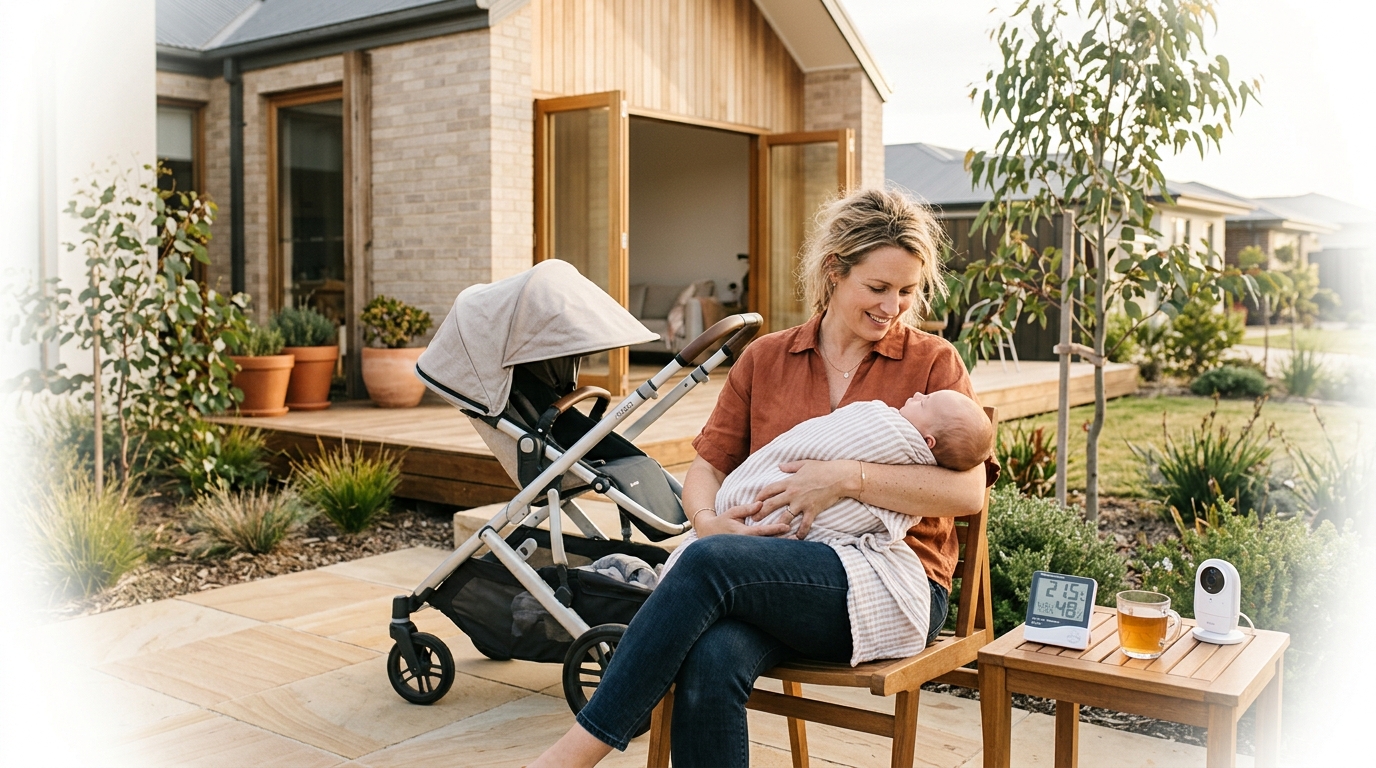
Why Infant Room Temperature Matters for Safe Sleep
Few things keep new parents awake at night quite like wondering whether their baby is too hot or too cold. Getting the infant room temperature right is not just about comfort, it is a genuine safety concern. Newborns and young babies cannot regulate their own body heat the way adults can. They rely almost entirely on the surrounding environment to stay within a safe thermal range, which makes the temperature of the nursery one of the most important factors in safe sleep.
Australian health authorities, including the Red Nose Foundation, have identified overheating as a significant risk factor for Sudden Infant Death Syndrome (SIDS). A room that is too warm can cause a baby to overheat during sleep, particularly when they are swaddled or covered. At the other extreme, a room that drops too cold overnight can disrupt sleep cycles and cause a baby to wake frequently.
This guide covers the recommended temperature range for a baby's room, how Australian seasons create unique challenges, the signs that your baby is too hot or too cold, and how a modern air conditioner can help you maintain a safe, consistent environment all year round.
Key takeaways
- The safe infant room temperature is 18°C to 22°C, with 20°C as the ideal target.
- Consistency matters more than hitting an exact number, as temperature swings disrupt sleep.
- A reverse-cycle split system is the most reliable way to maintain safe temperatures year-round.
The Recommended Infant Room Temperature Range
The safe temperature range for infant sleep is 18°C to 22°C, with 20°C widely regarded as the ideal target. This range is recommended by Australian paediatric and safe-sleep organisations because it keeps babies comfortable without the risks that come with overheating or excessive cold. If your nursery sits consistently within this band overnight, you are giving your baby the best possible sleep environment.
The reason this range works comes down to how babies are dressed for sleep. Infants typically sleep in a onesie or light pyjamas with a swaddle or sleep bag rated for the season. Because they are already insulated by their sleepwear, the room itself carries most of the thermal load. A room at 24°C or 25°C combined with a warm sleep bag can push a baby's core temperature dangerously high, even if the room does not feel particularly hot to an adult walking in.
Consistency matters just as much as hitting the right number. A room that holds a steady 21°C all night is better for infant sleep than one that starts at 20°C and climbs to 25°C by 3am as outdoor temperatures stay warm. Sudden temperature swings in either direction are more disruptive to sleep architecture than a temperature that sits at the slightly warmer or cooler edge of the recommended range. This is why passive ventilation alone, such as opening a window, often falls short. It hands control of your nursery temperature to the weather outside.
Australian summers can push bedroom temperatures well above 25°C without climate control, particularly in Queensland, Western Australia and the Northern Territory. Southern states face the opposite problem in winter, with overnight temperatures in Melbourne, Canberra and the Adelaide Hills regularly dropping below 10°C, which can pull an unheated nursery well below the safe 18°C floor. Neither extreme is manageable with a fan or a draught stopper alone.
Summer vs Winter: Adjusting for Australian Seasons
The 18°C to 22°C target applies year-round, but how you reach it changes completely depending on the season.
In summer, the challenge is cooling a room that may already be at 28°C or higher by bedtime and keeping it there as outdoor temperatures stay elevated through the night. Opening windows often makes things worse after midnight in coastal cities, where humidity rises. The goal is to bring the room down to the target range before you settle your baby and hold it there until morning.
In winter, the goal shifts to gentle, consistent heating. A nursery that is warm at 7pm can drop below 15°C by 5am if there is no active heating source. Portable heaters can help but they cycle on and off, creating the temperature swings that disrupt sleep. They also carry fire risks if placed near soft furnishings.
A reverse-cycle split system handles both jobs from a single wall-mounted unit, making it the most practical solution for Australian parents. Set to cool in summer and heat in winter, a quality inverter split system maintains a steady temperature within a degree or two of your target all night, without the noise spikes of a unit that constantly switches on and off. For a standard nursery of around 20 square metres, a 2.5kW unit is typically the right size for the job.
Signs Your Baby Is Too Hot or Too Cold
You do not need a thermometer to tell whether your baby is comfortable, though one certainly helps. Babies give clear physical cues when they are too warm or too cold, and knowing what to look for means you can act quickly rather than waiting until your little one is fully unsettled. The key is to check the right parts of the body, because hands and feet are naturally cooler than the core and will mislead you.
Signs your baby may be overheating include:
- Sweat on the back of the neck or damp hair at the hairline
- Flushed or red-looking skin across the face and chest
- Rapid or slightly laboured breathing that is faster than usual
- Restlessness, frequent waking or an unsettled, irritable cry
- Skin that feels hot to the touch on the chest or tummy
Signs your baby may be too cold include:
- A cool chest or cool back of the neck (these are the reliable spots to check, not the hands or feet)
- Pale or slightly mottled skin
- Difficulty settling or waking more frequently than usual
- A weak or whimpery cry that is quieter than normal
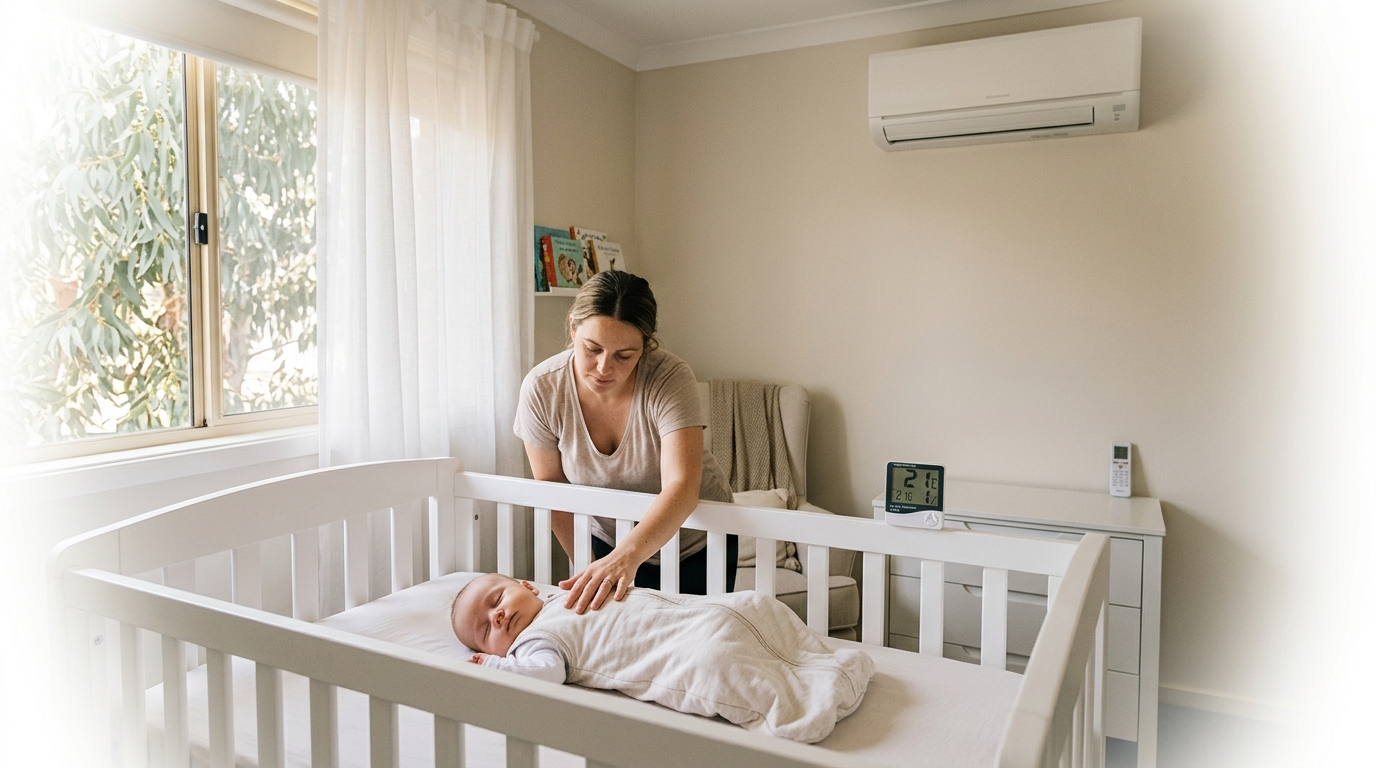
Where you place your room thermometer matters as much as having one. Heat rises, so a thermometer mounted high on the wall will read warmer than the air your baby is actually breathing at cot height. Position it at roughly the same level as the mattress for an accurate reading. A baby monitor with a built-in temperature display is a practical solution here, since it sits right at cot level and lets you check the reading from another room without disturbing your baby.
If you notice any signs of overheating, remove a layer of clothing or bedding first, then check the room temperature and adjust your air conditioner if needed. For a cool baby, add a layer before reaching for the thermostat, as the fix is often simpler than you think.
How to Maintain the Right Infant Room Temperature with Air Conditioning
A reverse-cycle split system air conditioner is the most reliable way to hold a steady infant room temperature across every season. Unlike fans, which only move air, or portable heaters, which cycle on and off, a quality inverter split system actively maintains your target temperature within a degree or two all night long. For parents who want genuine control over their nursery environment, split system air conditioners are the practical starting point.
Not all split systems are equally well suited to a nursery. Three features are worth prioritising when you are choosing a unit for a baby's room:
| Feature | Why It Matters for a Nursery | What to Look For |
|---|---|---|
| Precise thermostat control | Lets you set an exact target temperature rather than a vague 'cool' or 'warm' mode | Degree-by-degree digital temperature setting, ideally with a display you can read at a glance |
| Low noise output | Modern inverter units run as quietly as 19 to 22 dB on their lowest fan speed, well below the threshold that disturbs infant sleep | Check the indoor unit noise rating in the spec sheet, not just the outdoor unit figure |
| Sleep or quiet mode | Gradually adjusts temperature and dims or turns off the display light overnight so the room stays dark and undisturbed | A dedicated sleep mode button or setting in the app, separate from the standard timer function |
For a standard Australian nursery of up to around 20 m², a 2.5kW unit is typically the right capacity. Going larger than you need can cause the unit to short-cycle, switching on and off too frequently and creating the temperature swings you are trying to avoid. Three solid options at this capacity are the Daikin 2.5kW Inverter Split System LITE FTXF25WVMA at $989, the Fujitsu 2.5kW Lifestyle Range Inverter Split System ASTG09KMTC at $1,018 and the Mitsubishi Electric 2.5kW Split System MSZAP25VGKD at $1,040. All three are compact, quiet inverter units from brands with strong reputations in Australian homes. Daikin split systems in particular are well regarded for low noise output, making the LITE series a popular choice for bedrooms and nurseries.
Positioning the Indoor Unit for a Nursery
Where the indoor unit is mounted has a direct impact on how comfortable your baby will be. The single most important rule is that the airflow should never blow directly onto the cot. A constant draught across a sleeping baby, even a gentle one at a comfortable temperature, can cause uneven cooling and disrupt sleep.
The best approach is to mount the unit on the wall opposite the cot, or on an adjacent wall, so that conditioned air circulates around the room rather than across the sleeping area. Many modern split systems include a wide-angle or auto-swing louvre that moves the airflow direction automatically, helping to distribute air evenly throughout the room without creating a concentrated draught in any one spot. This feature is worth confirming before you buy.
Every nursery layout is slightly different, and the right position also depends on window placement, door position and ceiling height. A professional installer can assess the room during installation and recommend the optimal mounting height and angle. Getting this right at the time of installation is far easier than repositioning the unit later.
Using Smart Controls and Timers
One of the most practical features for parents is Wi-Fi connectivity. Wi-Fi-enabled split systems let you monitor and adjust the nursery temperature from your phone without opening the door and risking waking your baby. If the room climbs a degree or two warmer than expected on a humid summer night, you can nudge the thermostat down from the hallway or even from another room entirely.
Timer functions are equally useful. You can pre-cool or pre-heat the nursery in the 30 to 60 minutes before your baby goes down, so the room is already sitting at your target temperature when you settle them rather than waiting for the unit to catch up after the fact. A stable room is easier to settle a baby into than one that is still adjusting.
The Mitsubishi Electric 2.5kW Split System MSZAP25VGKD at $1,040 is a strong example of a Wi-Fi-capable unit at an accessible price point. It connects to the MELCloud app, giving you full remote control over temperature, fan speed and scheduling. For parents who want that extra layer of oversight overnight, it is a genuinely useful feature rather than a marketing add-on.
Other Tips for Keeping Your Nursery at a Safe Temperature
Air conditioning does the heavy lifting, but a few simple habits around the nursery can make it easier to hold the right infant room temperature and reduce how hard your unit has to work. These measures are most effective when used alongside a properly set reverse-cycle system, not as a replacement for one.
- Keep curtains or blinds closed during the day in summer. Direct sunlight through a window can raise a small room's temperature by several degrees before you even notice. Block-out blinds are particularly effective and have the added benefit of helping your baby sleep during daylight naps.
- Use a ceiling fan on low to improve air circulation. A fan does not cool the air, it only moves it. Your air conditioner still needs to be set to the correct temperature. Run the fan on its lowest setting to help distribute conditioned air more evenly around the room, and make sure it is not creating a direct draught over the cot.
- Position the cot away from windows, exterior walls and heating vents. These spots are the most thermally unstable in any room. An exterior wall can radiate heat in summer and cold in winter, and a heating vent blowing directly onto a sleeping baby creates uneven warmth that is hard to manage.
- Dress your baby in a single layer suited to the room temperature. Relying on extra blankets to compensate for a room that is too cold is a safe-sleep risk. Get the room right first, then dress your baby appropriately for that temperature.
- Use a room thermometer placed at cot height. Heat rises, so a thermometer high on the wall will read warmer than the air at mattress level. A reading at cot height gives you the most accurate picture of what your baby is actually experiencing.
Parents who rent or cannot install a permanent split system have another option worth considering. Portable air conditioners can be moved from room to room, require no installation and are a practical short-term solution for keeping a nursery within the safe temperature range. They are less efficient than a wall-mounted unit and do require a window or vent for the exhaust hose, but for renters or temporary setups they fill the gap well.
Frequently Asked Questions About Infant Room Temperature
What temperature is too hot for a baby's room?
A room above 24°C is generally considered too warm for infant sleep. At this temperature, the combination of room heat and sleepwear can push a baby's core temperature into an unsafe range, particularly if they are swaddled or in a warm sleep bag. The Red Nose Foundation recommends keeping the nursery between 18°C and 22°C to reduce the risk of overheating.
Is 18°C too cold for a baby's room?
18°C is the lower end of the recommended safe range, not dangerously cold, provided your baby is dressed appropriately for that temperature. A onesie with a sleep bag rated for cooler conditions is usually sufficient at 18°C. If the room drops below 18°C overnight, active heating is advisable rather than adding extra loose blankets, which carry their own safe-sleep risks.
Should I leave the air conditioner on all night for my baby?
Yes, running the air conditioner through the night is the most reliable way to maintain a stable nursery temperature. A quality inverter split system uses very little power at its steady-state holding temperature, so the overnight running cost is modest. The alternative, letting the room drift with outdoor temperatures, creates the kind of swings that disrupt infant sleep and can push the room outside the safe range by early morning.
How do I know if my baby is too hot at night?
Check the back of your baby's neck or their chest rather than their hands or feet, which are naturally cooler. Sweat at the hairline, flushed skin, rapid breathing or restless sleep are the clearest signs of overheating. If you notice any of these, remove a layer of clothing or bedding first, then check the room thermometer and adjust your air conditioner if the temperature is above 22°C.
Keep Your Baby Comfortable All Year Round
Maintaining a safe infant room temperature comes down to three things: knowing your target range of 18°C to 22°C, keeping that range consistent across every season and having the right equipment to hold it reliably overnight. A reverse-cycle split system is the single most effective tool for all three, handling both summer cooling and winter heating from one quiet, wall-mounted unit.
For a standard nursery of around 20 m², a 2.5kW inverter unit from a trusted brand is all you need. The Daikin 2.5kW Inverter Split System LITE FTXF25WVMA at $989, the Fujitsu 2.5kW Lifestyle Range Inverter Split System ASTG09KMTC at $1,018 and the Mitsubishi Electric 2.5kW Split System MSZAP25VGKD at $1,040 are all solid starting points across three of Australia's most reliable brands.
Ready to find the right unit for your nursery? Browse our full split system air conditioner range to compare models, specs and pricing, and find a quiet, efficient unit that keeps your baby sleeping safely all year round.
Need expert advice?
Our team can help you choose the right air conditioning system for your space.