
Price of Evaporative Air Conditioning in Australia (2026 Guide)
What Is the Price of Evaporative Air Conditioning in Australia?
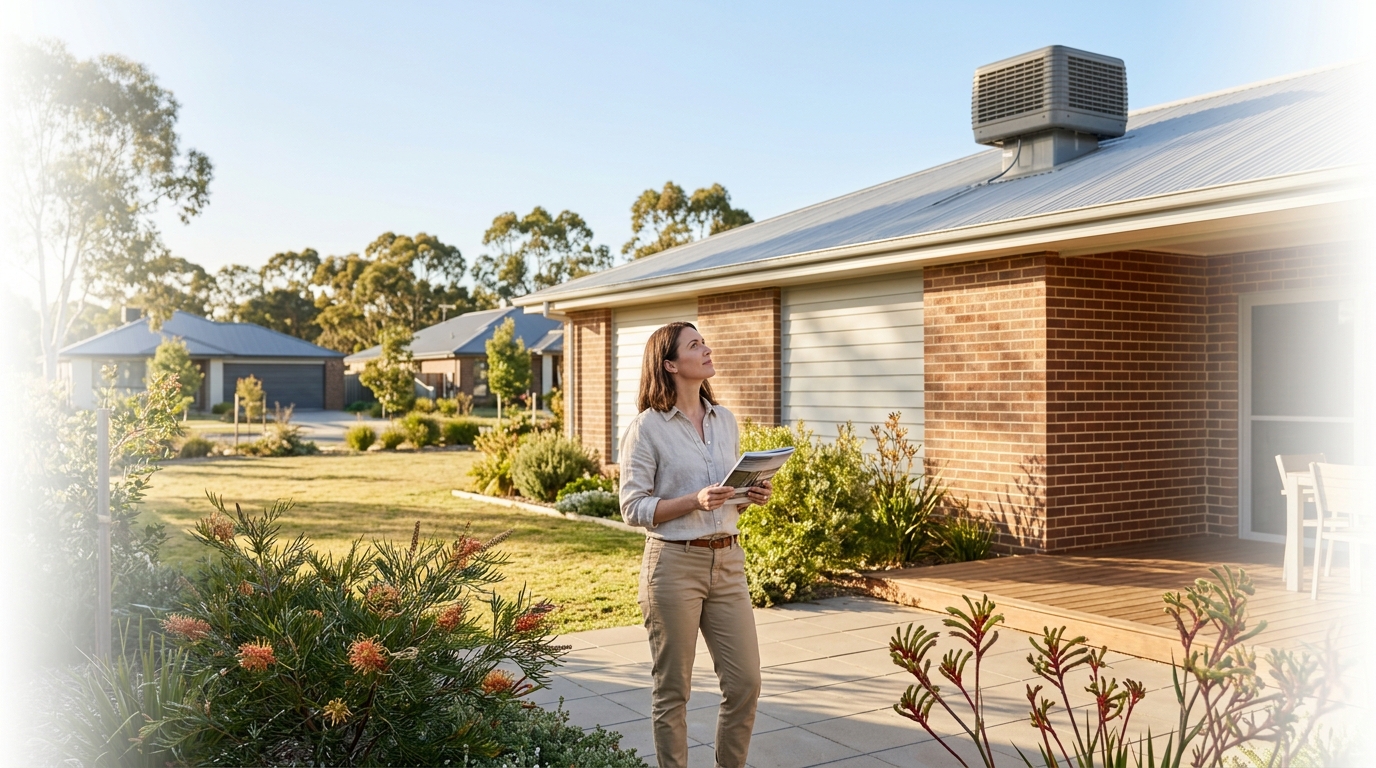
The price of evaporative air conditioning in Australia ranges from as little as $50 for a basic portable cooler to over $8,000 fully installed for a ducted roof-mounted system. Evaporative cooling works by drawing warm outside air through water-saturated pads, dropping the temperature through evaporation before a fan pushes the cooled air into your home. It is most effective in hot, dry climates like inland Victoria, South Australia, Western Australia and regional New South Wales.
This guide breaks down the three main cost categories you need to budget for: the unit purchase price, professional installation and ongoing running costs. Understanding each one will help you decide whether evaporative cooling is the right fit for your home and your wallet.
Key takeaways
- The price of evaporative air conditioning ranges from $50 to $8,000 depending on unit type and installation.
- Ducted systems cost $3,000 to $8,000 installed but run for just $200 to $600 annually.
- Evaporative cooling works best in dry climates and loses effectiveness above 50% humidity.
Evaporative Air Conditioner Unit Costs
Evaporative air conditioner unit prices in Australia range from around $50 for a portable cooler to $4,500 for a large ducted roof-mounted system, before installation. The table below summarises the three main unit types, their typical price ranges and the home sizes they suit.
| Unit Type | Typical Unit Price (AUD) | Suitable Home Size | Key Limitation |
|---|---|---|---|
| Portable / Window Evaporative Cooler | $50 to $300 | Single room | Ineffective in humid conditions; no whole-home coverage |
| Roof-Mounted Single-Outlet | $600 to $1,500 | Small home or open-plan area | Limited airflow distribution; one zone only |
| Roof-Mounted Ducted System | $1,500 to $4,500 | 3 to 5 bedroom home | Higher upfront cost; requires roof space and ductwork |
Prices vary by brand and capacity. Established Australian brands like Breezair, Braemar and Coolair sit at the higher end of each range, while lesser-known imports tend to be cheaper but may carry shorter warranties. Capacity is measured in litres per hour (L/hr), which indicates how much water the unit evaporates and directly affects how much air it can cool. All prices above are supply-only. Installation is a separate cost covered in the next section.
Portable and Window Evaporative Coolers
Portable evaporative coolers are the most affordable entry point, with units available from around $50 up to $300 at hardware and appliance retailers. No installation is required as they simply plug into a standard power point, making them a practical option for renters or anyone who needs spot cooling in a single room.
The trade-off is significant. Portable units move a relatively small volume of air and rely entirely on low ambient humidity to work. On a dry 38-degree day in Mildura or Broken Hill, a $200 portable cooler can drop a bedroom temperature by a useful 8 to 10 degrees. On a humid summer afternoon in coastal Queensland or Sydney, the same unit will barely make a dent. They are also not suited to whole-home cooling as the cooled air does not travel beyond the immediate area around the unit.
For renters or those cooling a single study, bedroom or small living area in a dry climate, a portable evaporative cooler offers genuine value. For anyone wanting to cool multiple rooms or a whole house, the next tier up is worth the investment.
Ducted Roof-Mounted Systems
Ducted roof-mounted evaporative systems are the dominant choice for whole-home cooling across southern and inland Australia, and for good reason. A quality ducted unit from Breezair or Braemar will supply cooled air to every room in the house through a network of ceiling vents, giving you consistent comfort from the front door to the back bedroom.
Unit prices for ducted systems start at around $1,500 for a smaller capacity model suited to a two or three bedroom home, and climb to $4,500 or more for high-capacity units designed for four and five bedroom homes. Capacity is rated in litres per hour. A 15 L/hr unit is typically adequate for a 120 to 150 square metre home, while a 25 L/hr unit is better suited to homes over 200 square metres.
It is worth comparing this upfront cost against alternatives. A Daikin 5kW Inverter Split System LITE (FTXF50WVMA) retails at $1,589, which is comparable to a mid-range single-outlet evaporative unit. A Daikin 7.1kW Inverter Split System LITE (FTXF71WVMA) at $1,977 sits well below the cost of a whole-home ducted evaporative system. The key difference is that split systems provide both heating and cooling year-round, while evaporative systems are cooling-only and lose effectiveness as humidity rises above around 50 per cent.
For homes in dry inland climates where summer temperatures regularly exceed 35 degrees, a ducted evaporative system remains one of the most cost-effective ways to cool an entire house. The unit cost is only part of the picture though, and installation adds a significant amount to the total outlay.
Evaporative Cooling Installation Costs
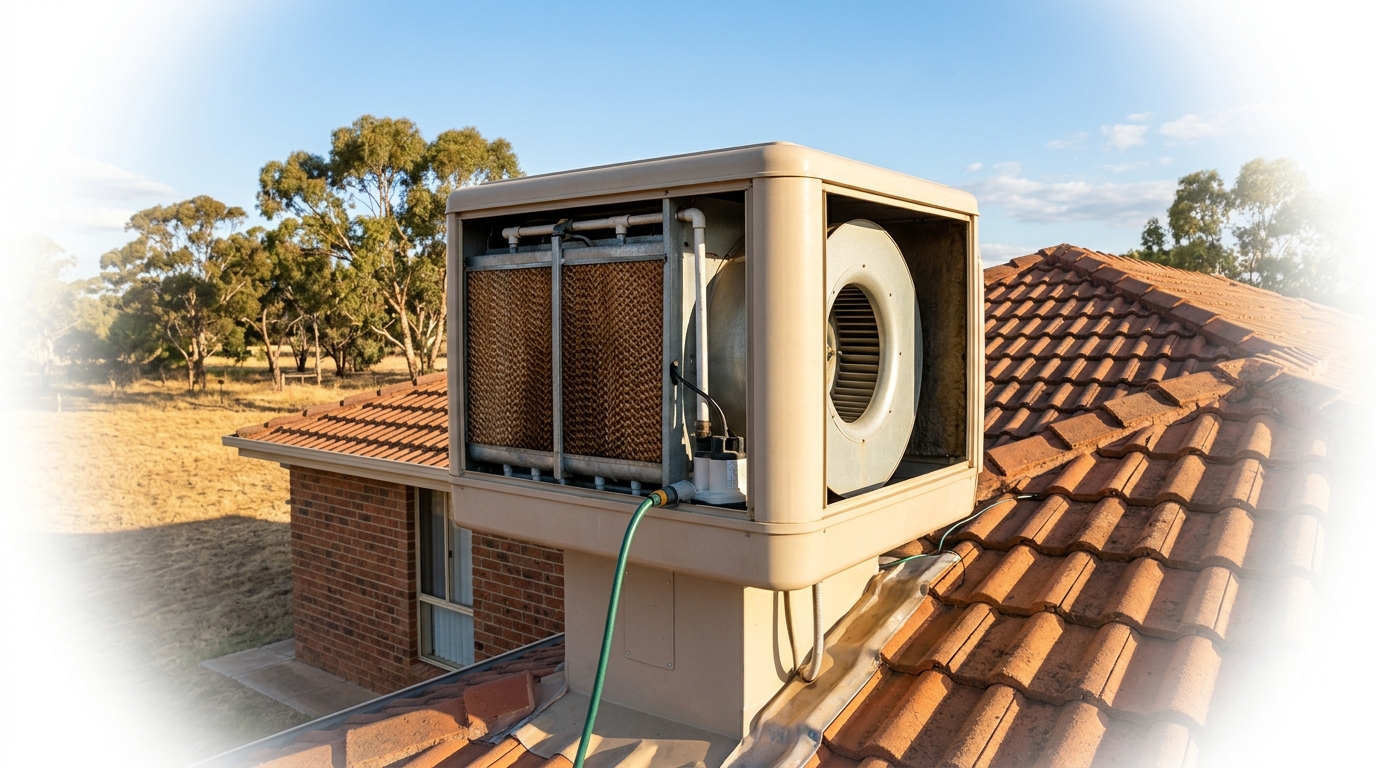
Professional installation of a ducted evaporative system in Australia typically costs $1,500 to $3,500 in labour, bringing the total installed price to roughly $3,000 to $8,000 for most homes. The wide range reflects real differences in job complexity, roof type, ducting requirements and local labour rates. Most average three to four bedroom homes land somewhere in the $4,500 to $6,000 range once the unit and installation are combined. Portable evaporative coolers, by contrast, require no installation at all as they plug straight into a standard power point.
Quotes also vary noticeably by state. Melbourne and Adelaide have a higher concentration of evaporative cooling specialists due to the dry summer climate in both cities, which tends to keep labour rates more competitive. In Sydney and Brisbane, evaporative cooling is less common and installers are fewer, so quotes can run $500 to $1,000 higher for the same job.
Factors That Affect Installation Price
- System capacity and number of outlets. A larger system serving more rooms requires more ceiling vents, more ductwork and more time on the job. Each additional outlet adds to both materials and labour costs.
- Roof type and accessibility. Metal roofs are generally faster and easier to work on than tiled roofs, which require careful tile removal and replacement around penetrations. Difficult roof access can add $200 to $500 to the final quote.
- Ducting requirements (new vs. existing). Installing a brand-new duct network from scratch is significantly more expensive than connecting to existing ducting in good condition. Replacing old, deteriorated ductwork adds both materials and labour to the bill.
- Storey height and ceiling space. Two-storey homes require more ducting run and more time for the installer to work safely at height. Tight ceiling cavities with limited clearance also slow the job down considerably.
- Location and local labour rates. Labour costs vary between states and between metro and regional areas. Remote locations may also attract a travel surcharge on top of the standard hourly rate.
Running Costs: How Much Does Evaporative Cooling Cost to Operate?
A ducted evaporative cooling system costs roughly $200 to $600 per year to run in a typical Australian home, covering electricity, water and annual servicing. This is substantially less than a comparable refrigerated system, making evaporative cooling one of the most economical choices for homeowners in dry climates who run their system heavily through summer.
The electricity saving is the headline figure. Evaporative coolers use around 80 to 90 per cent less power than a refrigerated ducted system. A ducted evaporative unit typically draws 500 to 1,500 watts, compared to 2,000 to 5,000 watts for a ducted reverse-cycle system covering the same floor area. At the average Australian electricity rate of around $0.30 to $0.35 per kWh in 2026, running a ducted evaporative system for eight hours a day costs roughly $0.40 to $1.20. Running a ducted reverse-cycle system for the same period costs $4.80 to $14.00 per day. Over a three-month summer, that difference adds up fast.
Water consumption is the other ongoing cost to factor in. A ducted evaporative system uses approximately 25 to 60 litres of water per hour depending on capacity and the ambient temperature. On a hot day with the system running for eight hours, that is 200 to 480 litres. At typical Australian water rates, this adds a modest amount to your quarterly bill, but it is worth accounting for if you are on tank water or in an area with water restrictions.
Annual servicing is also a real cost. A standard service visit covering cooling pad replacement and a general clean typically runs $100 to $250 depending on your location and the size of the unit. Skipping this is a false economy as dirty or degraded pads reduce cooling efficiency and can shorten the life of the unit significantly.
| Cost Category | Evaporative Ducted System | Refrigerated Ducted System |
|---|---|---|
| Power draw | 500 to 1,500W | 2,000 to 5,000W |
| Daily running cost (8 hrs at $0.32/kWh) | $0.40 to $1.20 | $4.80 to $14.00 |
| Water usage | 25 to 60 L/hr | None |
| Annual servicing | $100 to $250 | $150 to $300 |
| Estimated annual running cost | $200 to $600 | $800 to $2,500+ |
For context, a split system like the Daikin 2.5kW Inverter Split System LITE (FTXF25WVMA) at $989 will cost considerably more to run over a full summer than a ducted evaporative system, but it handles humidity and provides heating in winter. The right choice depends on your climate, your usage patterns and how you weigh upfront cost against long-term running expenses.
Evaporative Cooling vs. Split System Air Conditioning: Which Is Better Value?
Evaporative cooling is cheaper to buy and run than a reverse-cycle split system, but only if you live in a hot, dry climate. In humid conditions, evaporative cooling loses most of its effectiveness, and it cannot heat your home at all. A split system costs more upfront and more to run, but it works in every Australian climate, every month of the year.
| Factor | Ducted Evaporative Cooling | Reverse-Cycle Split System |
|---|---|---|
| Purchase + install cost | $3,000 to $8,000 | $1,500 to $4,500 (single room to large room) |
| Running cost (per day, 8 hrs) | $0.40 to $1.20 | $1.00 to $4.00 (inverter split system) |
| Cooling effectiveness in humidity | Poor above 50% relative humidity | Excellent in all humidity levels |
| Heating capability | None | Yes, reverse-cycle heating included |
| Annual maintenance cost | $100 to $250 (pad replacement, clean) | $150 to $300 (filter clean, general service) |
| Best climate | Hot, dry inland areas (SA, inland VIC, WA) | All Australian climates, including coastal |
The cost gap narrows considerably when you look at individual split system units. The Daikin 2.5kW Inverter Split System LITE (FTXF25WVMA) is $989 supply-only, the 5kW model (FTXF50WVMA) is $1,589 and the 7.1kW model (FTXF71WVMA) is $1,977. Each of these provides both heating and cooling year-round, which a ducted evaporative system simply cannot match.
For homeowners in Melbourne's western suburbs, the Adelaide plains or the WA wheatbelt, evaporative cooling is a genuinely smart investment. Summers are hot and dry, winters are mild, and the running cost savings over 10 to 15 years are real and substantial.
For anyone in Sydney, Brisbane, the Gold Coast or any other humid coastal city, the maths shifts decisively. An evaporative system will underperform on the days you need it most, and you will still need a separate heating solution for winter. In those situations, a split system air conditioner delivers better overall value despite the higher upfront cost. If you want whole-home coverage in a humid climate, ducted air conditioning systems are worth comparing against ducted evaporative on a total cost-of-ownership basis.
Is Evaporative Air Conditioning Worth the Cost?
Evaporative air conditioning is worth the cost if you live in the right climate. Total installed prices run from $3,000 to $8,000, with the unit itself costing $600 to $4,500 and installation adding $1,500 to $3,500. Annual running costs sit between $200 and $600, making evaporative cooling one of the most economical options available for homeowners in hot, dry regions like inland Victoria, South Australia and Western Australia.
If you live in a humid coastal area, or you want heating as well as cooling, evaporative cooling is a poor fit. The technology simply does not perform in high humidity, and it offers no heating capability at all.
For those readers, the better path is a reverse-cycle system. Browse our range of split system air conditioners and ducted systems to compare prices from Daikin, Mitsubishi Electric, Fujitsu and more, and find a system that works for your home year-round.
Frequently Asked Questions
How much does it cost to install evaporative air conditioning in Australia?
Installing a ducted evaporative system in Australia typically costs $3,000 to $8,000 in total, covering both the unit and professional installation. The unit itself ranges from $1,500 to $4,500 for a ducted roof-mounted system, with installation labour adding $1,500 to $3,500 on top. Most three to four bedroom homes land in the $4,500 to $6,000 range all up.
What is the best evaporative air conditioner in Australia?
Breezair and Braemar are consistently regarded as the top evaporative cooling brands in Australia, offering high-capacity ducted systems with strong warranties and reliable performance in hot, dry climates. Coolair is another well-regarded option at a slightly lower price point. That said, evaporative cooling only performs well in low-humidity conditions, so many Australians in coastal or humid climates choose Daikin split systems instead, which deliver effective cooling and heating regardless of humidity levels.
Is evaporative cooling cheaper to run than air conditioning?
Yes, evaporative cooling is significantly cheaper to run than a refrigerated air conditioning system. A ducted evaporative system typically costs $0.40 to $1.20 per day to run for eight hours, compared to $4.80 to $14.00 per day for a ducted reverse-cycle system covering the same area. Annual running costs for evaporative cooling sit between $200 and $600, making it one of the most economical cooling options available in dry Australian climates.
Does evaporative cooling work in humid climates?
Evaporative cooling does not work effectively in humid climates. The technology relies on evaporating water into dry air to lower the temperature, so once relative humidity rises above around 50 per cent, the cooling effect drops off sharply. Cities like Sydney, Brisbane and the Gold Coast regularly exceed this threshold in summer, making evaporative cooling a poor choice for coastal and subtropical regions. A reverse-cycle split system or ducted refrigerated system is a far better fit for those areas.
Need expert advice?
Our team can help you choose the right air conditioning system for your space.