
Reverse Cycle vs Split System Air Conditioners: What's the Difference?
What Is a Reverse Cycle Air Conditioner?
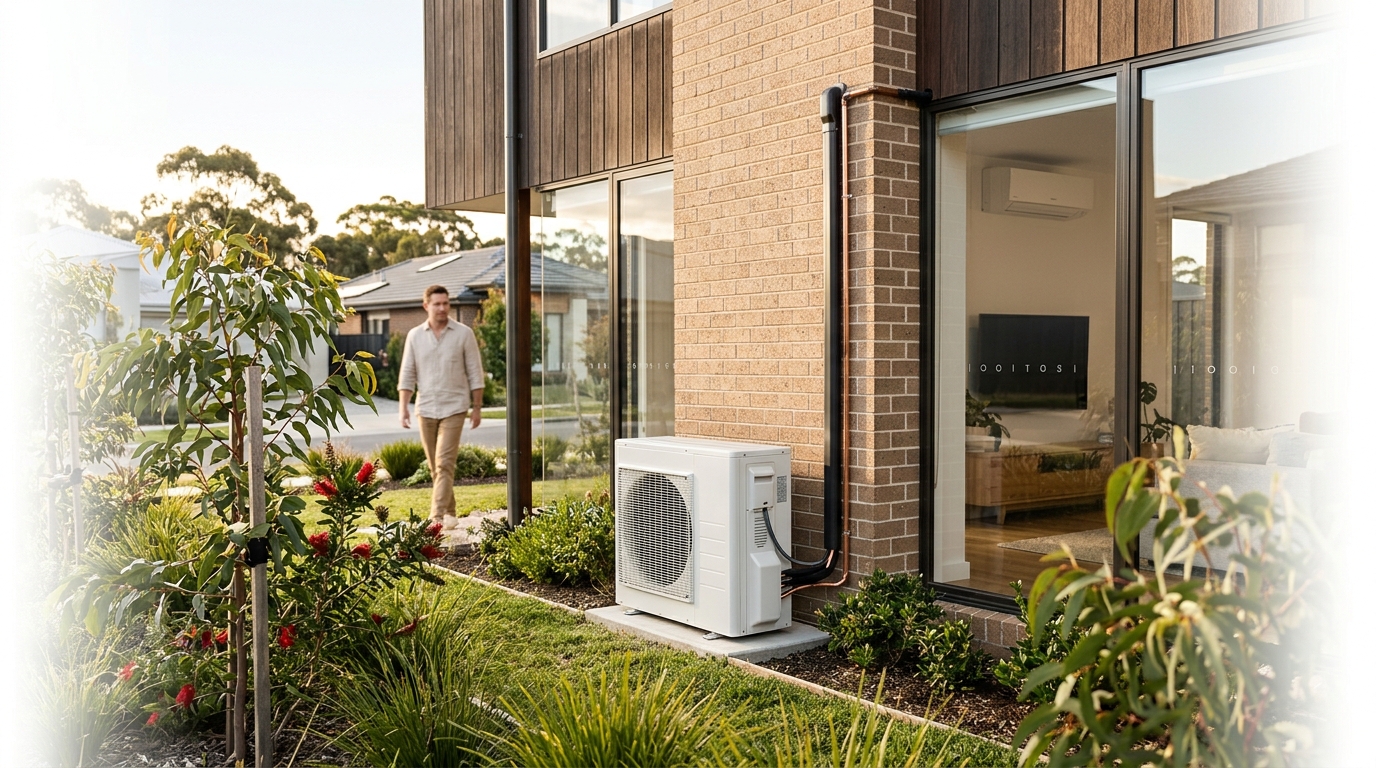
A reverse cycle air conditioner is any air conditioning system that can both cool and heat a space, making it a year-round climate control solution. The term 'reverse cycle' refers to the ability to reverse the refrigerant cycle, extracting heat from outside air to warm a room in winter and expelling heat outside to cool a room in summer. It is not a separate product category but a feature built into most modern air conditioners sold in Australia today.
Most people searching for a split system air conditioner are actually looking at reverse cycle split systems without realising it. The two terms are often used interchangeably in Australian retail, which makes it genuinely tricky to know what you are buying. This article breaks down exactly what each term means and how to choose the right system for your home.
Key takeaways
- A reverse cycle air conditioner heats and cools by moving heat rather than generating it, making it highly efficient year-round.
- Most split systems sold in Australia today are reverse cycle units as standard.
- Choosing the right capacity matters more than worrying about terminology or brand.
How a Reverse Cycle System Works
A reverse cycle air conditioner uses a refrigerant to move heat from one place to another rather than generating heat directly. This is the key reason reverse cycle systems are so much more efficient than a standard electric heater, which burns electricity to produce warmth from scratch. Instead of creating heat, a reverse cycle system simply relocates it.
The refrigerant circulates between an indoor unit and an outdoor unit. In heating mode, it absorbs heat energy from the outdoor air and carries it inside. In cooling mode, it absorbs heat from the indoor air and releases it outside. Because the system is moving heat rather than generating it, it can deliver three to four kilowatts of heating or cooling output for every one kilowatt of electricity it consumes. This ratio is known as the Coefficient of Performance, or COP, and a COP of 3 to 4 is typical for a quality reverse cycle unit. By comparison, a resistive electric heater has a COP of exactly 1. That efficiency gap is the main reason reverse cycle technology now dominates Australian homes.
Cooling Mode vs Heating Mode
In cooling mode, the indoor unit's evaporator coil absorbs heat from the air inside your room. The refrigerant carries that heat to the outdoor unit, where it is released into the outside air. The result is cooler, drier air circulated back into your room.
In heating mode, the cycle reverses. The outdoor unit's coil now acts as the absorber, pulling heat energy from the outside air even when temperatures are low. That heat is transferred to the indoor unit and released into your room. Modern reverse cycle units can extract usable heat from outdoor air down to around -15°C, which makes them well suited to cold Australian winters in cities like Canberra, Melbourne and alpine areas such as the Blue Mountains. You do not need warm outdoor air for a reverse cycle system to heat effectively. As long as there is some heat energy in the air, the system can use it.
Reverse Cycle vs Split System: Are They the Same Thing?
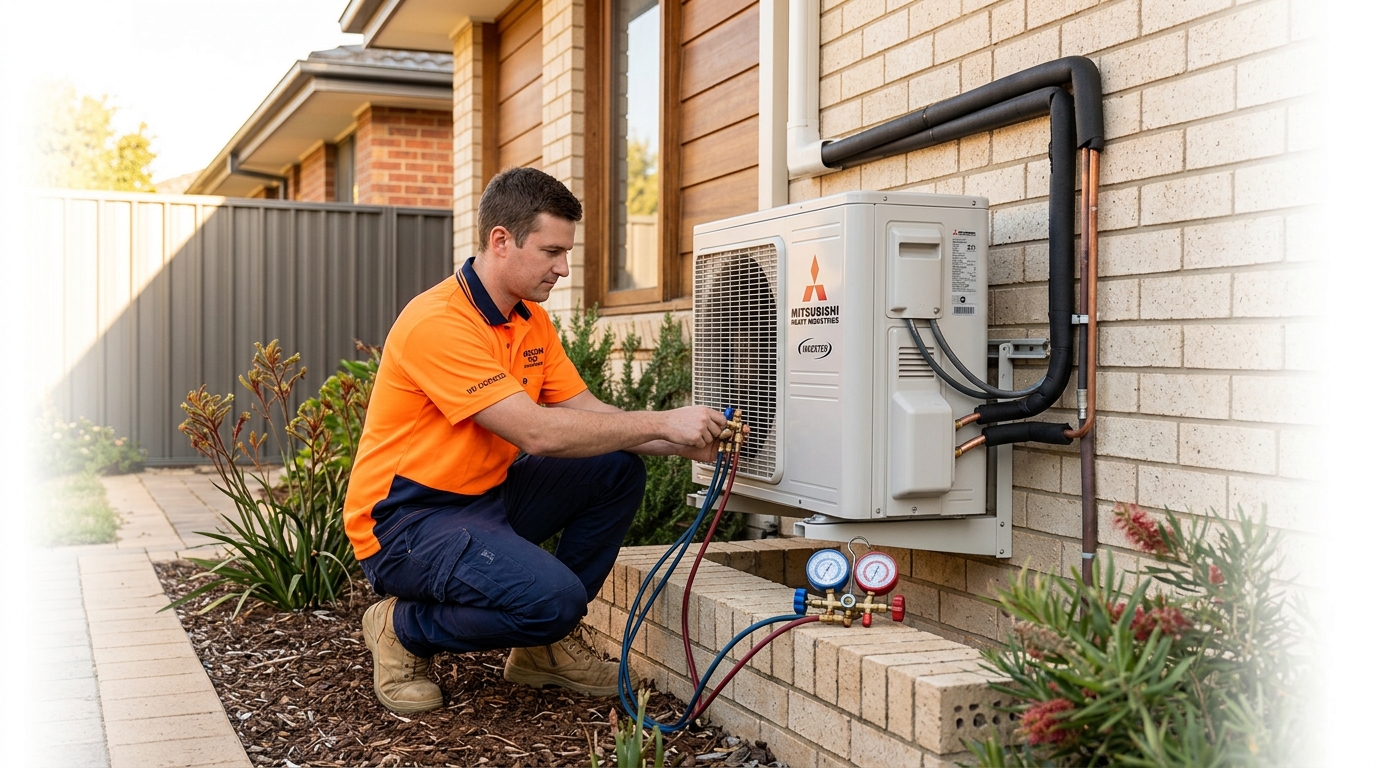
In the Australian market, 'reverse cycle' and 'split system' are often used as if they mean the same thing, but they actually describe two different things. 'Split system' refers to the physical design of the unit: an indoor wall-mounted head connected by refrigerant lines to an outdoor compressor. 'Reverse cycle' refers to a capability: the ability to both heat and cool. Most split system air conditioners sold in Australia today are reverse cycle, which is why the terms get blurred together.
A split system could technically be cooling-only. These units exist, but they are increasingly rare in the Australian retail market. Virtually every split system you will find from a major brand in 2026 includes reverse cycle heating as standard. So while the two terms are not technically identical, for most buyers shopping right now, they point to the same product.
The clearest way to think about it: 'split system' tells you what the unit looks like, and 'reverse cycle' tells you what it can do. A reverse cycle split system is simply a split system that does both jobs.
| Feature | Reverse Cycle | Cooling-Only Split System |
|---|---|---|
| Heating capability | Yes | No |
| Cooling capability | Yes | Yes |
| Energy efficiency (heating) | High (COP of 3 to 4+) | Not applicable |
| Typical price range | $800 to $2,500+ (2.5kW to 7kW) | Slightly lower, but rarely available |
| Best suited for | Year-round climate control in any Australian region | Tropical climates where heating is never needed |
| Availability in Australia | Widely available from all major brands | Very limited, mostly commercial or older stock |
Which Type Is Right for Your Home?
For the vast majority of Australian households, a reverse cycle split system is the most practical and cost-effective choice. Australia's climate varies enormously from Darwin to Hobart, but even in warmer northern regions, a reverse cycle unit gives you the flexibility to handle the occasional cool night without needing a separate heater. Brands like Daikin split systems and Mitsubishi Electric split systems are consistently well-regarded for reliability, energy-efficiency and after-sales support across Australia.
Here is how to match the right system to your situation:
Single room or bedroom: A 2.5kW reverse cycle split system is the sweet spot for rooms up to around 20 square metres. The Daikin Cora 2.5kW Inverter Split System (FTXV25WVMA) at $1,054 and the Mitsubishi Electric AP Series 2.5kW (MSZAP25VGKD) at $1,040 are both popular choices at this size. If budget is a priority, the Samsung ARISE Wind Free AR7500 2.5kW Split System at $846 is a solid entry-level reverse cycle option that still delivers reliable heating and cooling.
Open-plan living area: Larger open-plan spaces typically need a 5kW to 7kW+ reverse cycle split system to maintain comfortable temperatures across both seasons. Undersizing a unit for a large room is one of the most common and costly mistakes buyers make, as the system will run constantly and still struggle to reach the set temperature.
Whole-home comfort: If you want consistent climate control across multiple rooms, a ducted reverse cycle system is worth considering. The upfront cost is significantly higher, but a single outdoor unit can serve an entire home through ceiling vents, with zoning options to control individual rooms.
Key Factors to Consider Before Buying
- Room size and kW capacity: As a rough guide, allow around 125W per square metre for a standard room. A 20m² bedroom needs roughly 2.5kW, while a 50m² open-plan area needs 5kW to 6kW. Always factor in ceiling height, insulation and sun exposure.
- Climate zone: In hotter climates like Queensland and the Northern Territory, cooling efficiency (measured by the Energy Efficiency Ratio, or EER) is the priority. In colder climates like Victoria, Tasmania and the ACT, focus on the heating COP and check the unit's rated performance at low outdoor temperatures.
- Budget (unit plus installation): Factor in both the purchase price and installation costs, which typically add $600 to $1,500 depending on complexity. A cheaper unit with a difficult installation can end up costing more overall.
- Energy star ratings: More stars mean lower running costs. A higher-rated unit costs more upfront but pays back the difference over time, particularly if you run the system daily through summer and winter.
Ready to Find the Right Reverse Cycle Air Conditioner?
The short answer for most Australian buyers is this: a reverse cycle split system gives you year-round heating and cooling from a single unit, and virtually every split system sold in Australia in 2026 already includes that capability. The terminology can be confusing, but the product itself is straightforward. You are not choosing between two different technologies. You are simply choosing the right capacity and brand for your space.
Getting the capacity right matters far more than worrying about what the unit is called. A well-sized 2.5kW reverse cycle split system will outperform an oversized or undersized unit every time, regardless of the brand on the box. Focus on your room size, climate zone and budget, and the rest falls into place.
Browse our full range of split system air conditioners to compare models, capacities and prices across all major brands.
Frequently Asked Questions
Is a reverse cycle air conditioner the same as a split system?
Not exactly, but in practice they usually refer to the same product. 'Split system' describes the physical design of the unit, with an indoor head and an outdoor compressor connected by refrigerant lines. 'Reverse cycle' describes the capability to both heat and cool. Almost every split system sold in Australia today is reverse cycle, so the terms are used interchangeably in most retail contexts.
Can a reverse cycle air conditioner replace a heater?
Yes, for most Australian homes a reverse cycle air conditioner can fully replace a dedicated heater. Reverse cycle systems are significantly more efficient than electric resistive heaters, delivering three to four kilowatts of heat output for every one kilowatt of electricity consumed. In very cold climates like Canberra or alpine Victoria, check that the unit is rated to operate effectively at low outdoor temperatures before purchasing.
What is the difference between reverse cycle and inverter air conditioning?
'Reverse cycle' refers to the ability to heat and cool, while 'inverter' refers to how the compressor motor is controlled. An inverter compressor adjusts its speed continuously to maintain the set temperature, rather than switching fully on and off. Most modern reverse cycle split systems are also inverter units, combining both features for efficient year-round climate control.
Are cooling-only split systems still available in Australia?
Cooling-only split systems are increasingly rare in the Australian residential market. Most major brands have phased them out of their standard residential ranges in favour of reverse cycle models. You may still find cooling-only units in some commercial applications or older stock, but for a new home installation, a reverse cycle unit is almost always the practical choice.
How do I know what size reverse cycle split system I need?
A common starting point is to allow roughly 125 watts of capacity per square metre of floor space. A 20 square metre bedroom typically needs a 2.5kW unit, while a 40 to 50 square metre open-plan living area generally requires 5kW to 6kW. Ceiling height, insulation quality, sun exposure and local climate all affect the final calculation, so it is worth getting a proper assessment before buying.
Is reverse cycle air conditioning expensive to run?
Reverse cycle air conditioning is one of the most cost-effective ways to heat and cool a home in Australia. Because the system moves heat rather than generating it, running costs are considerably lower than gas ducted heating or electric resistive heaters. Energy star ratings vary between models, and a higher-rated unit will cost more upfront but reduce your electricity bills over time, particularly if you run the system through both summer and winter.
Need expert advice?
Our team can help you choose the right air conditioning system for your space.