
Types of Heaters for Home: Which One Is Right for Your Australian Home?
Which Type of Heater Is Right for Your Home?
Australian winters have a habit of arriving without much warning. One week you're in a t-shirt, the next you're hunting for a blanket at 7am. If your home isn't set up with the right heating, that seasonal shift can be genuinely miserable. Understanding the different types of heaters for home use is the first step to staying comfortable without blowing your power bill.
This article covers the four main categories worth considering for Australian homes: reverse cycle split systems, panel and convection heaters, radiant and infrared heaters, and ducted heating systems. Each suits a different situation, and the two factors that matter most in your decision are running costs and the size of the space you need to heat.
Key takeaways
- Reverse cycle split systems are the most energy-efficient types of heaters for home use in Australia.
- Portable panel heaters cost less upfront but have significantly higher running costs.
- Your choice depends on room size, heating frequency, budget and whether you rent or own.
The Main Types of Heaters for Home Use in Australia
Choosing the right heater comes down to matching the technology to your home, your budget and how you actually use your space. The four main types of heaters for home use in Australia each have a distinct heating method, a different upfront cost and a very different impact on your electricity bill. Here is how they compare at a glance.
| Heater Type | Best For | Upfront Cost Range | Running Cost | Heating Coverage |
|---|---|---|---|---|
| Reverse Cycle Split System | Single rooms, year-round use | $800 to $2,500+ | Low (3-5x more efficient than resistive heating) | One room or open-plan zone |
| Panel / Convection Heater | Renters, small rooms, supplementary heating | $50 to $400 | High (draws 1-2.4kW of resistive electricity) | Small to medium rooms |
| Radiant / Infrared Heater | Spot heating, outdoor areas, instant warmth | $40 to $600 | High (resistive, but used in short bursts) | Localised spot only |
| Ducted Heating System | Whole-home heating, larger properties | $5,000 to $15,000+ | Low to medium (reverse cycle ducted is efficient) | Entire home via ceiling vents |
Reverse Cycle Split Systems
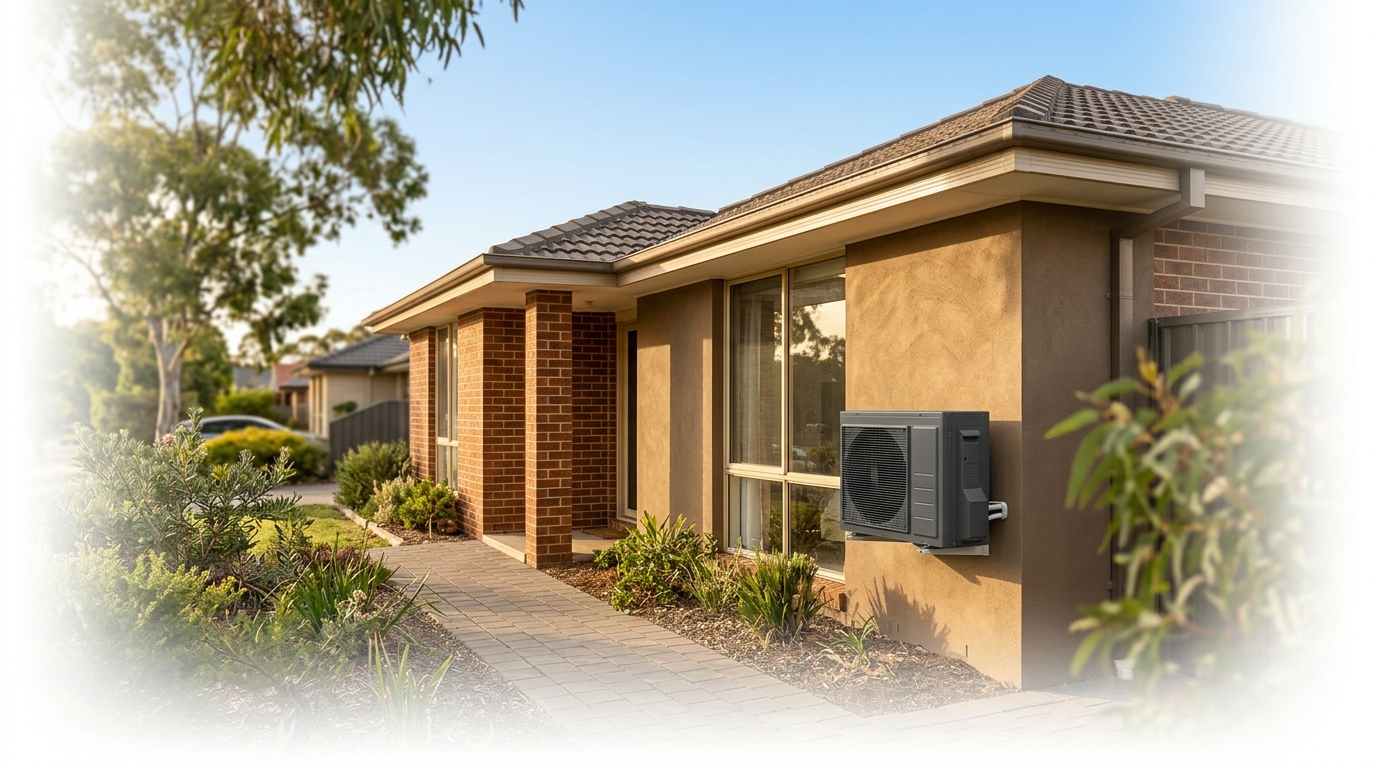
Reverse cycle split systems are the most energy-efficient electric heating option available for Australian homes. Rather than generating heat by burning electricity directly, they use a refrigerant cycle to extract heat from the outside air and transfer it indoors. This process delivers three to five units of heat energy for every one unit of electricity consumed, making them dramatically cheaper to run than any resistive heater.
Because they both heat and cool, a split system is a genuine year-round investment rather than a single-season purchase. A 2.5kW unit is the standard starting point for a bedroom or small living area. The Daikin Cora 2.5kW Inverter Split System (FTXV25WVMA) is a popular entry-level choice at $1,054, while the Mitsubishi Electric AP Series 2.5kW Split System (MSZAP25VGKD) sits at $1,122 and is equally well regarded for reliability and quiet operation.
Installation adds to the upfront cost, typically $600 to $1,200 depending on your location and the complexity of the job. Even so, the running cost savings over a few winters make split systems the most cost-effective long-term choice for most Australian households. Browse our full range of split system air conditioners to compare sizes and brands.
Panel and Convection Heaters
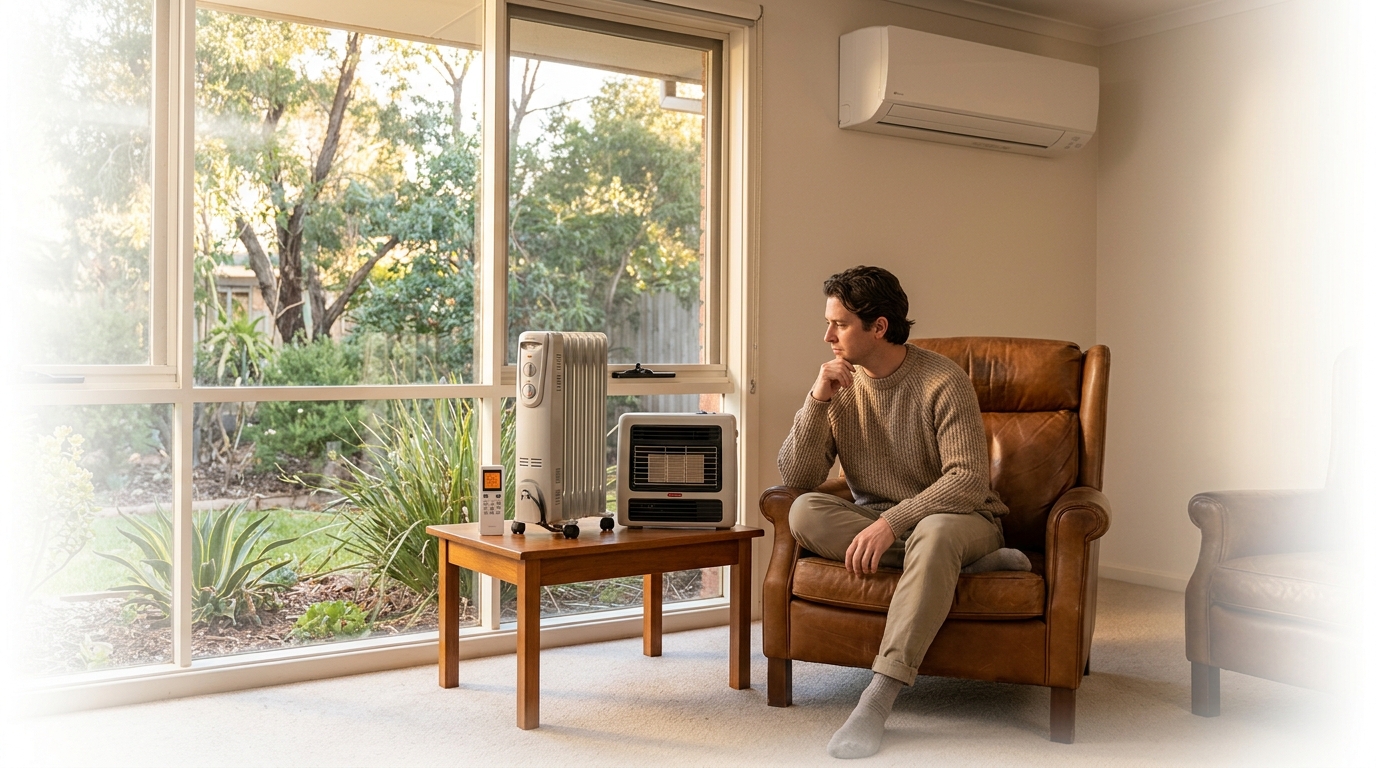
Panel heaters and oil-filled column heaters work by warming the air in a room through convection. The heater warms a surface or oil reservoir, which heats the surrounding air, and that warm air then circulates naturally around the space. They are cheap to buy, with most models sitting between $50 and $400, and they require no installation at all.
The trade-off is running cost. These are resistive heaters, meaning they convert electricity directly into heat at a one-to-one ratio. Running a 2kW panel heater for four hours a day adds up quickly on your power bill. They work well for renters who cannot install a fixed system, or as supplementary heating in a small bedroom or study. For a primary heating source in a living area, the ongoing cost is hard to justify.
Radiant and Infrared Heaters
Radiant heaters, including bar heaters and infrared panels, work differently to convection heaters. Instead of warming the air, they emit infrared radiation that heats objects and people directly in their line of sight. This makes them feel almost instant, which is useful for a bathroom, a covered outdoor area or a spot where you only need warmth for short periods.
The limitation is coverage. Radiant heat does not spread around a room the way convection does, so they are poorly suited to heating large or open-plan spaces. Like panel heaters, they are resistive and carry higher running costs per hour. Use them for targeted, short-duration warmth rather than sustained whole-room heating.
Ducted Heating Systems
Ducted reverse cycle systems heat an entire home from a single outdoor unit, distributing conditioned air through ceiling vents in every room. They offer the most consistent whole-home comfort and can be zoned so you only heat the areas in use. The upfront cost is significant, typically $5,000 to $15,000 installed depending on home size and system capacity, but for larger properties the per-room running cost is competitive.
If whole-home coverage is your priority, explore our range of ducted air conditioners to find a system sized for your property.
How to Choose the Right Heater: 5 Key Factors
The right heater for your home depends on five practical factors: room size, how often you heat, running costs, your upfront budget and whether you rent or own. Working through each one in order will quickly narrow down which type of heater makes sense for your situation and which ones you can rule out straight away.
- Room size and layout. A small bedroom or study of around 15 to 20 square metres can be handled by a portable panel heater or a 2.5kW split system. Open-plan living areas are a different story. Large, connected spaces lose heat quickly and need a higher-capacity unit, typically a 5kW to 7kW reverse cycle split system or a ducted system, to maintain a comfortable temperature. Measure your room before you buy, not after.
- Frequency of use. If you need heating every morning and evening throughout winter, running costs matter enormously. A split system pays for itself over a few seasons compared to a resistive heater used daily. If you only need occasional warmth in a spare room or home office a few times a week, a portable convection or radiant heater is a perfectly reasonable choice and avoids the cost of installation.
- Running costs and energy efficiency. Look at the energy star rating and, for reverse cycle systems, the Coefficient of Performance (COP). A COP of 4.0 means the unit delivers 4kW of heat for every 1kW of electricity it draws. Higher star ratings and COP figures translate directly to lower quarterly power bills. Resistive heaters always have a COP of 1.0, so the comparison is stark.
- Upfront budget. Portable heaters cost $50 to $400 and need no installation. A reverse cycle split system starts around $800 to $1,100 for the unit, plus $600 to $1,200 for installation. If you are ready to invest in a permanent solution, Daikin split systems are a strong starting point for homeowners who want long-term efficiency without overspending on the unit itself.
- Renting vs owning. Renters generally cannot install a fixed split system without landlord approval, which rules out the most efficient option for many people. If you rent, a quality panel heater or oil-filled column heater is the practical fallback. Homeowners have no such restriction and are almost always better off installing a reverse cycle system for any room they heat regularly.
Running Costs: What Does It Actually Cost to Heat Your Home?
A standard 2kW electric bar heater costs roughly $0.50 to $0.60 per hour to run at current Australian electricity rates, which vary by state and retailer but typically sit between 25 and 35 cents per kilowatt-hour. Run that heater for four hours a day across a three-month winter and you are looking at $180 to $220 in heating costs alone, just for one room.
A reverse cycle split system with a COP of 4.0 changes that equation significantly. The unit still draws around 1kW of electricity per hour, but it delivers 4kW of actual heat output. That means you get the same warmth for roughly a quarter of the running cost, a saving of up to 75% compared to a resistive heater running at the same output. Over a full winter, that difference adds up to hundreds of dollars.
The good news is that efficient reverse cycle heating does not have to mean a premium price tag. The Rinnai 3.5kW T Series Inverter Split System (HSNRT35B) is priced at $855 and includes built-in WiFi, making it one of the more accessible entry points into proper inverter heating. It is a solid option for a medium-sized bedroom or a smaller living area where you want the efficiency of a split system without stretching the budget.
For those after a well-known brand with a strong efficiency track record, Mitsubishi Electric split systems consistently deliver high COP ratings and are worth comparing against the Rinnai if you are shopping in the $1,000 to $1,500 range.
A few honest caveats are worth keeping in mind. Electricity tariffs vary considerably across Queensland, New South Wales, Victoria and South Australia, and time-of-use pricing can affect your actual cost per hour. The figures above are indicative. Check your most recent power bill for your actual rate before calculating running costs for any specific heater.
FAQ
What is the cheapest type of heater to run in Australia?
Reverse cycle split systems are the cheapest type of heater to run in Australia. They use a refrigerant cycle to move heat rather than generate it, delivering three to five units of warmth for every one unit of electricity consumed. Resistive heaters like panel heaters and bar heaters always operate at a one-to-one ratio, making them significantly more expensive over a full winter.
Are reverse cycle air conditioners good for heating?
Reverse cycle air conditioners are excellent for heating and are the most efficient electric heating option available for Australian homes. They extract heat from the outside air and transfer it indoors, which works effectively even on cold days down to around minus 15 Celsius for most modern inverter models. The added benefit is that the same unit cools your home in summer, making it a year-round appliance rather than a seasonal one.
What type of heater is best for a large room?
A reverse cycle split system is the best heater for a large room. For open-plan living areas or rooms above 40 square metres, a unit rated between 5kW and 7kW is typically required to maintain a comfortable temperature. Portable panel or convection heaters struggle to keep up with large spaces and become very expensive to run when pushed to their limits.
Can renters install a split system air conditioner?
Renters generally need landlord approval before installing a split system, as the installation involves drilling through walls and mounting a bracket on the exterior of the property. Without that approval, a portable panel heater or oil-filled column heater is the most practical alternative. It is worth asking your landlord, as many are open to it, particularly if the tenant covers the installation cost.
How much does it cost to run a heater all day in Australia?
Running a 2kW resistive heater all day at current Australian electricity rates of roughly 25 to 35 cents per kilowatt-hour costs between $12 and $17 per day. A reverse cycle split system delivering the same heat output costs around a quarter of that, typically $3 to $5 per day, because of its higher efficiency. Actual costs vary by state, retailer and time-of-use tariff, so check your power bill for your specific rate.
What size heater do I need for a bedroom?
A 2.5kW reverse cycle split system is the standard recommendation for a typical Australian bedroom of 15 to 25 square metres. For smaller rooms under 15 square metres, a 2kW unit may be sufficient. If you are using a portable heater, a 1.5kW to 2kW panel heater will handle a small bedroom, though running costs will be considerably higher than a split system over a full winter.
Find the Right Heater for Your Home This Winter
For most Australian homeowners, a reverse cycle split system offers the best balance of upfront cost, running efficiency and year-round versatility. It heats in winter, cools in summer and pays for itself through lower power bills within a few seasons. Portable panel and radiant heaters still have a genuine place for renters, spare rooms or situations where a fixed installation is not practical, but they should not be the primary heating source for any room you use daily.
The right choice comes down to your home, your budget and how often you actually need the heat. If you are ready to invest in a permanent solution, browse our best sellers to see which split systems are most popular with Australian homeowners right now.
Need expert advice?
Our team can help you choose the right air conditioning system for your space.