
What Is a Reverse Cycle Air Conditioner and How Does It Work?
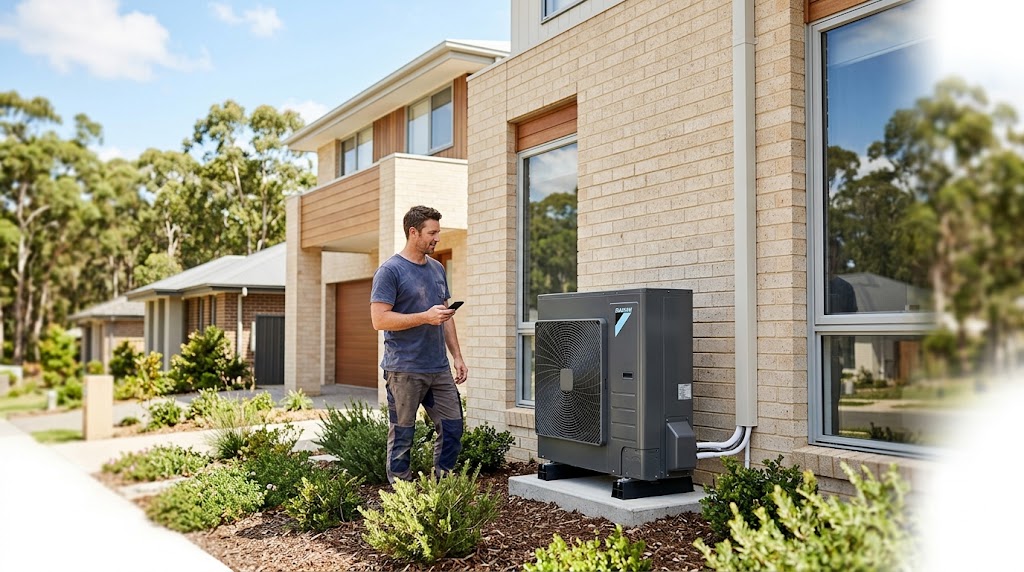
What Is a Reverse Cycle Air Conditioner?
A reverse cycle air conditioner is a single system that both heats and cools your home. Unlike a standard cooling-only unit or a gas heater, one reverse cycle system handles your climate control year-round. The name comes from its ability to reverse the flow of refrigerant, switching between cooling in summer and heating in winter. For Australian homeowners, it is the most energy-efficient way to manage indoor temperature.
The key to that efficiency is how the system works: rather than generating heat by burning fuel or using electric resistance elements, it moves heat from one place to another. In cooling mode it shifts heat out of your home. In heating mode it pulls heat from outside air and brings it in.
This article covers how the refrigeration cycle works in plain language, the real-world benefits for Australian households, the different types available and what to look for when choosing one.
Key takeaways
- A reverse cycle air conditioner heats and cools by moving heat rather than generating it, making it highly efficient year-round.
- Modern inverter models deliver 3 to 5 units of heat or cooling for every 1 unit of electricity consumed.
- Split systems are the most popular choice for Australian homes due to lower costs and straightforward installation.
How Does a Reverse Cycle Air Conditioner Work?
A reverse cycle air conditioner works by circulating refrigerant between an indoor unit and an outdoor unit, using that refrigerant to absorb heat in one location and release it in another. The system has four core components: the compressor, the condenser coil, the expansion valve and the evaporator coil. Together they form a continuous loop that moves heat rather than creating it, which is why reverse cycle systems are far more efficient than resistive electric heaters.
Most modern reverse cycle systems use an inverter compressor. A conventional compressor runs at a fixed speed and simply switches on and off to maintain temperature, which wastes energy and causes temperature swings. An inverter compressor modulates its speed continuously, running faster when the room needs rapid heating or cooling and slowing right down once the target temperature is reached. The result is steadier comfort and noticeably lower running costs.
Cooling Mode
In cooling mode, the indoor unit draws warm room air across the evaporator coil. The refrigerant inside that coil absorbs the heat from the air, causing the refrigerant to evaporate into a gas. That gas travels to the outdoor unit, where the compressor pressurises it and the condenser coil releases the absorbed heat into the outside air. The refrigerant then passes through the expansion valve, drops in pressure and temperature, and returns to the indoor unit ready to absorb more heat. The cooled air is circulated back into the room.
Heating Mode
In heating mode, the refrigerant flow is reversed. The outdoor coil now acts as the evaporator, absorbing latent heat from the outside air. This works even in cold conditions because refrigerant boils at very low temperatures, and there is usable heat energy in outside air down to around -15°C on many modern models. That heat is carried indoors, where the indoor coil releases it into the room. No heat is generated from scratch. It is simply moved from outside to inside, which is why a reverse cycle system can deliver two to five units of heat energy for every one unit of electricity it consumes.
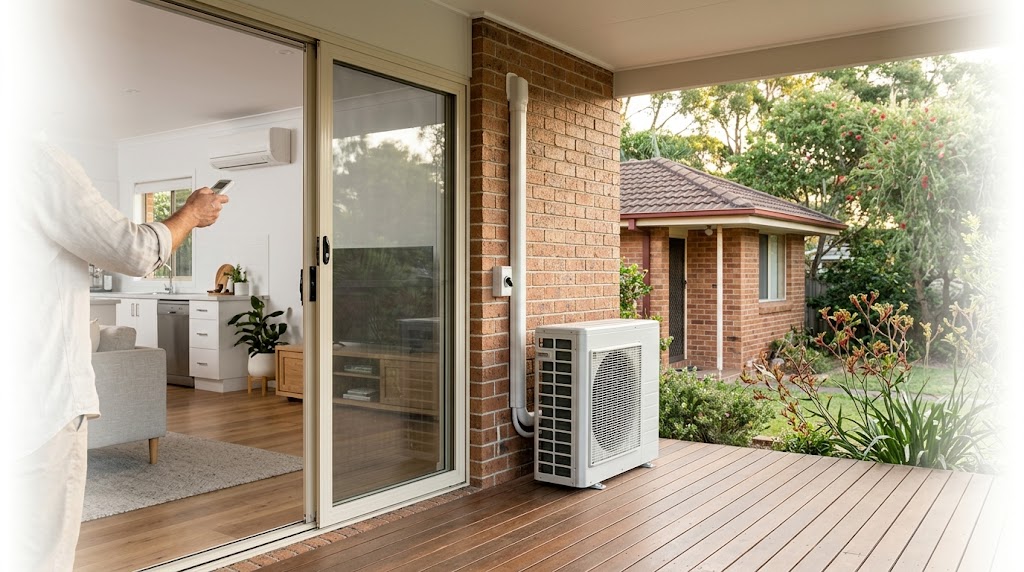
Key Benefits of Reverse Cycle Air Conditioning
Reverse cycle air conditioning offers year-round heating and cooling from a single system, outstanding energy efficiency, built-in air filtration and a strong safety profile. These qualities make it the dominant choice for Australian homes, accounting for the vast majority of new climate control installations across every state and territory.
- Year-round comfort from one system, no separate heater required
- High energy efficiency, delivering 3–5kW of output per 1kW of electricity consumed
- Built-in air filtration and dehumidification
- No open flame or exposed heating element
- Quiet operation, particularly on modern inverter models
- Long service life of 10–15 years with regular maintenance
Most reverse cycle units sold in Australia are split system air conditioners, with a wall-mounted indoor head and a compact outdoor unit. They suit everything from a single bedroom to a large open-plan living area, and they are available at a wide range of price points.
One System for All Seasons
The most practical benefit is consolidation. A reverse cycle system replaces both your summer cooling and your winter heating, which means one installation, one set of running costs and one unit to maintain. For households that currently run a portable heater alongside a cooling-only unit, switching to a single reverse cycle system typically reduces both upfront spend and ongoing energy bills.
Exceptional Energy Efficiency
Because a reverse cycle system moves heat rather than generating it, it delivers far more energy than it consumes. A quality inverter unit typically has a Coefficient of Performance (COP) of 3.0 to 5.0 in heating mode, meaning every 1kW of electricity produces 3–5kW of usable heat. In plain terms, it is three to five times more efficient than a standard electric bar heater or resistive panel heater running at the same cost.
The Daikin 2.5kW Inverter Split System LITE FTXF25WVMA ($989) is a solid entry-level example that delivers this kind of efficiency in a compact, no-fuss package suited to bedrooms and smaller living areas. If you want a competitively priced alternative, the Samsung ARISE Wind Free AR7500 2.5kW Split System ($846) offers strong efficiency figures and Samsung's 'Wind Free' mode, which disperses air gently through micro-holes rather than a direct airstream.
Air Quality and Safety
Reverse cycle systems filter the air as they run, capturing dust, pollen and other airborne particles through the indoor unit's filter. Most models also dehumidify as a by-product of cooling, which helps reduce mould risk in humid climates like Queensland and coastal New South Wales. Because there is no combustion involved, there is no carbon monoxide risk, no gas line required and no exposed element that can ignite nearby materials. This makes reverse cycle systems particularly well suited to homes with young children or anyone with respiratory sensitivities.
Quiet Operation and Longevity
Modern inverter compressors run at variable speeds, which keeps noise levels low during normal operation. Indoor units on premium models can operate as quietly as 19 decibels, roughly equivalent to a whisper. With annual filter cleaning and a professional service every two to three years, a well-maintained reverse cycle system will typically last 10–15 years before requiring replacement.
Types of Reverse Cycle Air Conditioners
Reverse cycle air conditioners are available in three main configurations in Australia: wall-mounted split systems, ducted systems and multi-split systems. Each suits a different combination of home size, budget and installation requirements. The table below summarises the key differences at a glance.
| System Type | Best For | Typical Capacity Range | Approximate Price Range |
|---|---|---|---|
| Wall-mounted split system | Single rooms or open-plan living areas | 2–9.5kW | $800–$3,500+ (unit only) |
| Ducted system | Whole-home climate control | 8–20kW+ | $5,000–$15,000+ installed |
| Multi-split system | Multiple rooms from one outdoor unit | 2–8kW per indoor head | $3,000–$10,000+ installed |
Ducted air conditioners deliver the most consistent whole-home comfort, with conditioned air distributed through ceiling or floor vents in every room. The trade-off is cost. Ducted systems require significant installation work and are best suited to new builds or major renovations where ductwork can be run without disruption. Zone control options allow you to heat or cool only the rooms in use, which helps manage running costs in larger homes.
Multi-split systems sit between the two. A single outdoor unit connects to two, three or four indoor heads in separate rooms, which avoids the need for multiple outdoor units on homes with limited external wall space. Installation is more complex than a standard split system, so the upfront cost is higher, but running costs are comparable once the system is in place.
Split systems remain the most popular choice for Australian households by a wide margin. Lower upfront costs, straightforward installation and a broad range of capacities make them practical for most situations. At the top end of the split system range, the Daikin 9.5kW XL Premium Inverter Split System FTXM95WVMA ($3,439) is a strong example of what a high-capacity unit can do, comfortably handling large open-plan living and dining areas up to around 90 square metres. For anyone starting their search, Daikin split systems consistently rank among the most recommended options in Australia for reliability, efficiency and after-sales support.
How to Choose the Right Reverse Cycle System for Your Home
Choosing the right reverse cycle system comes down to four practical factors: room size and capacity, energy star ratings, features and installation requirements. Getting these right before you buy will save you money upfront and on your power bills for years to come. A licensed installer should always assess your space before you commit to a specific unit, but understanding the basics puts you in a much stronger position going in.
Room Size and Capacity
Capacity is measured in kilowatts, and sizing your system correctly is the single most important decision you will make. A unit that is too small will run constantly and never quite reach your target temperature. One that is too large will short-cycle, switching on and off rapidly, which wastes energy and wears out the compressor faster.
A common starting point is roughly 0.125kW of cooling capacity per square metre of floor space. So a 20m² bedroom needs around 2.5kW, and a 60m² open-plan living area needs around 7.5kW. That figure needs to be adjusted upward for rooms with high ceilings, poor insulation, large north-facing windows or a location in a hot climate zone such as Queensland or the Northern Territory. Your installer will factor all of this in during their site assessment.
Energy Star Ratings
Australian reverse cycle systems carry a zoned energy rating label with separate star ratings for cooling and heating. More stars means lower running costs. The label also shows the system's capacity and energy consumption figures, which let you compare models directly. For most households, spending a little more upfront on a higher-rated model pays for itself within a few years through reduced electricity bills.
Features Worth Paying For
Not every feature is worth the premium, but a few make a genuine difference to day-to-day comfort and running costs.
- Inverter technology: Standard on most modern units. Modulates compressor speed for steadier temperatures and lower energy use. Avoid non-inverter models.
- Wi-Fi control: Lets you adjust settings remotely via a smartphone app, useful for pre-cooling or pre-heating before you arrive home.
- Sleep mode: Gradually adjusts temperature overnight to avoid overcooling or overheating while you sleep, reducing running costs.
- Air purification filters: Higher-end models include HEPA-style or activated carbon filters that capture fine particles and odours, a worthwhile upgrade for allergy sufferers.
Installation Requirements
Most residential split systems up to around 7kW run on standard single-phase power. Larger units, particularly those above 7.5kW, may require three-phase power, which not all homes have. Check with your installer before purchasing a high-capacity model. Outdoor unit placement also matters. The unit needs adequate airflow clearance, should not be positioned in direct afternoon sun if avoidable and must be accessible for servicing. Wall penetration for the refrigerant lines and drainage pipe needs to be factored into the installation quote as well.
Once you have a clear picture of your requirements, you can browse our full range of split systems to compare models, capacities and price points side by side.
FAQ: Reverse Cycle Air Conditioners
Is a reverse cycle air conditioner the same as a heat pump?
Yes, a reverse cycle air conditioner is a type of heat pump. Both work by moving heat from one place to another using a refrigerant cycle rather than generating heat through combustion or electric resistance. The term 'reverse cycle' is the common Australian name for the same technology that is marketed as a 'heat pump' in Europe and North America.
Can a reverse cycle air conditioner heat a room in winter?
Yes, and it does so very efficiently. In heating mode, a reverse cycle system extracts latent heat from outside air and transfers it indoors, even when outside temperatures drop to around -15°C on modern models. It delivers two to five units of heat energy for every one unit of electricity consumed, making it far more cost-effective than a gas heater or electric bar heater.
How much does it cost to run a reverse cycle air conditioner?
Running costs depend on the system's capacity, its energy star rating, how often you use it and your local electricity tariff. As a rough guide, a 2.5kW inverter split system running for eight hours a day might cost $1 to $2 per day at typical Australian electricity rates. A larger 7kW unit will cost proportionally more, but a higher star rating will reduce that figure noticeably over a full season.
What size reverse cycle air conditioner do I need?
A common rule of thumb is 0.125kW of cooling capacity per square metre of floor space, so a 20m² bedroom typically needs a 2.5kW unit and a 60m² living area needs around 7.5kW. Ceiling height, insulation quality, window size and your climate zone all affect the final figure. A licensed installer should always confirm sizing with a proper site assessment before you purchase.
How long does a reverse cycle air conditioner last?
A well-maintained reverse cycle system will typically last 10 to 15 years. The main factors that extend service life are regular filter cleaning (every four to six weeks during heavy use), a professional service every two to three years and keeping the outdoor unit clear of debris and obstructions. Neglecting maintenance is the most common reason systems fail before their time.
Do reverse cycle air conditioners use a lot of electricity?
Compared to other heating and cooling options, reverse cycle systems are among the most electricity-efficient available. Their high Coefficient of Performance means they return three to five times more energy as heating or cooling than they consume as electricity. Choosing a model with a high star rating and using features like timers, sleep mode and Wi-Fi scheduling will keep consumption as low as possible.
Ready to Find Your Reverse Cycle Air Conditioner?
Reverse cycle air conditioners deliver year-round heating and cooling from a single system, outstanding energy efficiency and long-term value that no other climate control technology matches for Australian homes. Whether you need a compact split system for a bedroom or a full ducted setup for a new build, the right system is out there at a price point that works for your budget.
Browse the full split system range at Air Conditioning Experts to compare models, capacities and brands side by side. If you are looking at whole-home comfort, the ducted air conditioner range covers everything from mid-size family homes to larger properties. Not sure which system suits your space? The team at Air Conditioning Experts can help you match the right unit to your room size, climate zone and budget before you buy.
You can also check the Air Conditioner Sale collection for current deals across split systems, ducted units and more.
Need expert advice?
Our team can help you choose the right air conditioning system for your space.