
What Is Ducted Air Conditioning and How Does It Work?
What Is Ducted Air Conditioning?
Ducted air conditioning is a whole-home climate control system that delivers conditioned air through a concealed network of insulated ducts and ceiling vents, allowing you to heat or cool every room from a single central unit. Unlike a split system that serves one room at a time, a ducted system treats the entire home as one climate zone, making it the most popular choice for larger Australian homes.
A ducted system can both heat and cool, so it handles everything from a sweltering Sydney summer to a cold Canberra winter. This article covers how a ducted system works, its main components, the honest pros and cons, and how it stacks up against split systems so you can decide which is right for your home.
Key takeaways
- Ducted air conditioning is a whole-home system delivering conditioned air through hidden ducts to every room
- Modern inverter systems adjust compressor speed to match demand, reducing energy consumption
- Zoning lets you condition only occupied rooms, lowering running costs significantly
The Main Components of a Ducted System
A ducted air conditioning system has four core parts working together: the outdoor unit, the indoor unit, the ductwork and vents, and the controller. Understanding what each part does makes it much easier to compare quotes, talk to installers and spot any issues down the track. Browse our range of ducted air conditioners to see full specs and pricing.
Outdoor Unit
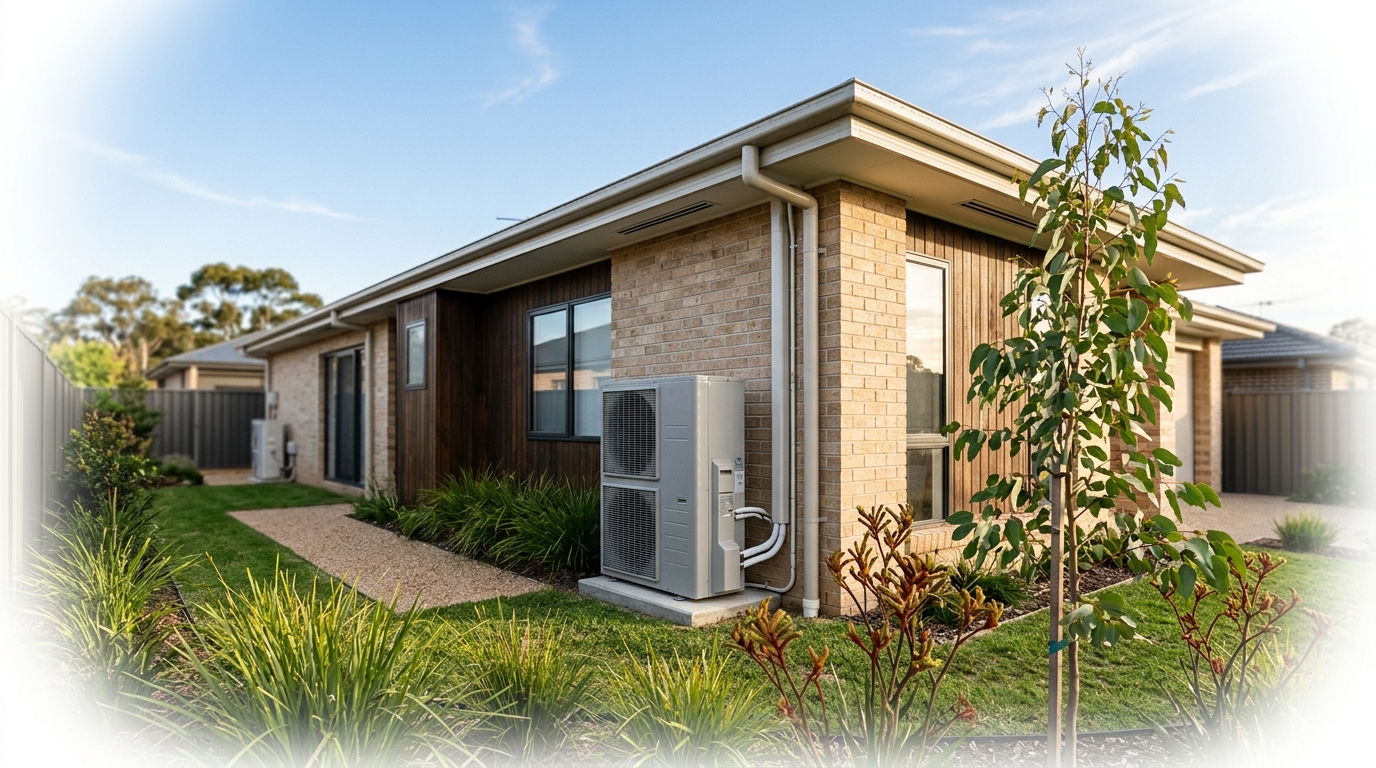
The outdoor unit is the large metal box you see sitting beside the house on a concrete pad or mounted on a rooftop for commercial buildings. It houses the compressor and condenser coils, which are the parts responsible for moving heat energy between the inside of your home and the outside air.
In cooling mode, the outdoor unit extracts heat from the refrigerant that has absorbed warmth from inside your home and releases that heat into the outside air. In heating mode, the process reverses and the unit pulls heat energy from the outside air to warm your home. The outdoor unit runs continuously while the system is on, so it needs clear airflow around it and a solid, level surface to sit on.
Indoor Unit
The indoor unit, sometimes called the air handler, sits out of sight in your roof cavity. It contains the evaporator coil and a blower fan. Warm air from your living spaces is drawn into the unit, passed over the cold evaporator coil to remove heat and humidity, and then pushed by the blower fan into the duct network.
Because the indoor unit lives in the roof cavity, most homeowners never see it after installation. That said, it does need periodic servicing, so your installer should leave enough access space around it. The size of the indoor unit is matched to the capacity of the outdoor unit, and both need to be correctly sized for your home's floor area and insulation level.
Ductwork and Vents
Insulated flexible ducts run from the indoor unit through the roof cavity to ceiling vents in each room. The insulation on the ducts is critical in Australian conditions because uninsulated ducts running through a hot roof space can lose a significant amount of cooling before the air even reaches the room below.
Each room has a supply vent that delivers conditioned air and typically one or more return air grilles elsewhere in the home. The return air grilles draw stale, warm air back to the indoor unit to be reconditioned, completing the cycle. Keeping return air grilles unobstructed by furniture or curtains is one of the simplest ways to maintain system efficiency.

How Does Ducted Air Conditioning Work?
A ducted air conditioning system works by drawing warm room air through return air grilles, passing it over cold evaporator coils inside the indoor unit to remove heat, and then pushing the cooled air through insulated ducts to every room in the home. In heating mode, a reverse cycle system flips the process, extracting heat energy from outside air and transferring it indoors, even on cold winter days.
The refrigerant is the working fluid that makes this possible. In cooling mode, the refrigerant absorbs heat from your indoor air at the evaporator coil, travels to the outdoor unit as a warm gas, and releases that heat through the condenser coils into the outside air. It then returns indoors as a cool liquid and the cycle repeats continuously while the system runs.
Most modern ducted systems use inverter technology, which means the compressor adjusts its speed continuously to match the actual heating or cooling demand in your home. Older non-inverter systems simply switch the compressor on and off at full power, which wastes energy and creates noticeable temperature swings. An inverter system holds your set temperature more precisely and uses significantly less electricity over a full day of operation. Daikin ducted systems are a popular choice for Australian homes thanks to their inverter technology and zoning options, and Mitsubishi Electric ducted systems are another top pick, with strong inverter performance and flexible zoning capabilities across their range.
Zoning: Conditioning Only the Rooms You Use
Zoning lets you divide your home into separate areas and only heat or cool the rooms that are actually occupied, rather than running the system at full capacity across the entire house.
Motorised dampers sit inside the ductwork at branch points throughout the roof cavity. When a zone is switched off, its damper closes and blocks airflow to those vents. When the zone is active, the damper opens and conditioned air flows through normally. The controller, whether a wall panel or a smartphone app, manages which zones are open at any given time.
A typical home is set up with two to four zones, such as living areas and bedrooms, so you can run the living zone during the day and switch to the bedroom zone at night. Not conditioning empty rooms can make a real difference to your quarterly electricity bill, particularly in larger homes where the system would otherwise be working hard to maintain temperature across unused spaces.
Ducted Air Conditioning: Pros and Cons
Ducted air conditioning delivers whole-home comfort that no other system type can match, but it comes with a higher price tag and some practical requirements that are worth understanding before you commit. The table below lays out the main advantages and disadvantages side by side.
| Pros | Cons |
|---|---|
| Heats and cools every room from a single system | Higher upfront cost than split systems |
| Discreet appearance, with only slim ceiling grilles visible inside | Requires adequate roof cavity space for the indoor unit and ductwork |
| Quiet operation indoors, as the compressor and fan are hidden in the roof or outside | More complex and costly to retrofit into an existing home |
| Zoning lets you condition only the rooms in use, reducing running costs | Running costs can be high if zoning is not used effectively |
| Adds measurable value to the property at resale | Ductwork needs periodic professional cleaning to maintain air quality |
The upfront cost is the most common sticking point. A quality inverter ducted system for a medium-sized home, including installation, typically runs well into five figures once labour, ductwork and zoning controls are factored in. That said, the system is also doing the job of multiple split systems, so the comparison is not always as stark as it first appears.
The roof cavity requirement catches some homeowners off guard. Older homes with low-pitched roofs or limited ceiling space may need structural modifications to fit the indoor unit, which adds cost and complexity. A good installer will assess your roof cavity before quoting so there are no surprises on the day.
Running costs are manageable with disciplined zoning use, but a ducted system left running across an entire home with no zones active will use considerably more electricity than a targeted split system. The technology is only as efficient as the habits of the people using it.
Is Ducted Air Conditioning Right for Your Home?
Ducted air conditioning suits larger homes of around 200sqm or more where whole-home comfort is the goal and a clean, uncluttered interior matters. For smaller homes, apartments or single-room cooling needs, a split system will almost always deliver better value. A hybrid approach, ducted for the main living areas and a split system for a detached garage or granny flat, works well for some properties.
If your home is on the larger side and you want every room conditioned from a single system, ducted is hard to beat. A unit like the Daikin 10kW Inverter Ducted Air Conditioner FDYAN100 at $4,017 is a solid mid-range option for medium-sized homes, and the Mitsubishi Electric 10kW Inverter Ducted Air Conditioner PEA-M100HAA at $4,110 is a comparable alternative worth considering alongside it. Both are inverter-driven, support zoning and are well suited to Australian conditions.
For smaller homes, apartments or anyone who only needs to cool one or two rooms, split system air conditioners are a more practical and cost-effective choice. A single split system can be installed in a day, costs a fraction of a ducted setup and is far easier to service. There is no point paying for whole-home infrastructure if you only use two rooms regularly.
Timing matters more with ducted than with any other system type. Installing ducted air conditioning during a new build is significantly cheaper and less disruptive than retrofitting it into an existing home. In a new build, the ductwork goes in before the ceiling is closed, which keeps labour costs down and avoids the need to cut into finished plasterwork. Retrofitting into an existing home means working through a finished ceiling, which adds time, cost and mess to the job.
If you are building now or planning a renovation, this is the right moment to get ducted on the plans. If you are in an existing home and want to explore your options, browse our range of ducted air conditioners to compare capacities and pricing before speaking to an installer.
FAQ: Ducted Air Conditioning Questions Answered
How much does a ducted AC unit cost?
Ducted air conditioning units start from around $2,798 for a smaller capacity system like the Daikin 5kW Inverter Ducted Air Conditioner FDYAN50, with mid-range 10kW units sitting between $4,000 and $4,200 before installation. Full installed costs, including ductwork, zoning controls and labour, typically run from $8,000 to $15,000 or more depending on home size and complexity. Getting at least two quotes from licensed installers is the best way to understand what your specific home will cost.
Is ducted air conditioning more efficient than split systems?
A modern inverter ducted system is highly efficient, but a split system serving a single room will generally use less electricity than a ducted system conditioning the same space. The efficiency advantage of ducted comes from zoning. When you only run the zones you are actually using, the overall energy consumption across a large home can be lower than running multiple split systems simultaneously. The key is using the zoning controls consistently rather than leaving the whole home running all day.
How long does ducted air conditioning last?
A quality ducted system from a reputable brand will typically last 15 to 20 years with regular servicing. The outdoor compressor unit tends to be the component most affected by wear over time, particularly in coastal areas where salt air accelerates corrosion. Annual professional servicing and keeping the outdoor unit clear of debris will extend the system's life considerably.
Does ducted air conditioning add value to a home?
Yes, a ducted system is widely regarded as a value-adding feature in the Australian property market, particularly in larger homes where buyers expect whole-home climate control. Real estate agents consistently list ducted air conditioning as a selling point, and homes with existing systems tend to attract stronger buyer interest than comparable properties without. The value uplift is most pronounced in warmer climate zones where air conditioning is considered essential rather than optional.
Can ducted air conditioning heat as well as cool?
Yes. All modern ducted systems sold in Australia are reverse cycle, meaning they can both heat and cool using the same refrigerant circuit. In heating mode, the system extracts heat energy from the outside air and transfers it indoors, which is far more efficient than a resistive electric heater. This makes a ducted reverse cycle system a practical all-seasons solution for most Australian climate zones.
How noisy is ducted air conditioning inside the home?
Ducted systems are among the quietest options available because the compressor and main fan are located outside or in the roof cavity, well away from living spaces. Inside, you typically hear only a gentle airflow from the ceiling vents. Noise levels vary between models and installation quality, so checking the indoor sound rating in the product specifications is worthwhile if quiet operation is a priority.
Ready to Cool Your Whole Home?
Ducted air conditioning is a whole-home solution that delivers even comfort across every room, keeps hardware out of sight and gives you the flexibility of zoning to manage running costs. The trade-off is a larger upfront investment than a split system, plus the need for adequate roof cavity space and professional installation.
If you are ready to explore your options, browse our full range of ducted air conditioners to compare capacities, brands and pricing. Not sure which system suits your home? Get in touch with our team for expert advice on sizing, brand selection and zoning setup. We are here to help you find the right fit for your home and budget.
Need expert advice?
Our team can help you choose the right air conditioning system for your space.