
What Is Ducted Heating Gas and How Does It Work?
What Is Ducted Heating Gas?
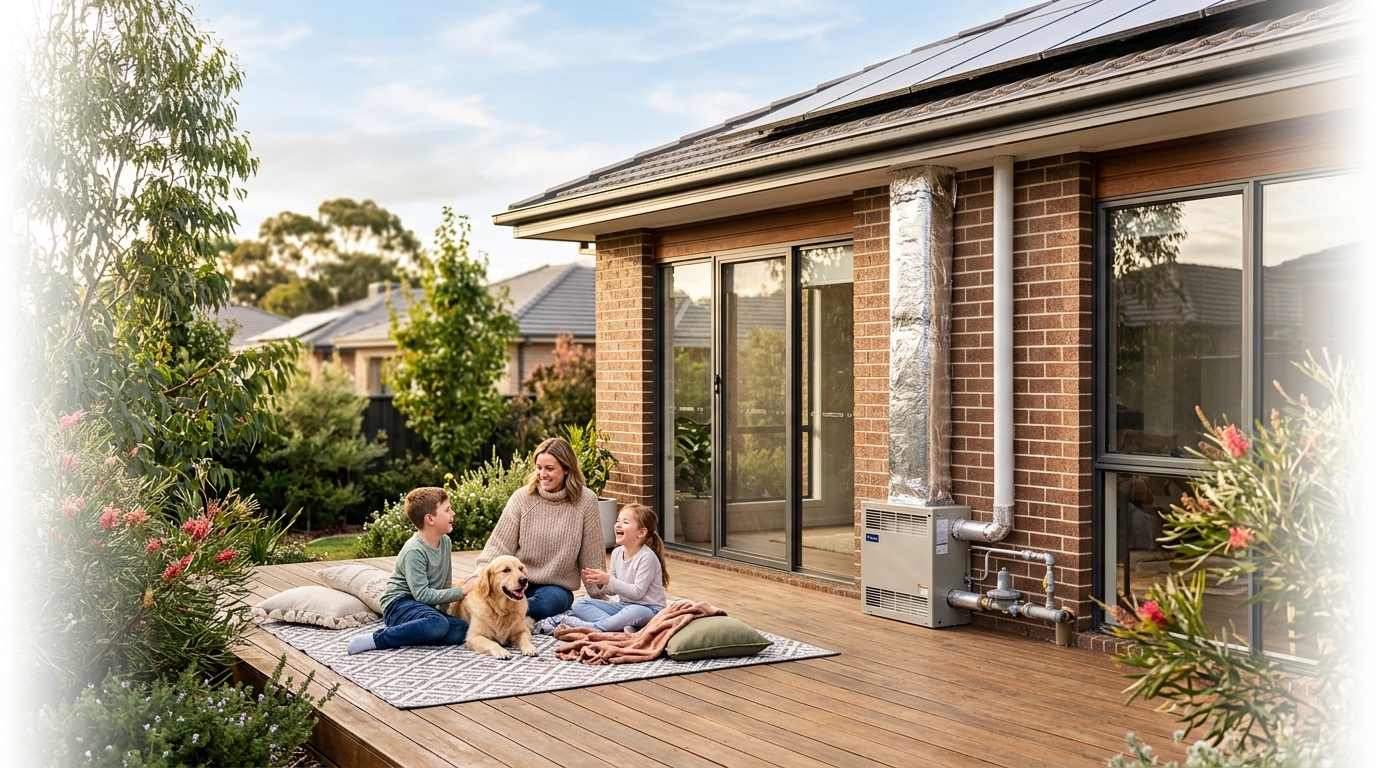
Ducted heating gas is a whole-home heating solution that uses natural gas or LPG as its fuel source to warm an entire house from a single central unit. A gas furnace heats air and a fan pushes that warmed air through a network of ducts installed in the ceiling or under the floor, delivering consistent heat to every room via vents. It is one of the most popular heating choices in southern Australia, particularly in Victoria, South Australia and the ACT where winters are cold and gas connections are common.
This article covers everything you need to know about gas ducted heating: how the system works step by step, the key components involved, what it costs to run, and how it stacks up against electric ducted alternatives. By the end, you will have a clear picture of whether ducted gas heating is the right fit for your home.
Key takeaways
- Ducted heating gas uses a central furnace to distribute warm air through ducts to every room in your home.
- Zone control lets you heat only occupied areas, reducing energy consumption and running costs.
- Gas ducted heating is heating-only and suits cold southern states with existing gas connections.
How a Ducted Gas Heating System Works
A gas ducted heating system follows a straightforward cycle to bring your home up to temperature. Modern systems add zone controllers to this process, letting you heat only the rooms you are actually using rather than the whole house at once. Here is how the full sequence works from start to finish.
- The thermostat or zone controller calls for heat. You set your desired temperature on the wall controller or smart thermostat. Once the room temperature drops below that set point, the controller sends a signal to the furnace unit to start up.
- The gas burner ignites inside the furnace. The furnace unit is typically installed in the roof space, under the floor or externally on a wall. A gas valve opens, the igniter fires and the burner produces a controlled flame inside the heat exchanger.
- Cold return air is drawn through a filter and over the heat exchanger. A return air grille, usually located in a central hallway or living area, pulls cool air from inside the home back to the furnace. That air passes through a filter to remove dust and particles before flowing over the hot heat exchanger, where it picks up warmth without ever coming into direct contact with the combustion gases.
- A fan pushes the warmed air into the duct network. Once the air is heated to the target temperature, the system's blower fan forces it out through the main supply duct and into the branching network of ducts running through your ceiling or subfloor.
- Heated air exits through ceiling or floor vents into each room. Each room has one or more supply vents connected to the duct network. Warm air flows out of these vents and circulates through the space, raising the room temperature.
- The system cycles off once the set temperature is reached. When the thermostat detects that the room has hit the target temperature, it signals the furnace to shut down the burner and, after a short cool-down period, the fan stops too. The system will restart automatically if the temperature drops again.
Zone controllers add a practical layer of efficiency to this cycle. By fitting motorised dampers inside the ducts, you can open or close airflow to individual zones, such as bedrooms, living areas or a home office, independently. This means you are not paying to heat an empty guest room while the family is gathered in the lounge. Most modern gas ducted systems support at least two zones, and larger homes can run four or more.
Key Components of a Gas Ducted Heating System
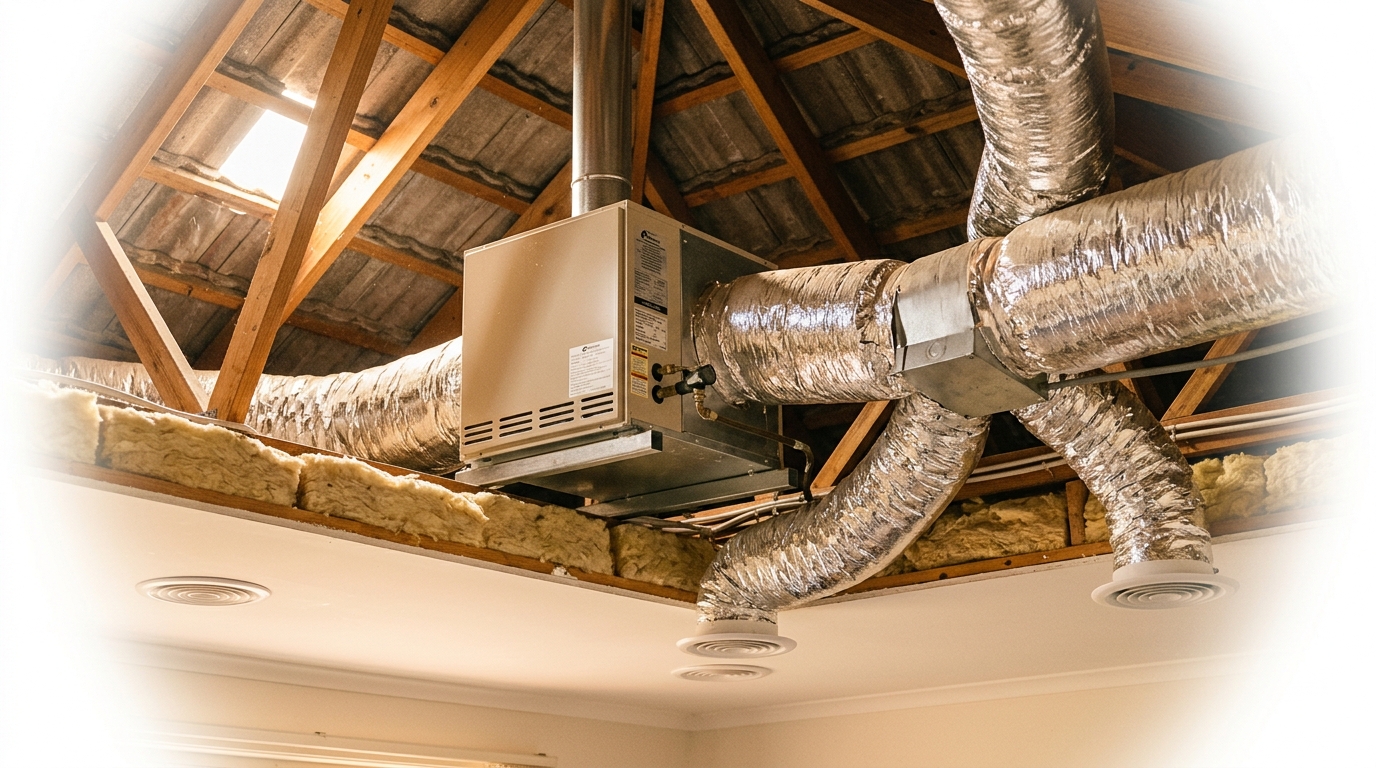
A gas ducted heating system is made up of seven core components that work together to heat your home. Understanding each part helps you make sense of installation quotes, maintenance schedules and efficiency upgrades. Here is what you are actually buying when you invest in a gas ducted system.
- Gas furnace unit. The heart of the system. This is the box that houses the burner and heat exchanger. It is most commonly installed in the roof space, though external wall-mounted and underfloor configurations exist. The furnace unit is rated in kilowatts and its output capacity should be matched to your home's floor area and insulation level.
- Heat exchanger. A sealed metal chamber inside the furnace where combustion gases heat the surrounding air without the two ever mixing. This is a critical safety component. A cracked heat exchanger can allow carbon monoxide to enter your living spaces, which is why annual servicing matters.
- Blower fan. Once the heat exchanger is up to temperature, the blower fan pushes the warmed air out through the duct network. Fan speed and motor efficiency directly affect how quickly your home reaches the set temperature.
- Duct network. A branching system of insulated ducts runs through your ceiling cavity or subfloor to carry heated air to each room. The quality, insulation rating and layout of the ductwork significantly affects both efficiency and how evenly heat is distributed. Poorly designed or uninsulated ducts can waste a substantial portion of the heat generated.
- Return air grille and filter. Typically located in a central hallway, this grille draws cool room air back to the furnace. A filter sits behind it to catch dust before it reaches the heat exchanger.
- Supply vents. The ceiling or floor registers in each room where heated air exits the duct network. Vent placement affects airflow patterns and comfort levels throughout the home.
- Flue. A pipe that vents combustion exhaust gases safely out of the building, usually through the roof. Correct flue sizing and installation is a regulatory requirement in all Australian states.
Zone Control and Smart Thermostats
Zone control lets you heat specific areas of your home independently rather than running the entire system at full capacity. Motorised dampers inside the ducts open or close on demand, so you can warm the living areas in the evening and shut off the bedrooms until it is time to sleep. For a typical four-bedroom home, zoning can meaningfully reduce gas consumption compared to running the whole house continuously.
Modern zone controllers from brands like Daikin, Brivis and Rinnai can connect to your home Wi-Fi, giving you full control via a smartphone app. You can set schedules, adjust temperatures remotely and receive service alerts. Adding smart zone control is one of the most practical energy-efficiency upgrades available for an existing gas ducted system, and it can often be retrofitted without replacing the furnace unit itself.
Gas Ducted Heating vs Electric Ducted Air Conditioning
Gas ducted heating and electric reverse-cycle ducted air conditioning are the two most common whole-home climate systems in Australia, but they serve different purposes and suit different households. The table below compares them across the factors that matter most to buyers.
| Feature | Gas Ducted Heating | Electric Ducted Reverse-Cycle |
|---|---|---|
| Heating and cooling | Heating only | Heating and cooling in one unit |
| Typical unit cost (supply only) | $1,500 to $3,500 | $2,798 to $5,800+ (e.g. Daikin 5kW FDYAN50 from $2,798; Rinnai 10kW Inverter Ducted Air Conditioner from $3,356; Daikin 10kW FDYAN100 from $4,017) |
| Running cost estimate | Lower per hour for heating in gas-connected areas; natural gas typically cheaper than electricity per kWh of heat output | Higher electricity tariff per kWh, but high COP (3.0 to 5.0+) means efficient heat delivery; running costs vary by climate zone |
| Energy source | Natural gas or LPG | Electricity (compatible with solar) |
| Star rating system | Gas star rating (heating efficiency only) | Zoned Energy Rating Label (heating and cooling stars) |
| Installation complexity | Requires gas connection and licensed gasfitter | Requires electrical connection; no gas line needed |
| Best suited for | Cold-climate states (VIC, SA, ACT, TAS) with existing gas connections; heating-focused households | All Australian climates; homes without gas; households wanting year-round climate control |
The single biggest practical advantage of an electric reverse-cycle ducted system is that it handles both heating and cooling from one unit. In most parts of Australia, where summers can be just as demanding as winters, that dual capability removes the need for a separate cooling solution entirely. Gas ducted heating does the heating job well, but you will still need another system for summer.
Air Conditioning Experts stocks a wide range of electric ducted air conditioners from Daikin, Fujitsu and Rinnai, covering capacities from 5kW for smaller homes up to 24kW for large properties. If you are weighing up whether to go gas or electric, browsing those options alongside their running cost estimates is a useful starting point.
Pros and Cons of Ducted Gas Heating
Gas ducted heating delivers fast, powerful warmth across an entire home and remains a practical choice for households in cold southern states with an existing gas connection. That said, it comes with real limitations around fuel availability, running costs and the absence of cooling. Here is an honest look at both sides.
Pros
- Fast, powerful heat output. Gas furnaces heat air quickly and can bring a large home up to temperature faster than many electric alternatives. This matters on cold Victorian or ACT mornings when you need warmth in a hurry.
- Well suited to cold climates. In alpine areas and southern states where winter temperatures regularly drop below 5 degrees, gas ducted heating performs reliably without the efficiency drop that some heat pumps experience in extreme cold.
- Lower upfront unit cost in many cases. Gas furnace units typically start from around $1,500 to $3,500 supply only, which can be less than a comparable electric ducted system. For comparison, a Daikin ducted system like the 10kW FDYAN100 starts from $4,017 supply only.
- Wide installer availability. Gas ducted heating has been the standard in southern Australia for decades. Licensed gasfitters and HVAC technicians familiar with these systems are easy to find in most metro and regional areas.
Cons
- Heating only. A gas ducted system cannot cool your home. If you want air conditioning in summer, you will need a separate split system or add-on cooling unit, which adds cost and complexity.
- Requires a natural gas connection. Gas is not available everywhere, particularly in newer outer-suburban estates and regional areas. LPG is an option but tends to be significantly more expensive to run.
- Gas prices have risen sharply. Residential gas tariffs across Australia have increased considerably in recent years, narrowing the running cost advantage gas once held over electricity. This trend is worth factoring into your long-term budget.
- Combustion by-products require proper flue ventilation. Unlike a heat pump, a gas furnace produces exhaust gases that must be safely vented outside. A correctly installed and maintained flue is non-negotiable for safety.
- Gas network uncertainty. Several Australian states are actively planning to phase down or restrict new gas connections as part of broader decarbonisation policy. If you are building a new home or planning a long-term investment, this is worth considering.
Is a Gas Ducted Heating System Right for Your Home?
Gas ducted heating suits larger homes in cooler southern states, particularly Victoria, South Australia, Tasmania and the ACT, where winters are cold, gas connections are already in place and heating performance is the priority. It is also a strong option for households replacing an existing gas ducted system, since the ductwork is already installed and the switchover cost is lower.
If your home already has a gas furnace and ducting in good condition, upgrading to a newer, higher-efficiency gas unit is often the most cost-effective path. You avoid the expense of new ductwork and can keep a familiar, well-supported technology.
Gas ducted heating is a harder sell for homes without an existing gas connection, or for households that want year-round comfort from a single system. In those cases, a reverse-cycle electric ducted system handles both heating and cooling without the need for a gas line. Brands like Rinnai ducted air conditioners offer capable electric ducted options, and for smaller homes or those without existing ductwork, split system air conditioners are a practical and affordable alternative.
Not sure which direction to take? Browse the full ducted air conditioner range at Air Conditioning Experts or get in touch with the team for straightforward advice on the best system for your home, budget and climate zone.
Frequently Asked Questions About Ducted Heating Gas
How does ducted gas heating work?
A gas ducted heating system burns natural gas or LPG inside a furnace unit to heat a metal heat exchanger. A blower fan then pushes air from your home over that heat exchanger and through a network of insulated ducts, delivering warm air to each room via ceiling or floor vents. The thermostat monitors room temperature and cycles the burner on and off to maintain your set point.
Is ducted gas heating expensive to run?
Running costs depend on your gas tariff, the size of your home and how efficiently your system is set up. In gas-connected areas of Victoria, South Australia and the ACT, gas has traditionally been cheaper per unit of heat output than electricity, though residential gas prices have risen sharply in recent years. Using zone control to heat only occupied areas of the home is the most effective way to keep bills down.
How much is a new gas ducted heating system?
A gas furnace unit typically costs between $1,500 and $3,500 supply only, with full installation adding $2,000 to $4,000 or more depending on home size and ductwork condition. For comparison, an entry-level electric ducted alternative such as the Daikin 5kW Inverter Ducted Air Conditioner (FDYAN50) starts from $2,798 supply only, and also provides cooling. Total installed costs for either system in a medium-sized home commonly land between $5,000 and $10,000.
What is the difference between ducted gas heating and ducted air conditioning?
Ducted gas heating uses a gas burner to produce heat and can only warm your home. Ducted air conditioning uses an electric reverse-cycle system that can both heat and cool, making it a year-round solution. If you live somewhere with hot summers as well as cold winters, a reverse-cycle ducted system removes the need for a separate cooling unit.
How long does a gas ducted heating system last?
A well-maintained gas ducted heating system typically lasts 15 to 20 years. The furnace unit itself is the component most likely to need replacement, while quality ductwork can often be reused when upgrading to a new unit. Annual servicing by a licensed technician is the single biggest factor in reaching the upper end of that lifespan.
Does ducted gas heating need to be serviced every year?
Yes. Annual servicing by a licensed gasfitter or HVAC technician is strongly recommended and required by most manufacturers to maintain warranty coverage. A service includes checking the burner, inspecting the heat exchanger for cracks, cleaning the filter and verifying that the flue is clear and correctly venting combustion gases outside. A cracked heat exchanger is a serious safety risk, which is why skipping services is not worth the saving.
Can I add cooling to my existing gas ducted heating system?
Some gas ducted heating systems can have an add-on cooling unit retrofitted, which connects to the existing ductwork and adds refrigerative cooling capacity. Not all systems or duct layouts are compatible, so a qualified technician needs to assess your setup first. Alternatively, a split system air conditioner in the main living area is a simpler and often more cost-effective way to add cooling without modifying the ducted system.
Need expert advice?
Our team can help you choose the right air conditioning system for your space.