
What Is Inverter Air Conditioning and How Does It Work?
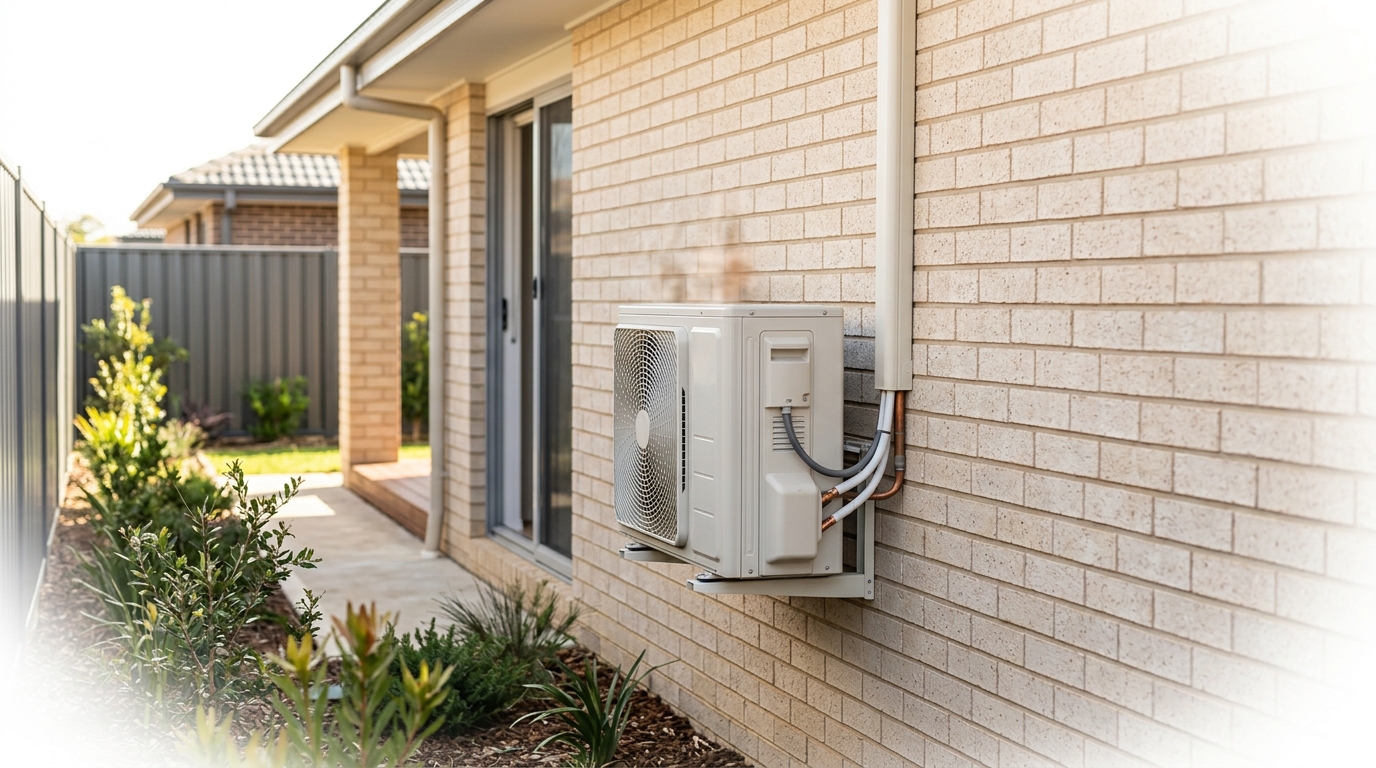
What Is Inverter Air Conditioning?
Inverter air conditioning refers to a system that uses a variable-speed compressor to regulate temperature, rather than a fixed-speed compressor that simply switches on and off. Instead of running at full power or not at all, an inverter unit continuously adjusts its output to match the cooling or heating demand of the room. The result is more precise temperature control, lower running costs and a quieter overall operation.
Older, non-inverter units work in a much more blunt way: the compressor runs at 100% capacity until the target temperature is reached, then cuts out completely. This creates noticeable temperature swings and draws a large surge of electricity every time the compressor restarts.
This article covers how inverter technology works under the hood, how it compares to fixed-speed units, what it costs to run and what to look for when buying an inverter split system in Australia.
Key takeaways
- Inverter air conditioning uses a variable-speed compressor for superior energy-efficiency compared to fixed-speed models.
- Inverter systems maintain consistent temperatures and operate more quietly than traditional units.
- Higher upfront costs are typically recovered within two to four years through lower electricity bills.
How Does an Inverter Air Conditioner Work?
An inverter air conditioner maintains your set temperature by continuously varying the speed of its compressor motor. Rather than cycling on and off at full power, the system reads the room conditions in real time and adjusts its output accordingly. Here is how that process works from start to finish.
- The room sensor reads the temperature gap. A thermistor inside the indoor unit measures the current room temperature and compares it to your set point. The larger the gap between the two, the more cooling or heating output the system will request.
- The inverter circuit converts and reshapes the power supply. The incoming AC mains power is first converted to DC, then inverted back into AC at a variable frequency. This variable-frequency output is what gives inverter systems their name and their flexibility.
- The variable frequency controls compressor motor speed. The compressor motor runs faster when a higher frequency signal is applied and slower when a lower frequency is applied. This is fundamentally different from a fixed-speed motor, which has only two states: full speed or stopped.
- The compressor ramps up hard on start-up. When you first turn the system on, or when the room temperature is well outside the set point, the compressor runs at high speed to close the gap quickly. This is where you get the fast initial cool-down or warm-up that inverter systems are known for.
- The compressor drops to a low maintenance speed. Once the room reaches the target temperature, the system does not switch off. Instead, it slows the compressor to the minimum speed needed to hold that temperature steady, making tiny adjustments as heat enters or leaves the room.
This continuous-variable approach is significantly more efficient than the on/off cycling of a fixed-speed compressor. The biggest draw on electricity in any air conditioner is the moment the compressor starts from a standstill, because it must overcome the static pressure in the refrigerant circuit. An inverter unit avoids that repeated start-up surge by never fully stopping. Running at a low, steady speed also generates less heat in the motor and compressor components, which reduces wear over time.
Inverter vs Non-Inverter: The Key Difference
A non-inverter (fixed-speed) compressor operates at one speed only: 100% capacity. It runs flat out until the room hits the set temperature, then shuts off completely. As the room warms or cools again, it restarts at full power, drawing a large current spike each time. This cycle repeats constantly, causing noticeable temperature swings of one to two degrees either side of the set point and placing repeated mechanical stress on the compressor.
An inverter compressor eliminates both problems. It never fully stops, so there are no start-up surges, and it modulates output finely enough to hold the room within a fraction of a degree of the set temperature. For most Australian households, this translates to a noticeably quieter, more comfortable and cheaper-to-run system over its lifetime.
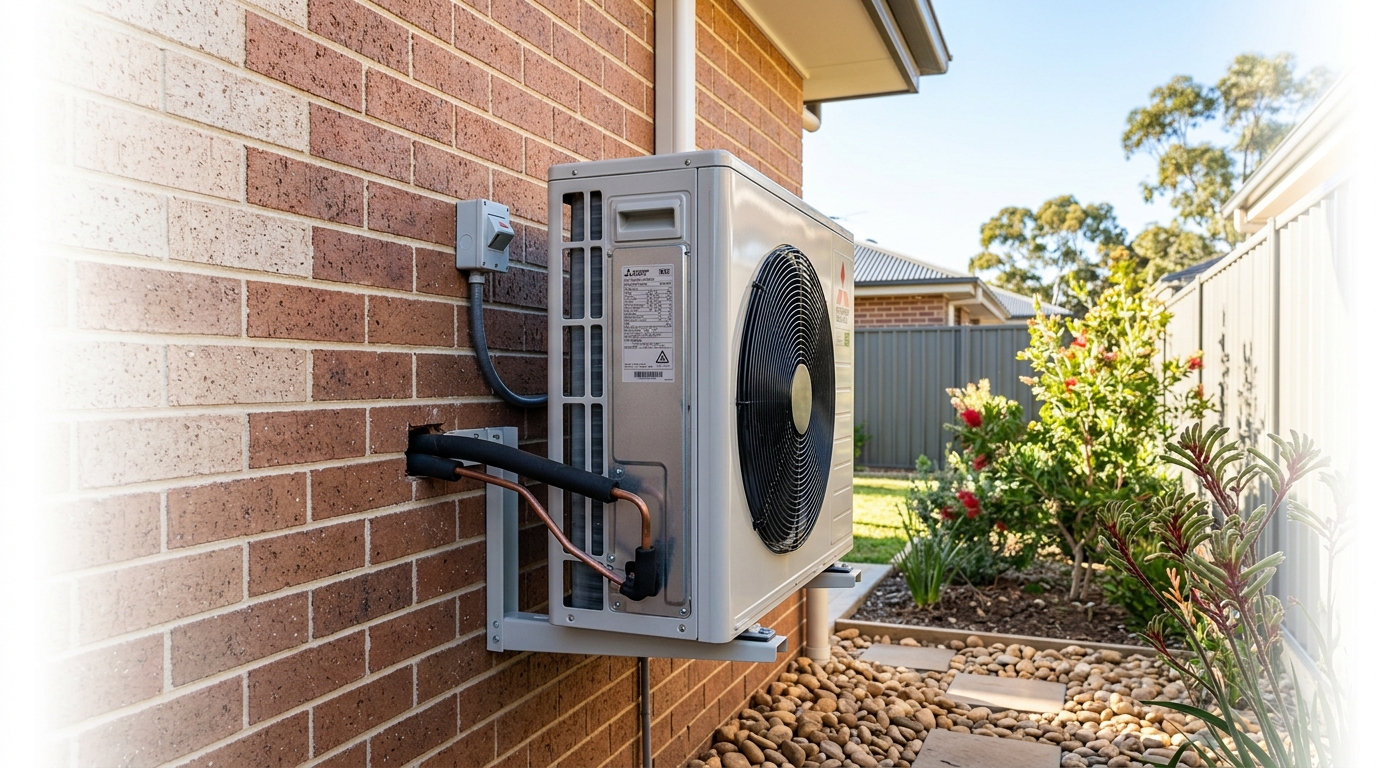
Benefits of Inverter Air Conditioning
Inverter air conditioners offer four clear advantages over fixed-speed units: lower running costs, more consistent temperatures, quieter operation and a longer working life. These benefits apply across all the major brands, and they are the reason virtually every split system air conditioner sold in Australia today, including models from Daikin, Mitsubishi Electric and Fujitsu, uses inverter technology as standard.
Energy Savings
Inverter systems typically use 30 to 40% less electricity than equivalent fixed-speed units. The saving comes from two places: the compressor never draws a start-up current surge, and it runs at a low, efficient speed for most of its operating time rather than hammering away at full capacity. With Australian electricity rates sitting above 30 cents per kWh in most states, that difference adds up quickly across a cooling or heating season. A household running a split system for six to eight hours a day will notice the gap on their quarterly bill.
Consistent Comfort
Because the compressor never fully shuts off, an inverter system holds the room temperature within a fraction of a degree of your set point. Fixed-speed units swing one to two degrees above and below the target as the compressor cycles on and off. That constant fluctuation is noticeable, particularly at night. Inverter systems eliminate it, which is one reason they are the preferred choice for bedrooms and living areas where comfort matters most.
Quieter Operation
At maintenance speed, an inverter compressor runs slowly and generates far less noise than a fixed-speed unit cycling at full power. Some models achieve indoor sound levels below 20 dB at their lowest setting, which is quieter than a whisper. The absence of the abrupt on/off cycling also removes the mechanical clunk that fixed-speed units produce each time the compressor kicks in.
Longer Lifespan
Every time a compressor starts from a standstill, it places significant mechanical stress on the motor windings, bearings and refrigerant valves. A fixed-speed unit can cycle on and off hundreds of times a day. An inverter compressor avoids almost all of that repeated stress by staying in motion continuously. Fewer start/stop cycles means less wear, and less wear generally means a longer service life before major components need attention.
Are There Any Downsides to Inverter Air Conditioners?
Inverter air conditioners cost more upfront and carry more complex electronics than fixed-speed units. For most Australian households these trade-offs are worth it, but they are worth understanding before you buy.
The most obvious downside is the purchase price. An entry-level inverter split system like the Daikin 2.5kW LITE FTXF25WVMA starts at $989, while a comparable fixed-speed unit can be found for less. The energy savings typically close that gap within two to four years of regular use, but the payback period depends on how often the system runs. For a holiday home used only a few weeks a year, the maths takes much longer to work in the inverter's favour, and a simpler fixed-speed unit may be the more practical choice.
The second trade-off is repair complexity. Inverter systems rely on a variable-frequency drive board that has no equivalent in a fixed-speed unit. If that board fails outside of warranty, the replacement cost can be significant, and not every technician has equal experience diagnosing inverter electronics. It is worth checking that any installer or service provider you use has specific experience with inverter systems, particularly for the brand you choose.
Neither of these points is a reason to avoid inverter technology. They are simply honest factors to weigh up, especially if your usage pattern is low or your budget for repairs is limited.
Choosing the Right Inverter Air Conditioner for Your Home
Picking the right inverter split system comes down to three decisions: getting the size right for your room, comparing energy star ratings to understand running costs, and choosing a brand and feature set that suits your budget. Get all three right and you will have a system that runs efficiently for well over a decade.
1. Sizing: Match the kW Output to Your Room
Undersizing is the most common buying mistake. A unit that is too small will run at full capacity constantly, driving up your power bill and never quite reaching your set temperature on the hottest or coldest days. Use the guide below as a starting point, then factor in ceiling height, insulation quality, sun exposure and your local climate zone.
| Room Size | Recommended Capacity | Typical Use |
|---|---|---|
| Up to ~20 m² | 2.5 kW | Small bedroom, study |
| ~20–35 m² | 3.5 kW | Master bedroom, medium living room |
| ~35–60 m² | 5–6 kW | Large living area, open-plan kitchen and dining |
Homes in Queensland, the Northern Territory or Western Australia should size up slightly compared to these figures, as sustained heat loads are higher than in southern states.
2. Energy Star Rating: More Stars, Lower Bills
Every inverter split system sold in Australia carries a zoned energy rating label showing separate star ratings for heating and cooling. The more stars, the more efficiently the unit converts electricity into conditioned air. With electricity rates above 30 cents per kWh across most of Australia in 2026, even a one-star difference can translate to meaningful savings over a full season. Always compare the star ratings of shortlisted models side by side rather than relying on the kW figure alone.
3. Brand and Features: The Three Major Players
Daikin split systems, Mitsubishi Electric split systems and Fujitsu split systems are the three most popular inverter brands in Australia, and for good reason. All three offer entry-level and premium lines, strong warranty support and wide service networks. Here is a practical example from each tier:
- Small rooms up to ~20 m²: The Daikin 2.5kW Inverter Split System LITE FTXF25WVMA at $989 is an accessible entry point into inverter technology. It covers the essentials without unnecessary extras, making it a solid choice for a bedroom or study.
- Medium rooms of 20–35 m²: The Mitsubishi Electric 3.5kW Split System MSZAP35VGKD at $1,236 is a reliable everyday performer. It sits in the mid-range price bracket and delivers the consistent comfort and quiet operation that Mitsubishi Electric is known for.
- Larger rooms up to ~50 m²: The Fujitsu 5kW Lifestyle Range Inverter Split System ASTG18KMTC at $1,638 is a strong value pick for open-plan living areas. It offers solid efficiency credentials and sits at the more affordable end of the 5 kW category.
Beyond these three examples, each brand offers premium lines with features like Wi-Fi control, advanced air filtration and higher star ratings. Browse the full range to compare models across all capacity and price points.
Ready to Upgrade to Inverter Air Conditioning?
Inverter air conditioning delivers three things that fixed-speed technology simply cannot match: better energy efficiency, more consistent comfort and a longer-lasting unit. Avoiding the constant start-up surges of a fixed-speed compressor means lower power bills, steadier temperatures and less wear on the components that matter most.
The good news for anyone shopping right now is that virtually every quality split system on the market today is already inverter-based. You are not choosing between old and new technology. You are choosing between brands, capacities and features. Get the sizing right, compare the star ratings and pick a brand with a strong local service network.
Ready to find the right unit for your home? Browse the full range of split system air conditioners on the site and filter by capacity, brand and energy rating to find your match.
Frequently Asked Questions
Is an inverter air conditioner better?
Yes, an inverter air conditioner is better for most households, primarily because it is significantly more energy-efficient than a fixed-speed model. Inverter units can deliver up to 30 to 40% in energy savings by adjusting compressor speed to match demand rather than cycling on and off. The upfront cost is higher, but for anyone running their unit regularly, the savings on electricity bills typically offset the price difference within a few years.
What is an inverter in air conditioning?
The inverter in an air conditioner is an electronic circuit that converts incoming AC power to DC, then back to variable-frequency AC, which allows the compressor motor to run at variable speeds. A conventional fixed-speed compressor has only two states: full power or off. By contrast, an inverter-driven compressor can slow down or speed up continuously, matching output to the actual cooling or heating load in the room.
What are the disadvantages of an inverter air conditioner?
The two main disadvantages of an inverter air conditioner are a higher purchase price than non-inverter equivalents and more complex electronics that can be costlier to repair if something goes wrong. For households that use their air conditioner frequently, the energy savings generally outweigh the price premium within a few years, making the trade-off worthwhile for most Australian homes.
Which AC is better for allergies?
An inverter split system with multi-stage filtration is generally the best choice for allergy sufferers. Because inverter units run continuously at low speed rather than cycling on and off, they filter indoor air more consistently throughout the day. Some Daikin and Mitsubishi Electric models include built-in HEPA-style, activated carbon or plasma filtration as standard features, making them worth seeking out if air quality is a priority.
Need expert advice?
Our team can help you choose the right air conditioning system for your space.